The Best Santoku Knives
The best santoku knives from Shun, MAC, Wüsthof, Global and Miyabi, with official prices, blade lengths, steels, hardness and edge angles, plus what santoku means, hollow-ground edges explained and santoku vs chef's knife.
We may earn a commission when you buy through links on this page. Learn more
Quick answer
The best santoku knife is the Shun Classic 7" Hollow Ground Santoku ($189.95 on sale), with a VG-MAX core, Damascus cladding and a 16° edge, handcrafted in Japan. The MAC Superior SK-65 ($100) is the best value, the Wüsthof Classic 7" Hollow Edge ($170, 58 HRC, made in Solingen) the best German option, the Global G-46 ($129.95) the best all-steel knife, and the Miyabi Birchwood SG2 ($364.99, 63 HRC) the splurge.
The santoku is the Japanese answer to the chef's knife: shorter, lighter and with a flatter edge that's made for chopping straight down rather than rocking. Shun and Miyabi both say the name means "three virtues," often taken to mean vegetables, proteins and fruit.
I picked five santokus, from a $100 workhorse to a $365 showpiece, with prices and specs from each maker's official US site as of November 2026. Victorinox's site blocked us, so it isn't included. For the bigger picture, see our Japanese vs German knives and best chef's knives under $150.
For each knife, I've listed the blade length, steel, hardness and edge angle where the maker publishes them, followed by a plain-English guide to what those numbers mean and how to look after a good knife.
Our picks at a glance
1. Best overall
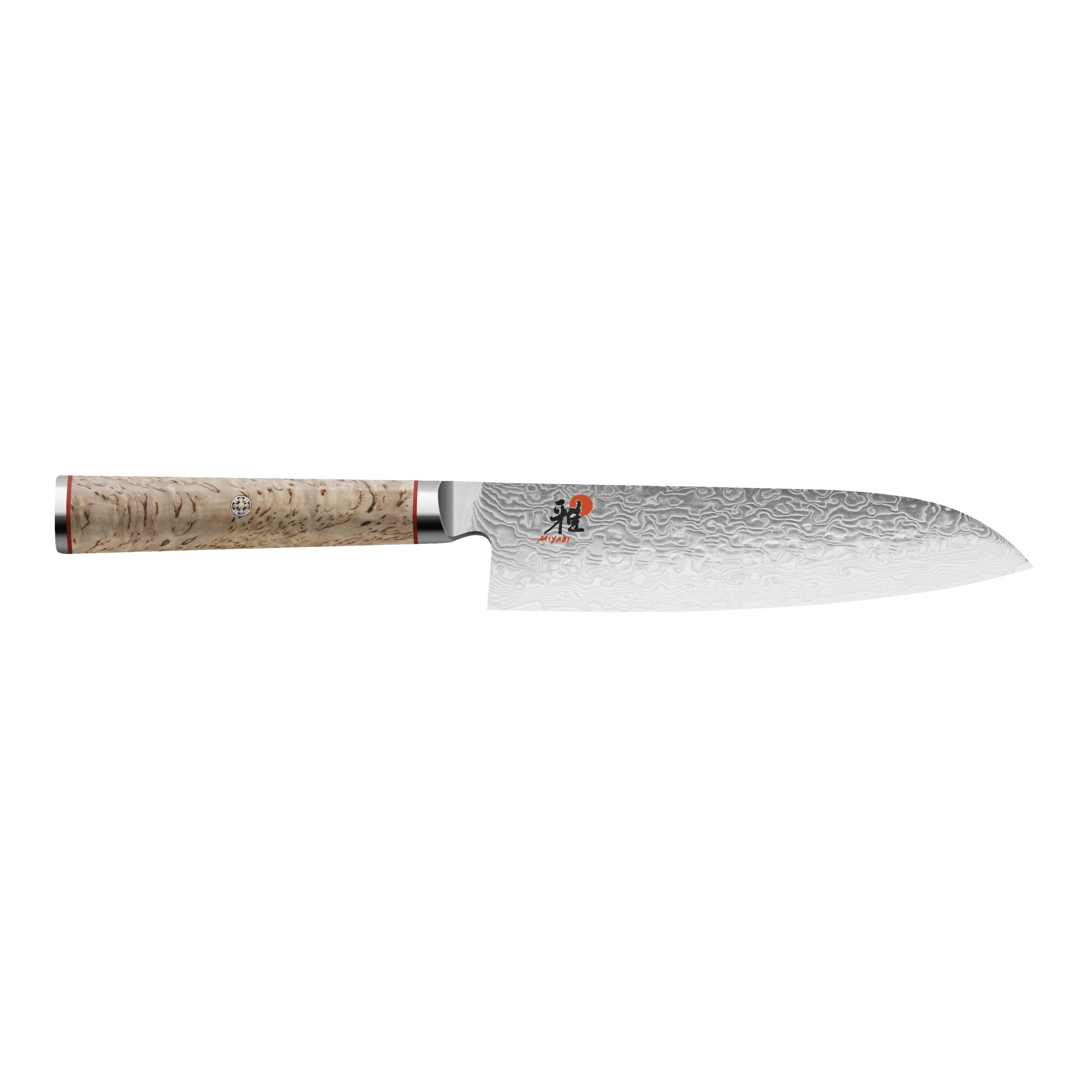
Shun Classic 7" Hollow Ground Santoku

Shun's Classic santoku has a VG-MAX steel core clad in 68 layers of Damascus, a 16° edge and a D-shaped Pakkawood handle that sits comfortably in the right hand. The hollow-ground dimples reduce friction so food releases from the blade, Shun says. It was $189.95 on sale when we checked.
Pros
- 01Beautiful Damascus blade
- 02Very sharp 16° edge
- 03On sale when we checked
Cons
- 01D-shaped handle favors right-handers
- 02Harder steel needs care
| Blade | 7 in, hollow ground |
|---|---|
| Steel | VG-MAX core, 68 layers of Damascus |
| Edge | 16° per side |
| Handle | D-shaped ebony Pakkawood |
| Made in | Japan (handcrafted) |
2. Best value
MAC Superior Series 6½" Santoku
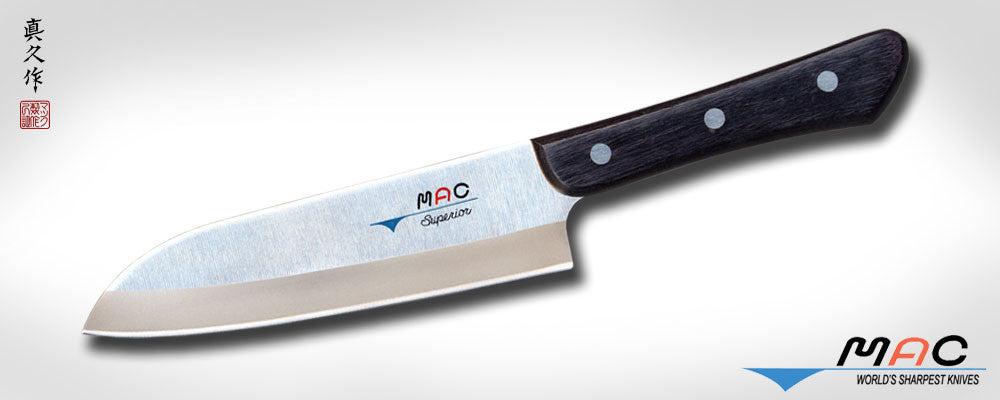
MAC is a favorite of professional cooks, and the SK-65 is a no-frills, very light (5.4 oz) santoku for $100. MAC says its Superior steel is sub-zero tempered and holds an edge better than its Original series. It's a simple knife that cuts very well.
Pros
- 01$100
- 02Very light
- 03Thin, sharp blade
Cons
- 01Plain looks
- 02Fewer specs published
| Blade | 6.75 in, 2.0 mm thick |
|---|---|
| Steel | MAC Superior steel, sub-zero tempered |
| Weight | 5.4 oz |
| Overall length | 11.69 in |
3. Best German
Wüsthof Classic 7" Hollow Edge Santoku
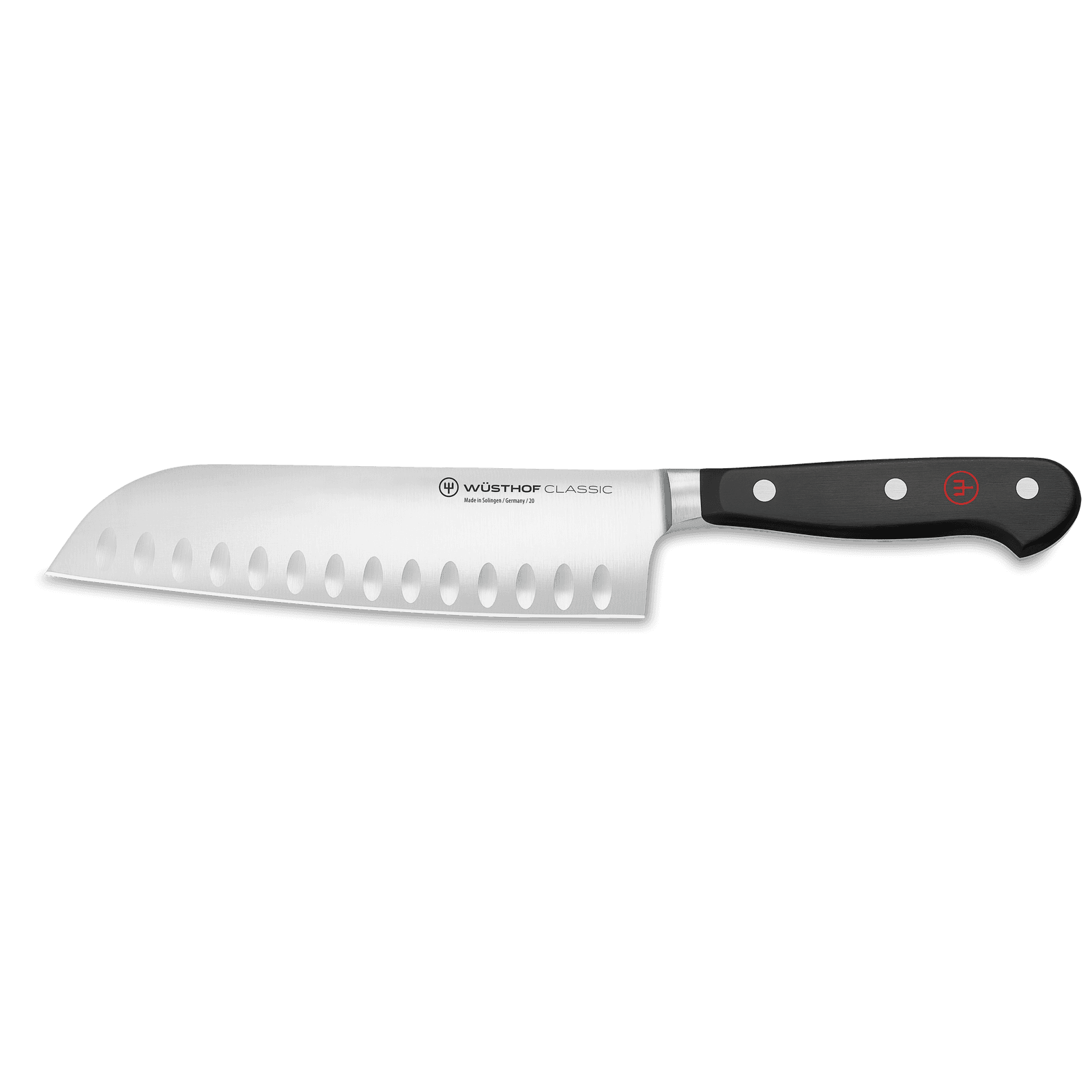
If you like the sturdiness of German knives, Wüsthof's Classic santoku is forged in Solingen with a 58 HRC blade. Wüsthof says its Asian-style knives, like this santoku, are sharpened to 10°, sharper than its standard 14.5°. Softer German steel is tougher and easier to sharpen than hard Japanese steel.
Pros
- 01Durable forged blade
- 02Easy to sharpen
- 03Made in Germany
Cons
- 01Heavier than Japanese santokus
| Blade | 7 in, hollow edge |
|---|---|
| Construction | Forged, PEtec edge |
| Hardness | 58 HRC |
| Edge | 10° (per Wüsthof, for Asian-style knives) |
| Made in | Solingen, Germany |
4. Best all-steel
Global Classic 7" Santoku
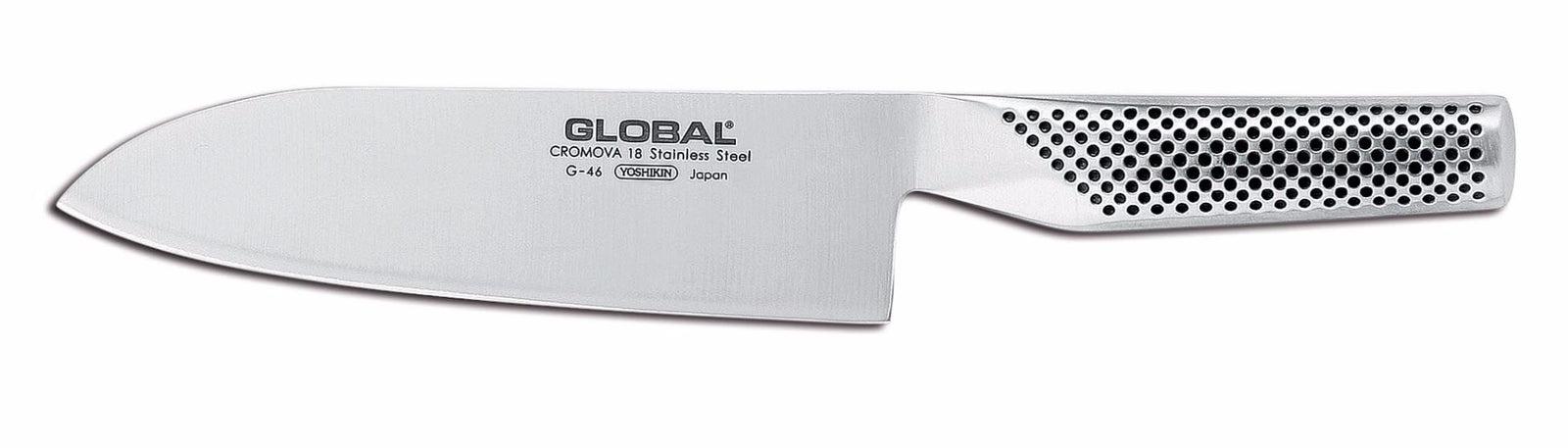
Global's all-steel knives are instantly recognizable, with a dimpled steel handle that's seamless and easy to clean. The G-46 is made in Japan from Global's CROMOVA 18 stainless steel, sharpened to between 10° and 15°. It's light and modern.
Pros
- 01Seamless, hygienic design
- 02Light
- 03Made in Japan
Cons
- 01Steel handle can feel slippery when wet
- 02Few specs on the product page
| Blade | 7 in |
|---|---|
| Steel | CROMOVA 18 stainless |
| Edge | Factory-sharpened 10–15° |
| Made in | Japan |
5. Best splurge
Miyabi Birchwood SG2 7" Fine Edge Santoku
The Miyabi Birchwood is a showpiece: an SG2 powder-steel core hardened to 63 HRC, wrapped in 100 layers of flower-pattern Damascus, with a hand-honed 9.5–12° edge and a Karelian birch handle. It's handcrafted in Seki, Japan's famous knife city. Hard steel holds an edge for a long time but needs gentle handling.
Pros
- 01Exceptionally sharp
- 02Stunning Damascus and birch
- 03Holds an edge
Cons
- 01$364.99
- 02Hard steel can chip if misused
| Steel | SG2 powder steel, 100-layer Damascus |
|---|---|
| Hardness | 63 HRC |
| Edge | 9.5–12°, Honbazuke hand-honed |
| Handle | Karelian birch |
| Made in | Seki, Japan |
The knives compared
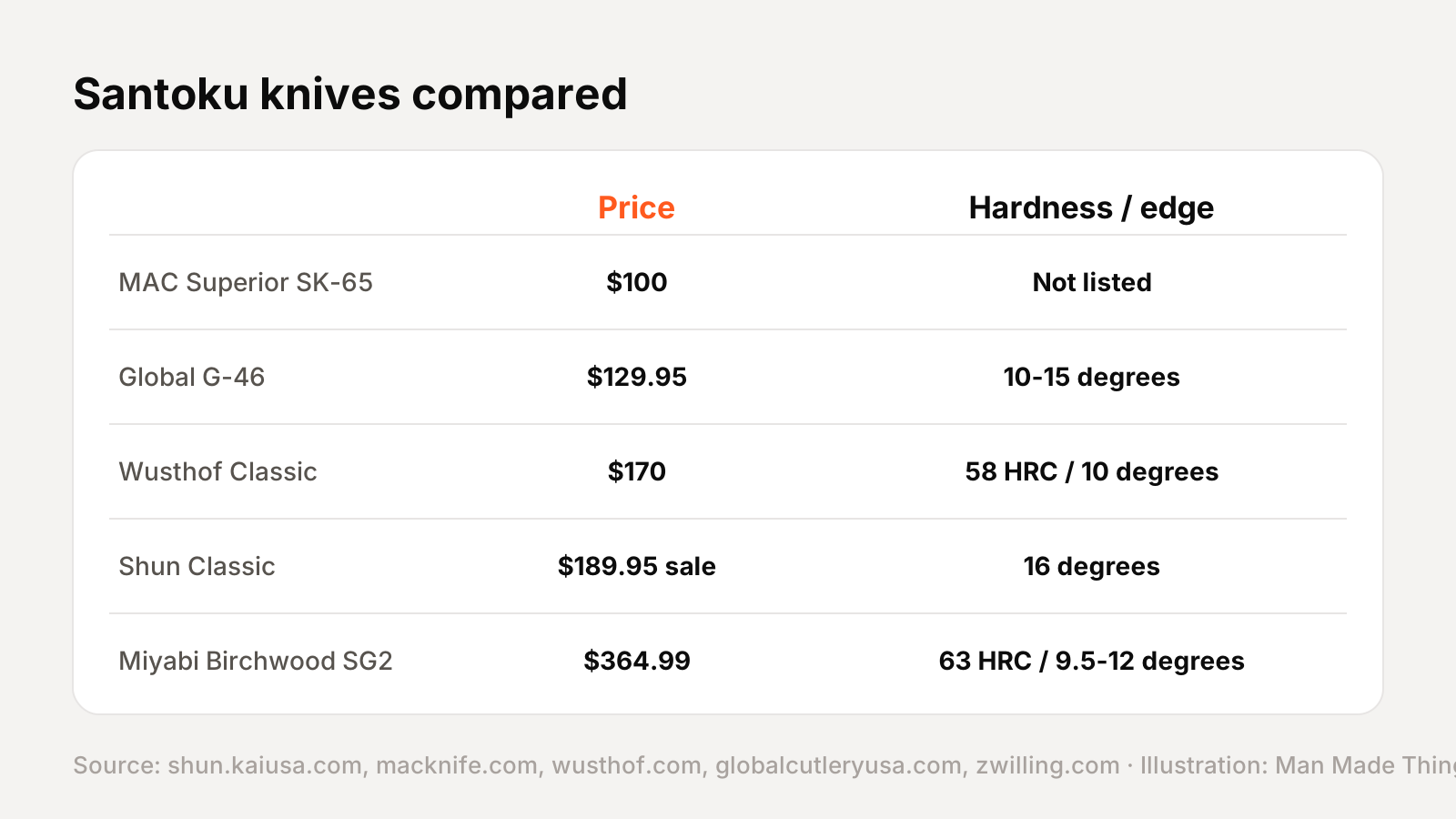
| Knife | Price | Blade | Hardness | Edge angle | Made in |
|---|---|---|---|---|---|
| MAC Superior SK-65 | $100 | 6.75 in | Not listed | Not listed | Japan |
| Global G-46 | $129.95 | 7 in | Not listed | 10–15° | Japan |
| Wüsthof Classic | $170 | 7 in | 58 HRC | 10° | Germany |
| Shun Classic | $189.95 (sale) | 7 in | Not listed | 16° | Japan |
| Miyabi Birchwood SG2 | $364.99 | 7.09 in | 63 HRC | 9.5–12° | Japan |
Santoku vs chef's knife
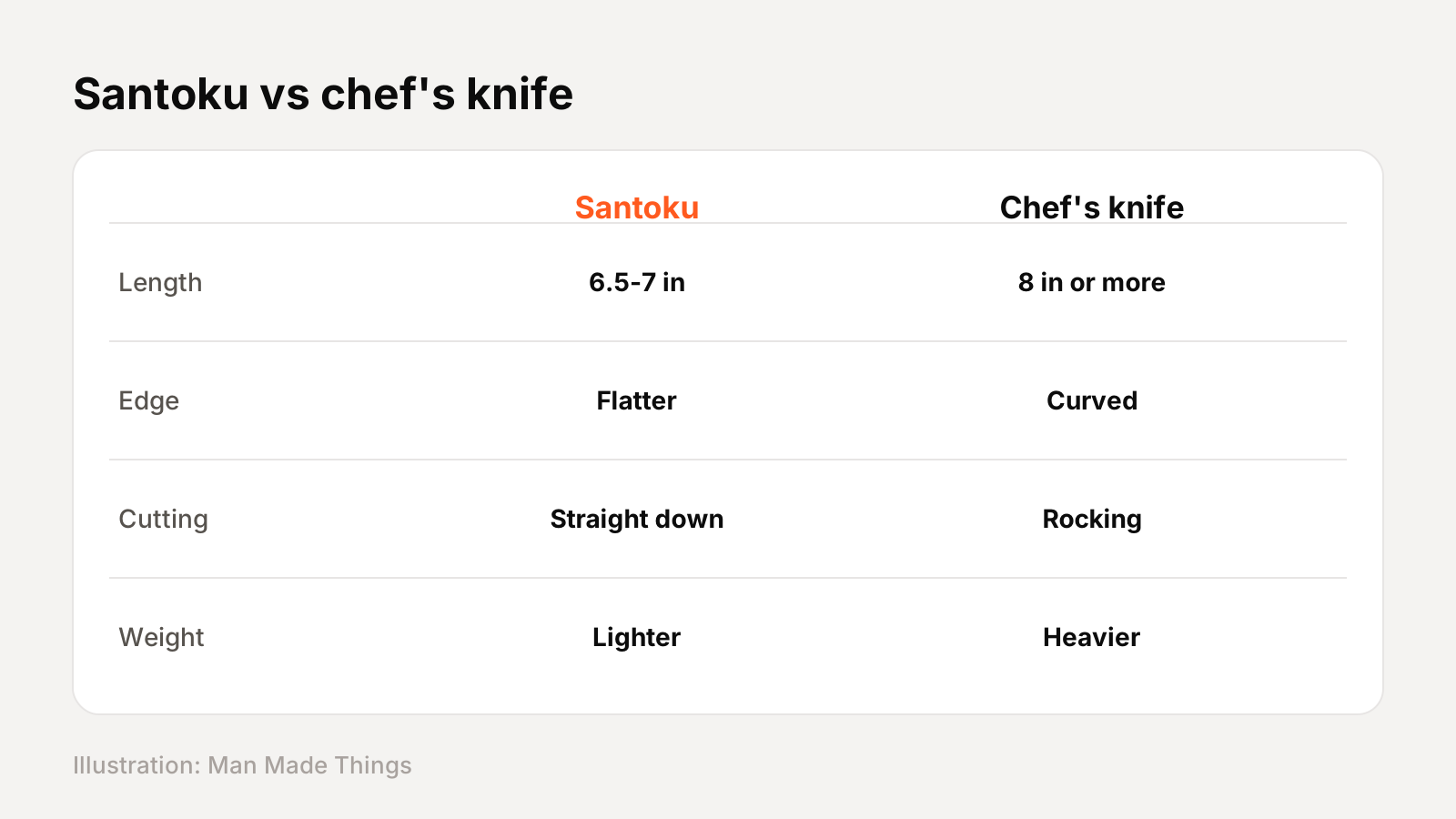
| Santoku | Chef's knife | |
|---|---|---|
| Length | Usually 6.5–7 in | Usually 8 in or more |
| Edge | Flatter | More curved |
| Cutting style | Straight up-and-down chopping | Rocking motion |
| Tip | Rounded, "sheep's foot" | Pointed |
| Weight | Usually lighter | Usually heavier |
Which should you get? If you mostly chop vegetables with a straight down motion, or have smaller hands, a santoku can feel more nimble. If you like to rock the knife or cut large items, a chef's knife is more versatile. Many cooks own both.
Hollow-ground dimples: the Shun and Wüsthof have indentations along the blade. Shun says they reduce friction so food glides off the blade instead of sticking.
Caring for a santoku
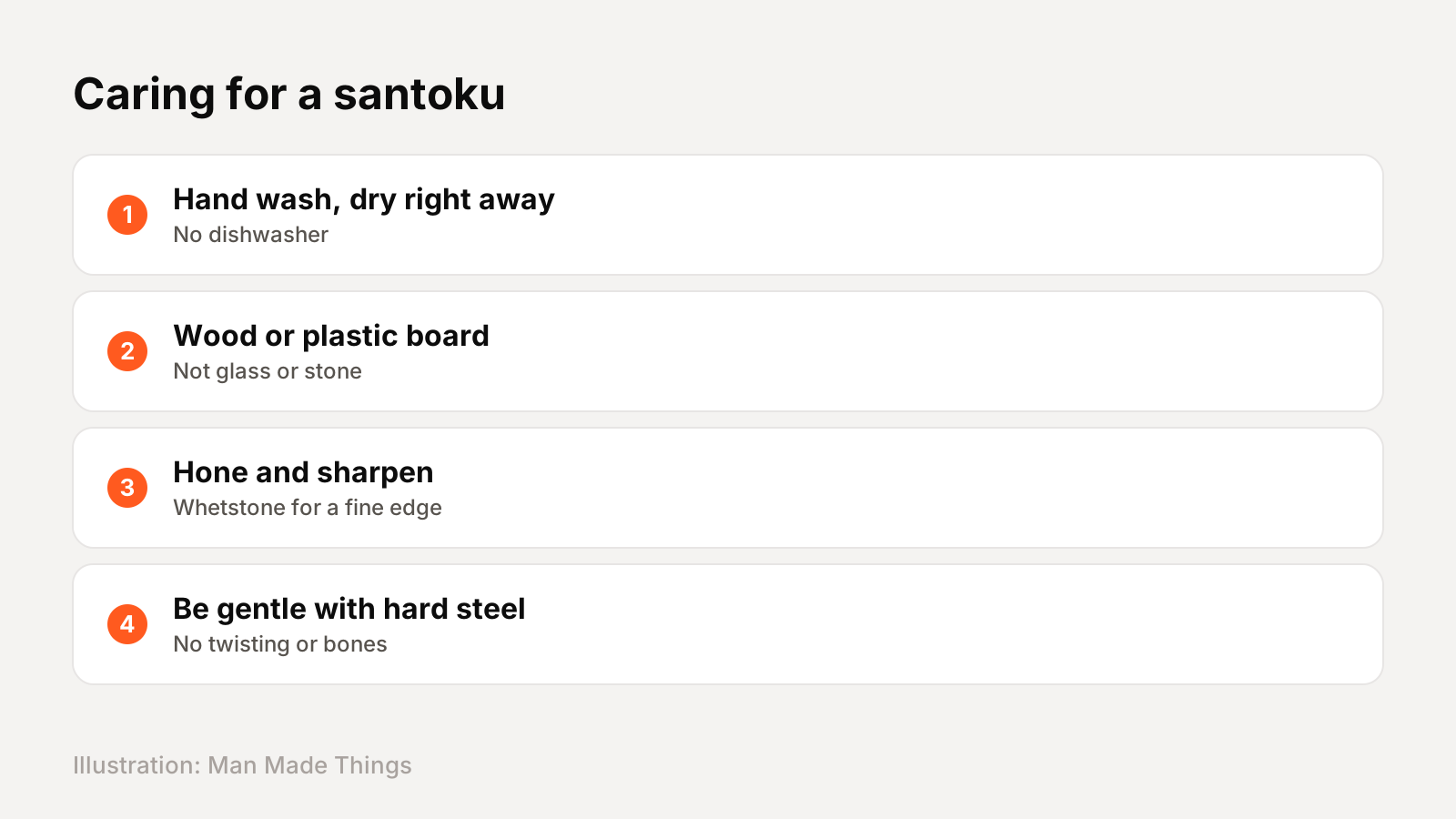
- Hand wash and dry right away. Dishwashers dull and damage good knives.
- Use a wooden or plastic board. Glass, stone and ceramic boards dull edges fast.
- Hone and sharpen. A whetstone keeps a fine edge; see our how to sharpen a knife on a whetstone.
- Be gentle with hard steel. Hard Japanese blades like the Miyabi (63 HRC) hold an edge longer but can chip if you twist them or cut through bone. Softer German steel, like Wüsthof's 58 HRC, is more forgiving.
The bottom line: the Shun Classic is the best all-rounder, the MAC SK-65 the best value, and the Wüsthof Classic the toughest. Pair your new knife with one of our best cast iron skillets.
Hardness and edge angle, explained
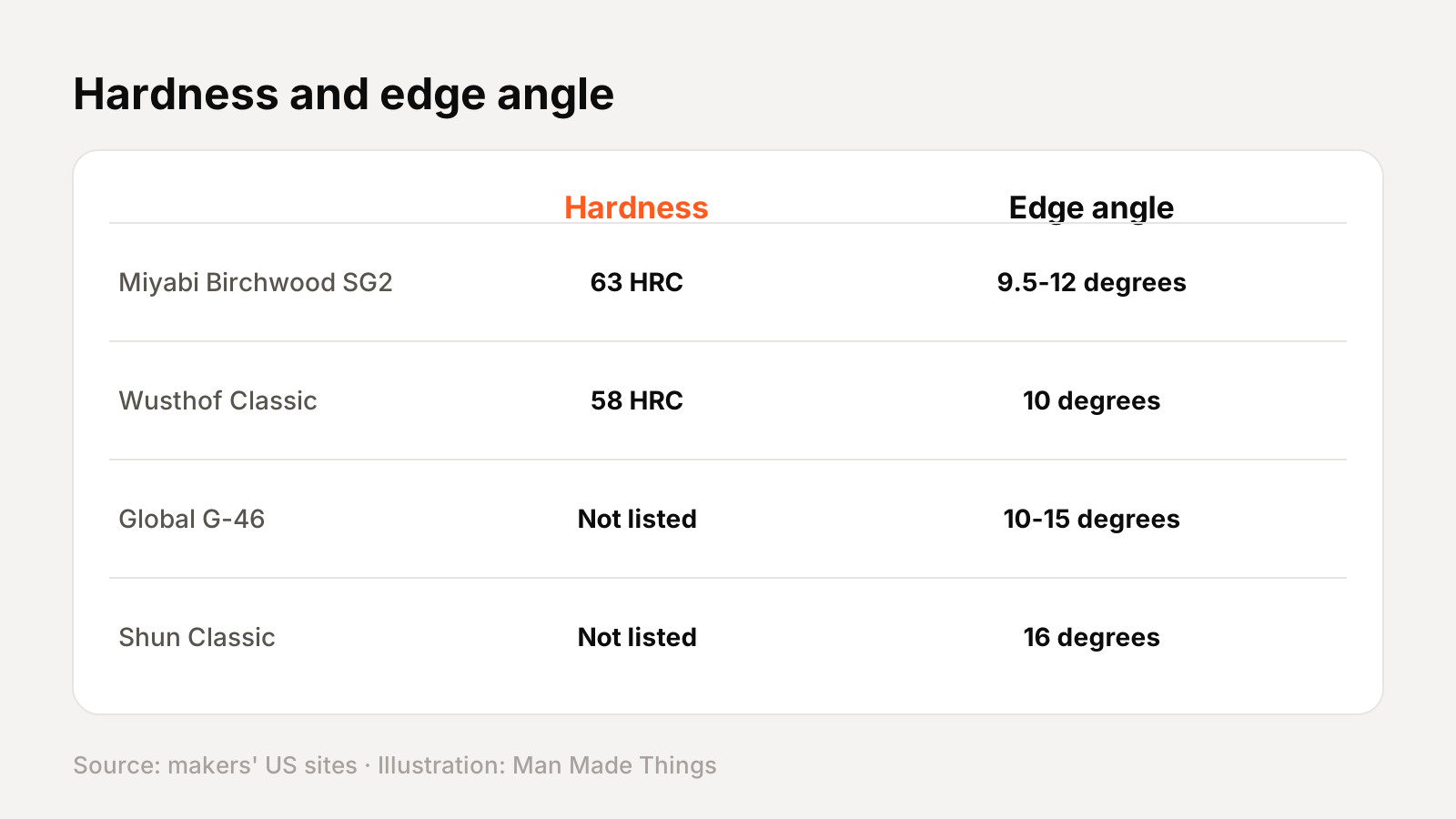
Two numbers explain most of the difference between these knives:
Hardness (HRC, the Rockwell C scale):
- Harder steel (like the Miyabi's 63 HRC) holds a sharp edge longer and can be sharpened to a finer angle, but it's more brittle, so it can chip if you twist the blade or hit bone.
- Softer steel (like Wüsthof's 58 HRC) needs sharpening more often but is tougher and more forgiving.
Edge angle (degrees per side):
| Knife | Edge angle |
|---|---|
| Miyabi Birchwood SG2 | 9.5–12° |
| Wüsthof Classic Santoku | 10° |
| Global G-46 | 10–15° |
| Shun Classic | 16° |
A lower angle feels sharper and glides through food, but the thin edge is more delicate. Most Japanese knives use lower angles than traditional Western knives; interestingly, Wüsthof sharpens its Asian-style knives like this santoku to 10°, versus 14.5° for its standard knives.
Frequently asked questions
What does santoku mean?
+
Shun and Miyabi both say santoku means "three virtues," often taken to mean vegetables, proteins and fruit.
What is the best santoku knife?
+
The Shun Classic 7" Hollow Ground Santoku ($189.95 on sale), with a VG-MAX core, Damascus cladding and 16° edge.
Santoku or chef's knife?
+
A santoku is shorter and lighter with a flatter edge for chopping straight down; a chef's knife is longer and curved for rocking. Both are versatile.
Sources
Editor-in-Chief
Rahul has been writing about gadgets and software since 2013, first at Thetechhacker and now at Man Made Things. He edits every review on the site and signs off on every verdict.
More from Rahul →