Japanese vs German Kitchen Knives: What's the Difference?
How Japanese and German kitchen knives differ in steel hardness, edge angle, weight, bolsters and care, according to Shun, Wüsthof, Zwilling, Miyabi, Global, MAC and Korin, and which suits your cooking.
We may earn a commission when you buy through links on this page. Learn more

Quick answer
Japanese knives are usually thinner, lighter and made from harder steel (around 60 to 61 HRC for Shun), with sharper edges around 15 to 16 degrees per side. They stay sharp longer but can chip, so avoid bones and frozen food. German knives are thicker, heavier and softer (around 56 to 58 HRC for Wüsthof), tougher and more forgiving, and suit heavy-duty work. Neither is better; they're built for different jobs.
Walk into any kitchen shop and the knives fall into two camps. On one side, sleek, lightweight Japanese blades with patterned steel. On the other, chunky German knives with a heavy bolster and three rivets in the handle.
Both make excellent chef's knives, and plenty of cooks own one of each. They're just designed with different priorities. Japanese knives prioritize sharpness and precision; German knives prioritize toughness and durability.
Shun, which makes Japanese knives, says it plainly in its own comparison: neither knife is better than the other. Below, I break down the real differences using what the knife makers themselves publish. If you're shopping, see our best chef's knives under $150 guide, and keep any knife sharp with our whetstone sharpening guide.
Steel hardness: hard vs tough
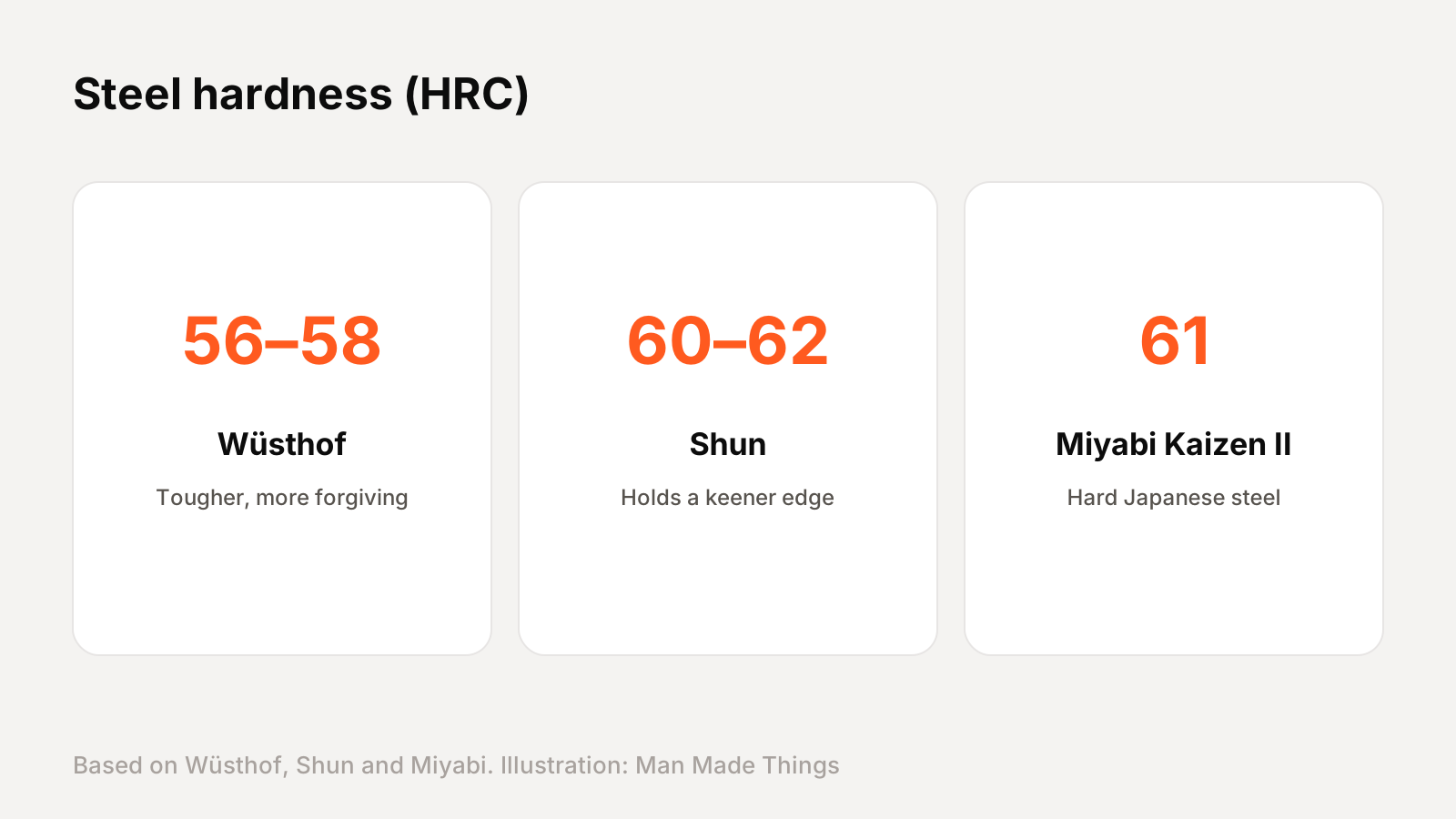
Knife hardness is measured on the Rockwell C scale (HRC), and this is the biggest difference between the two styles.
- Shun says it hardens its VG10 and VG-Max steel to 60 to 61 HRC, and its SG2 to 61 to 62. Miyabi rates its Kaizen II at 61. MAC lists 57 to 61.
- Wüsthof says its knives are typically 56 to 58 HRC, with the Classic chef's knife at 58. Zwilling's Four Star chef's knife is listed at 55 to 58.
Shun notes that each extra degree of Rockwell is about 10 percent harder. Harder steel holds a fine edge for longer. Softer steel is tougher and more flexible, so it's less likely to chip, but Shun says it needs sharpening more often.
Think of it like glass versus rubber: hard steel stays keen but can chip; softer steel bends and rolls but rarely breaks.
Edge angle and thickness
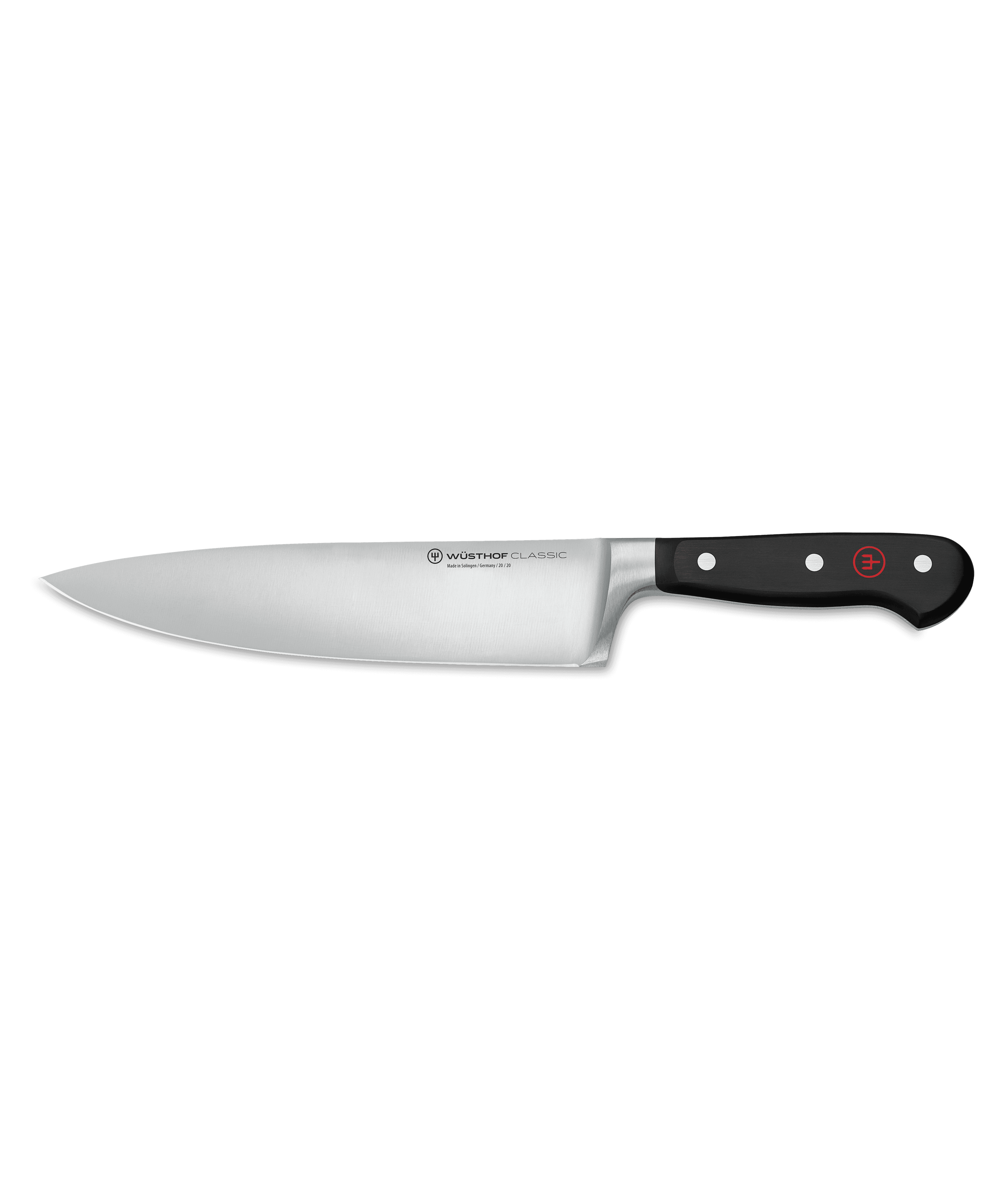
Harder steel can hold a thinner, sharper edge. Shun's comparison says Japanese knives are generally sharpened to about 15 degrees per side and Western knives to about 20. Shun's own knives are 16 degrees, Global's are factory sharpened at 10 to 15, and Miyabi says its edges are 9.5 to 12.
But the gap has narrowed. Wüsthof now sharpens its standard blades to 14 degrees per side, and its Asian-style santokus and nakiris to 10. So a modern German knife isn't necessarily blunt.
Thickness is still a clear difference. Korin, a Japanese knife specialist, says Japanese knives are generally lighter and made of thinner, harder steel, while German knives tend to have thicker, heavier blades. Shun says thicker German blades take a bit more pressure to slice through food, while its thinner blades are lighter and less tiring to use.
That extra weight isn't a flaw. It helps German knives power through tough jobs.
Bolsters, handles and shapes
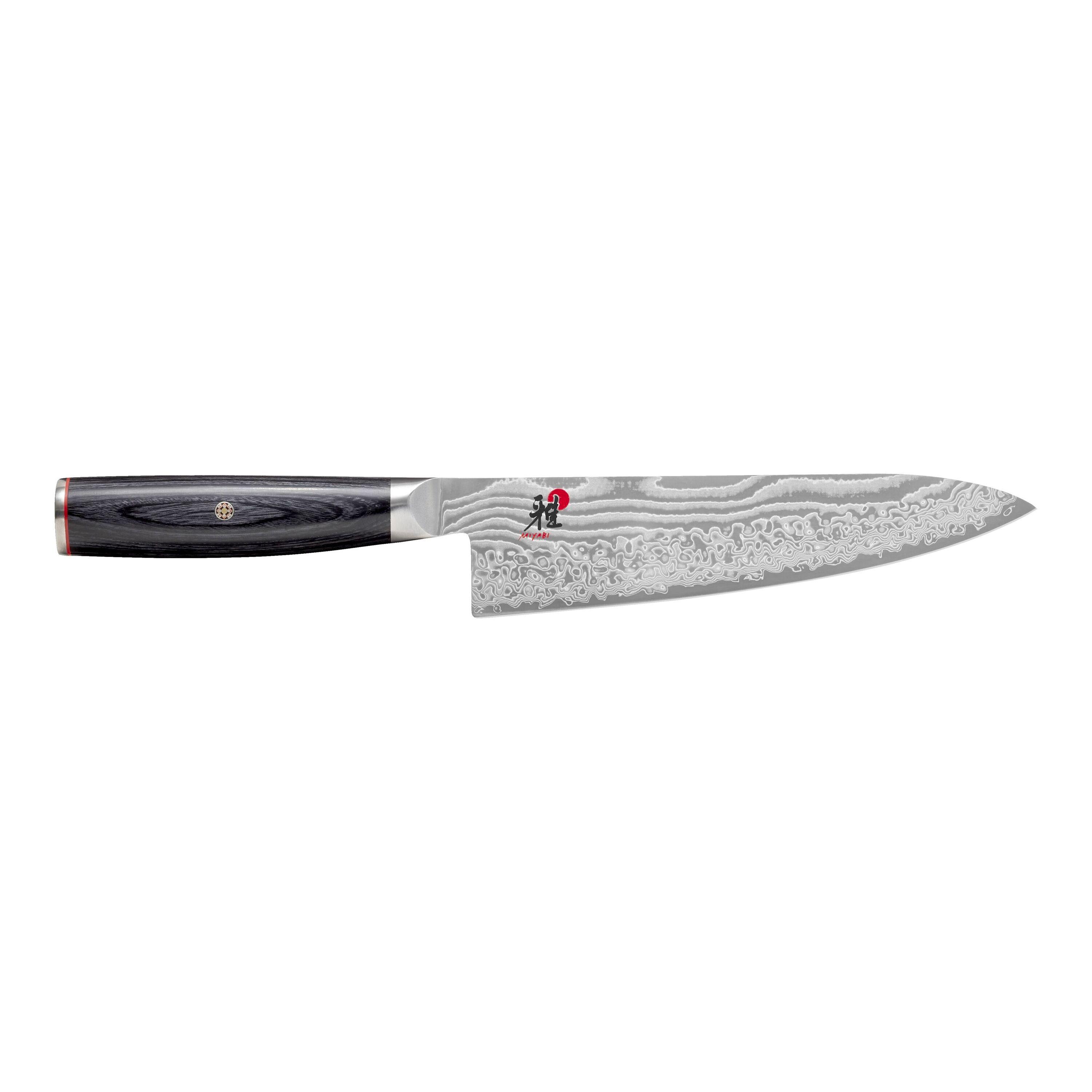
Bolsters: the thick collar where the blade meets the handle. Wüsthof says its forged knives include a bolster for balance, acting as a finger guard, and Zwilling calls its pronounced bolster a safety feature. Many Japanese knives skip it to save weight, though not all. Miyabi's Kaizen II has a rounded bolster.
Handles: German knives typically have full-tang, riveted handles. Shun says Western knives use full-tang construction and substantial handles. Japanese knives often use a D-shaped handle, which Shun says is designed to tuck into the palm. Korin's traditional Japanese knives often use wooden handles, such as ho wood with a buffalo horn collar.
Shapes: the German chef's knife has a curved belly made for rocking. Shun says a chef's knife can be gently rocked. Japanese kitchens add other shapes:
- Gyuto: the Japanese chef's knife. Korin calls it extremely versatile.
- Santoku: shorter, light and agile, says Shun.
- Nakiri: a vegetable knife used with a push cut rather than a rock.
Single-bevel vs double-bevel
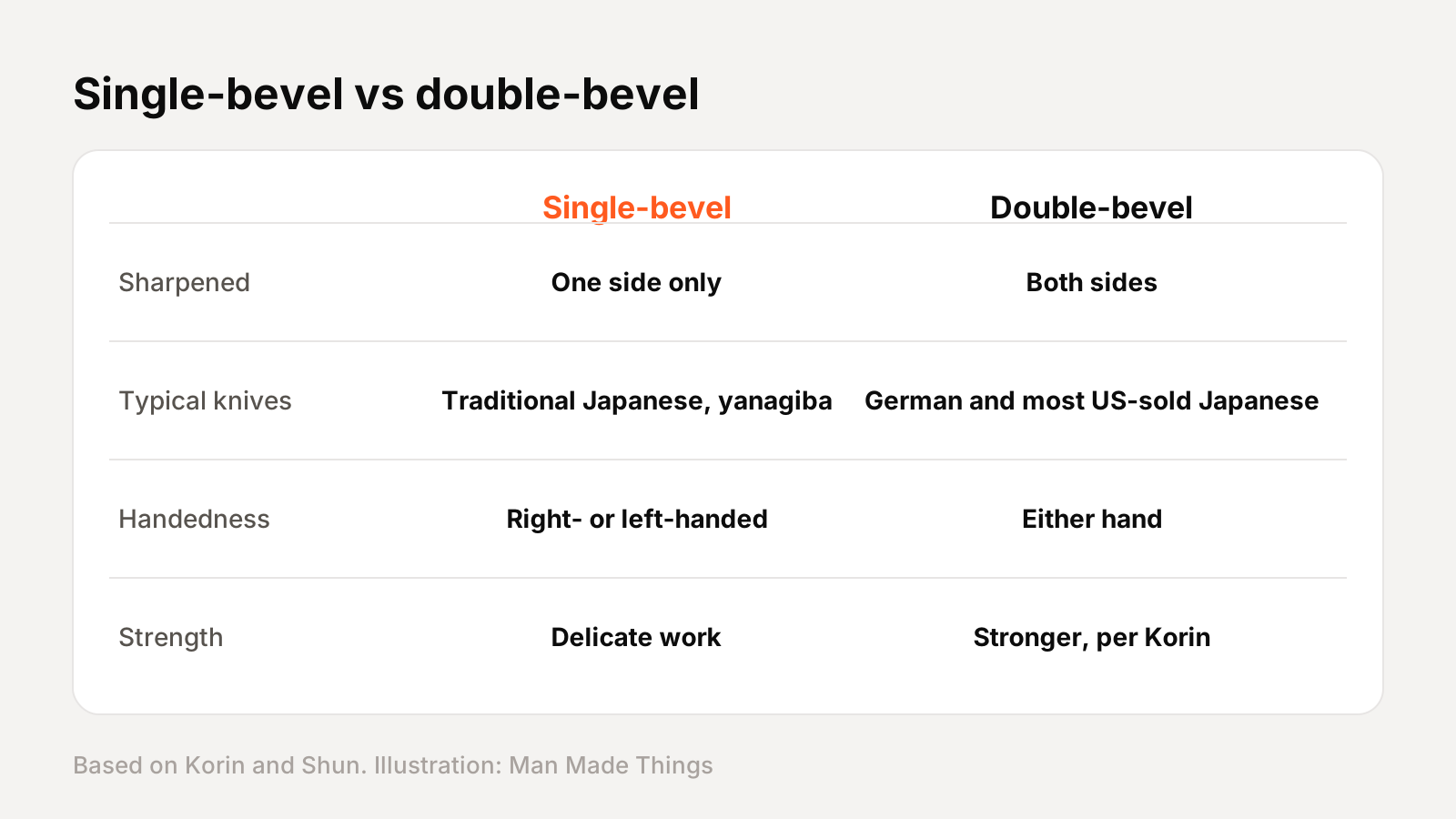
Here's a detail that surprises many people. Traditional Japanese knives are single-bevel. Korin explains they're sharpened on only one side of the blade, creating a razor-sharp edge with a slightly concave back. That makes delicate work, like slicing sashimi with a yanagiba, easier, but it means the knife cuts toward one side and is made specifically for right- or left-handed users.
Most knives you'll buy are double-bevel. Korin says Western-style knives are double-beveled, sharpened on both sides, which is a stronger configuration than single-edged blades. That includes all German knives and most Japanese chef's knives sold in the US, like the Shun Classic and Miyabi Kaizen II.
Korin adds that many Japanese Western-style knives have asymmetrical edges, rather than an even 50:50, citing one with a 90:10 bevel. MAC describes its edge as a hybrid between the two. For a home cook, a double-bevel knife is the easier, more versatile choice.
Care, and which to choose
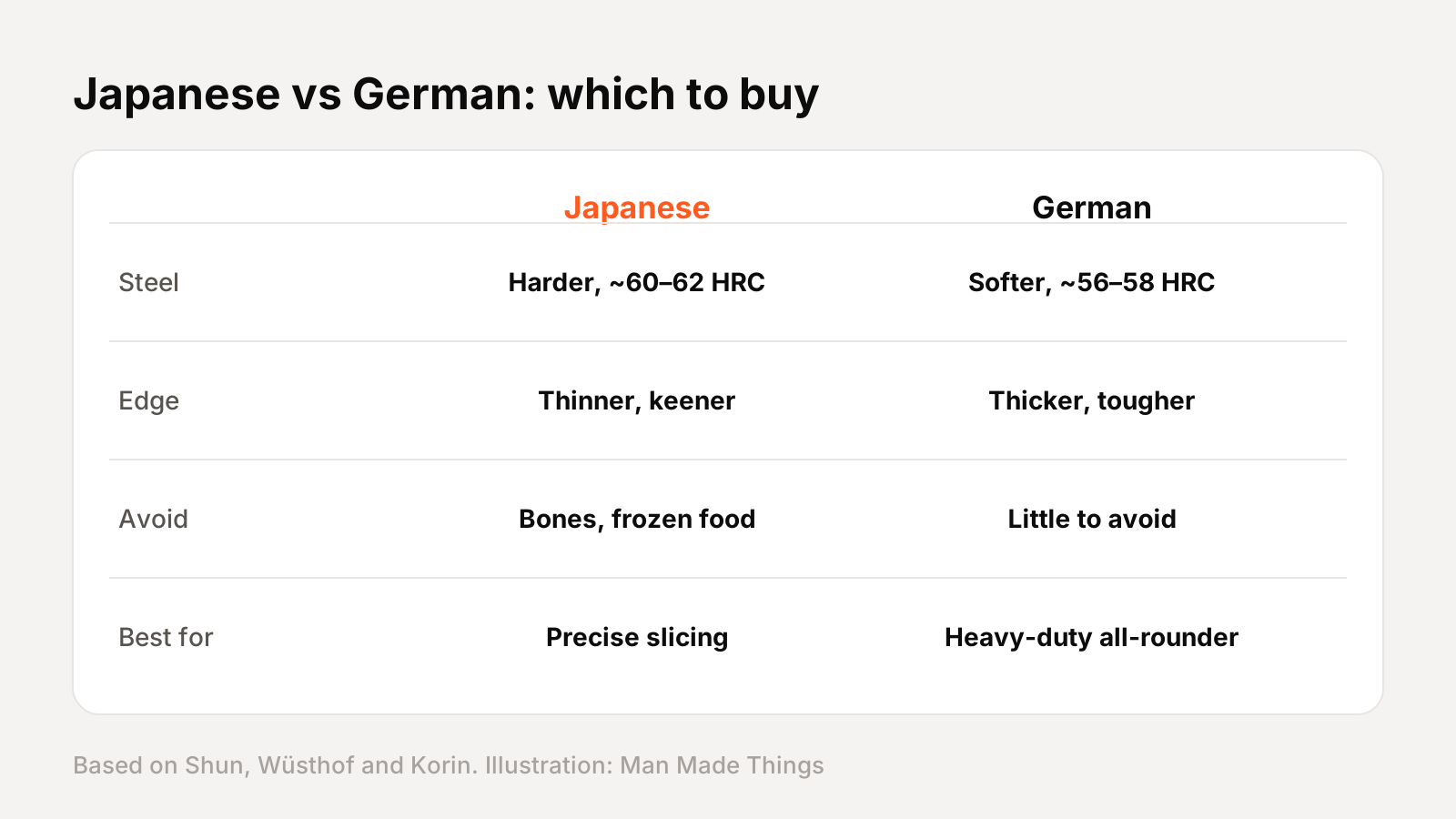
Care differs. Shun says not to use its knives on bones, joints or frozen foods, and explains that very hard steel can micro-chip. Korin and Global say never to put their knives in the dishwasher, and Korin warns against twisting a knife in food. Korin also says a honing steel may damage a Japanese knife.
German knives are more forgiving. Their edges tend to roll rather than chip, and Shun notes honing straightens a rolled edge. Wüsthof still says to hand wash and dry immediately, though Zwilling lists its Four Star as dishwasher safe, with hand washing recommended.
So which should you buy?
- Japanese, like the Shun Classic 8-inch (on sale for $149.95 when I checked), if you love precise slicing, want an edge that lasts and don't mind careful handling.
- German, like the Wüsthof Classic 8-inch ($170), if you want one tough knife for everything, including breaking down chickens.
Many cooks start with a German chef's knife and add a Japanese one later.
Frequently asked questions
Are Japanese knives better than German knives?
+
Neither is better. Shun says so itself. Japanese knives are harder and sharper; German knives are tougher and more forgiving.
What HRC are Japanese and German knives?
+
Shun lists 60 to 62 HRC for its steels; Wüsthof says its knives are typically 56 to 58 HRC.
Can you cut bones with a Japanese knife?
+
No. Shun says not to use its knives on bones, joints or frozen foods, because very hard steel can chip.
What angle are Japanese knives sharpened to?
+
Shun says Japanese knives are generally about 15 degrees per side; Shun's own are 16. Wüsthof sharpens its standard German blades to 14.
Sources
Editor-in-Chief
Rahul has been writing about gadgets and software since 2013, first at Thetechhacker and now at Man Made Things. He edits every review on the site and signs off on every verdict.
More from Rahul →