Cast Iron vs Carbon Steel vs Stainless Steel Pans: Which Should You Buy?
How cast iron, carbon steel and stainless steel pans compare on weight, heat, seasoning, acidic foods, induction and care, using guidance from Lodge, Smithey, Made In, Misen and All-Clad.
We may earn a commission when you buy through links on this page. Learn more
Quick answer
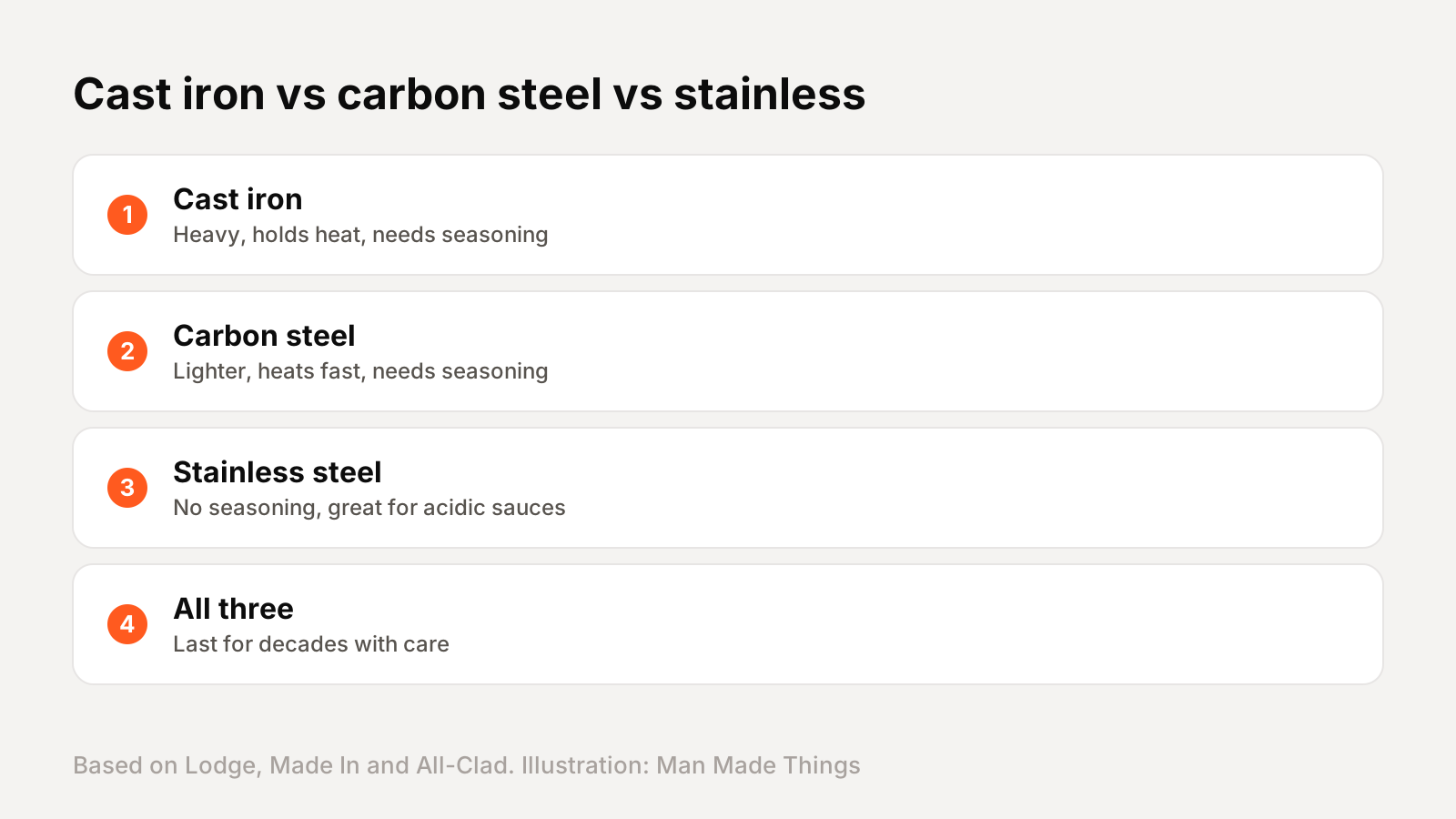
Cast iron is heavy, holds heat well and needs seasoning, making it great for searing and baking. Carbon steel is lighter and heats faster, with similar seasoning, and suits high-heat searing and eggs. Stainless steel needs no seasoning, handles acidic sauces and goes in a hot oven, but food sticks more. Many cooks own one of each.
If you're building a kitchen that will last decades, these are the three materials worth knowing. Unlike nonstick pans, which wear out, cast iron, carbon steel and stainless steel can last for generations with basic care.
They're not interchangeable, though. Cast iron and carbon steel are both bare iron that you season; stainless steel is a polished alloy that never needs seasoning. They heat differently, weigh differently and suit different jobs.
Below, I compare them using what the brands that make them say on their own sites: Lodge, Smithey and Field Company for cast iron, Lodge, Made In and Misen for carbon steel, and All-Clad for stainless. Where they disagree, I point it out. For specific pans, see our best cast iron skillets and best nonstick pans guides.
Cast iron: heavy, steady and cheap
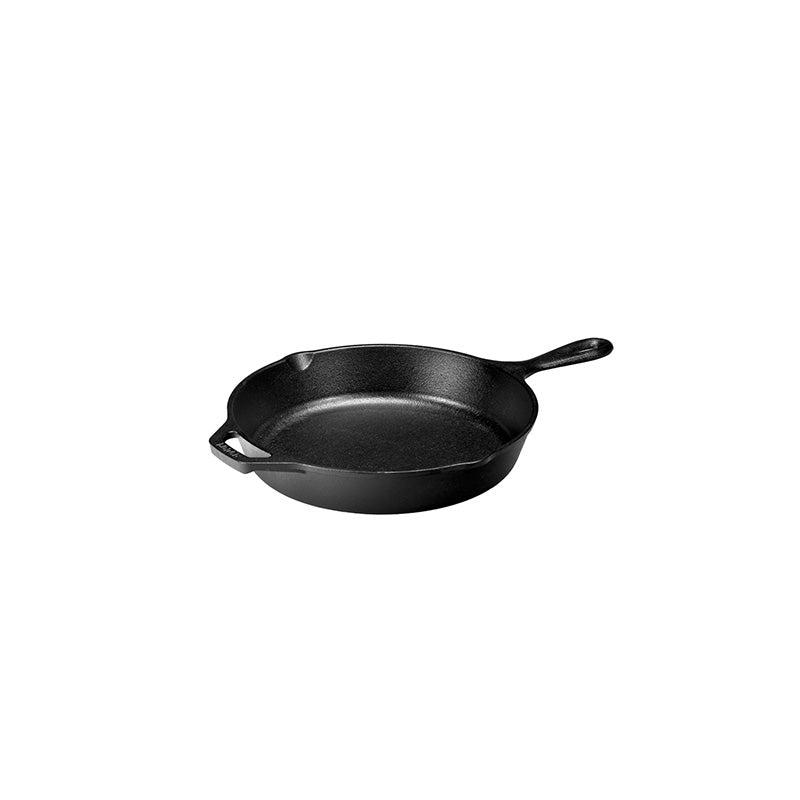
Cast iron is thick, heavy and slow to heat, but once it's hot, it stays hot. That steady heat is why it's so good for searing steaks, frying, baking cornbread and roasting vegetables.
Seasoning: Lodge pre-seasons its cast iron with soybean oil, so it's ready to use, and the seasoning builds as you cook. To re-season, Lodge says to bake it upside down at 450–500°F for an hour.
Acidic foods: the brands differ in tone. Lodge says acidic recipes aren't the best choice for new cast iron because they can break down seasoning, but once it's built up, acidic dishes under 45 minutes are fine. Smithey says yes, you can cook acidic foods, though they may strip or discolor newer seasoning.
Induction: Field Company says its skillets work on induction, since iron is magnetic.
Price: a Lodge 10.25-inch skillet lists at $29.95, making cast iron the cheapest way into a pan that lasts.
Carbon steel: cast iron's lighter cousin
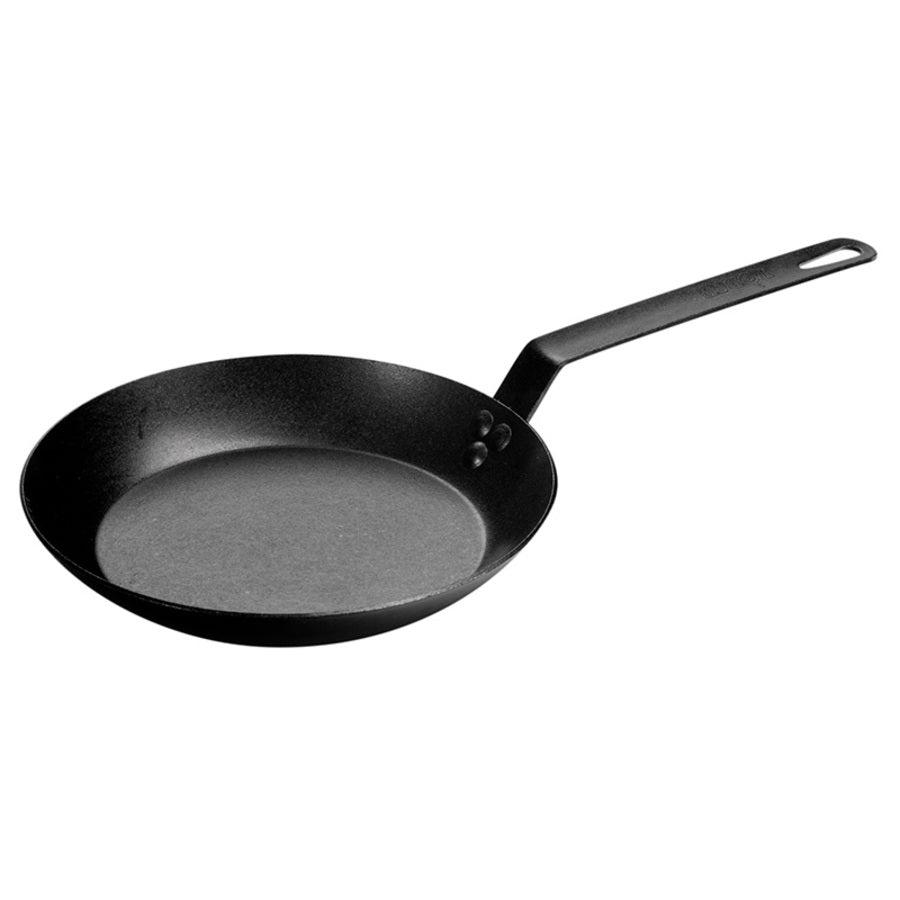
Carbon steel is made from the same basic material as cast iron, iron with a little carbon, but it's spun and stamped into much thinner pans. Lodge says that makes carbon steel lighter and thinner than cast iron, so it heats up and cools down faster. Made In says its carbon steel is half the weight of cast iron.
That faster response is why chefs love it for high-heat searing, stir-fries and eggs. Made In says it combines the heat retention of cast iron with the control of stainless.
Seasoning: like cast iron, it needs it. Lodge and Made In sell theirs pre-seasoned. Misen recommends building a base layer with several thin coats of neutral, high-smoke-point oil, and says not to use olive oil or butter for seasoning.
Acidic foods: Misen says long cooking with high-acid foods can weaken the seasoning, causing it to flake.
Induction and oven: Lodge and Made In both say carbon steel works on induction. Made In says its pans are heat-safe to 1,200°F.
Stainless steel: no seasoning, no fuss

Stainless steel is the workhorse of professional kitchens. Clad stainless pans like All-Clad's D3 sandwich an aluminum core between layers of stainless steel. All-Clad says that gives fast, even heating, while the stainless surface won't react with food.
No seasoning needed. Just wash it before first use. That makes stainless the easiest to live with, and the best choice for tomato sauces, wine reductions and anything acidic.
Pan sauces are its specialty. All-Clad suggests deglazing the browned bits left after searing with wine or stock to make a sauce, something seasoned pans don't do as well.
The catch is sticking. All-Clad's advice is to preheat on low to medium heat, and wait to flip food until it no longer sticks to the pan. Add salt only once liquid is boiling, to avoid small pits.
Heat: All-Clad says D3 is oven and broiler safe up to 600°F and works on induction. At $149.99 for a 10-inch pan, it costs more, but it's made in the USA.
How to care for each one
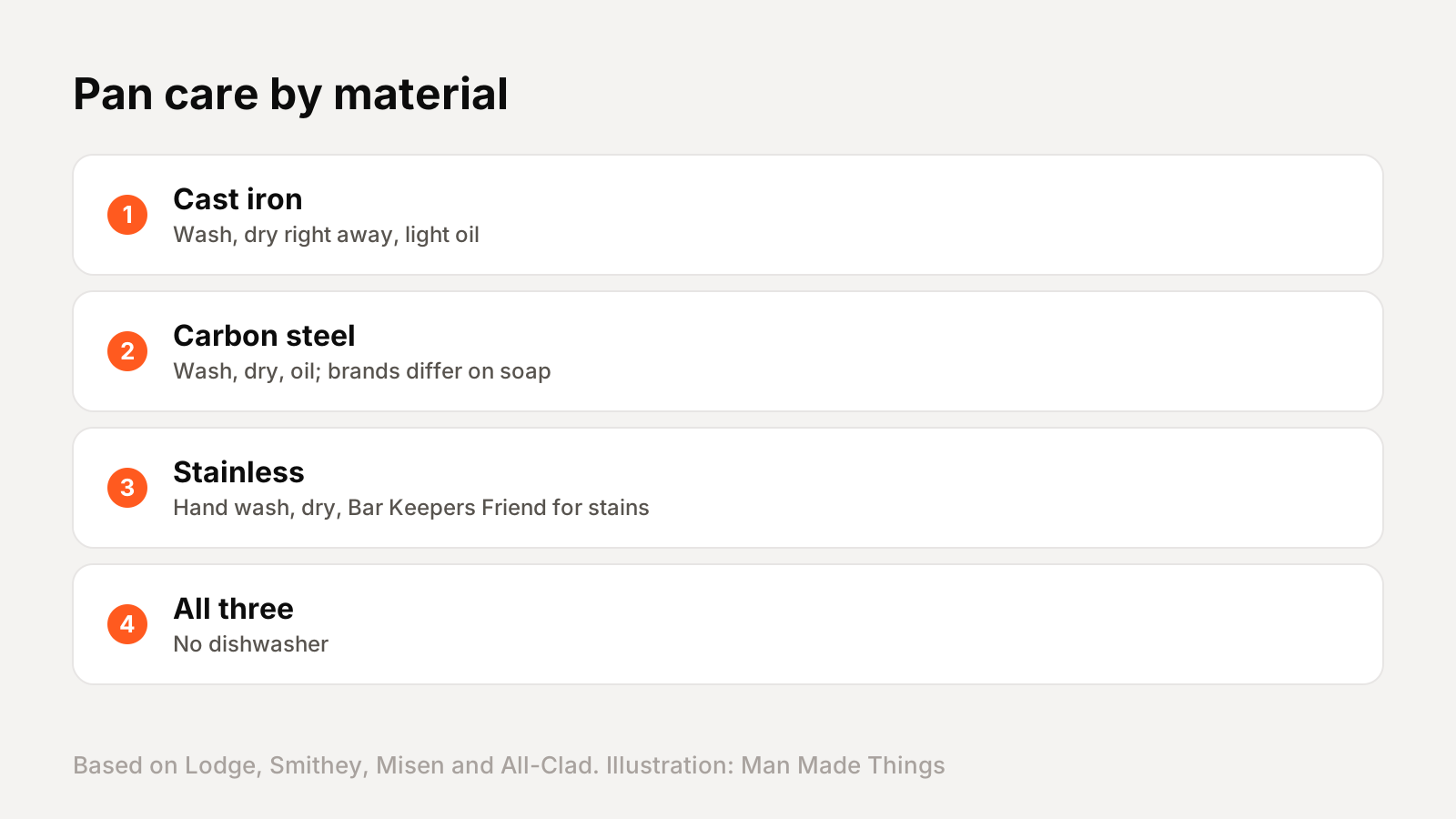
Cast iron: Lodge says modern dish soap won't remove seasoning, so warm soapy water is fine. Don't soak it, don't put it in the dishwasher and dry it right away. Smithey's rule: iron's enemy is moisture, so keep it dry and oiled. A light coat of oil after drying protects it.
Carbon steel: Lodge's routine is simple: wash, dry, oil, and never the dishwasher. On soap, the brands disagree. Lodge says soapy water is fine, while Misen says to use only warm water and a non-metallic brush. Either way, re-oil after washing. If rust appears, scrub it with steel wool and re-season.
Stainless steel: All-Clad says to hand wash, and dry immediately to prevent spotting. For burnt-on food, boil baking soda and water in the pan. For stubborn stains, All-Clad suggests Bar Keepers Friend or Bon Ami as a paste, and white vinegar for rainbow discoloration. Never put a hot pan under cold water, which can warp it.
For full cast iron care, see our how to season cast iron guide.
Which pan should you buy first?
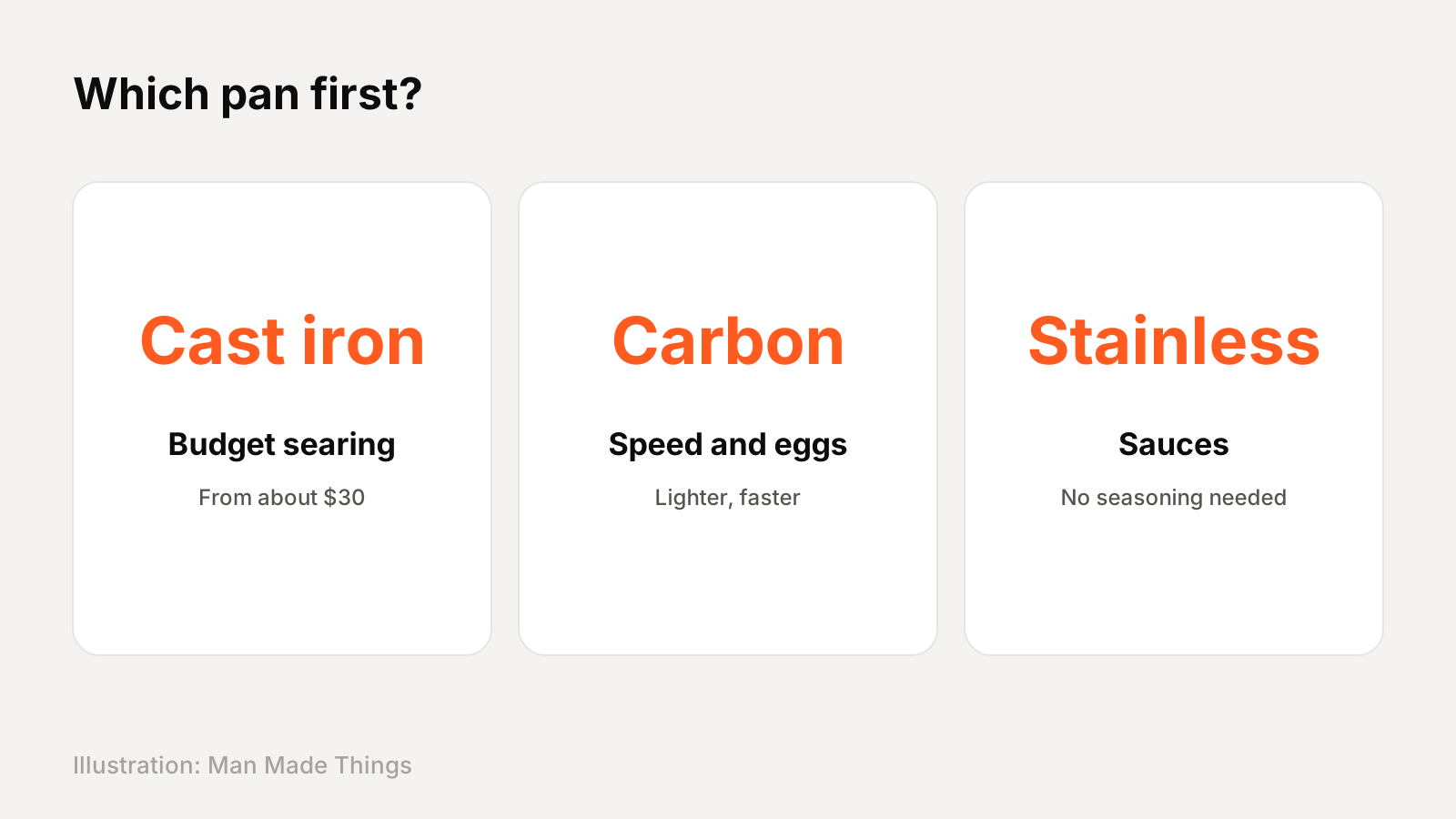
If you can only buy one, here's how I'd decide:
- Cast iron if you're on a budget and love searing, frying and baking. It's the cheapest and the most forgiving to keep seasoned, but it's heavy.
- Carbon steel if you want cast iron's searing power in a lighter pan you can toss and lift easily. It's great for eggs once seasoned.
- Stainless steel if you cook a lot of sauces, tomatoes or wine, or just don't want to think about seasoning. It's the most versatile, but you'll need to learn to manage sticking.
Over time, most serious home cooks end up with one of each, plus a nonstick pan for delicate eggs and fish. The three materials complement each other: cast iron for heat, carbon steel for speed and stainless for sauces.
None of the three should go in the dishwasher, according to Lodge, Misen and All-Clad.
Frequently asked questions
Is carbon steel better than cast iron?
+
It's lighter and heats faster. Lodge says carbon steel heats up and cools down faster than cast iron; cast iron holds heat more steadily.
Can you cook tomato sauce in cast iron?
+
Briefly, once seasoned. Lodge suggests acidic dishes under 45 minutes on well-seasoned cast iron. Stainless steel is the safer choice for long simmers.
Do stainless steel pans need seasoning?
+
No. All-Clad just says to wash the pan before first use.
Can these pans go in the dishwasher?
+
No. Lodge, Misen and All-Clad all recommend hand washing.
Sources
Editor-in-Chief
Rahul has been writing about gadgets and software since 2013, first at Thetechhacker and now at Man Made Things. He edits every review on the site and signs off on every verdict.
More from Rahul →