The Best Nonstick Pans: All-Clad, Caraway and Tramontina
Three nonstick frying pans for eggs, fish and everyday cooking: the All-Clad HA1 Expert, the PTFE-free Caraway ceramic pan and the $35 Tramontina Professional.
We may earn a commission when you buy through links on this page. Learn more
Quick answer
The All-Clad HA1 Expert 10" ($79.99 list) is the best nonstick pan for most kitchens: hard-anodized, induction compatible and oven safe to 500°F. The Caraway Fry Pan ($125) is the best ceramic, PTFE-free option, and the Tramontina Professional 10" ($34.95) is the best budget pick, though it doesn't work on induction. Use any nonstick on low to medium heat.
Even if you love cast iron, every kitchen needs one nonstick pan. Nothing else makes eggs, pancakes, delicate fish or a quick omelet this easy. The food slides out, and cleanup takes seconds.
The catch is that nonstick pans don't last forever, and there's a lot of confusion about coatings. Traditional nonstick uses PTFE. Ceramic nonstick is marketed as an alternative made without PFAS. Both work, but they need different kinds of care, and the cheapest pans can wear out fast.
I picked one of each, plus a budget pan that restaurant cooks have used for years, and checked every claim on the brand's own US site. These are research-based picks with no star scores. Let's get into it.
Our picks at a glance
1. Best overall
All-Clad HA1 Expert Nonstick Fry Pan, 10 inch
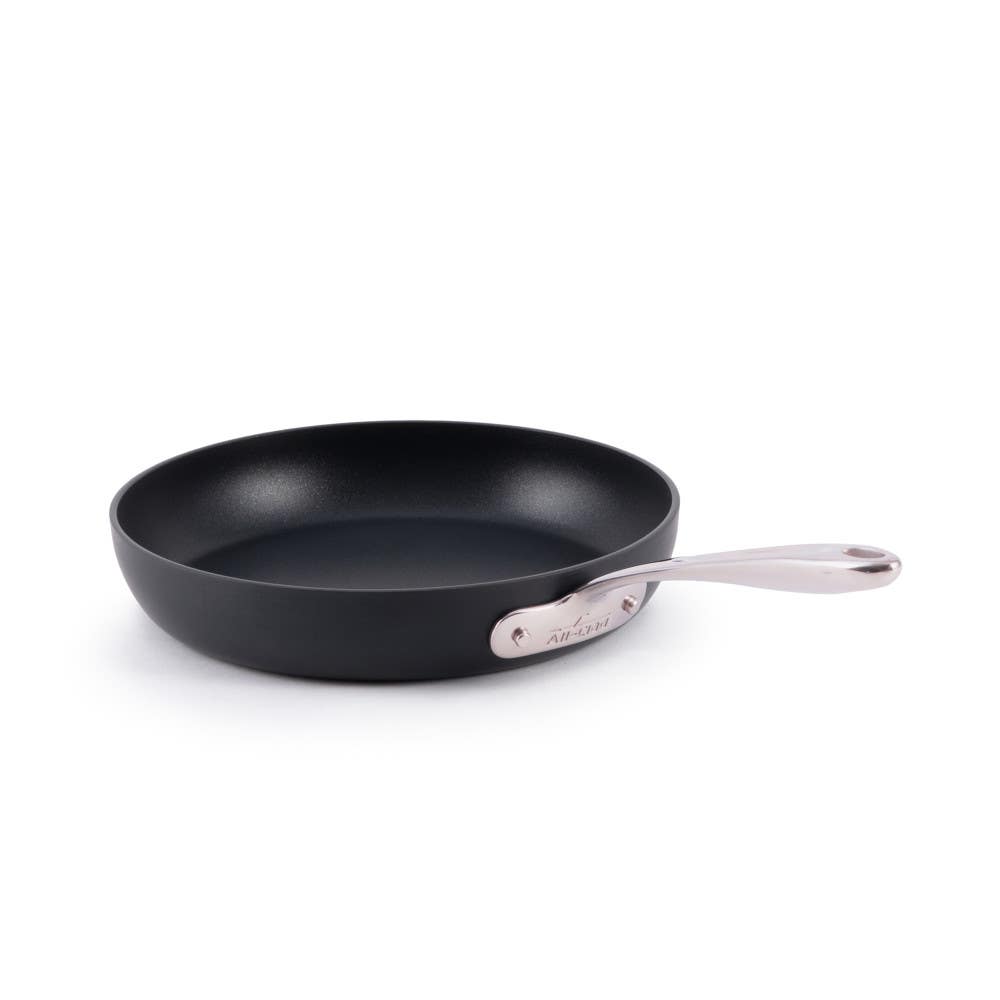
All-Clad is best known for its stainless steel, and its HA1 Expert line brings that build quality to nonstick. The body is hard-anodized aluminum, which heats quickly and evenly, with a stainless steel base bonded to the bottom so it works on induction as well as gas and electric.
It's oven safe to 500°F, so you can start a frittata on the stove and finish it under the heat of the oven. All-Clad says the coating is PTFE nonstick and backs the pan with a limited lifetime warranty.
Two notes. All-Clad's page calls it dishwasher safe in one place but tells you to hand wash in the care section, and hand washing will make any nonstick last longer. And it's made in China, though designed in Pennsylvania. All-Clad had it on sale for $64.99 when I checked.
Pros
- 01Hard-anodized body heats evenly
- 02Works on induction
- 03Oven safe to 500°F
- 04Limited lifetime warranty
Cons
- 01PTFE coating, if you want to avoid it
- 02Conflicting dishwasher guidance on All-Clad's page
- 03Made in China
| Coating | PTFE nonstick |
|---|---|
| Body | Hard-anodized aluminum with stainless steel base |
| Induction | Yes, works on any stovetop |
| Oven safe | Up to 500°F (lids to 350°F) |
| Utensils | Plastic, nylon, silicone or wood recommended |
| Made in | China (designed in Pennsylvania) |
| Warranty | Limited lifetime |
2. Best ceramic (PTFE-free)
Caraway Fry Pan, 10.5 inch
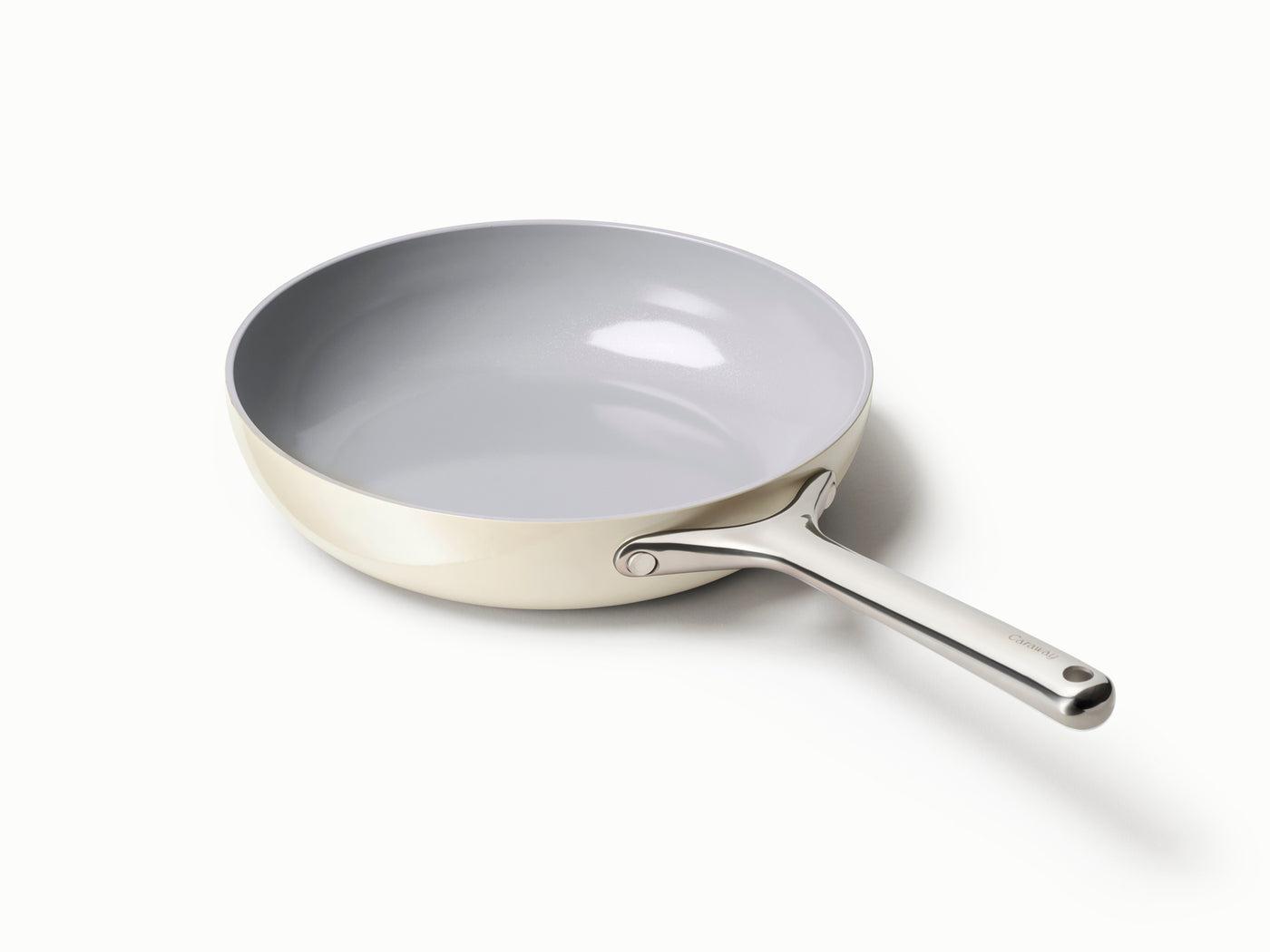
If you'd rather avoid PTFE, Caraway is the best-known ceramic option. Caraway says the coating is made without PTFE, PFOA or PFAS, and it's become popular as much for its looks as its cooking. It comes in several colors that look great hanging on a wall or sitting on the stove.
It's oven safe to 550°F, the highest of the three, and works on gas, electric and induction. The 10.5-inch pan holds 2.7 quarts, so it's deeper than most fry pans and handles sautéing and shallow frying well.
The trade-offs are care and lifespan. Caraway says hand wash only, low to medium heat, no oil sprays and no rough-edged metal utensils. Ceramic coatings generally lose their slickness sooner than PTFE, and Caraway's warranty is just one year, which is short for a $125 pan.
Pros
- 01Made without PTFE, PFOA or PFAS, per Caraway
- 02Oven safe to 550°F
- 03Works on induction
- 04Attractive colors
Cons
- 01Only a 1-year warranty
- 02Hand wash only
- 03Expensive at $125
- 04Lid not included
| Coating | Ceramic, made without PTFE, PFOA or PFAS (Caraway's claim) |
|---|---|
| Body | Aluminum core, steel handle |
| Size | 10.5 in, 2.7 qt, 2.8 lb |
| Induction | Yes, all cooktops |
| Oven safe | Up to 550°F |
| Care | Hand wash only; no rough-edged metal utensils |
| Warranty | 1 year |
3. Best budget
Tramontina Professional Nonstick Fry Pan, 10 inch
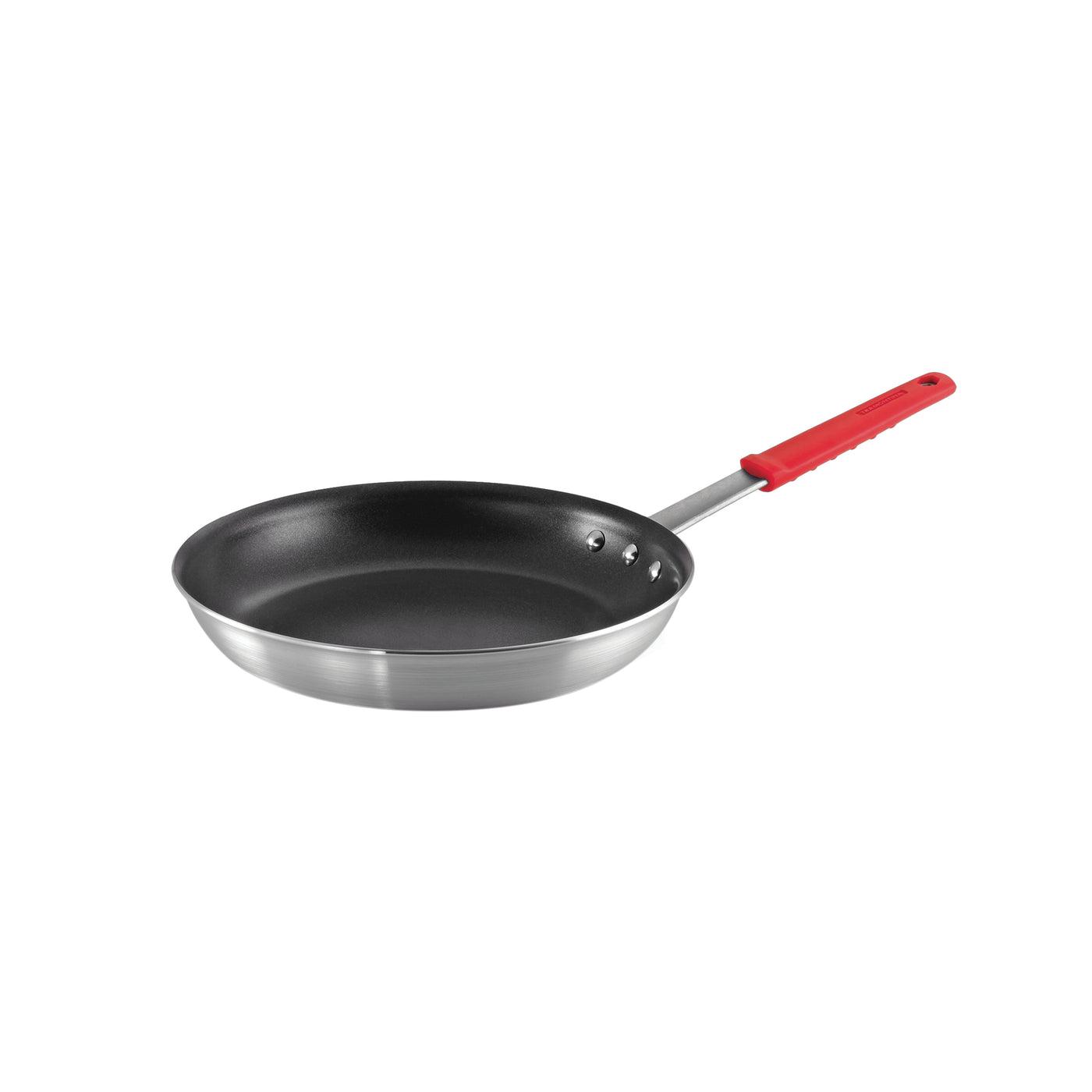
The Tramontina Professional is the kind of pan you see stacked in restaurant kitchens: simple, sturdy and cheap enough to replace without wincing. It's made from heavy-gauge aluminum and carries NSF certification, which is the standard for commercial kitchen equipment.
The handle is riveted stainless steel with a removable silicone grip, so you can take the grip off when the pan goes in the oven. It's oven safe to 400°F and dishwasher safe, and Tramontina backs it with a lifetime warranty. It also comes in 8, 12 and 14-inch sizes.
The big limitation: it doesn't work on induction cooktops. Tramontina lists only gas, electric and ceramic glass. Its page also doesn't say what the nonstick coating is made of. At $34.95, though, it's a fantastic everyday egg pan.
Pros
- 01Excellent value at $34.95
- 02NSF certified, restaurant-grade build
- 03Removable silicone grip
- 04Dishwasher safe, lifetime warranty
Cons
- 01Not induction compatible
- 02Coating type not stated by Tramontina
- 03Lower 400°F oven limit
| Coating | Reinforced nonstick |
|---|---|
| Body | Heavy-gauge aluminum, NSF certified |
| Handle | Riveted stainless steel with removable silicone grip |
| Stovetops | Gas, electric and ceramic glass (not induction) |
| Oven safe | Up to 400°F |
| Dishwasher | Yes |
| Warranty | Lifetime |
PTFE vs ceramic nonstick
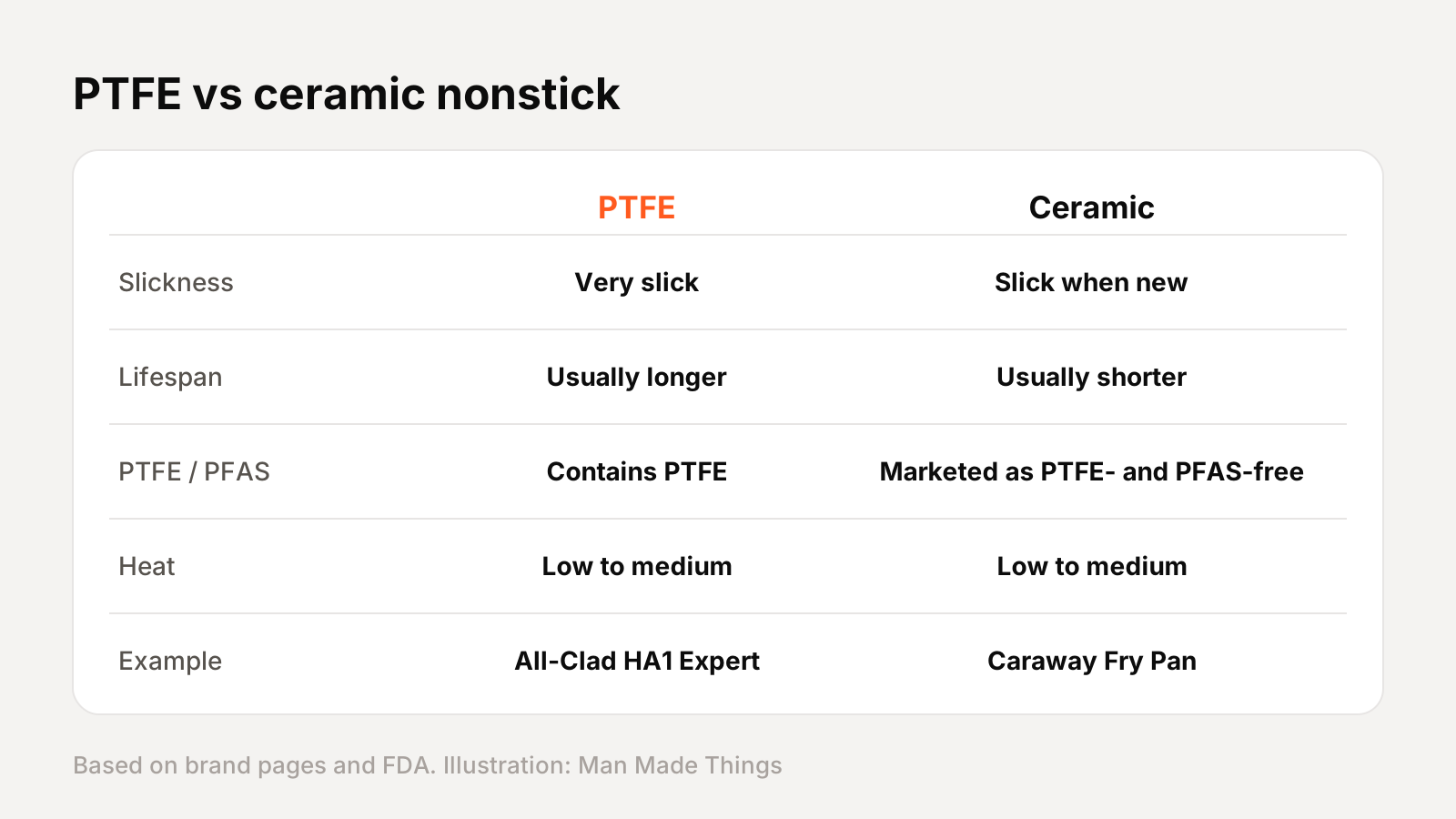
PTFE is the classic nonstick coating. It's very slick and usually lasts longer than ceramic. The FDA says nonstick coatings are applied at very high temperatures that tightly bind the coating to the pan, and that studies show negligible amounts of PFAS can migrate from this coating into food. The main rule with PTFE is to avoid overheating it.
Ceramic nonstick is made from a different type of coating and is marketed as free of PTFE and PFAS. Caraway, for example, says its coating is made without PTFE, PFOA or PFAS. Ceramic pans can handle higher oven temperatures, but in general they lose their nonstick performance sooner.
Which should you pick? If you want the longest-lasting slick surface, go PTFE and keep the heat moderate. If you want to avoid PTFE, choose ceramic and be extra gentle with it.
How to make a nonstick pan last
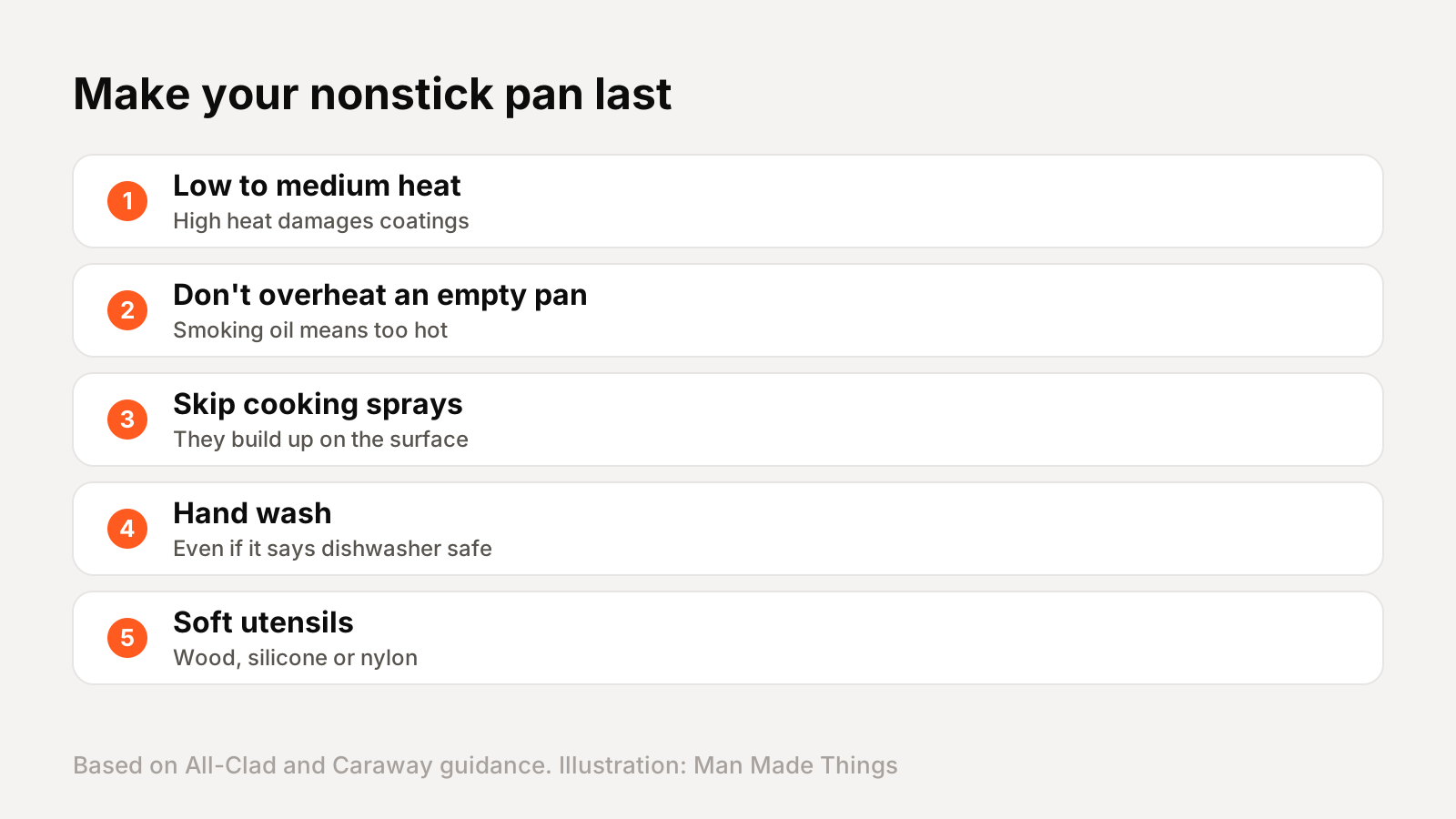
Most nonstick pans die early because of the same few habits. The brands agree on the fixes:
- Use low to medium heat. All-Clad says never use high heat unless you're boiling liquid. Caraway says high heat can damage the coating over time.
- Don't overheat an empty pan. All-Clad warns against overheating empty cookware. If oil starts smoking, the pan is too hot.
- Skip cooking sprays. Both All-Clad and Caraway say aerosol sprays can build up and reduce nonstick performance. Use a little oil or butter instead.
- Hand wash, even if the box says dishwasher safe.
- Use wood, silicone or nylon utensils to avoid scratches.
Even with good care, nonstick is a semi-consumable. When food starts sticking and the surface looks worn or scratched, it's time to replace it.
One more tip: let a hot pan cool before you wash it. Plunging a hot pan into cold water can warp the base, especially on thinner aluminum pans, and a warped pan heats unevenly and wobbles on glass and induction cooktops. A few minutes on the stove before washing is all it takes.
Frequently asked questions
What is the best nonstick pan?
+
The All-Clad HA1 Expert 10-inch, with a hard-anodized body, induction compatibility, 500°F oven safety and a limited lifetime warranty.
Is ceramic nonstick better than PTFE?
+
It depends on your priorities. Ceramic pans like Caraway are made without PTFE, while PTFE coatings are usually slicker and longer-lasting.
Why do nonstick pans stop working?
+
High heat, cooking sprays, metal utensils and dishwashers all wear the coating down. Use low to medium heat and hand wash to make them last.
Does the Tramontina Professional work on induction?
+
No. Tramontina lists it for gas, electric and ceramic glass cooktops only.
Sources
Editor-in-Chief
Rahul has been writing about gadgets and software since 2013, first at Thetechhacker and now at Man Made Things. He edits every review on the site and signs off on every verdict.
More from Rahul →