How to Season a Cast Iron Skillet (and Keep It Nonstick for Years)
The oven method for seasoning cast iron, step by step, plus how to clean it daily, fix a sticky or rusty pan, and which oils to use.
We may earn a commission when you buy through links on this page. Learn more
Quick answer
Wash the skillet, dry it completely, and rub a very thin layer of high-smoke-point oil over every surface. Bake it upside down at 450–500°F for one hour, then turn the oven off and let it cool inside. Repeat a few times for a stronger, slicker surface.
Ever noticed how an old, black cast iron pan at a diner or a family kitchen is smoother than most brand-new nonstick pans? That isn't magic. It's seasoning, built up one meal at a time over years.
The good news is you don't need years. You can build a solid base in an afternoon with your oven, and keep it going with a 30-second habit after each use. Sounds interesting? The steps below follow the method Lodge, one of the best-known American cast iron makers, recommends on its own site.
What seasoning actually is
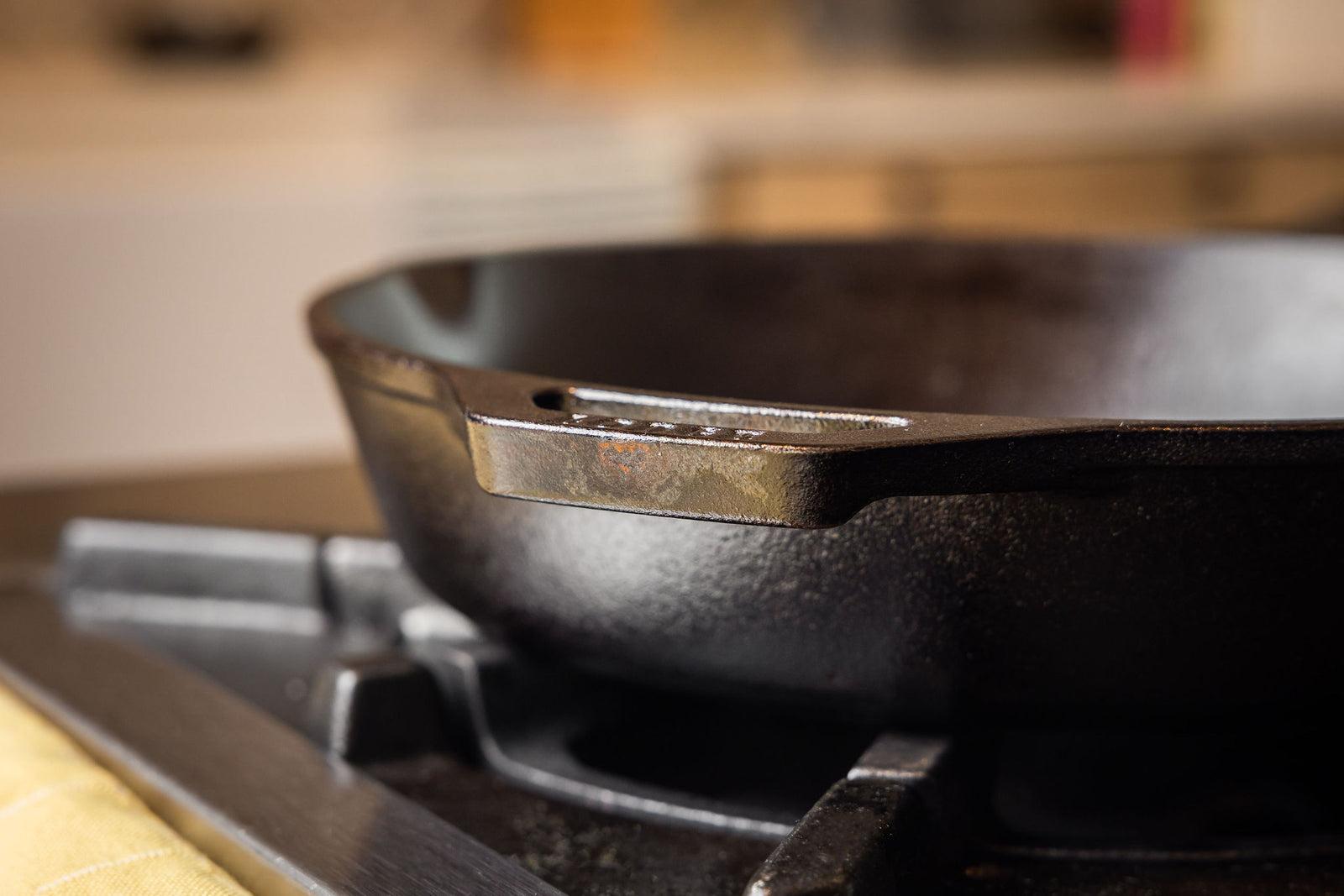
Seasoning isn't a coating you buy. It's oil that has been heated past its smoke point until it bonds to the iron and turns into a hard, slick layer. Cooks call this polymerized oil.
Every time you cook with fat or oil, you add a little more. That's why an old, well-used skillet is so smooth. It also protects the bare iron from rust, which is cast iron's one real enemy.
So when people say a pan "needs seasoning," they usually mean that layer has worn thin, or the pan has started to rust or stick.
Step 1: Wash and dry it completely
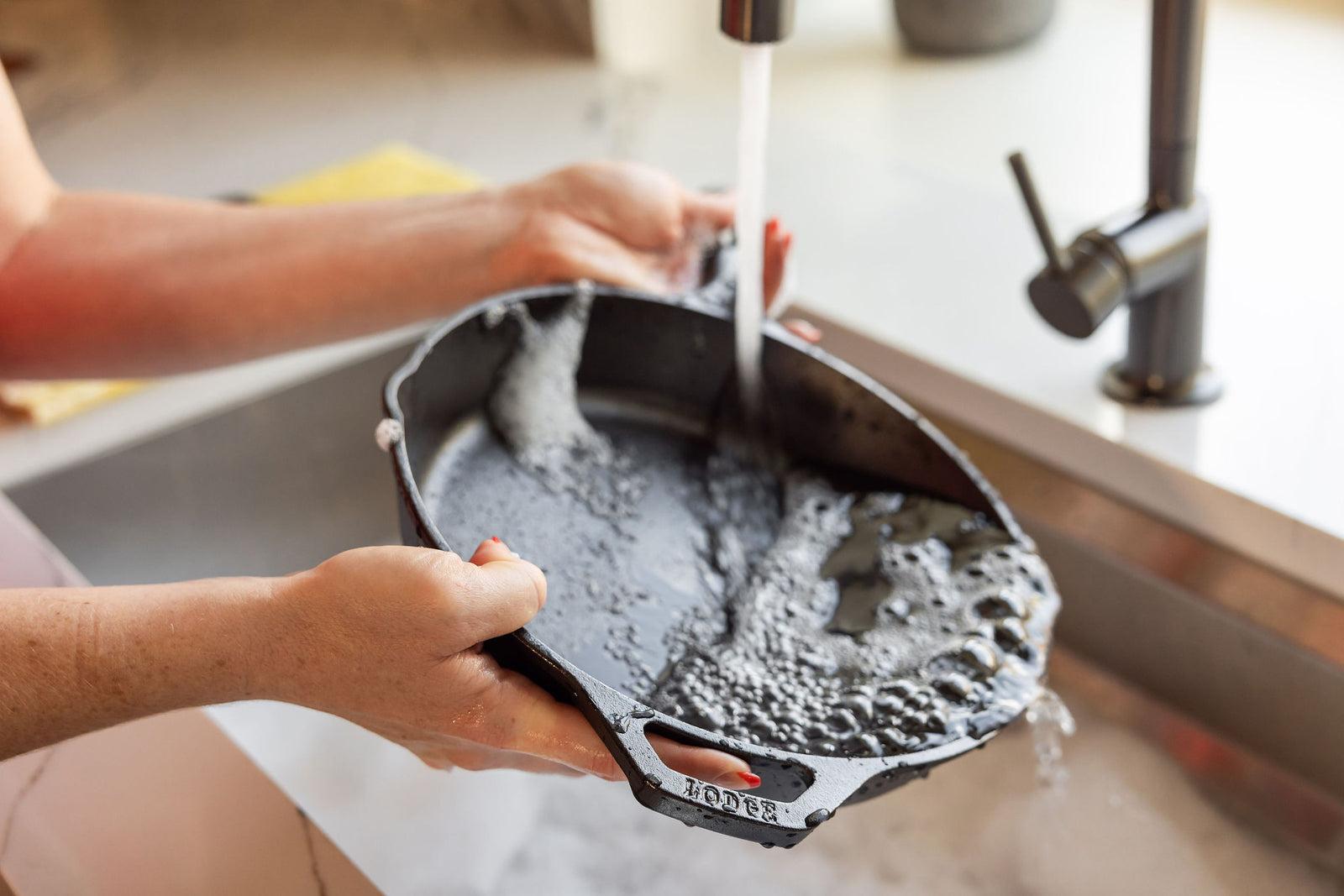
Start with a clean pan. Wash it with warm, soapy water and a stiff brush or scrubbing pad.
Yes, soap is fine. This is the biggest myth in cast iron. Lodge says plainly that soap is okay. What you should avoid is soaking the pan in water or putting it in the dishwasher, because both will lead to rust.
Now dry it completely, and I mean completely. Use a lint-free towel on every surface, including the handle and the bottom. Any water left behind will rust the iron under the new seasoning.
Step 2: Rub on a very thin layer of oil
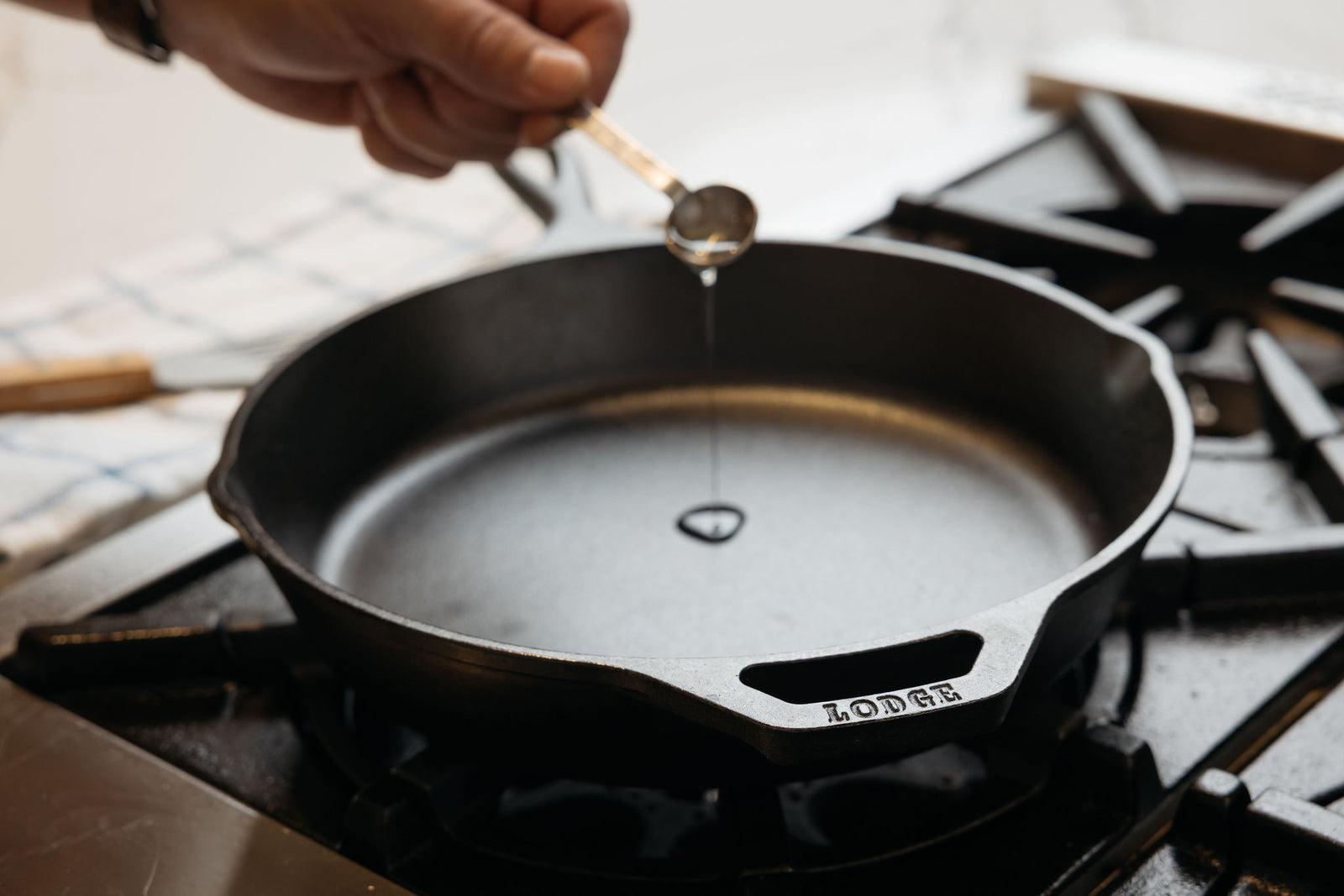
Use an oil with a high smoke point. Lodge's test kitchen likes vegetable oil, canola oil or melted shortening. You don't need anything fancy or expensive.
Pour in a small amount and rub it over every surface: inside, outside, the handle and the underside. Then take a clean paper towel and wipe it all off as if you put too much on. You want a layer so thin the pan looks almost dry.
This is where most people go wrong. Too much oil doesn't make better seasoning. It pools, turns gummy, and leaves you with a sticky pan.
Step 3: Bake it upside down for an hour
- Put a sheet of aluminum foil on the lower rack to catch any drips.
- Preheat the oven to 450–500°F.
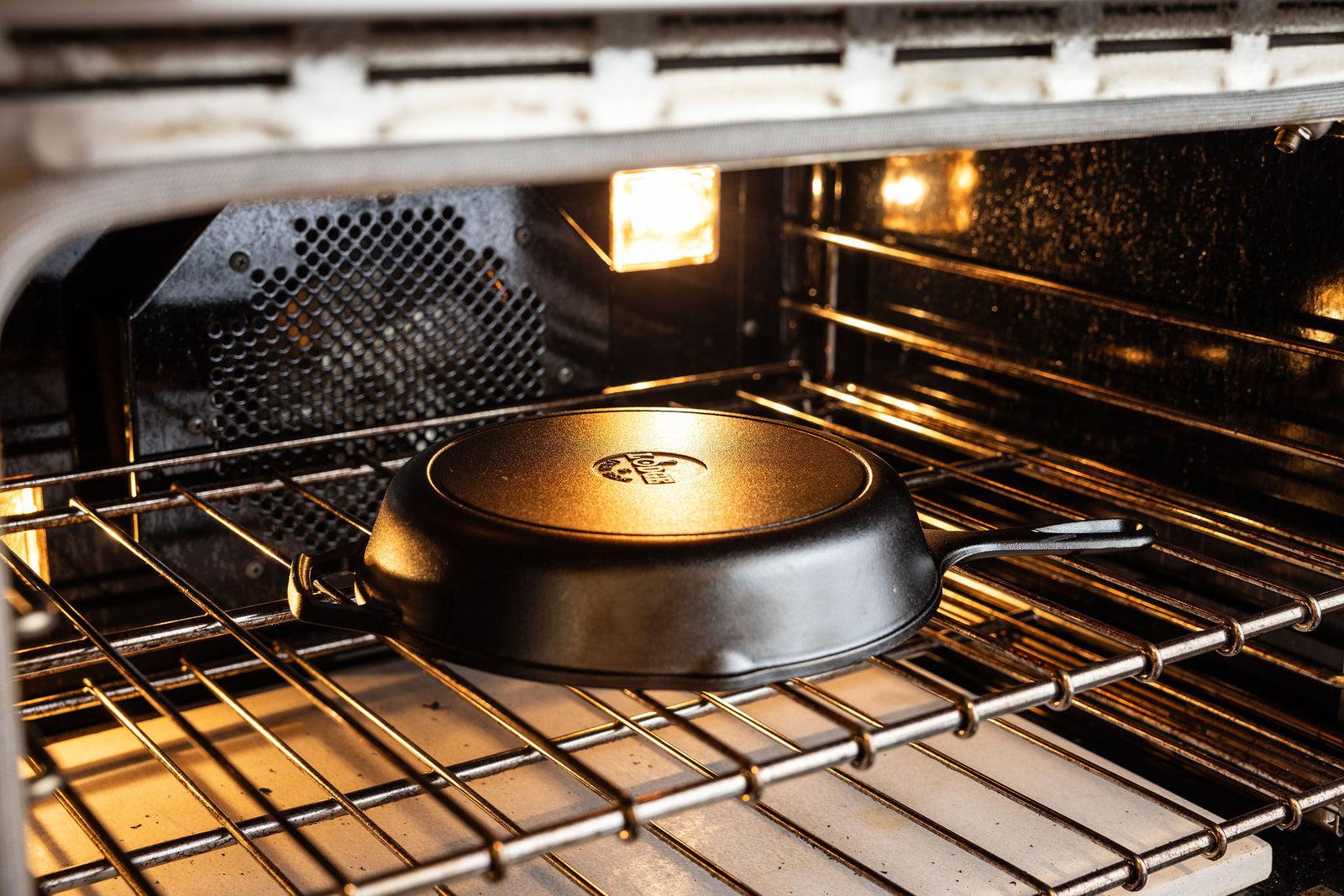
- Place the skillet upside down on the middle rack. Upside down stops oil from pooling in the cooking surface.
- Bake for one hour.
- Turn the oven off and let the pan cool inside the oven.
Your kitchen may get a little smoky, so turn on the vent fan. One round gives you a good base. Two or three rounds give you a tougher, darker finish, especially on a bare or stripped pan.
Which oil to use (and how much)
You'll find long online arguments about the "perfect" seasoning oil. Honestly, it matters a lot less than people think.
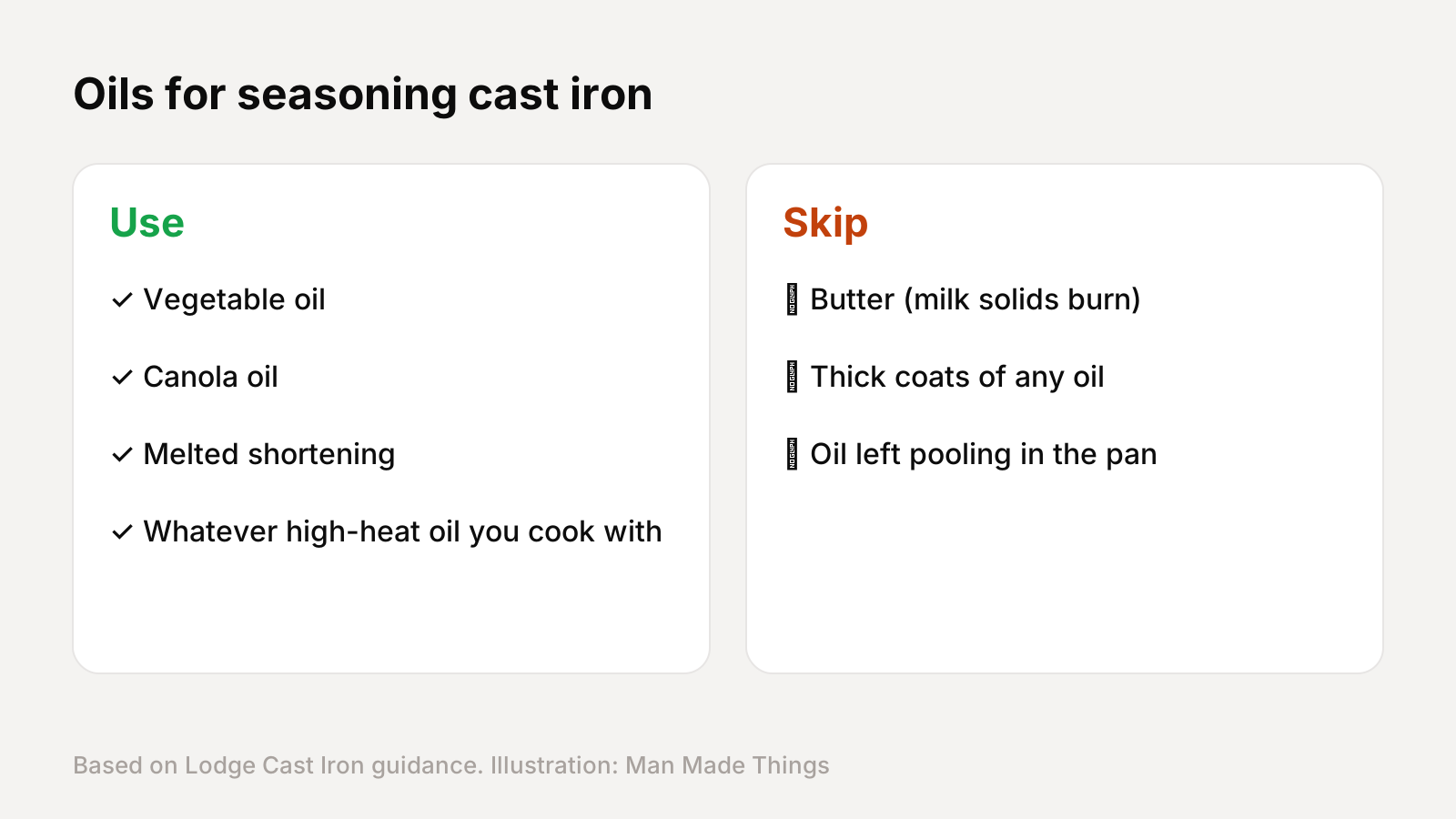
What matters is that the oil can handle high heat. Lodge's test kitchen uses vegetable oil, canola oil or melted shortening, all cheap and easy to find. Those work because they don't burn and turn bitter at the 450–500°F you're baking at.
Skip butter for seasoning. It's great for cooking, but the milk solids burn at those temperatures. Also skip thick coats of any oil. The amount matters far more than the type, and a thin layer always beats a thick one.
If you already cook with one of these oils, just use that. Consistency over many cooks builds better seasoning than any special product.
Everyday care after cooking
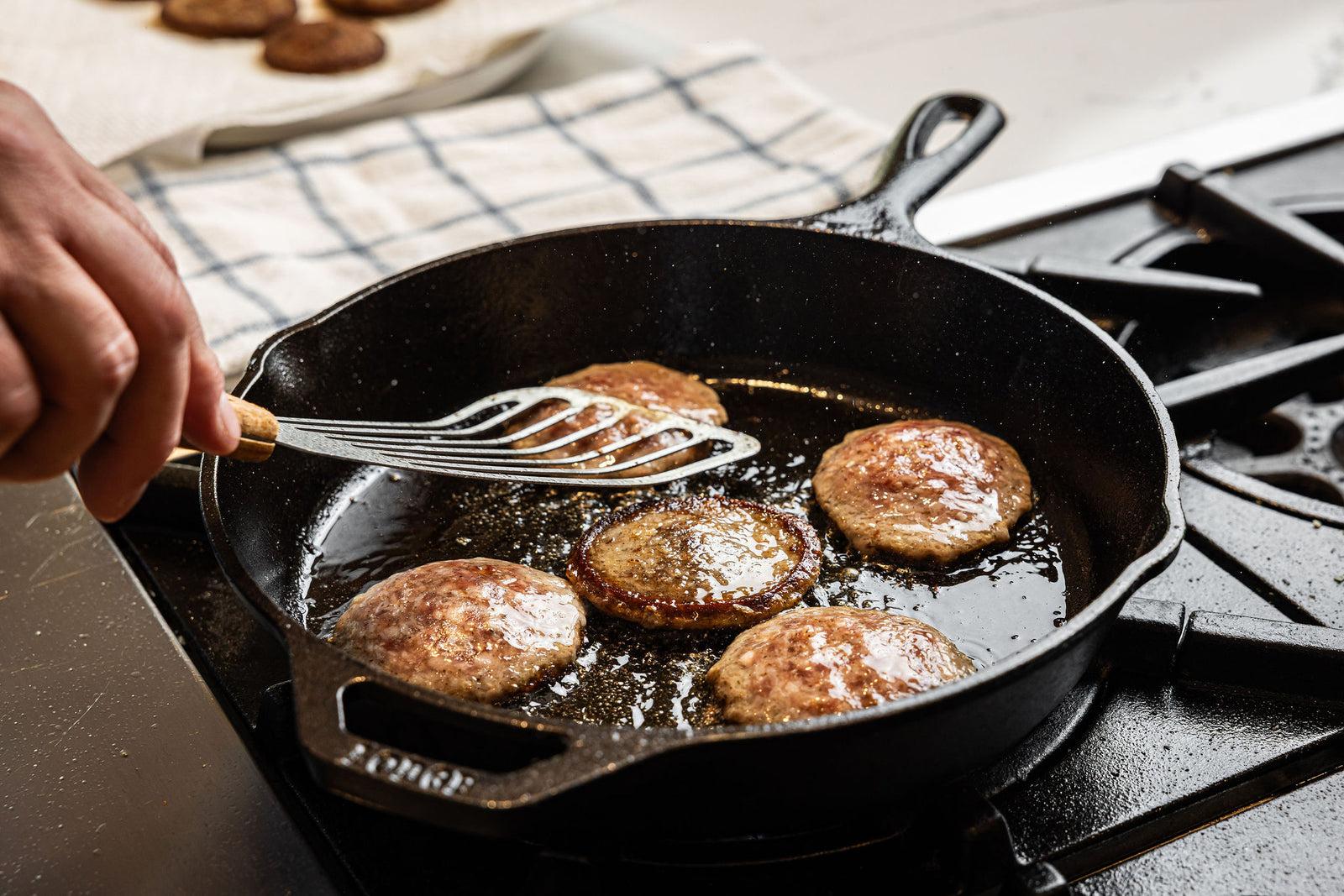
You don't need to oven-season after every meal. The best maintenance is simply cooking with it, especially foods with some fat.
After each use, wash it by hand, dry it right away, and wipe on a thin layer of oil while it's still warm. That's the 30-second habit I mentioned.
For stuck-on food, use a pan scraper or a nylon brush with warm water. Save steel wool for removing rust only, since it will strip seasoning too.
Storage matters more than people think. Keep the pan somewhere dry, not in a damp cabinet under the sink. If you stack pans, put a paper towel between them. It protects the surface and soaks up any moisture that would otherwise sit against the iron.
And don't be afraid to cook acidic food like tomato sauce once the seasoning is well built. A quick simmer is fine. Just don't store leftovers in the pan, because long contact with acid wears the seasoning down.
Fixing a sticky or rusty pan
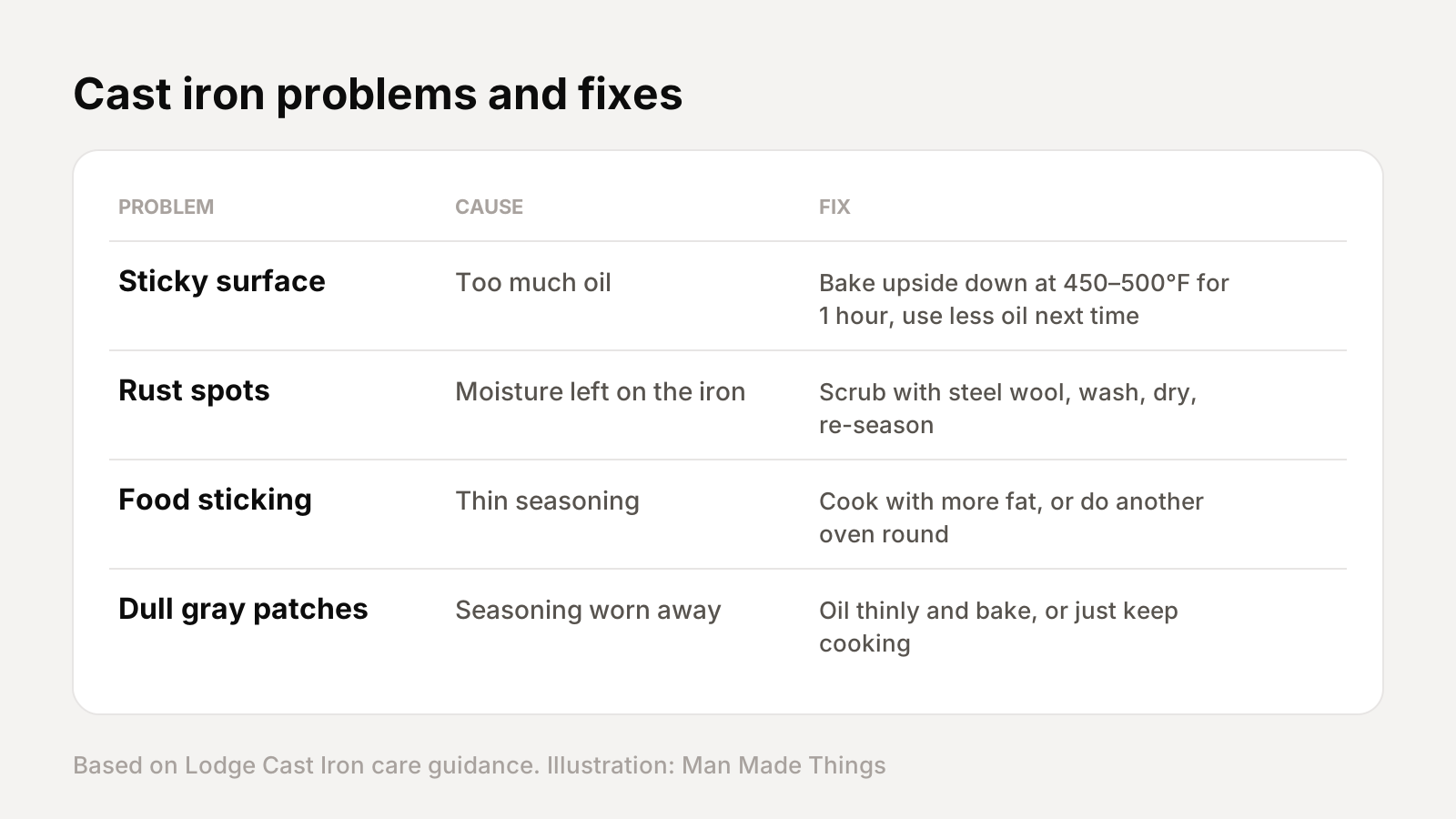
Sticky surface? You used too much oil. Bake the pan upside down at 450–500°F for another hour to finish curing it, then use less oil next time.
A few rust spots? Scrub them off with steel wool, wash, dry completely, and re-season using the steps above. Lodge says small amounts of rust don't always need a full re-season, so try a wipe of oil and some cooking first.
Food sticking? The seasoning is thin. Cook a few fatty meals in it, like bacon or shallow-fried potatoes, or do another oven round.
Frequently asked questions
What temperature do you season cast iron at?
+
Lodge recommends 450–500°F for one hour, with the pan placed upside down, then letting it cool in the oven.
Can you use soap on cast iron?
+
Yes. Lodge says soap is fine. Avoid soaking the pan or putting it in the dishwasher, because both cause rust.
What is the best oil for seasoning cast iron?
+
Use a high-smoke-point oil. Lodge's test kitchen recommends vegetable oil, canola oil or melted shortening.
Why is my cast iron sticky after seasoning?
+
Too much oil was applied. Bake it again at 450–500°F for an hour, and use a thinner layer next time.
Sources
Editor-in-Chief
Rahul has been writing about gadgets and software since 2013, first at Thetechhacker and now at Man Made Things. He edits every review on the site and signs off on every verdict.
More from Rahul →