The Best First Watch for a New Collector: Casio, Timex and Seiko
Starting a watch collection? Here are three first watches at three budgets: a G-Shock, a Timex Weekender and an automatic Seiko 5 Sports, with specs checked at the source.
We may earn a commission when you buy through links on this page. Learn more
Quick answer
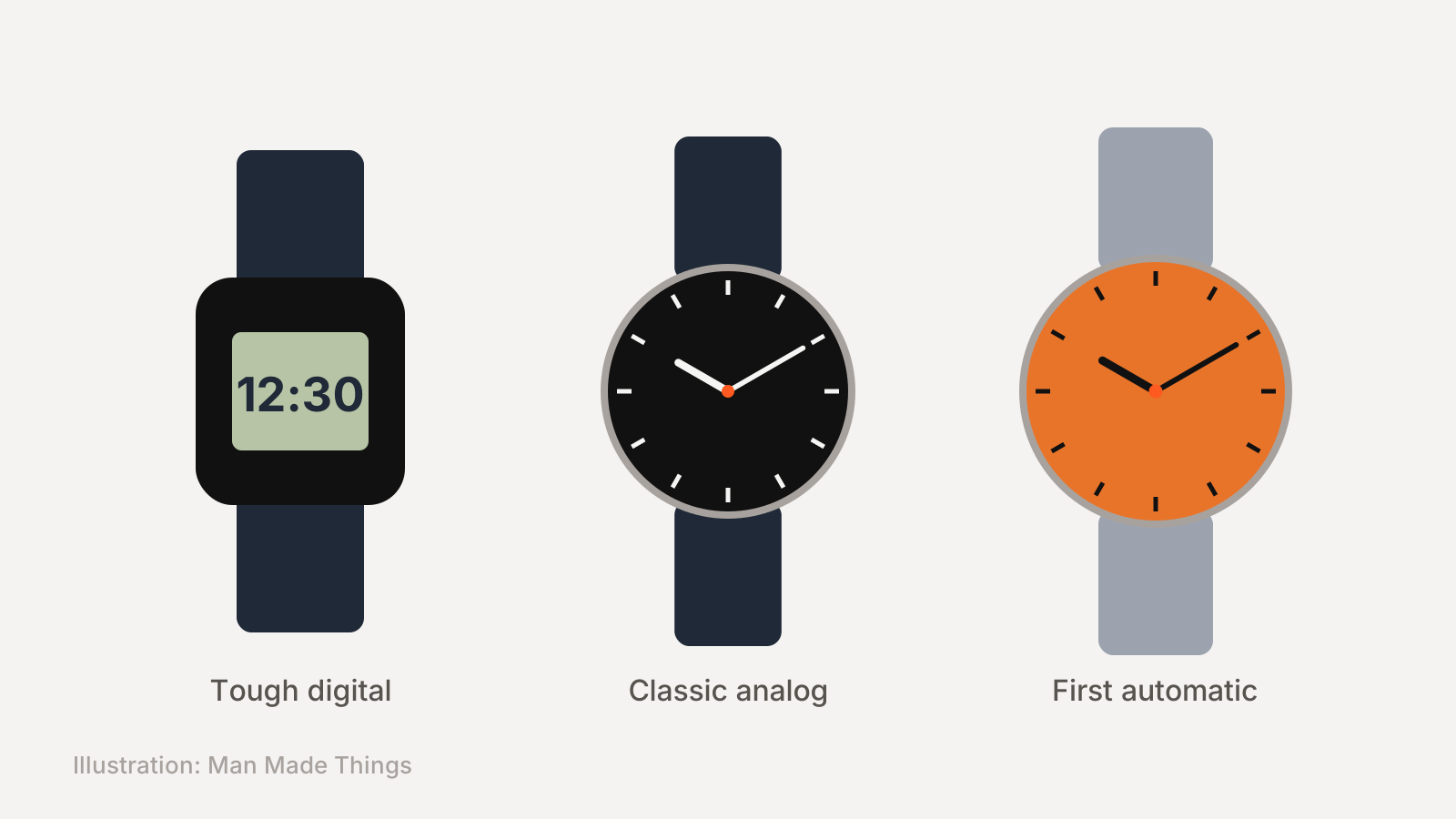
The best first watch depends on what you want to learn. The Casio G-Shock DW5600UE-1 ($99.95) is nearly indestructible and does everything. The Timex Weekender ($77) teaches you what you like about an analog dial for very little money. The Seiko 5 Sports SRPD59 ($350) is the classic first automatic, with a hacking, hand-windable movement and 100m water resistance.
Everyone who's into watches remembers their first "real" one. Not the plastic one from a birthday party, but the first watch they chose on purpose. That first pick shapes everything after it.
Here's the honest advice I wish more people heard: your first watch shouldn't be expensive. It should teach you what you like. Do you prefer digital or analog? Big or small? Do you want the ticking ritual of a mechanical watch, or something you never think about?
So instead of three versions of the same watch, I picked three different kinds at three budgets. Every spec and price comes from the brand's own US site. These are research-based picks with no star scores. Let's get into it.
Our picks at a glance
1. Best tough digital
Casio G-Shock DW5600UE-1
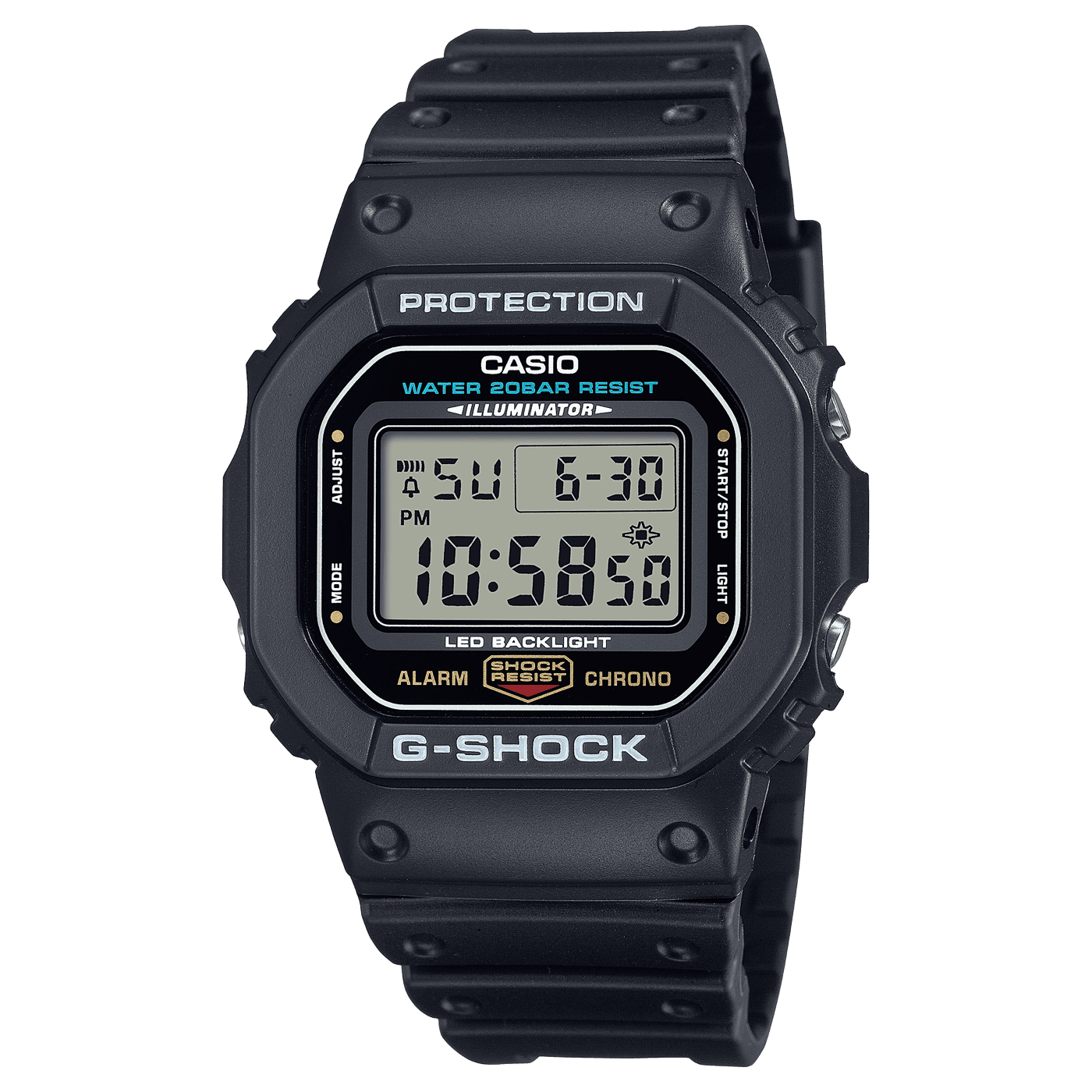
The square G-Shock 5600 is one of the most recognizable watches ever made, and it's still one of the smartest first buys. It's light at 52 grams, rated to 200m of water resistance, and Casio builds it to survive drops and knocks that would destroy most watches.
It also does a lot. There's a stopwatch, a countdown timer, alarms, a bright LED backlight and a calendar that's set until 2099. The battery lasts about five years, and Casio rates accuracy at plus or minus 15 seconds a month.
Is it a "nice" watch? Not in the jewelry sense. But it's the watch you can wear to the beach, the gym and a hike without ever worrying about it. Lots of serious collectors still own one for exactly that reason.
Pros
- 01Built to take knocks and drops
- 02200 m water resistance
- 03About 5-year battery
- 04Stopwatch, timer, alarms and backlight
Cons
- 01Resin case looks casual
- 02Digital display isn't for dressy outfits
| Case | 48.9 × 42.8 × 13.4 mm, resin, 52 g |
|---|---|
| Toughness | Shock resistant |
| Water resistance | 200 m |
| Battery | About 5 years (CR2016) |
| Light | LED backlight with afterglow |
| Functions | Stopwatch, 24-hr countdown, alarms, auto-calendar to 2099 |
| Accuracy | ±15 seconds per month |
2. Best classic analog
Timex Weekender 38mm Fabric Strap Watch
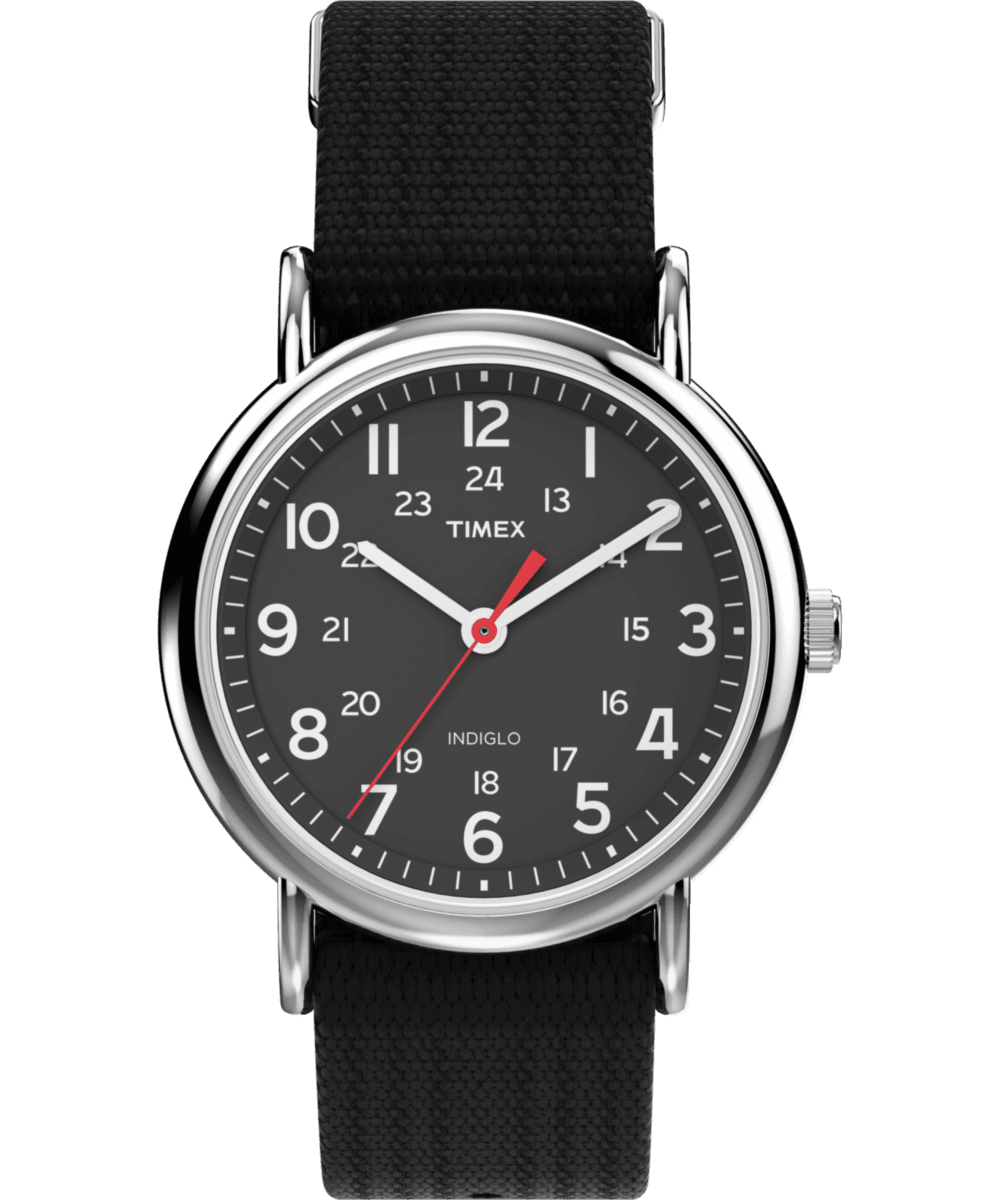
The Weekender is the watch I'd hand anyone who's never worn one. It's simple, readable and cheap enough that you won't stress about scratching it.
At 38mm, it's a classic size that suits most wrists, and the full set of Arabic numerals is easy to read at a glance. Press the crown and the whole dial lights up with INDIGLO, the backlight Timex developed in the early '90s. The slip-through fabric strap is comfortable and easy to swap, and changing straps is the cheapest way to make one watch feel like several.
The big limitation is water. Timex rates it at 30m, which it says is fine for splashes and hand washing but not for showering or swimming. Take it off before you get in the pool.
Pros
- 01Very affordable at $77
- 02Classic 38 mm size
- 03INDIGLO lights the whole dial
- 04Easy to swap straps
Cons
- 01Only 30 m water resistance, no swimming
- 02Brass case and mineral crystal are basic
| Case | 38 mm, brass, silver-tone |
|---|---|
| Movement | Quartz (CR2016 battery) |
| Dial | Black, full Arabic numerals |
| Light | INDIGLO light-up dial |
| Crystal | Mineral |
| Water resistance | 30 m (splashes and hand washing only) |
| Strap | Fabric slip-through, 20 mm |
3. Best first automatic
Seiko 5 Sports SRPD59
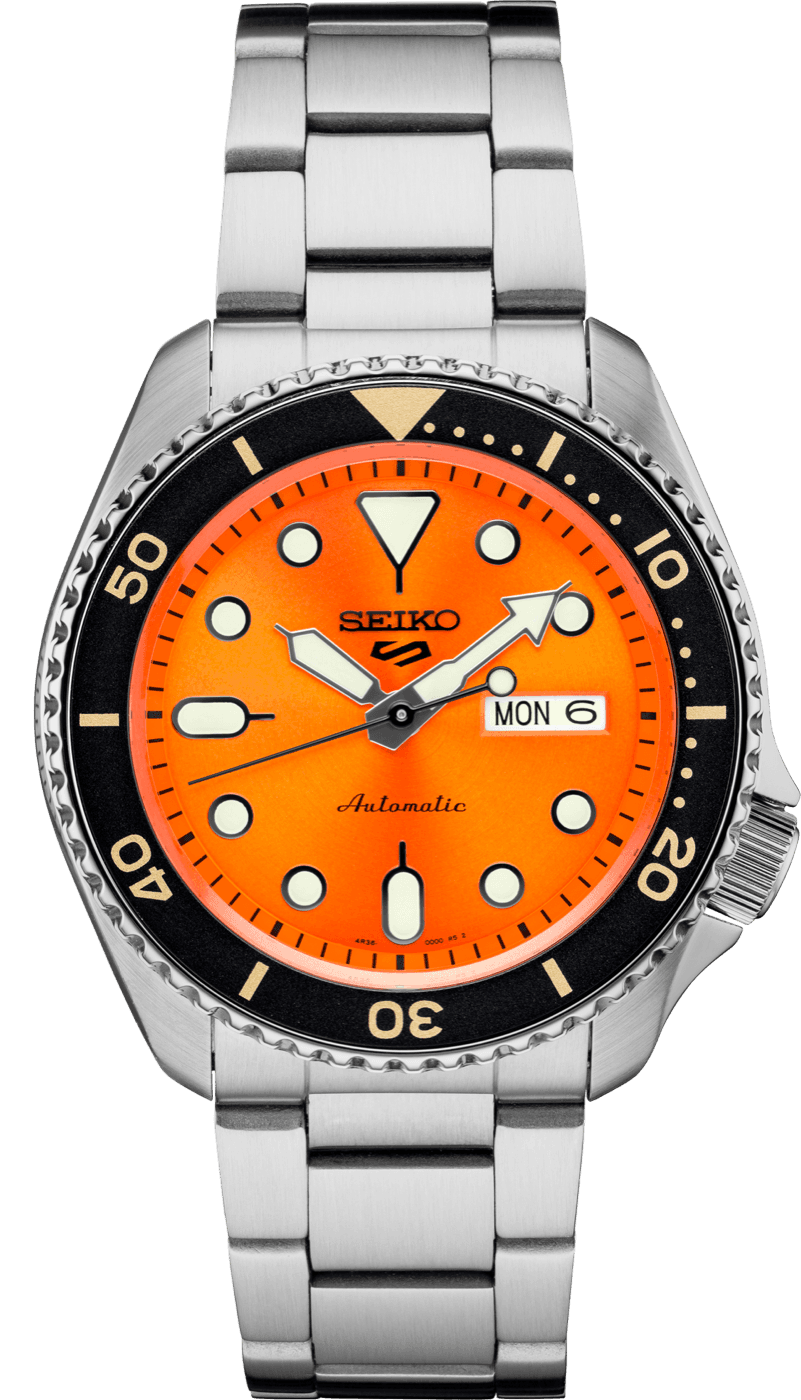
If the idea of a tiny machine on your wrist excites you, this is where to start. The Seiko 5 Sports line is the classic first automatic, and the SRPD59 adds a bright orange sunray dial to the SKX-inspired design many collectors love.
Inside is Seiko's 4R36, a proven movement that winds itself as you move, can be wound by hand and hacks so you can set it to the second. Turn it over and a see-through caseback lets you watch it work. You also get 100m of water resistance, a day-date and LumiBrite lume.
At 42.5mm, it's on the larger side, though the 46mm lug-to-lug keeps it wearable. Note that the black and blue versions of this model were sold out on Seiko USA when I checked, which is why the orange one is here.
Pros
- 01Proven automatic, hand-winding and hacking
- 02100 m water resistance
- 03See-through caseback
- 04Bright, fun orange dial
Cons
- 0142.5 mm may feel big on small wrists
- 02Hardlex crystal, not sapphire
- 03Other colors were sold out on Seiko USA
| Case | 42.5 mm, 13.4 mm thick, 46 mm lug to lug, steel |
|---|---|
| Movement | Seiko 4R36 automatic, hand-winding, hacking |
| Power reserve | About 41 hours |
| Crystal | Hardlex |
| Water resistance | 100 m |
| Extras | Day-date, one-way bezel, display caseback, LumiBrite |
Quartz or automatic for your first watch?
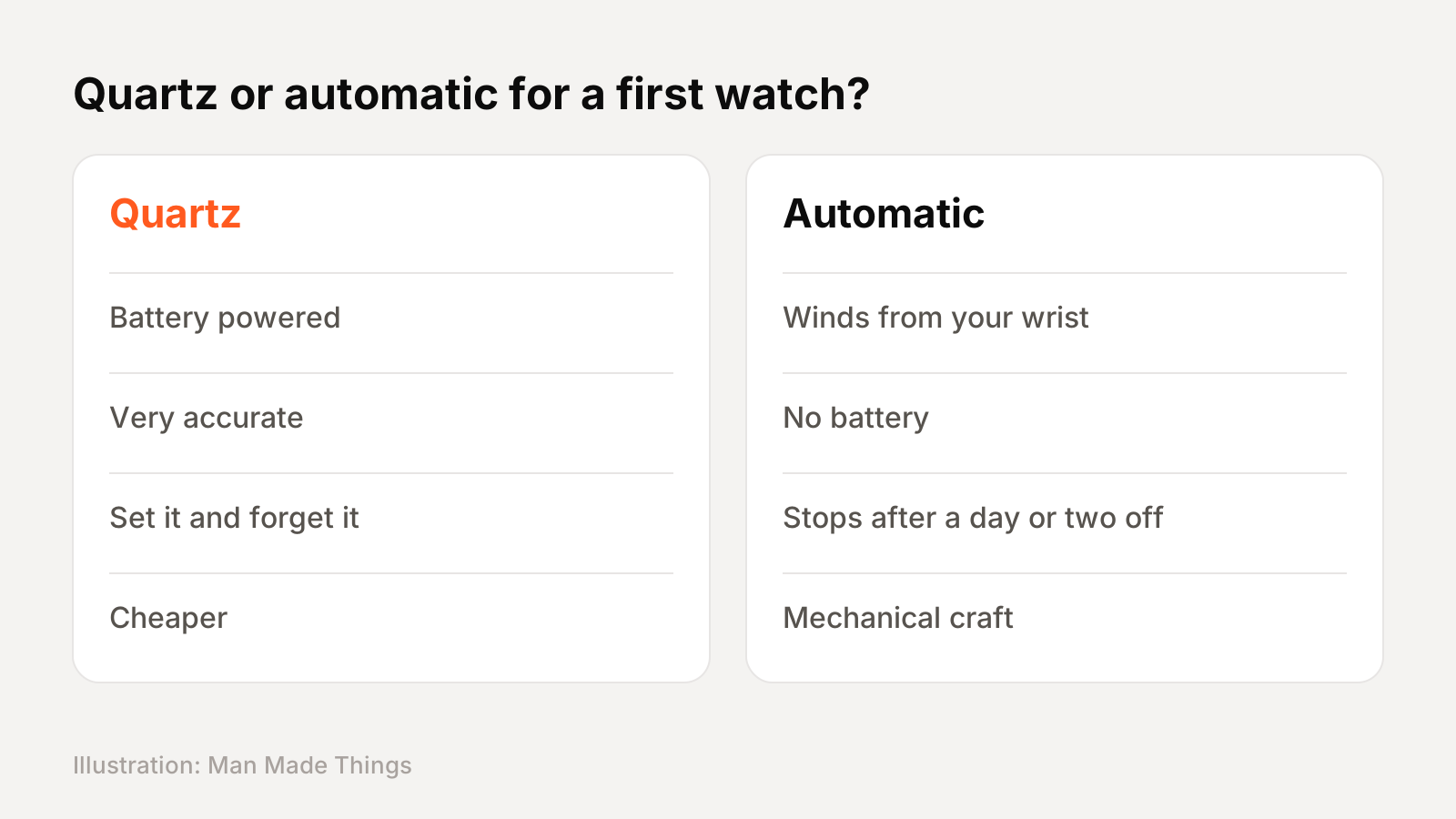
This is the first big fork in the road.
Quartz watches run on a battery. Timex calls quartz "highly accurate," and it is: a few seconds off a month is typical. You set it and forget it for years. The G-Shock and the Weekender are both quartz.
Automatic watches are mechanical. Citizen explains that they never need a battery because a weight inside winds them as your arm moves. They're less accurate and stop if you leave them in a drawer for a couple of days, but many people love them for the craft.
My advice: if you're not sure, start with quartz. If you already know you're curious about how watches work, go straight to an automatic like the Seiko.
Whichever you choose, wear it every day for a few weeks before you judge it. A watch that feels too big in the box often feels right by day three, and a watch you loved in photos might bug you on the wrist. That daily wear is how you figure out what your second watch should be.
What water resistance ratings really mean
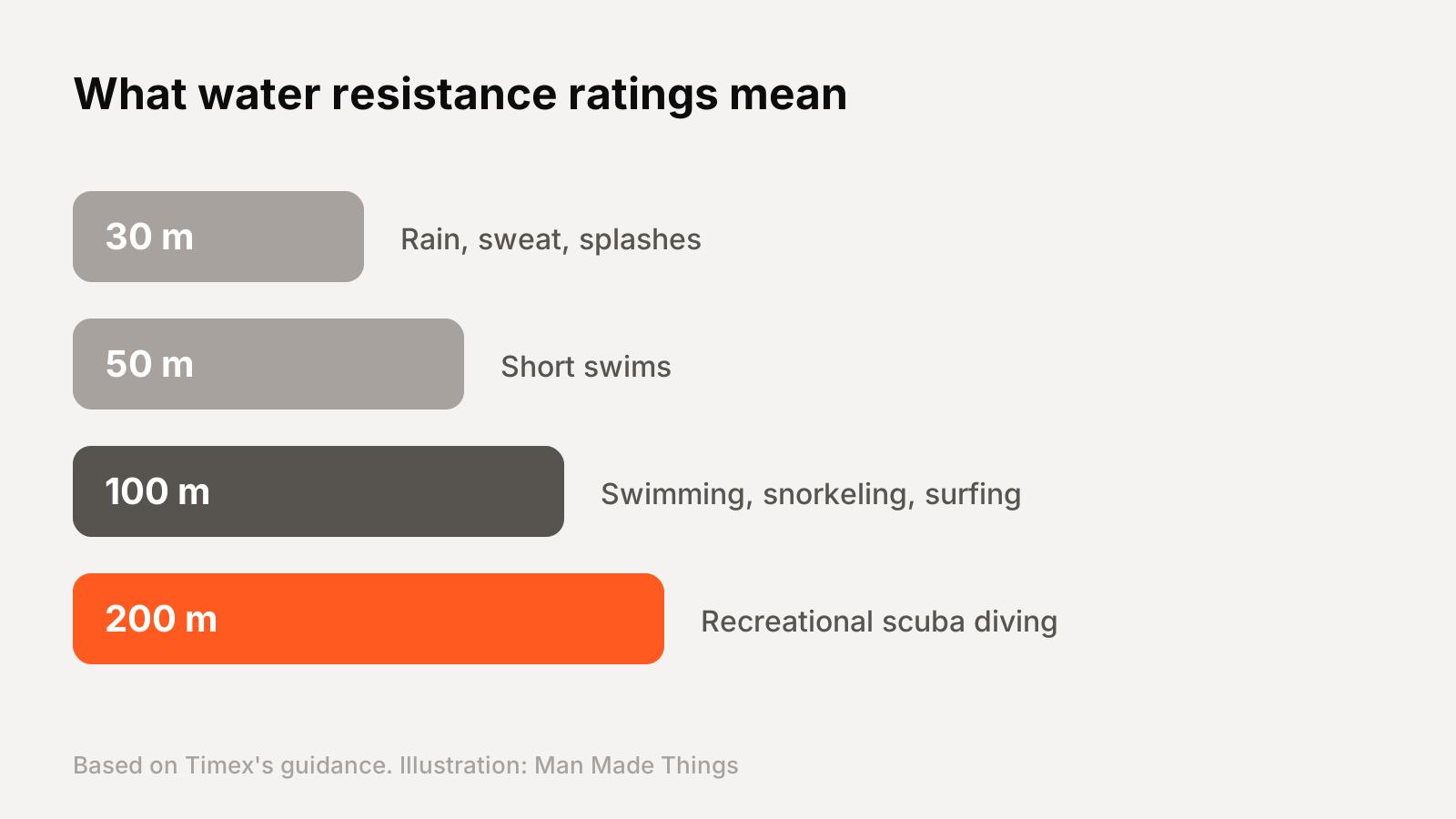
The numbers on a watch don't mean you can dive that deep. Timex's own guide translates them like this:
- 30m: light rain, sweat and splashes.
- 50m: short swims.
- 100m: swimming, snorkeling and surfing.
- 200m: recreational scuba diving.
Timex also advises not pressing buttons while the watch is wet. For a first watch, aim for at least 100m if you swim, or don't worry about it if you'll mostly wear it to work and dinner.
What to buy next
Once you've worn your first watch for a few months, you'll know what you like, and the next step gets easier. Loved the toughness? Look at our best dive watches under $1,000. Want something simple and smart? Try our best field watches. Curious about all the styles? Read dress, dive, field or GMT.
The best collection isn't the most expensive one. It's the one where every watch earns its place on your wrist.
Frequently asked questions
What is a good first watch?
+
It depends on your style. The Casio G-Shock DW5600UE-1 is a tough digital, the Timex Weekender is a simple $77 analog, and the Seiko 5 Sports SRPD59 is a classic first automatic at $350.
Should my first watch be quartz or automatic?
+
Quartz is more accurate and lower maintenance. Automatic is mechanical and needs regular wear or winding. If you're unsure, start with quartz.
How much should I spend on my first watch?
+
You don't need to spend much. Great first watches start under $100, and a quality automatic like the Seiko 5 Sports costs about $350.
Can I swim with a Timex Weekender?
+
No. Timex rates it at 30m, which covers splashes and hand washing but not swimming or showering.
Sources

Watches & Coffee Writer
Aditya is a passionate coffee lover who loves watches. He covers watches and coffee for Man Made Things.
More from Aditya →