Dress, Dive, Field or GMT? How to Pick the Right Watch Style
The four classic watch styles explained in plain English: what each one was built for, what to look for, and which one you should buy first.
We may earn a commission when you buy through links on this page. Learn more
Quick answer
A dress watch is thin and simple for formal wear, a dive watch is tough and water resistant with a rotating bezel, a field watch is a small, easy-to-read military-style watch, and a GMT shows a second time zone. For one watch that does everything, most people should start with a dive or field watch.
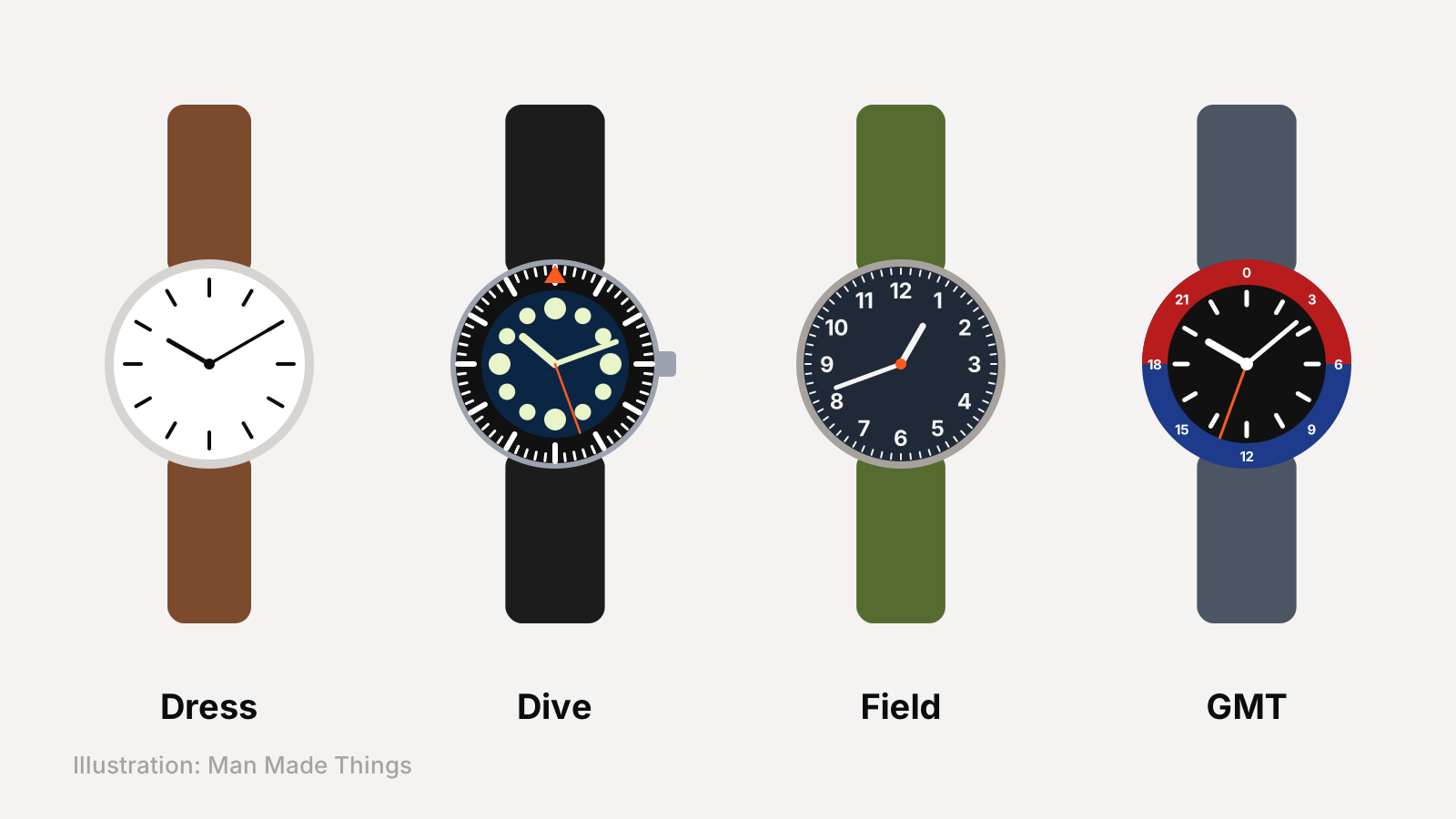
Walk into any watch store and the person behind the counter will start throwing words at you. Diver. Field. GMT. Dress. It sounds like a lot, but almost every watch you'll see fits into one of these four families.
Each one was built for a job. Once you know what that job was, picking the right one gets a lot easier. So let's go through them one by one, and then I'll tell you which one I think you should buy first.
Dress watches: simple, thin and quiet
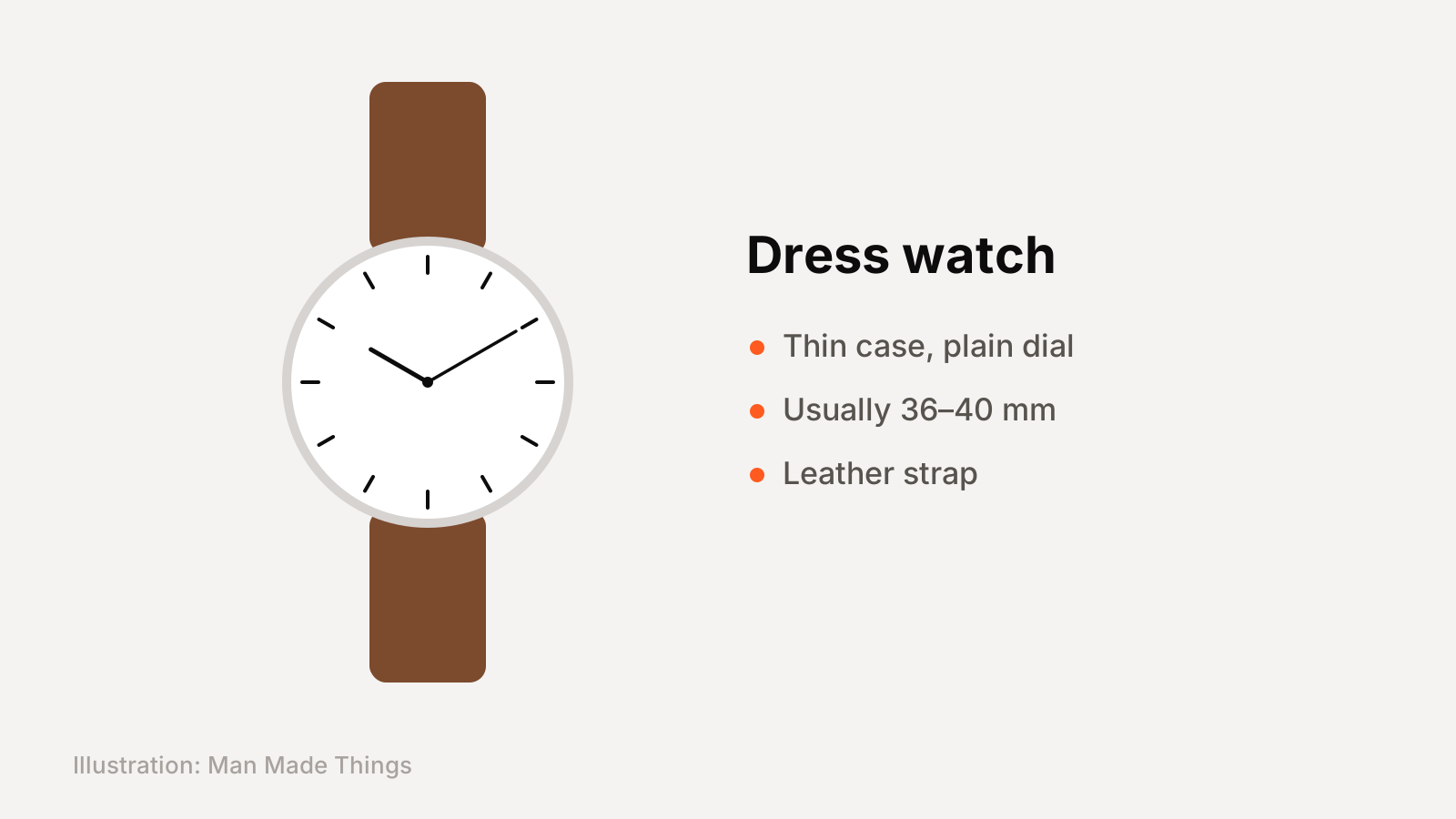
A dress watch does one thing: tell the time without getting in the way. The dial is plain, often just hands and simple markers. The case is thin so it slides under a shirt cuff, and it usually comes on a leather strap.
Size is the giveaway. Most dress watches are around 36 to 40mm, and many are under 10mm thick. Big numbers, chunky bezels and rubber straps are the opposite of what you want here.
One tip people miss: match the metal to your other accessories. A silver case looks best with a silver belt buckle and a black or dark brown strap. A gold case goes with gold and a brown strap. It's a small thing, but it's the difference between looking put together and looking like you grabbed whatever was on the dresser.
Buy one if you wear suits or dress shirts often, or you want a watch for weddings and interviews. Skip it if you want one watch for everything, since most dress watches aren't built for water or rough use.
Dive watches: the do-everything tool watch
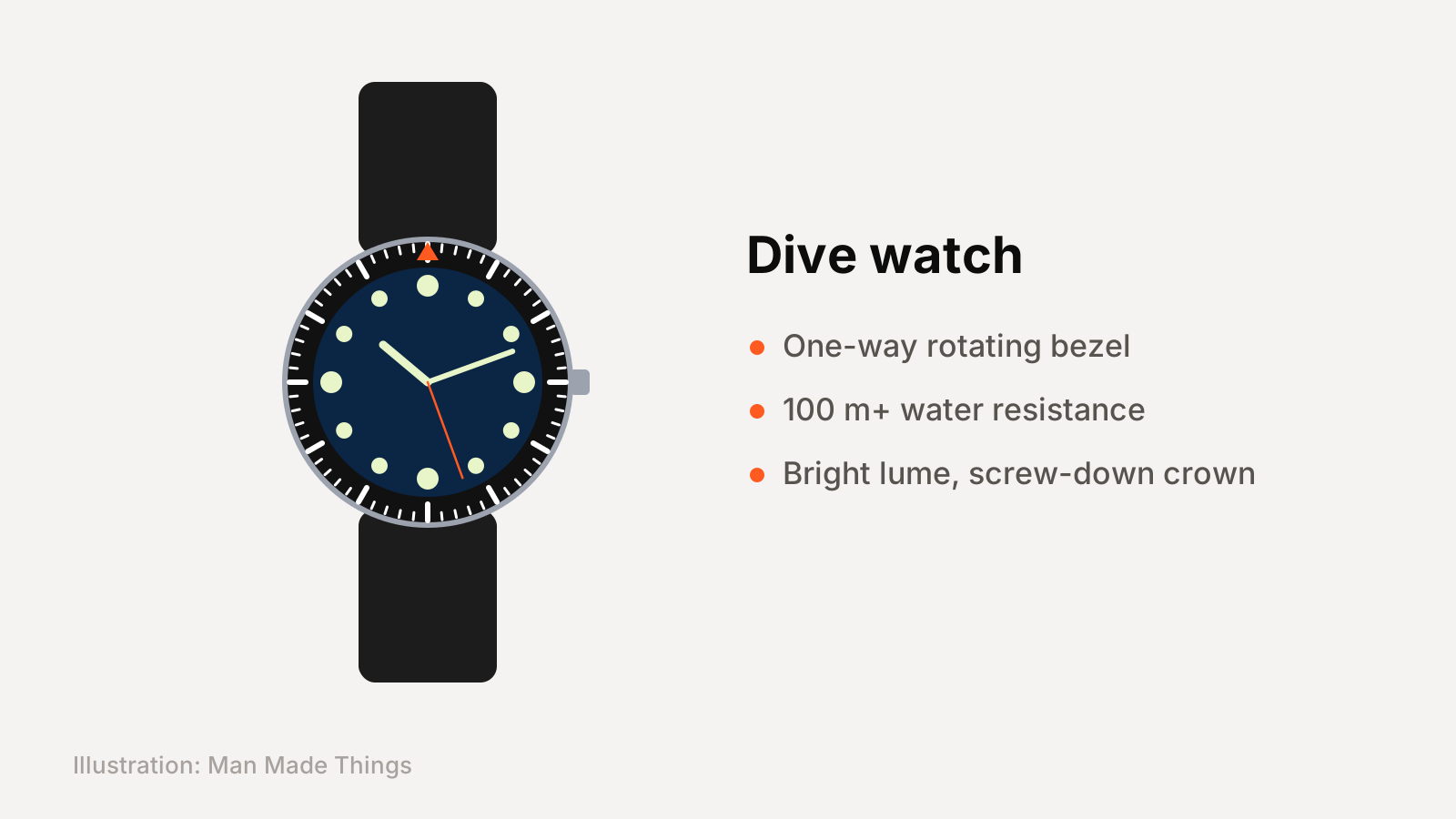
Dive watches were built for divers to time how long they'd been underwater. That's what the rotating bezel is for. You line up the bezel's zero marker with the minute hand when you go under, and read your elapsed time at a glance.
What makes a real one: at least 100m of water resistance (200m is more common), a bezel that only turns one way, a screw-down crown and bright lume. There's even an ISO standard (ISO 6425) for watches that are tested properly.
Here's the thing. Almost nobody who buys a diver actually dives. People buy them because they're tough, easy to read and look good with jeans or a suit. If you want ideas, see our picks for the best dive watches under $1,000.
Field watches: small, legible and tough
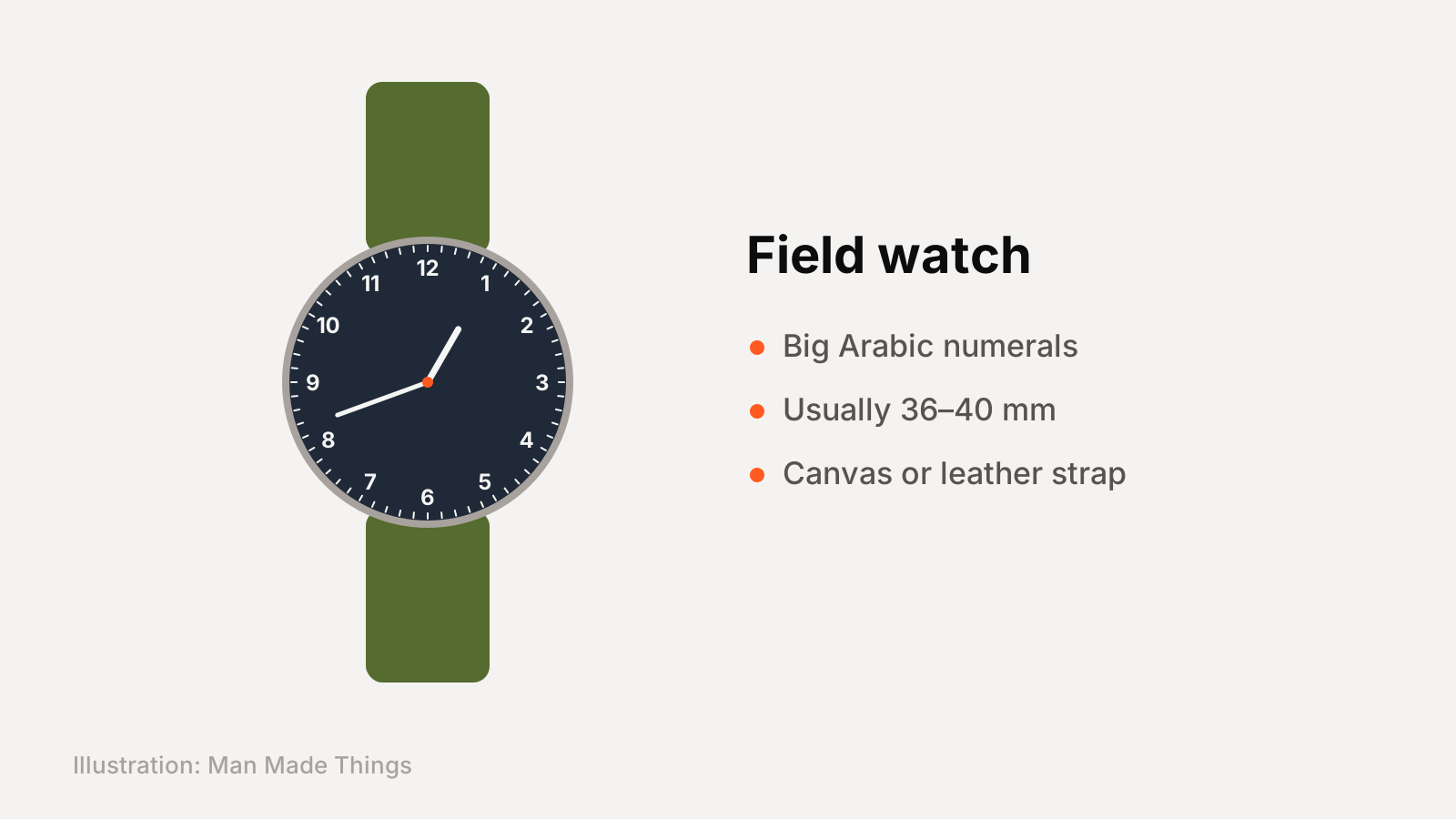
Field watches come from the military. Soldiers needed something cheap, tough and readable in a hurry, and that's still the formula: a plain dial with big Arabic numerals, often an inner 24-hour scale, and a canvas or leather strap.
They tend to be small, usually 36 to 40mm, and they don't have a rotating bezel. That makes them lighter and more comfortable than a diver, and a bit more casual.
Many field watches are hand-wound or quartz rather than automatic, which keeps them thin and cheap. Check the water resistance before you swim with one. A lot of field watches are only rated to 50m or 100m, which is fine for rain and hand washing but not for diving.
Buy one if you want a simple everyday watch that looks great with a T-shirt and jeans. They're also some of the cheapest good mechanical watches you can find.
GMT watches: two time zones at once
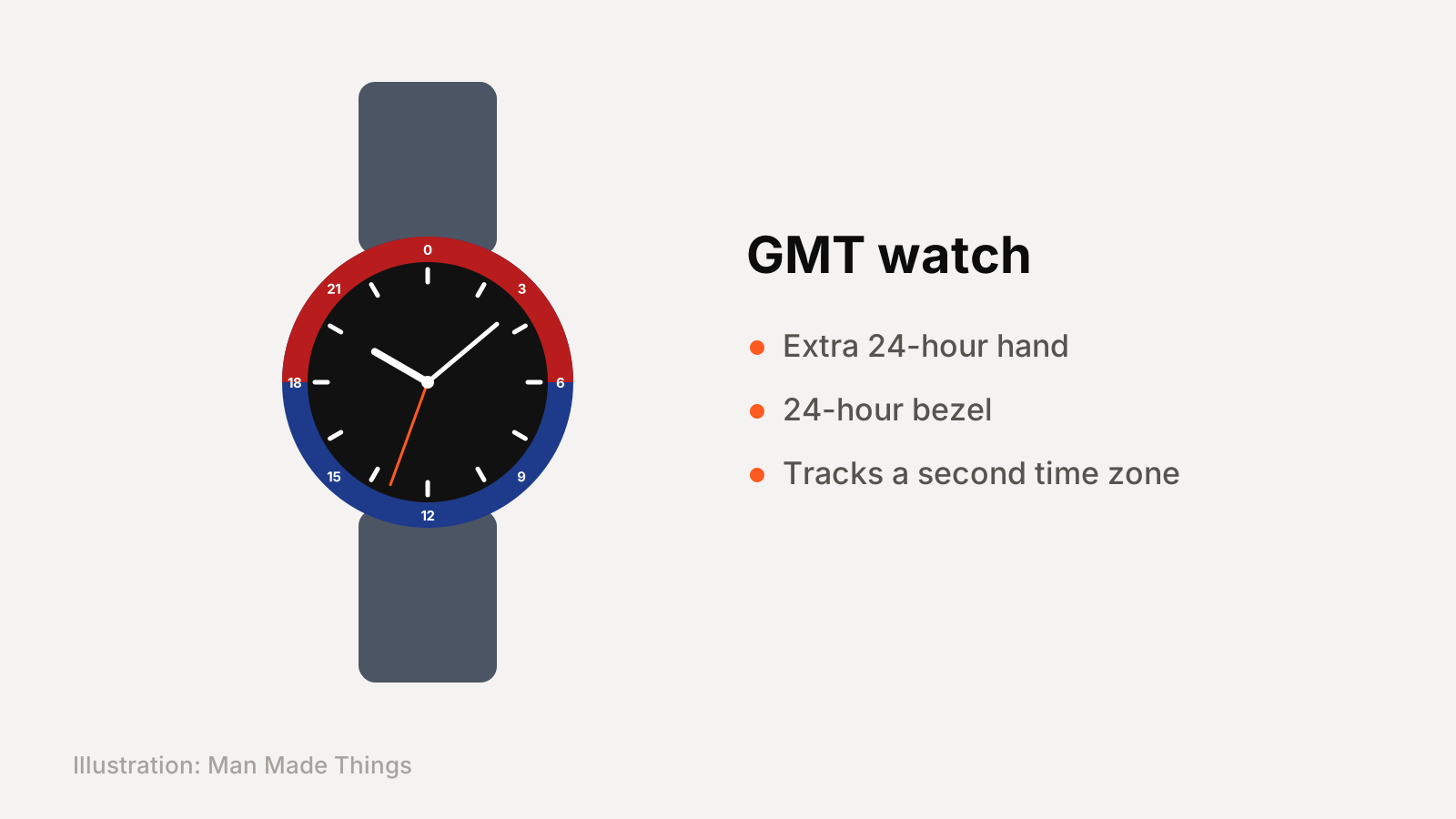
GMT watches were made for pilots who needed to track home time and local time together. They add a fourth hand that goes around the dial once every 24 hours, pointing at a 24-hour scale on the bezel or dial.
You'll see two types. A "flyer" GMT lets you jump the main hour hand when you land in a new time zone, which is what travelers want. A "caller" or "office" GMT jumps the 24-hour hand instead, which is better for keeping track of a colleague in another city. Flyer GMTs usually cost more.
Buy one if you travel a lot or work with people in other time zones. Otherwise, the extra hand is mostly a nice detail.
Automatic or quartz?
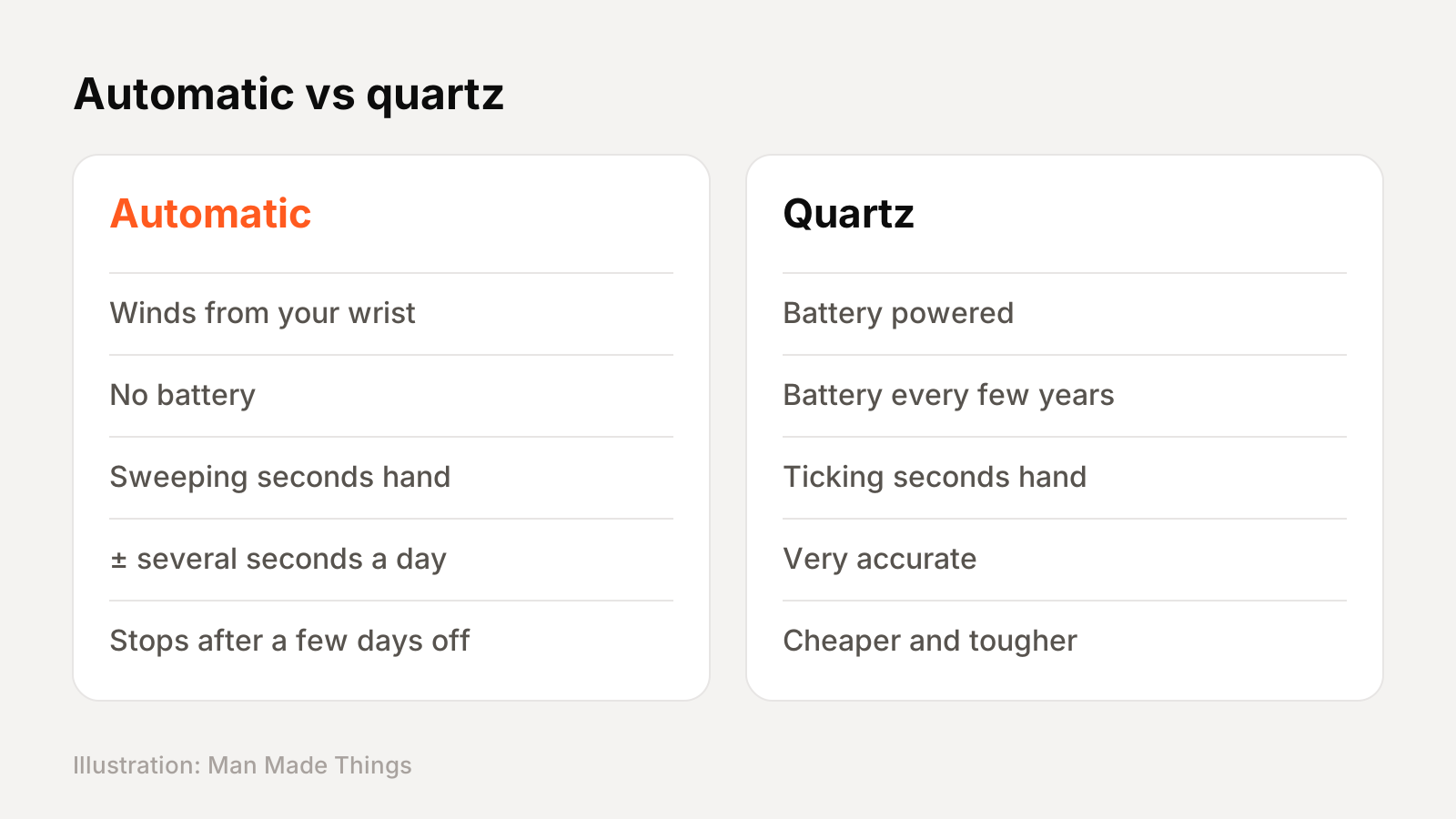
Every style above comes with either an automatic or a quartz movement, and this choice matters as much as the style.
An automatic winds itself from your wrist movement. No battery, a smooth sweeping seconds hand, and there's a craft to it that people love. But it can gain or lose several seconds a day, and it stops if you don't wear it for a couple of days.
A quartz runs on a battery. It's far more accurate, cheaper and tougher. The seconds hand ticks once per second, and you'll swap the battery every few years.
Neither is wrong. If you love the idea of a little machine on your wrist, go automatic. If you just want the right time with zero fuss, go quartz.
So which should you buy first?
If you can only have one watch, get a dive watch or a field watch. Both are tough, easy to read, and fit almost any outfit. Go diver if you swim or want something a bit sportier, and field if you want something smaller and lighter.
Add a dress watch second if you dress up often. Get a GMT when you start traveling enough that you're doing time zone math in your head. That's the order I'd follow, and it's the order most collectors end up taking anyway.
Frequently asked questions
What is the most versatile watch style?
+
A dive watch. It is tough, water resistant and easy to read, and it works with casual clothes and most office wear.
What size should a dress watch be?
+
Most dress watches are about 36 to 40mm wide and thin enough to slide under a shirt cuff.
What does GMT mean on a watch?
+
GMT stands for Greenwich Mean Time. A GMT watch has an extra 24-hour hand so you can track a second time zone.
Is an automatic watch better than quartz?
+
Not better, just different. Automatics need no battery and are prized for craftsmanship. Quartz watches are more accurate, cheaper and lower maintenance.
Sources

Watches & Coffee Writer
Aditya is a passionate coffee lover who loves watches. He covers watches and coffee for Man Made Things.
More from Aditya →