Single Malt vs Blended Scotch: What's Actually the Difference?
What single malt, blended Scotch and blended malt really mean under Scotch whisky law, how age statements work, why most Scotch is blended, and which you might prefer.
We may earn a commission when you buy through links on this page. Learn more
Quick answer
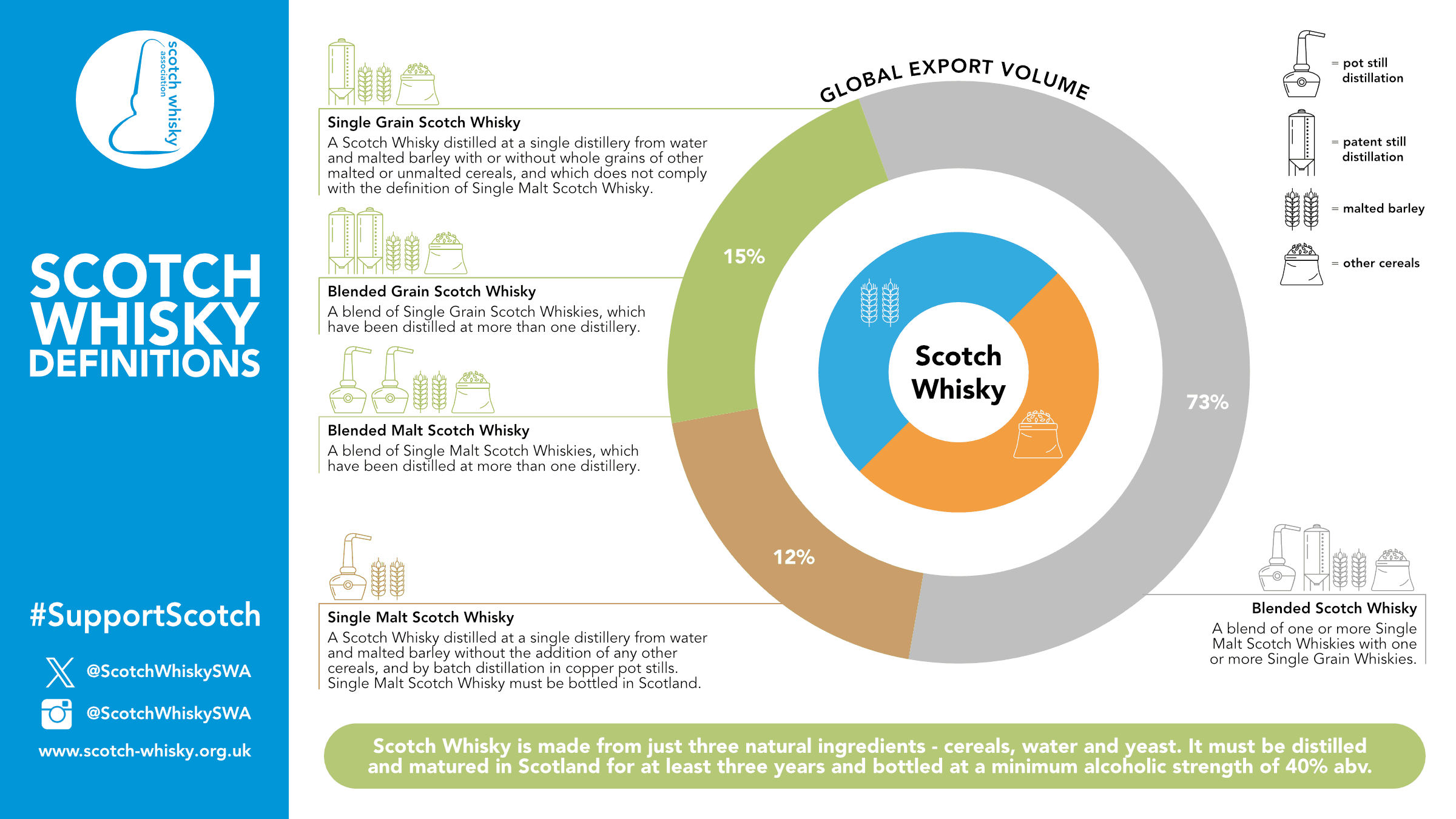
Single malt Scotch is made only from malted barley, in pot stills, at one distillery. Blended Scotch mixes one or more single malts with grain whisky. Both must be made in Scotland, aged at least three years in oak and bottled at 40% ABV or more. 'Single' means one distillery, not one cask, and blended Scotch makes up almost nine in ten bottles sold.
Single malt has a reputation as the "good stuff" and blended Scotch as the everyday bottle. That idea is so common that many people assume blends are lesser whisky. It's not that simple.
The difference isn't quality. It's how and where the whisky was made. Scotch whisky is one of the most tightly defined drinks in the world, and the law spells out exactly what each label means. Once you know the rules, the shelf makes a lot more sense.
Below, I've used the UK's official Scotch whisky product specification, which quotes the Scotch Whisky Regulations 2009, and the Scotch Whisky Association's own explanations. New to whiskey in general? Start with our bourbon vs rye vs Scotch guide, and see our best whiskey glasses for what to pour it into.
What makes it Scotch at all
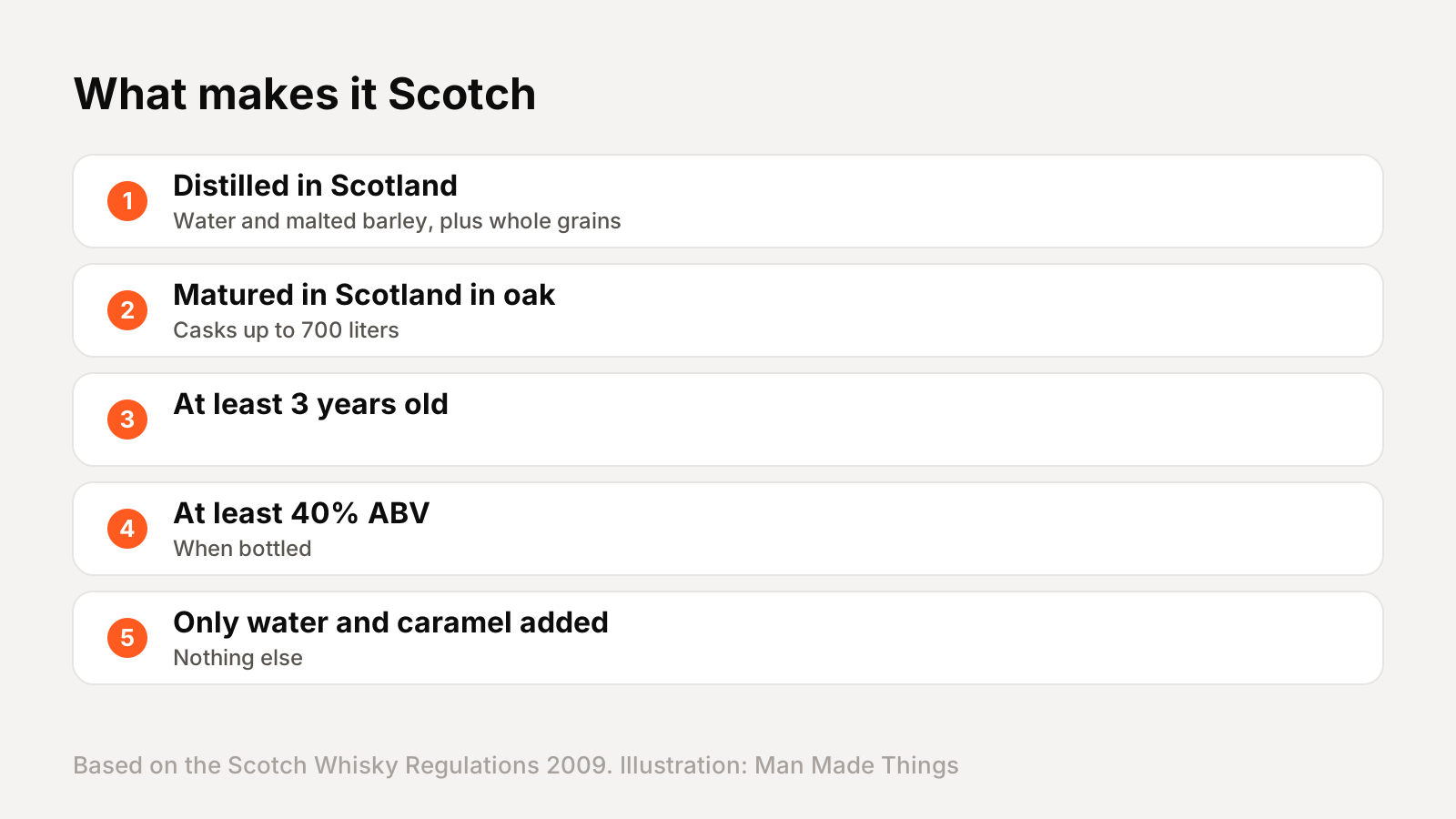
Every bottle labeled Scotch, single malt or blend, has to meet the same baseline. Under the Scotch Whisky Regulations 2009, it must be:
- Distilled in Scotland from water and malted barley, with only whole grains of other cereals added.
- Matured only in Scotland, in oak casks no bigger than 700 liters.
- Aged for at least three years.
- Bottled at a minimum of 40% ABV.
- Made with nothing added except water and plain caramel coloring.
US law follows the same line. The TTB defines Scotch whisky as a distinctive product of Scotland made under UK law, and requires a mixture of whiskies to be labeled "blended Scotch whisky." So whatever the category, you're getting a whisky made to the same strict rules. US rules add one more wrinkle: under 27 CFR 5.74, whisky aged less than four years must carry an age statement on American shelves.
The five categories of Scotch
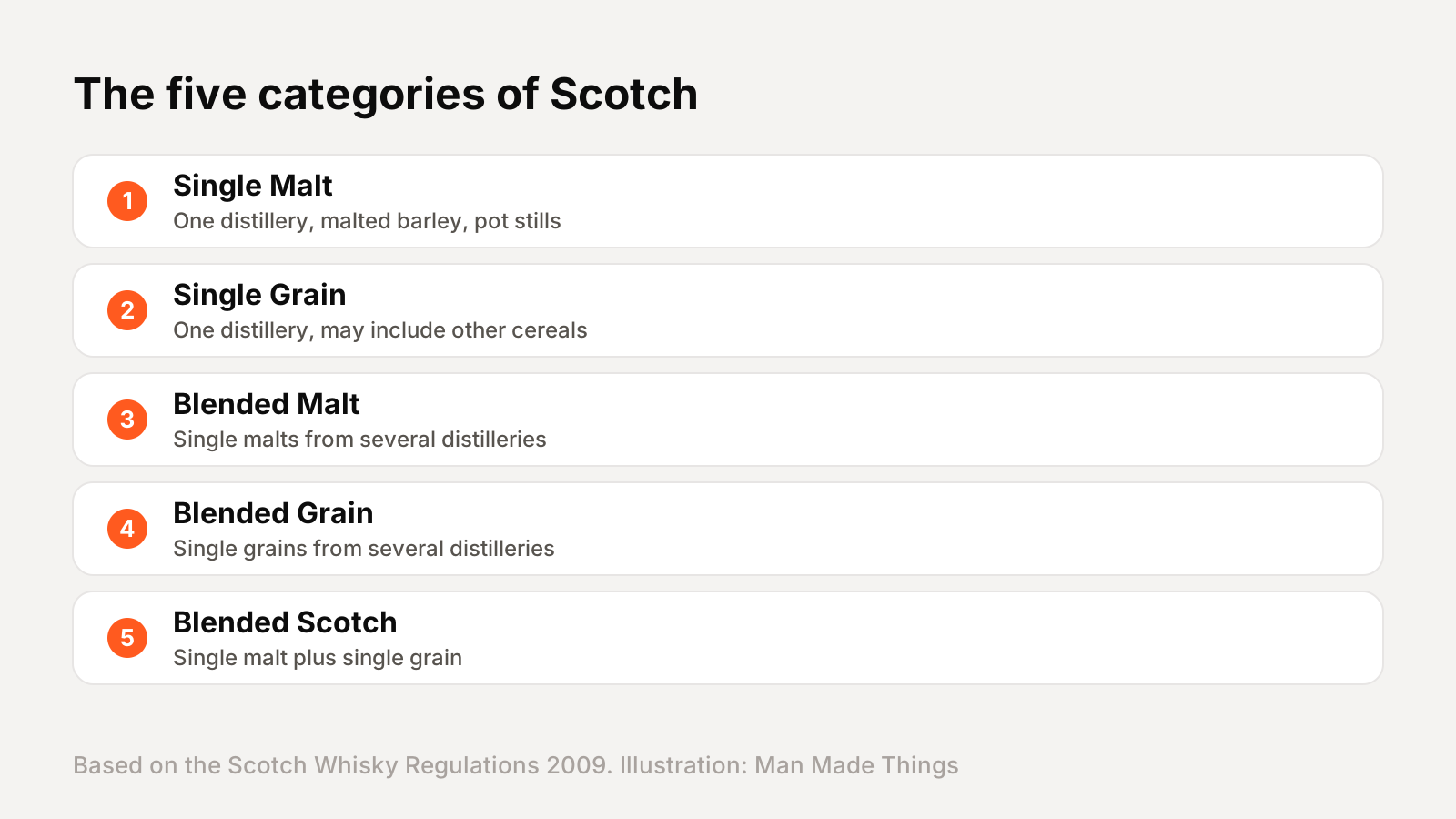
The law defines five categories, and the category must appear on the front of the bottle:
- Single Malt Scotch Whisky: distilled at a single distillery, from water and malted barley only, in pot stills.
- Single Grain Scotch Whisky: distilled at a single distillery, but not a single malt. It can include other cereals like wheat or corn.
- Blended Malt Scotch Whisky: a blend of single malts from more than one distillery. No grain whisky.
- Blended Grain Scotch Whisky: a blend of single grain whiskies from more than one distillery.
- Blended Scotch Whisky: one or more single malts blended with one or more single grain whiskies.
Two terms trip people up. "Single" means a single distillery, not a single cask or batch; a single malt can blend many casks from the same distillery. And the old phrase "pure malt" is now banned, which is why you'll see "blended malt" instead.
Single malt: one distillery, pot stills
Single malt is made entirely from malted barley, and the law requires it to be distilled in pot stills. The UK's technical file describes these as distinctive copper stills, with malt whisky usually distilled twice. Single malt must also be bottled in Scotland.
Because it comes from one distillery, a single malt tends to show that distillery's character: its water, stills, casks and house style. That's why whisky fans explore single malts region by region and distillery by distillery.
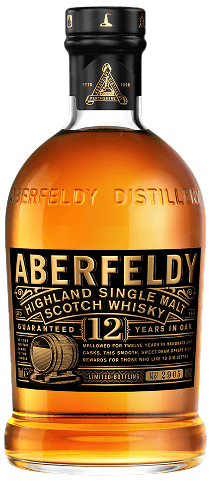
A good example is Aberfeldy 12 Year Old, a Highland single malt bottled at 40% ABV. Many well-known names, from Speyside to Islay, sit in this category, ranging from light and honeyed to heavily peated and smoky.
Pot stills work in batches, and on the shelf, single malts usually cost more than blends of the same age.
Blended Scotch: malt plus grain
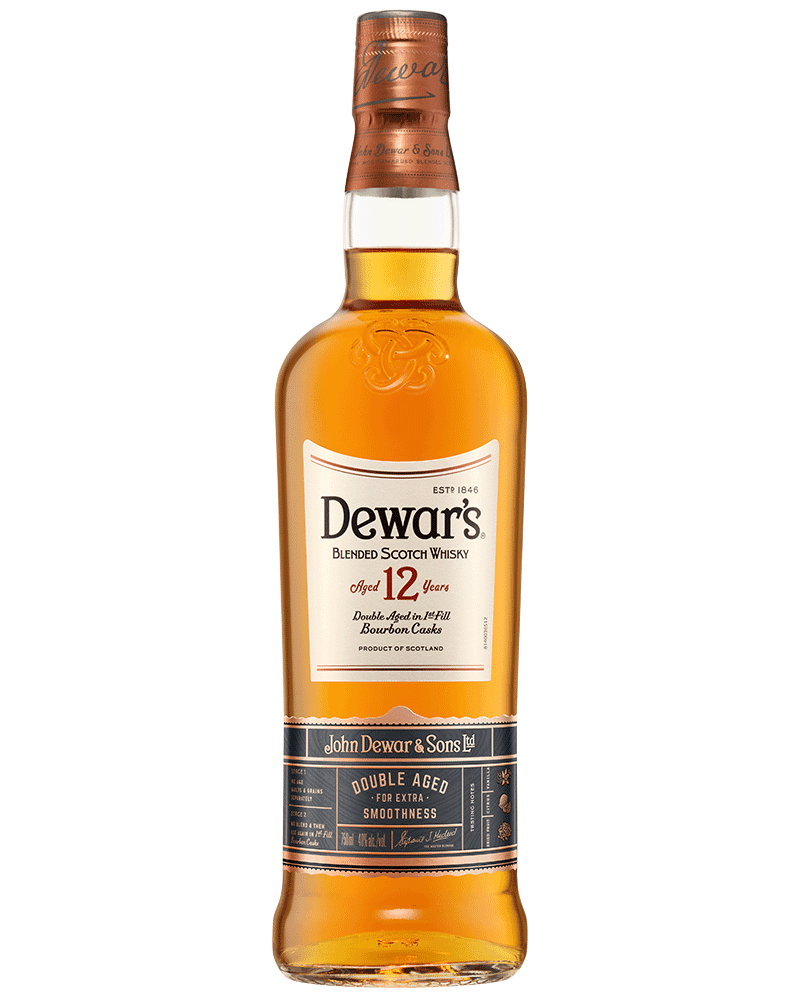
Blended Scotch combines single malt whisky with grain whisky. Grain whisky is usually made in continuous column stills, and the UK's technical file notes that grain whiskies are typically lighter in aroma and flavor than malts. The blend gives you a smoother, more approachable whisky with some of the malt's character.
Blending is a skill in itself. The SWA says a master blender may combine up to 60 different Scotch whiskies to create a consistent house style that tastes the same bottle after bottle.
Dewar's 12 Year Old is a classic example. Dewar's says it's crafted from thirty single malt and grain whiskies and bottled at 40% ABV.
Blends are hugely popular. The SWA says almost nine out of ten bottles of Scotch enjoyed around the world are blended Scotch, and bottled blends made up about 59 percent of Scotch export value in 2024, compared with about 31 percent for single malt.
How age statements work, and which to choose
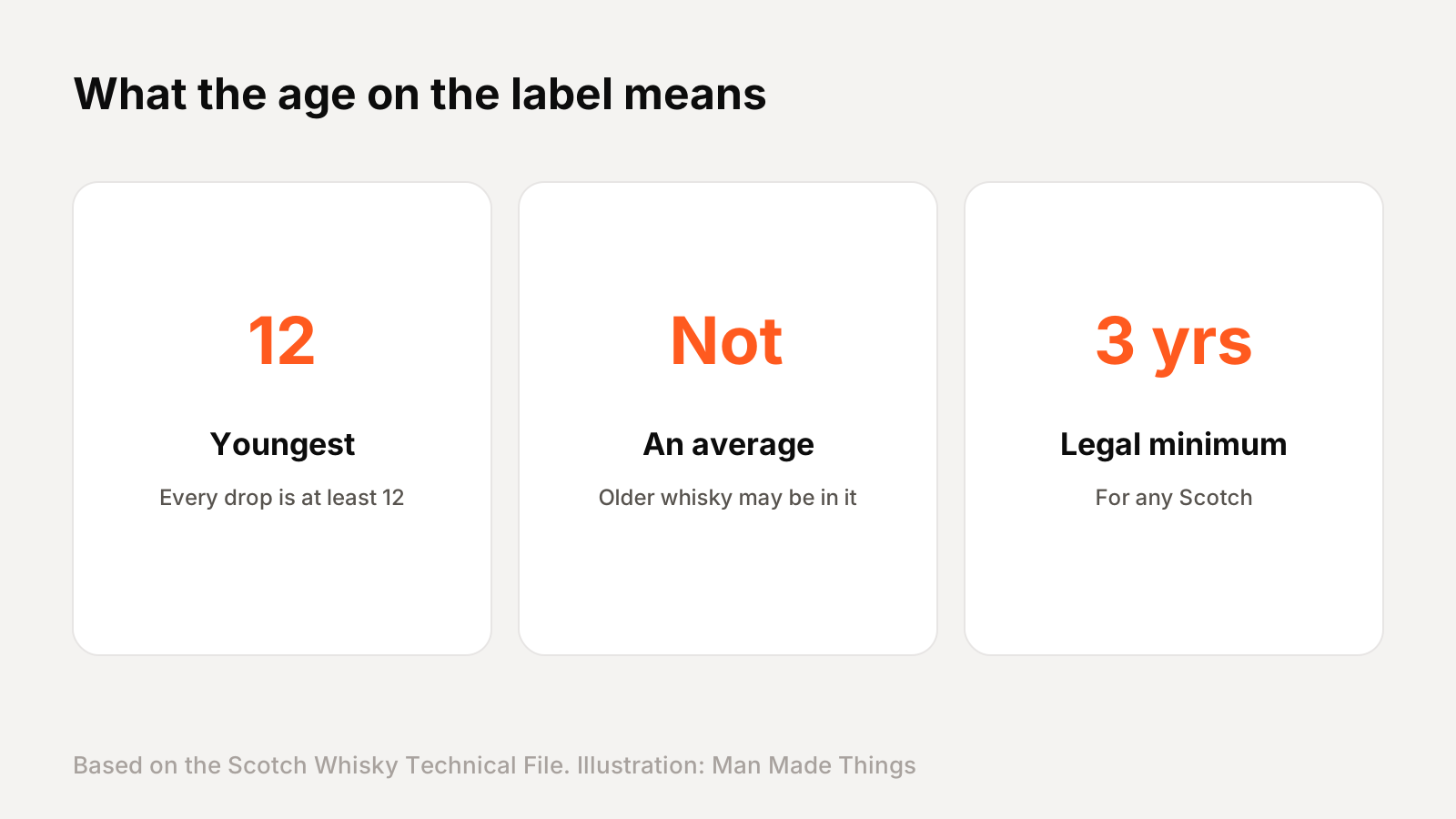
One rule applies to every category. By law, when a Scotch label states an age, that age is the youngest whisky in the bottle, not the average. A 12-year-old blend contains nothing younger than 12 years, and often some older whisky too.
So which should you buy? It depends on what you enjoy:
- Choose single malt if you want to explore distinct flavors and distillery styles, and you mostly sip it neat or with water.
- Choose blended Scotch if you want something smooth, consistent and affordable, especially for mixing. Dewar's recommends a highball: whisky, ice and soda with a lemon twist.
- Try a blended malt for a middle ground: all malt, but blended from several distilleries.
The SWA puts it simply: there's no "right" way to drink Scotch. In Scotland, many people add just a little water.
Frequently asked questions
What is the difference between single malt and blended Scotch?
+
Single malt is malted barley whisky from one distillery, made in pot stills. Blended Scotch mixes single malt with grain whisky.
Is single malt better than blended Scotch?
+
Not necessarily. They're different styles. Single malts show a distillery's character; blends are often smoother and more consistent.
What does 'single' mean in single malt?
+
It means a single distillery, not a single cask. A single malt can combine many casks from the same distillery.
What does the age on a Scotch label mean?
+
By law, it's the age of the youngest whisky in the bottle, not the average age.
Sources
Editor-in-Chief
Rahul has been writing about gadgets and software since 2013, first at Thetechhacker and now at Man Made Things. He edits every review on the site and signs off on every verdict.
More from Rahul →