Bourbon vs Rye vs Scotch: What's Actually the Difference?
The legal rules that separate bourbon, rye and Scotch, what they mean for taste, and how to read a whiskey label before you buy. For readers 21+.
We may earn a commission when you buy through links on this page. Learn more
Quick answer
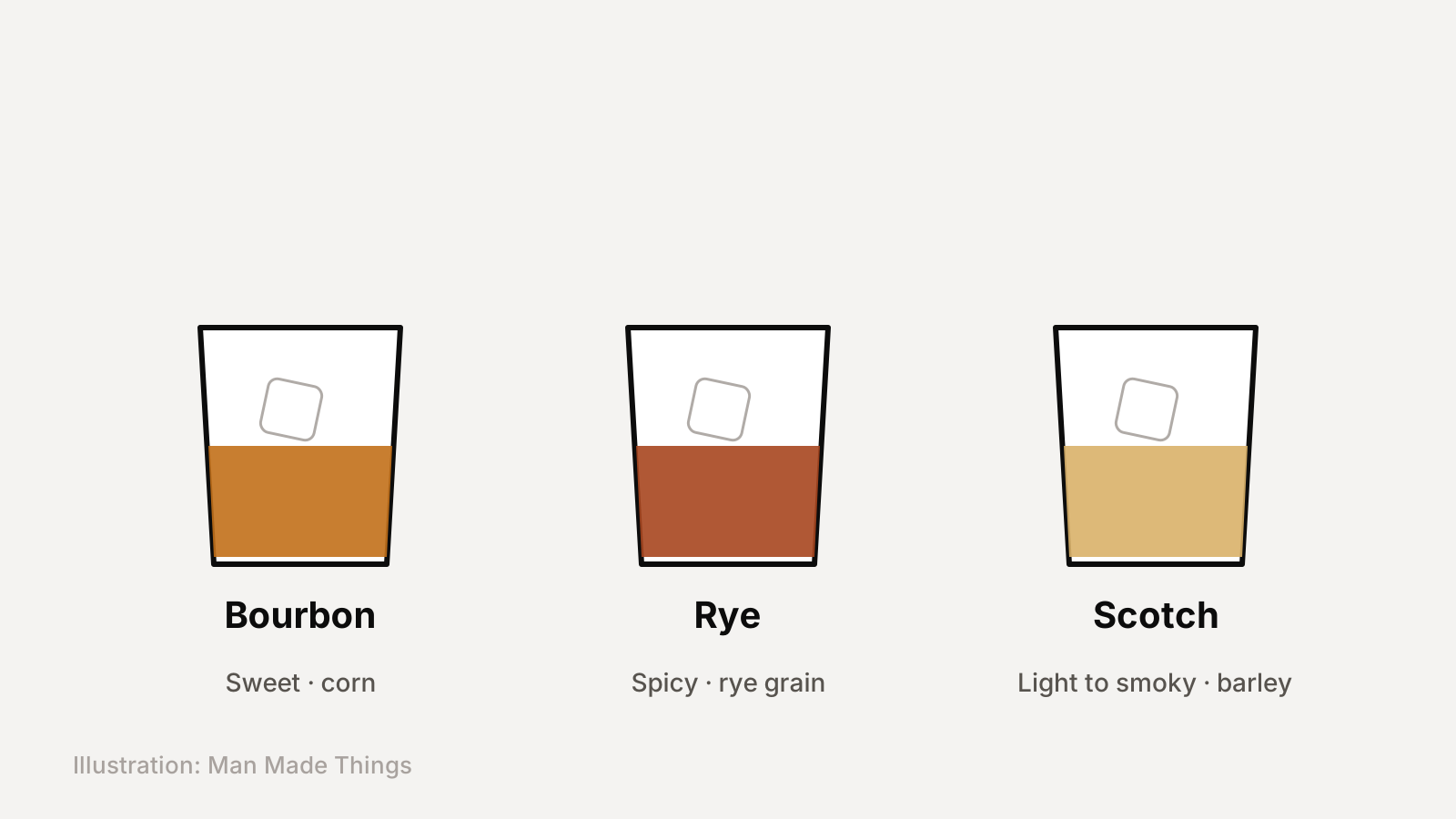
Bourbon is American whiskey made from at least 51% corn and aged in new charred oak, which makes it sweeter. Rye is made from at least 51% rye under the same barrel rules, so it tastes spicier. Scotch must be made and aged in Scotland for at least three years in oak casks, and its flavor ranges from light and fruity to smoky.
Walk into any liquor store and the whiskey aisle is the biggest one there. Hundreds of bottles, prices from $20 to $2,000, and labels covered in words like "straight," "single malt" and "small batch." No wonder people grab whatever their friend drinks.
Here's the thing most people don't know. The big categories aren't marketing terms. Bourbon, rye and Scotch each have legal definitions, written into US federal rules and UK law. Once you know those rules, the labels start making sense, and you can predict how a bottle will taste before you open it.
This article is for readers 21 and older. Please drink responsibly.
Bourbon: corn, new oak and sweetness
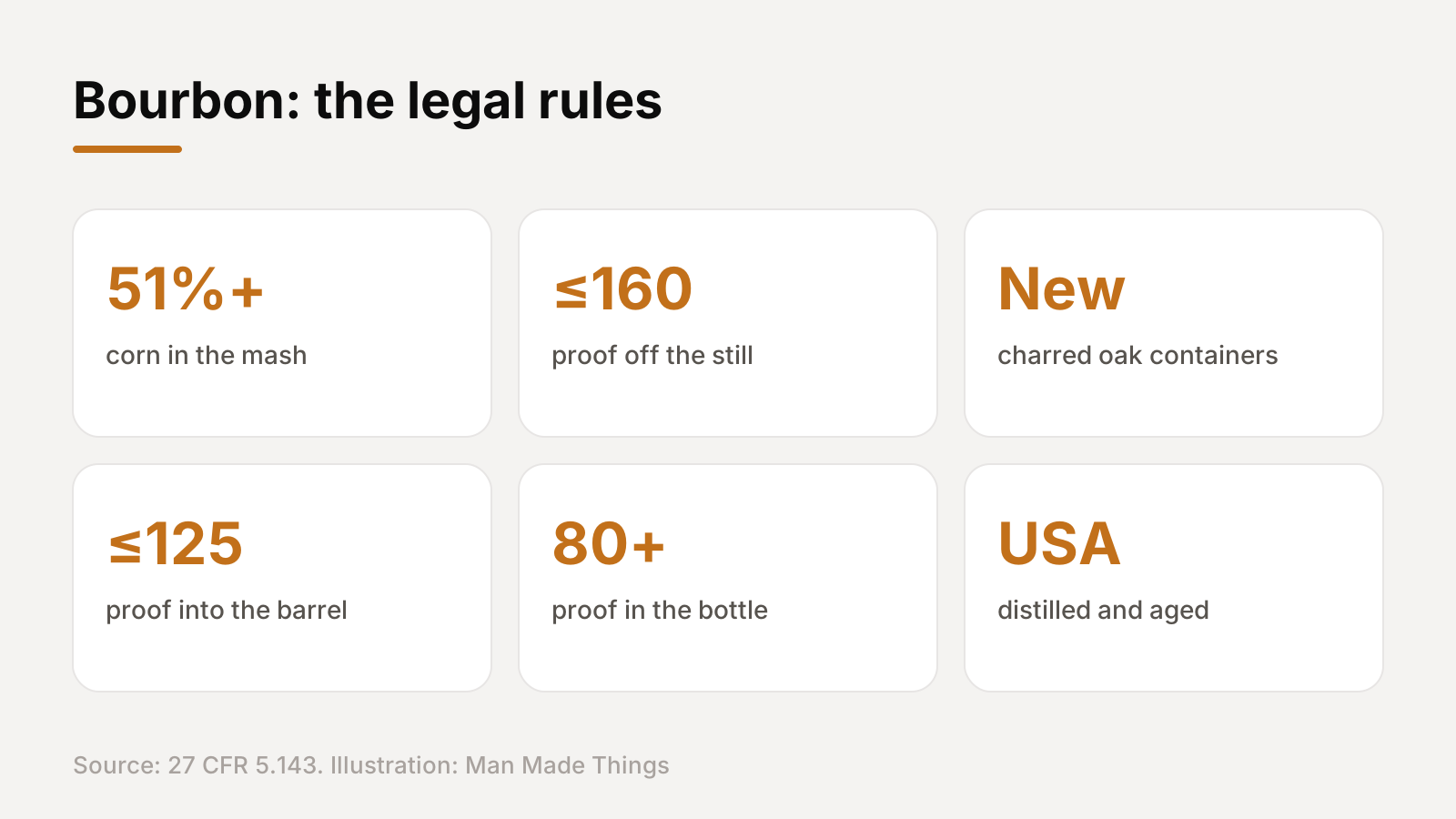
Under US federal rules (27 CFR 5.143), bourbon has to meet a short list of requirements:
- Made from a mash of at least 51% corn.
- Distilled to no more than 160 proof.
- Stored in new charred oak containers, entering at no more than 125 proof.
- Bottled at at least 80 proof (40% alcohol).
- No added coloring or flavoring.
- Only whiskey distilled and aged in the United States can be called bourbon.
Notice the word "new." A bourbon barrel can only be used once for bourbon. Fresh charred oak gives a lot of flavor fast, which is where bourbon's vanilla, caramel and toasted notes come from. Add all that corn, and you get a sweeter, rounder whiskey.
People often say bourbon has to come from Kentucky. It doesn't. Most of it does, but bourbon can be made anywhere in the US.
Rye: same barrel rules, more spice
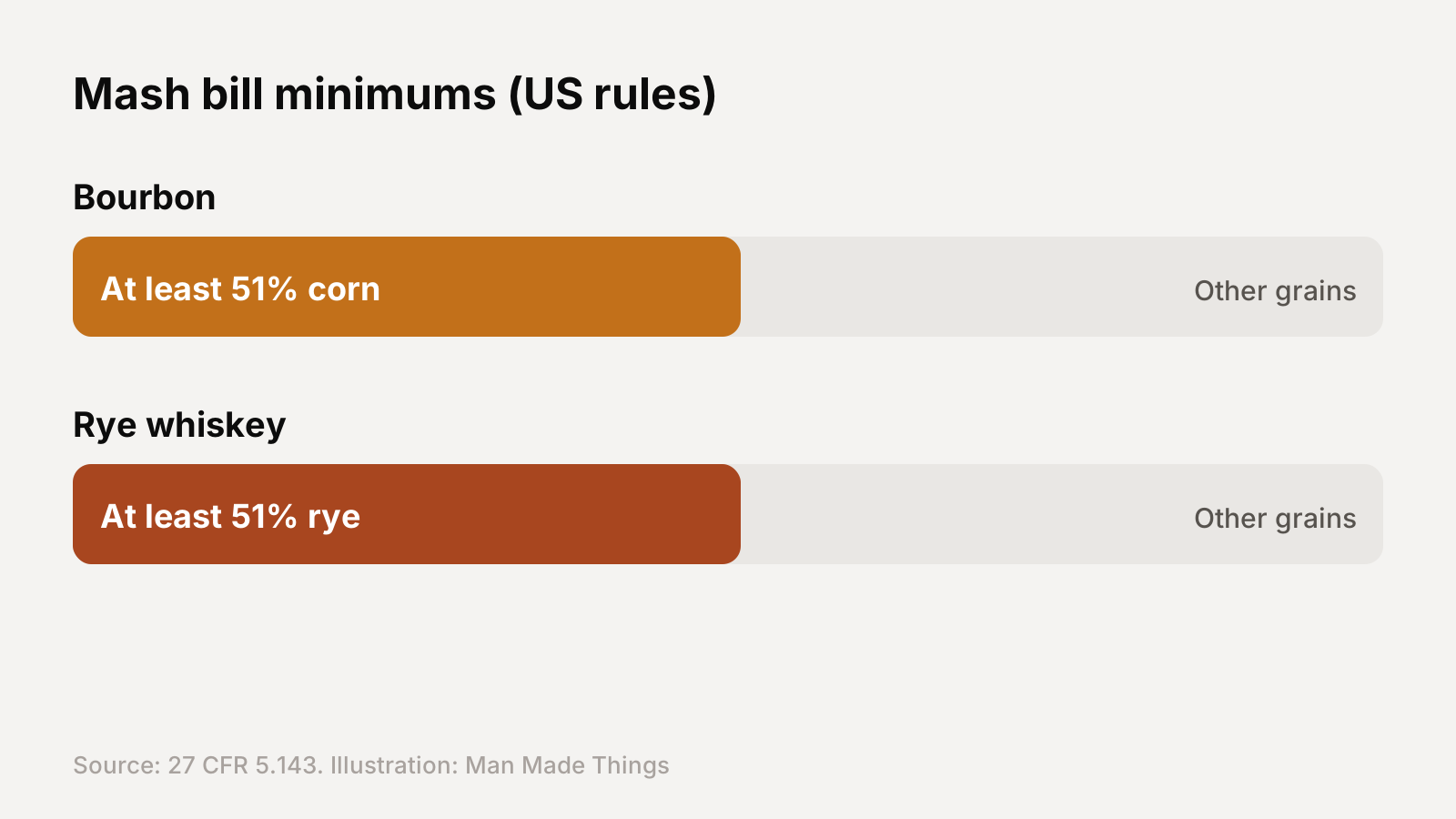
American rye whiskey follows the same federal rules as bourbon, with one big change: the mash must be at least 51% rye instead of corn. It also goes into new charred oak at no more than 125 proof.
Rye grain tastes different from corn. It gives whiskey a drier, peppery, sometimes herbal bite. If bourbon is a caramel candy, rye is closer to a spiced cookie.
That spice is why rye is the classic base for cocktails like the Manhattan and the Sazerac. It stands up to vermouth and bitters instead of disappearing behind them. If you find bourbon too sweet, rye is the first thing to try.
Scotch: made in Scotland, aged at least three years
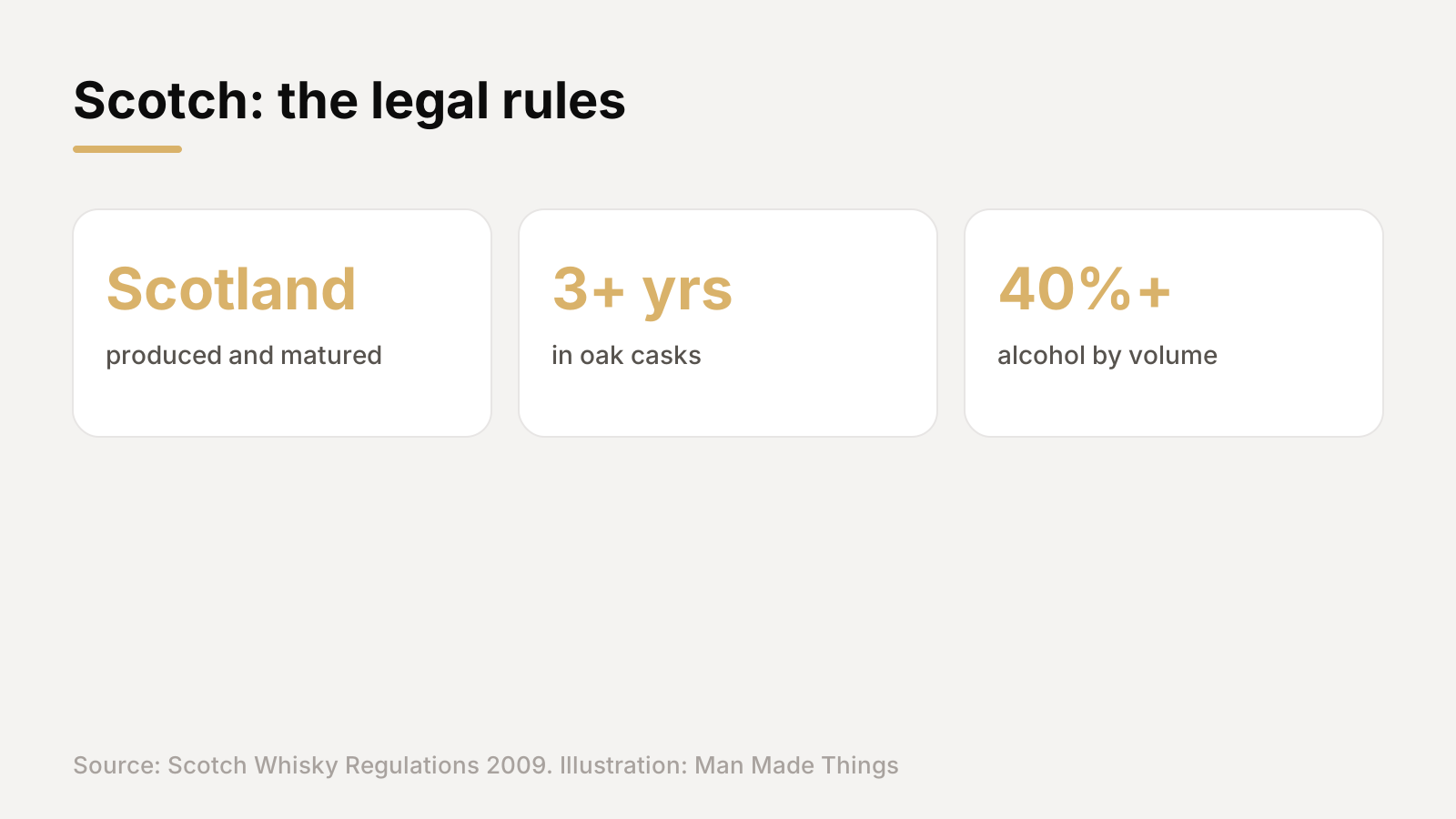
Scotch is defined by the UK's Scotch Whisky Regulations 2009. The key points:
- Produced in Scotland from water and malted barley (other whole cereal grains are allowed for some types).
- Matured in oak casks in Scotland for at least three years.
- Bottled at at least 40% alcohol by volume.
Unlike bourbon, Scotch doesn't require new barrels. Many distilleries age it in casks that previously held bourbon, sherry or wine. Used barrels give less raw oak flavor and more room for the spirit's own character.
And yes, some Scotch is smoky. That comes from drying malted barley over peat fires, which is common on the island of Islay. But plenty of Scotch has no smoke at all, so don't let one peaty glass put you off the whole category. Whiskies from Speyside, for example, are often known for fruity, honeyed flavors rather than smoke.
Single malt, blended and other label terms
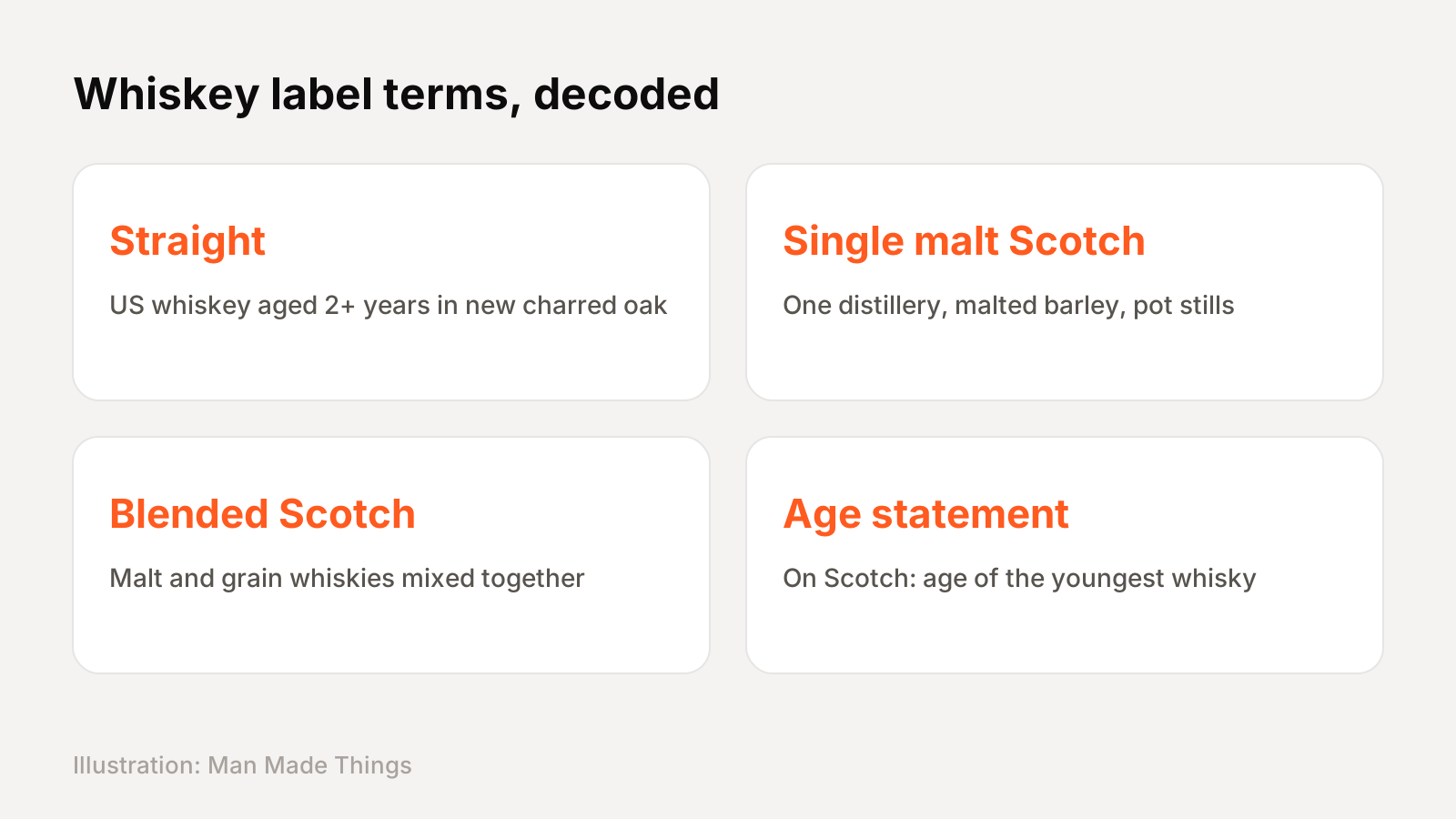
A few words you'll see on labels, and what they mean:
- Straight bourbon / straight rye: aged at least two years in new charred oak, under the US rules.
- Single malt Scotch: made at one distillery, from malted barley only, in pot stills.
- Blended Scotch: a mix of malt and grain whiskies, often from several distilleries. Most Scotch sold is blended, and that's not a bad thing.
- Age statement: on Scotch, a number like "12 years" refers to the youngest whisky in the bottle.
Also, "whisky" or "whiskey"? Scotland spells it without an "e," and most American and Irish producers add one. It's tradition, not a rule about what's inside.
How to taste whiskey properly
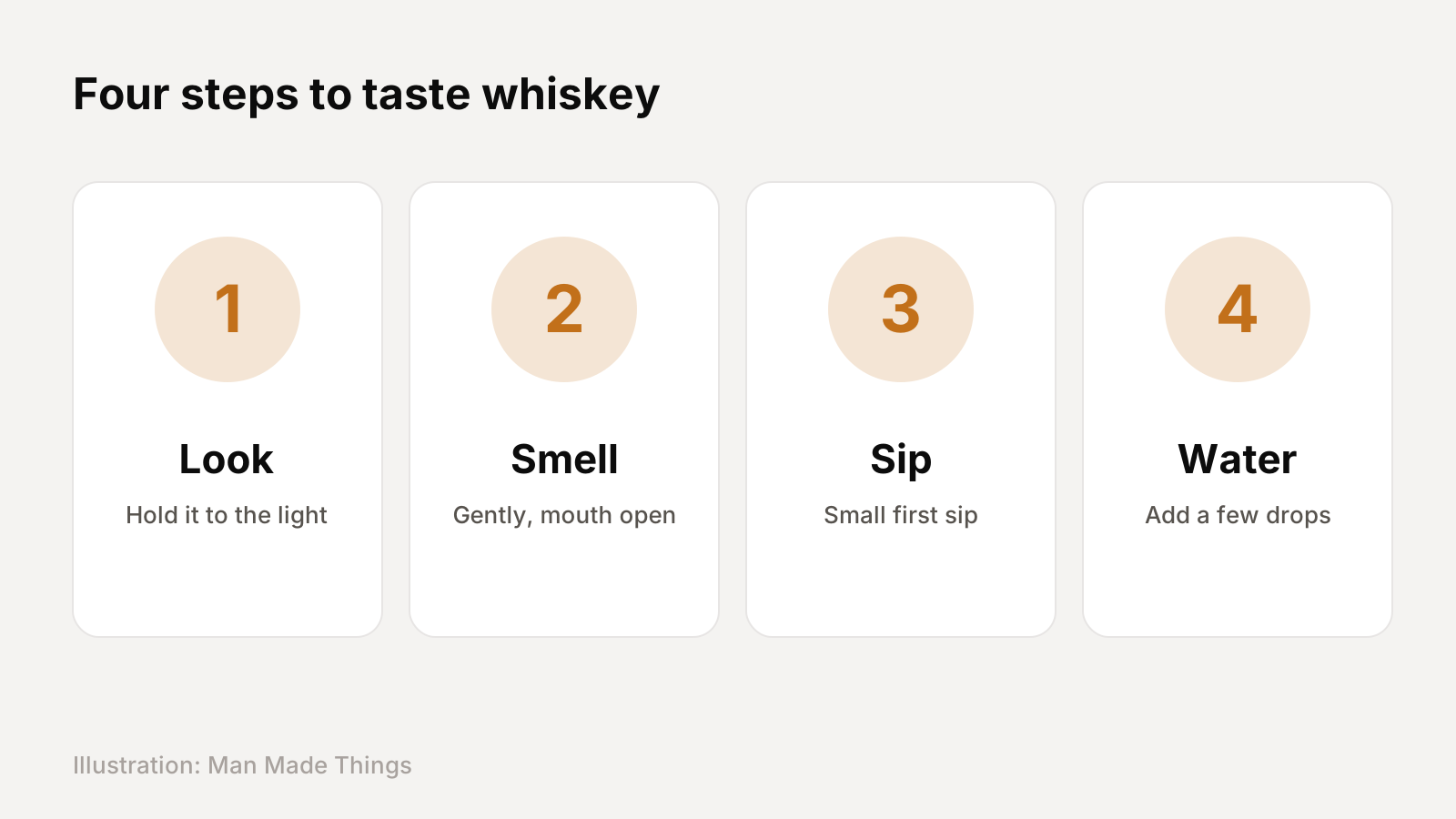
You don't need special training to taste whiskey well. A few simple habits make a big difference.
Use the right glass. A tulip-shaped glass concentrates the aroma. A regular rocks glass is fine too, just don't fill it.
Smell it gently. Keep your mouth slightly open and don't stick your nose deep into the glass. High-proof whiskey can burn your nose and hide the flavors.
Take a small first sip. Let it sit on your tongue for a moment. The first sip often tastes mostly of alcohol. The second one is where the flavor shows up.
Add a few drops of water. This is the one most people skip. A small splash can open up the aroma and soften the burn, especially in higher-proof bottles. Ice does something similar, but it also numbs flavor, so try it neat first.
Which one should you try first?
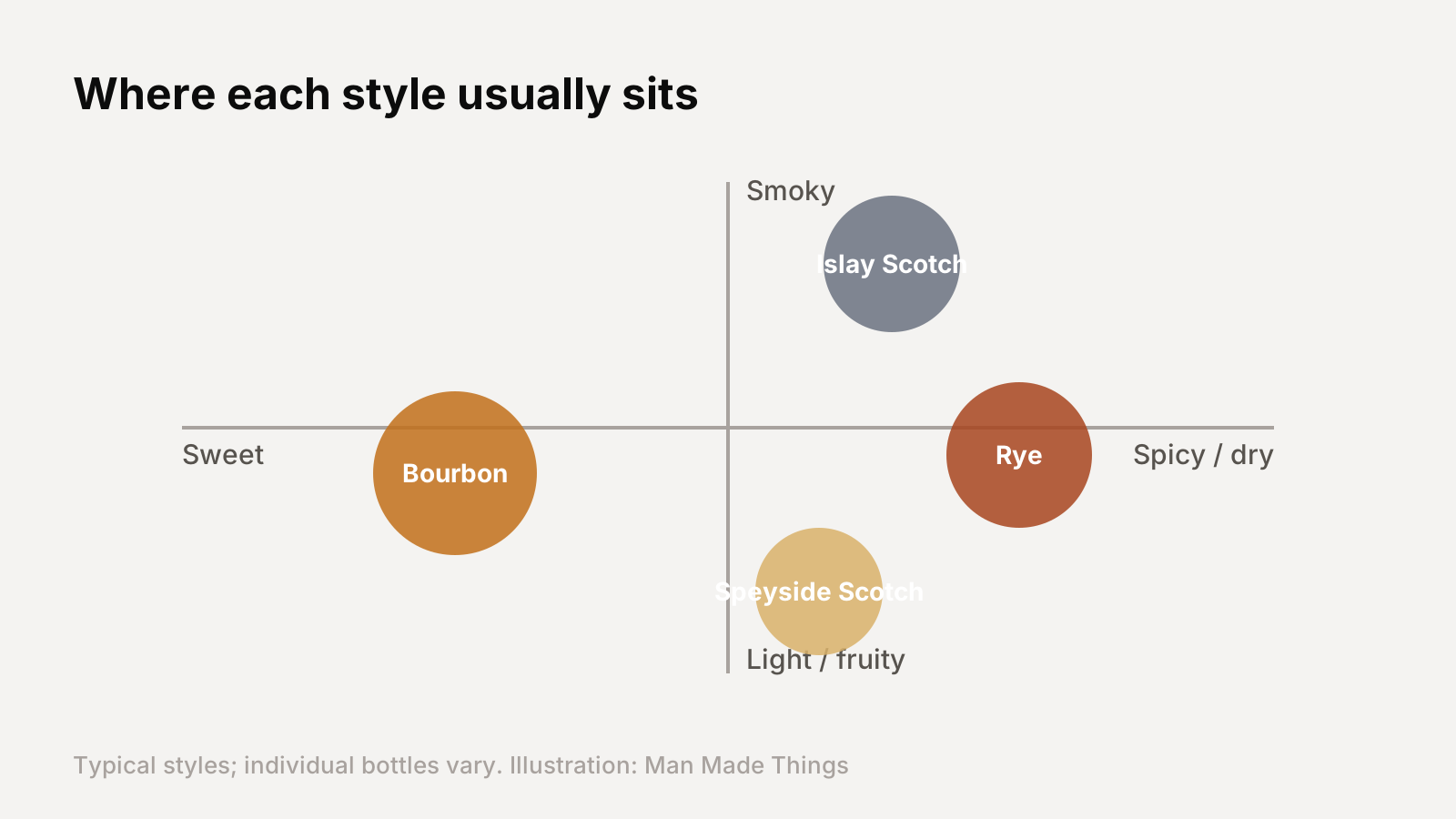
My simple advice:
- You like sweet, smooth drinks: start with a bourbon. Look for "straight bourbon" on the label for a solid baseline.
- You like bold, spicy flavors or cocktails: start with a rye.
- You want something lighter or more complex: try a Speyside or Highland single malt Scotch before a smoky Islay one.
Taste them side by side if you can, with a splash of water. A few drops of water often opens up the aroma, and comparing two glasses teaches you more than drinking ten bottles one at a time.
Frequently asked questions
Does bourbon have to be made in Kentucky?
+
No. Bourbon must be distilled and aged in the United States, but it can be made in any state.
What makes rye different from bourbon?
+
Rye whiskey uses at least 51% rye grain instead of 51% corn. That makes it drier and spicier, while bourbon tends to be sweeter.
How long does Scotch have to be aged?
+
At least three years in oak casks in Scotland, under the Scotch Whisky Regulations 2009.
What does straight bourbon mean?
+
Straight bourbon meets all bourbon rules and has been aged at least two years in new charred oak containers.
Sources
Editor-in-Chief
Rahul has been writing about gadgets and software since 2013, first at Thetechhacker and now at Man Made Things. He edits every review on the site and signs off on every verdict.
More from Rahul →