Sennheiser HDB 630 Review: An Audiophile Headphone That Happens to Be Wireless
A research-based review of the Sennheiser HDB 630 ($499.95): wireless anc over-ear, with Sennheiser's official specs, what they mean, how it compares with other Sennheiser models and who it's for.
We may earn a commission when you buy through links on this page. Learn more
Quick answer
The Sennheiser HDB 630 is Sennheiser's audiophile-tuned wireless headphone, priced at $499.95 on Sennheiser's US store. If you care more about sound quality than smart features, the HDB 630 is the most audiophile-focused wireless headphone Sennheiser makes.
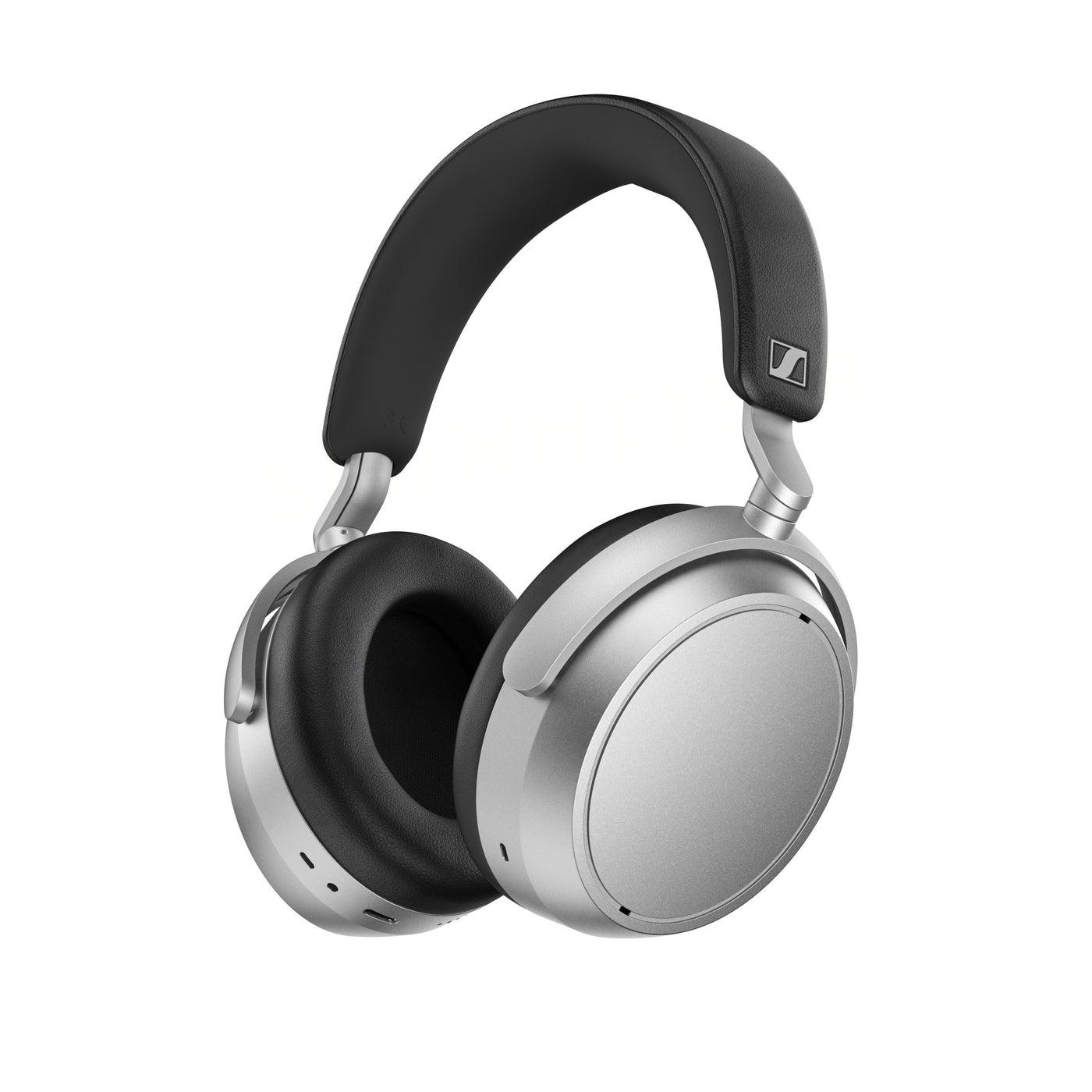
Sennheiser has made headphones for decades, and the HDB 630 is Sennheiser's audiophile-tuned wireless headphone. It costs $499.95 on Sennheiser's official US store. It costs $100 more than the MOMENTUM 5 Wireless, but it's aimed at a different listener: someone who wants neutral, high-resolution sound and expert controls rather than the most advanced noise cancellation.
A note on how we review: I haven't completed a hands-on test of the HDB 630, so there's no star rating on this page. Everything below comes from Sennheiser's official US product page, with plain-English explanations of what the specs mean and how it compares with the rest of Sennheiser's lineup. See all models in our guide to every Sennheiser headphone.
Image: Sennheiser
Sennheiser
Sennheiser HDB 630
If you care more about sound quality than smart features, the HDB 630 is the most audiophile-focused wireless headphone Sennheiser makes.
Best for: Audiophiles who want wireless convenience
Pros
- 01Audiophile tuning
- 02Parametric EQ and Crossfeed
- 03BTD 700 dongle included
- 0424-bit/96 kHz over USB-C
Cons
- 01$499.95
- 02Heavier at 311 g
- 03Best features need the dongle or USB
What the HDB 630 is
The HDB 630 is Sennheiser's wireless headphone for audiophiles. Sennheiser says it pairs a neutral audiophile tuning with minimal digital processing, plus noise cancellation and a 60-hour battery.
Its standout features are aimed at enthusiasts: a parametric EQ that lets you set frequency bands, width and gain, and a Crossfeed function. It comes with Sennheiser's BTD 700 Bluetooth dongle, which enables high-resolution aptX HD and aptX Adaptive from devices that don't support them, and it plays lossless audio up to 24-bit/96 kHz over USB-C. There's also a detachable 3.5mm analog cable.
Sound, according to Sennheiser
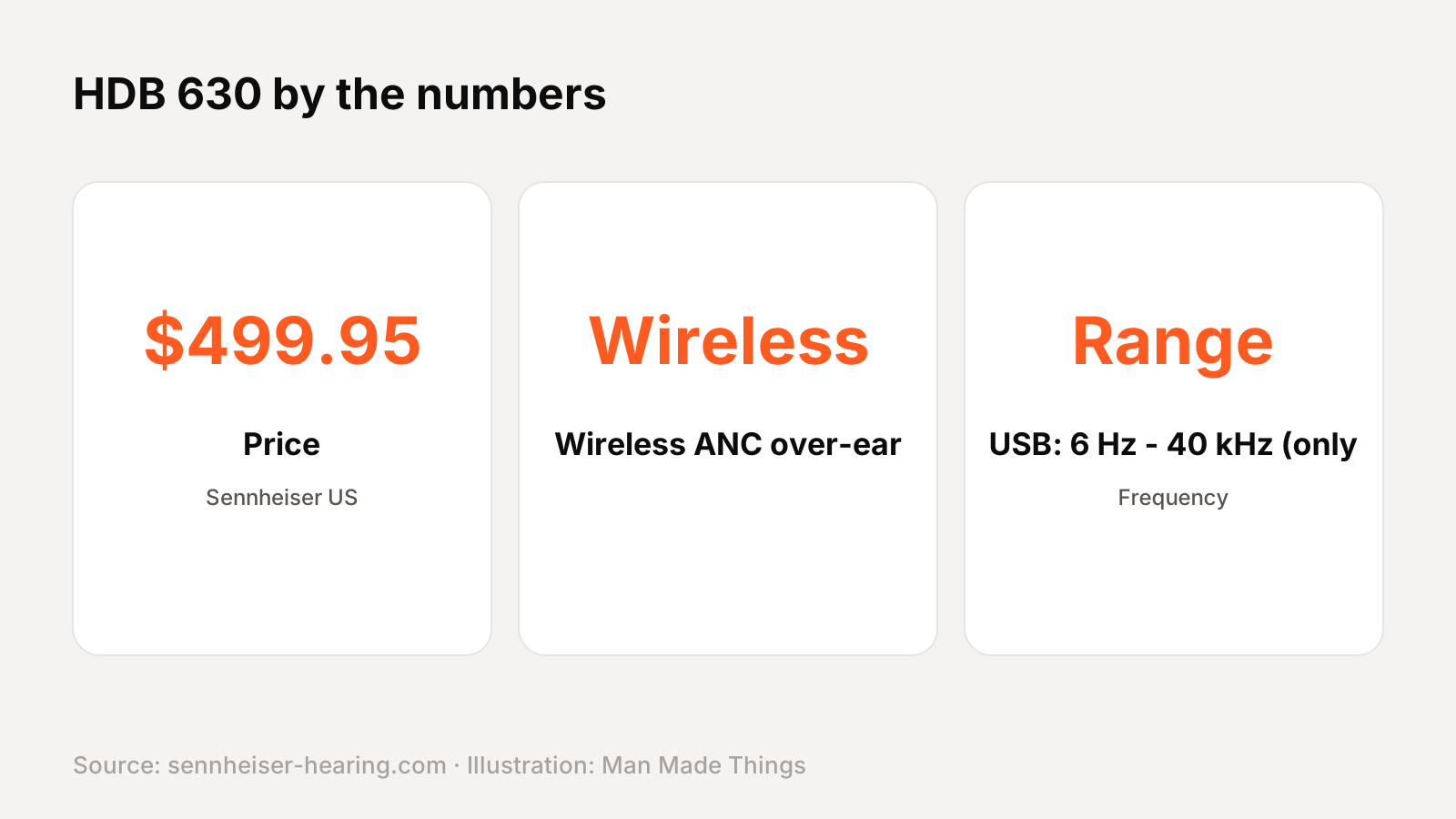
Sennheiser describes "lifelike mids, stunning detail, and a wide, natural soundstage" from its in-house 42mm transducer, with a frequency response up to 40 kHz over line-in, USB or aptX Adaptive at 96 kHz.
What the numbers mean: frequency response is the range of sound the headphone reproduces; human hearing is often cited as roughly 20 Hz to 20 kHz, so extended figures mostly reflect driver headroom. As a wireless headphone with its own built-in amplifier, it doesn't need an external amp.
HDB 630 specs
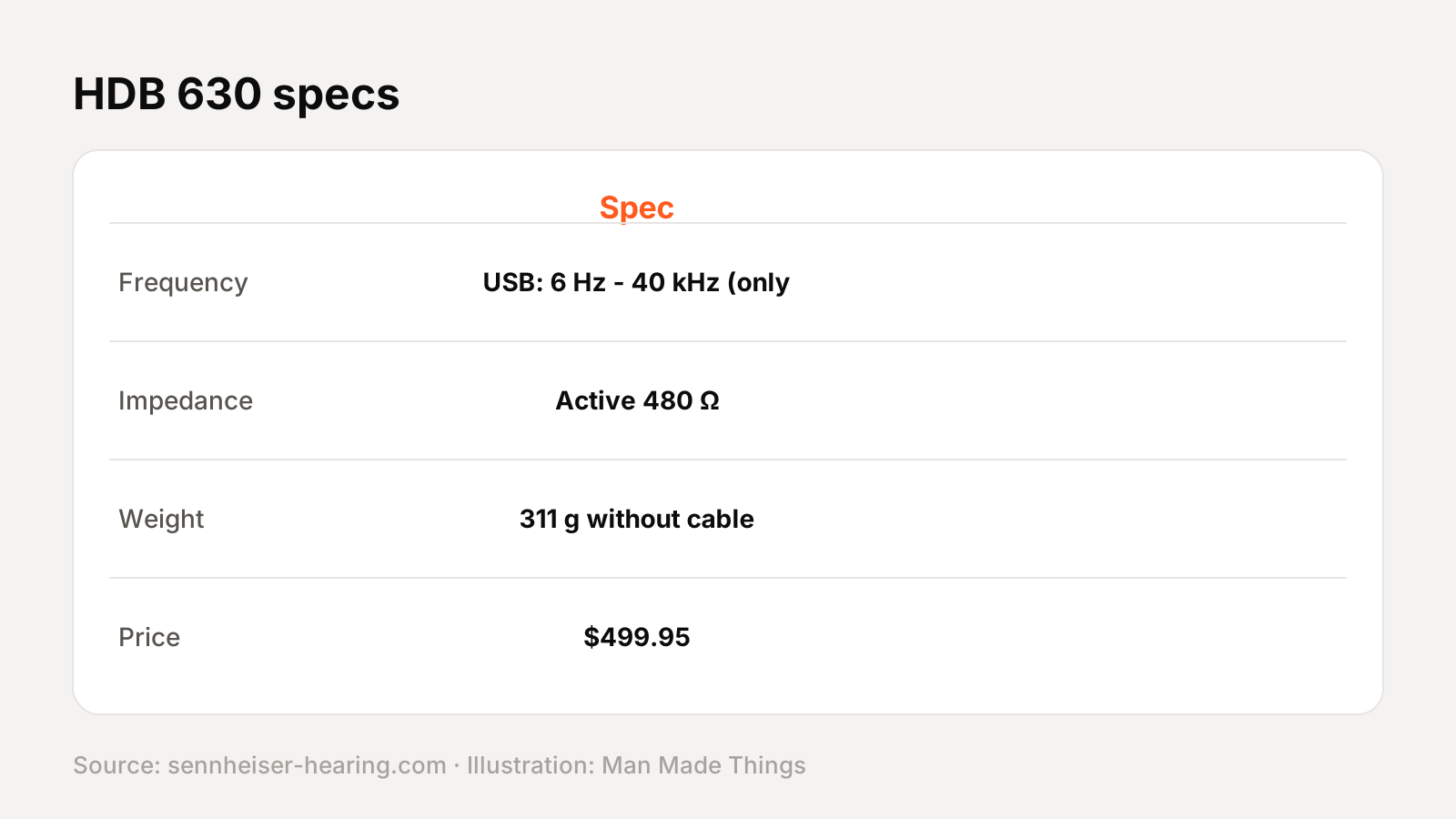
From Sennheiser's official US product page:
| Spec | HDB 630 |
|---|---|
| Weight | 311 g without cable |
| Audio cable | 1.20 m cable with 3.5 mm plug, detachable, right side |
| USB cable | 1.20 m with C-to-C connection |
| Ear coupling | Over-ear |
| Ear pad material | Leatherette (synthetic) |
| Resolution | Up to 24 bit / 96 kHz with USB-C, analog input or BTD 700 Bluetooth® USB C Dongle |
| Connectivity | Bluetooth 5.2 |
| Codec support | aptX™ Adaptive™, aptX™ HD, aptX™, AAC, SBC |
| Frequency response | USB: 6 Hz - 40 kHz (only when using Line-In, USB (96 kHz) or Bluetooth with aptX adaptive (96kHz), 6 Hz - 22 kHz (otherwise) |
| Nominal impedance | Active 480 Ω |
| Sound pressure level (SPL) | 105 dB (1 kHz / 0 dBFS) |
| THD, total harmonic distortion | <0.2 % (1 kHz / 100 dB SPL) |
| Acoustic design | Closed-back |
| Transducer | Electrodynamic (moving coil) |
Price and colors: $499.95; Lunar Silver and Black.
Noise cancelling over-ears: what you get
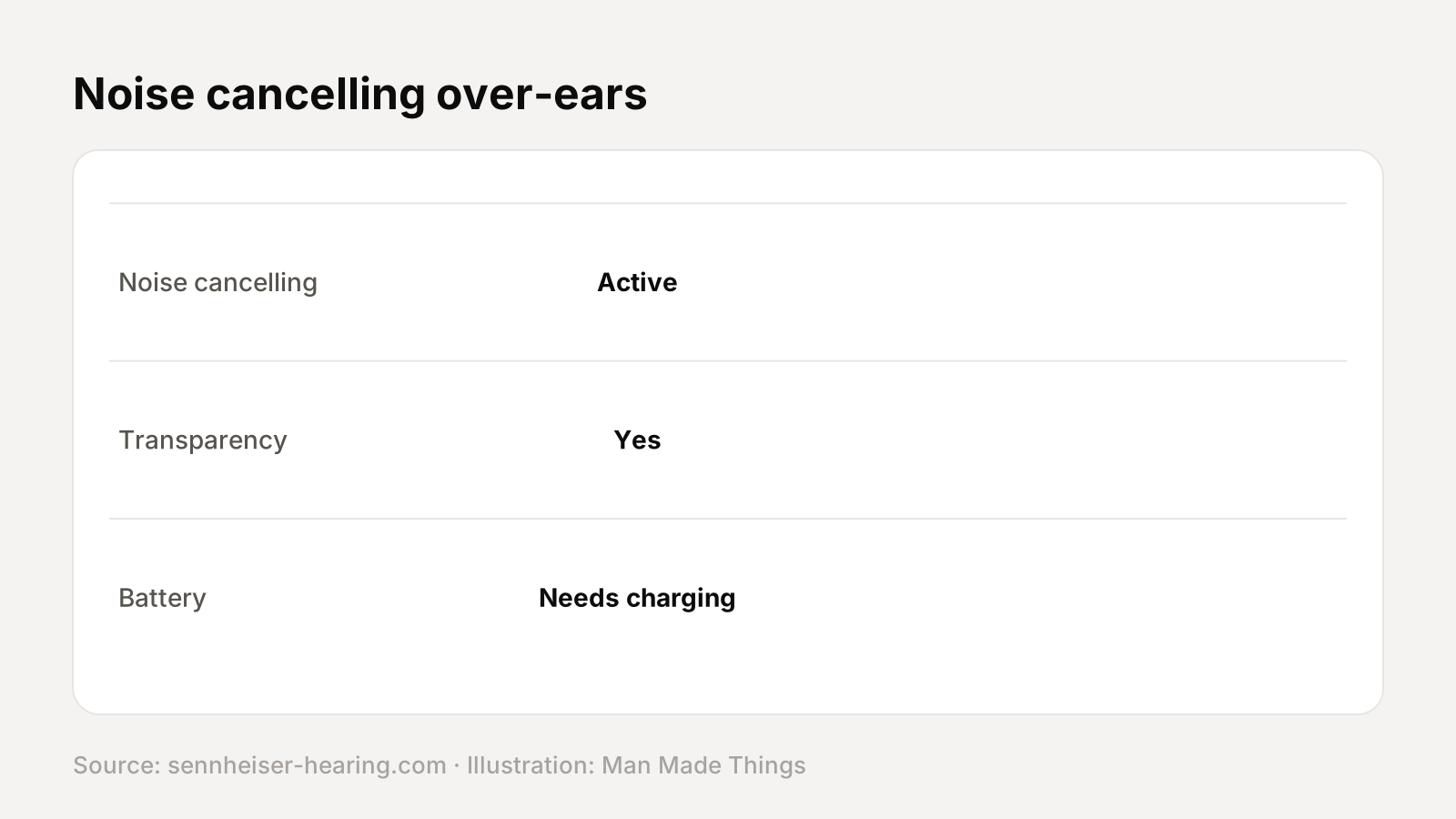
Active noise cancelling (ANC) uses microphones and processing to reduce steady outside noise, like engines and air conditioning, while closed ear cups block some sound physically. Sennheiser's wireless over-ears also add a Transparency Mode to let sound in when you need it.
| HDB 630 | Wired audiophile (e.g. HD 600) | |
|---|---|---|
| Noise cancelling | Yes | No |
| Battery | Needs charging | None needed |
| Use on the go | Ideal | Impractical (open back) |
| Best for | Travel, commuting, offices | Quiet rooms at home |
For more options beyond Sennheiser, see our best noise-cancelling headphones and ANC explained.
Getting the best from the HDB 630
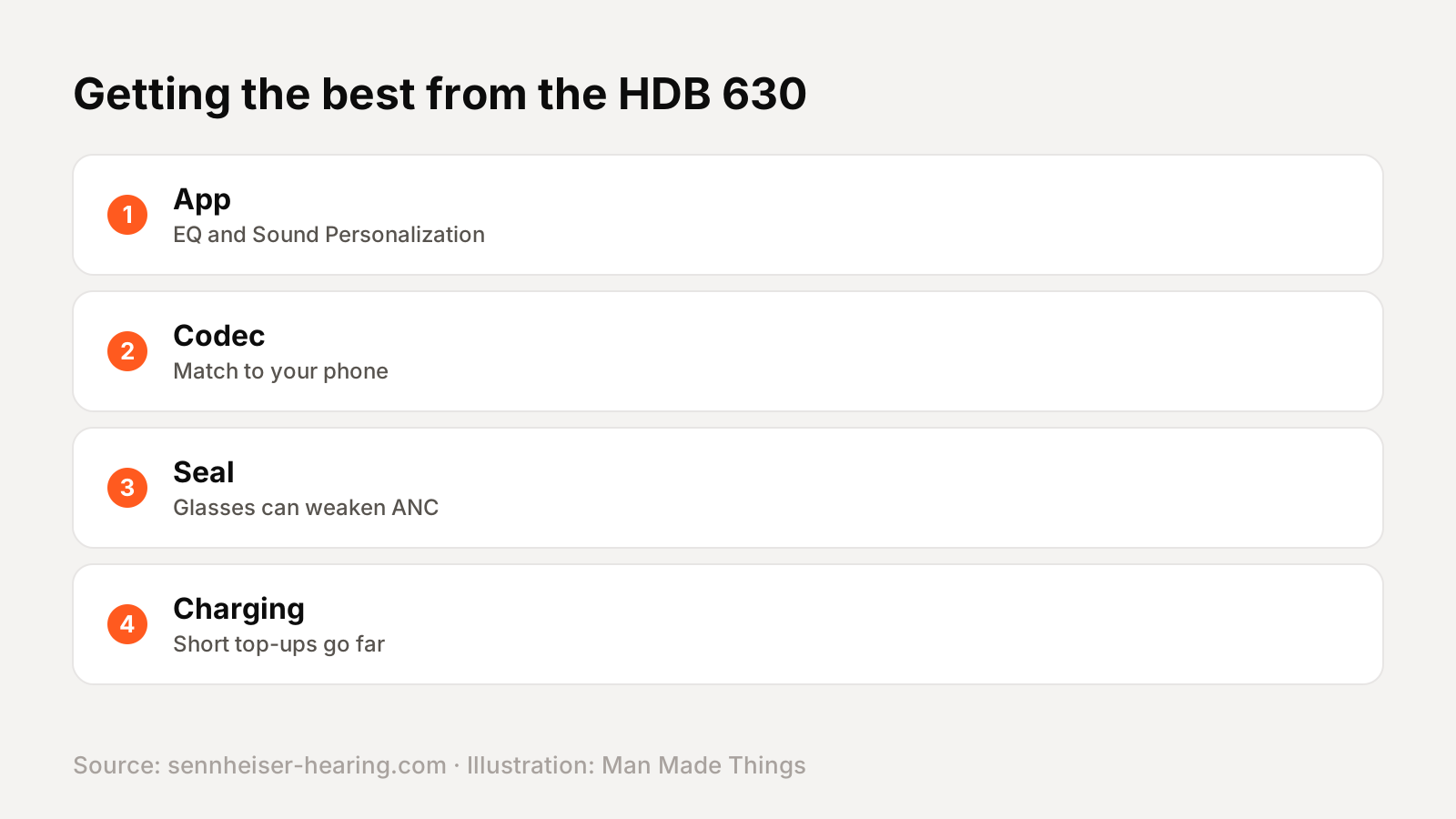
- Use the app. The Sennheiser Smart Control app adds an EQ, presets and Sound Personalization, which tailors the tuning to your hearing. It's worth running once.
- Match the codec to your phone. The HDB 630 supports aptX™ Adaptive™, aptX™ HD, aptX™, AAC, SBC. iPhones use AAC, while many Android phones support aptX; aptX Adaptive and aptX Lossless need a compatible Snapdragon Sound phone.
- Seal matters for ANC. Glasses arms and hair under the ear pads can reduce noise cancelling.
- Charge smart: a short top-up gives hours of playback, so you rarely need a full charge before a trip.
How it compares with other Sennheiser models
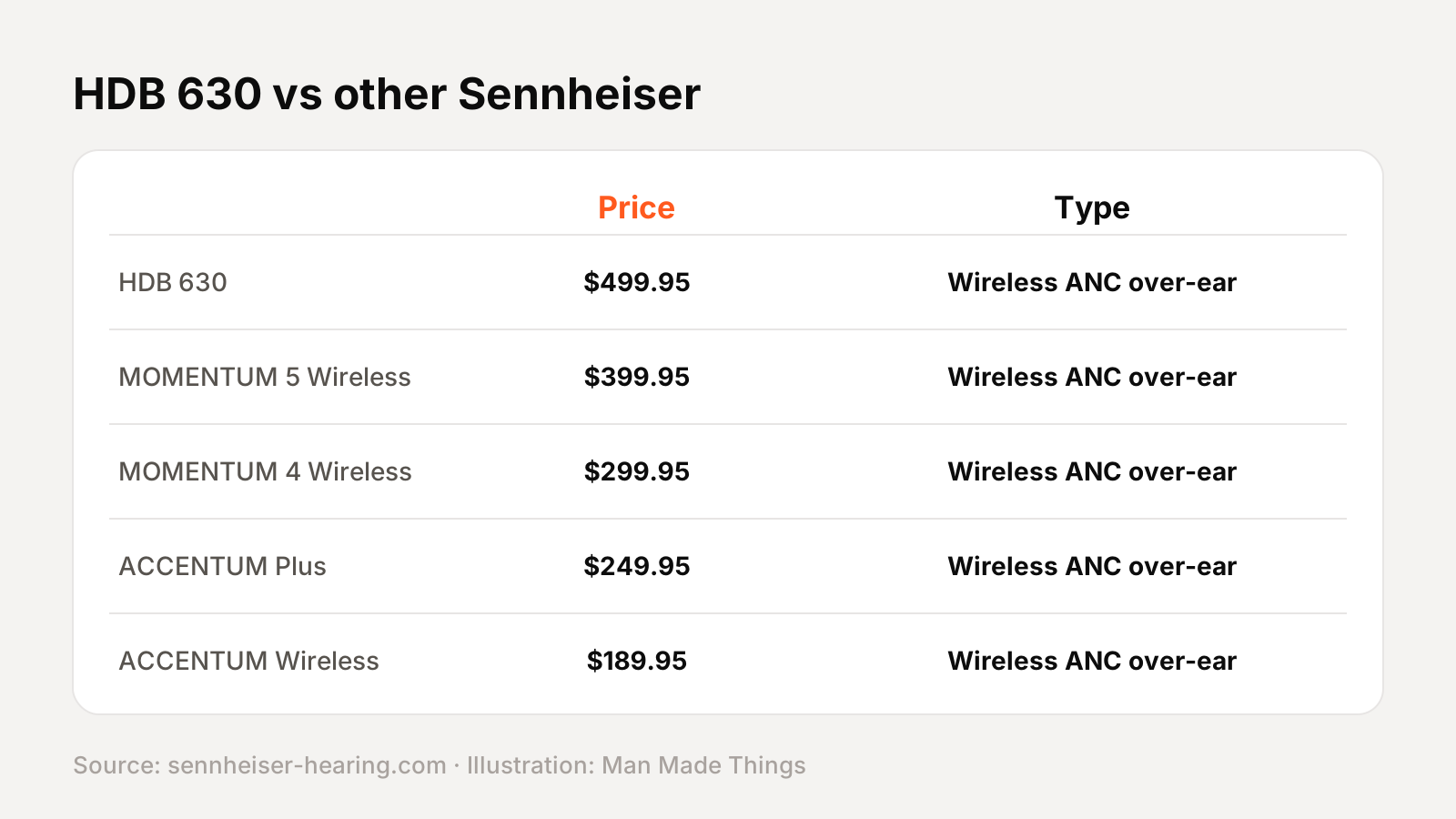
| Model | Price | Type |
|---|---|---|
| HDB 630 | $499.95 | Wireless ANC over-ear |
| MOMENTUM 5 Wireless | $399.95 | Wireless ANC over-ear |
| MOMENTUM 4 Wireless | $299.95 | Wireless ANC over-ear |
| ACCENTUM Plus | $249.95 | Wireless ANC over-ear |
| ACCENTUM Wireless | $189.95 | Wireless ANC over-ear |
Prices from Sennheiser's official US store, November 2026.
Warranty, care and spare parts
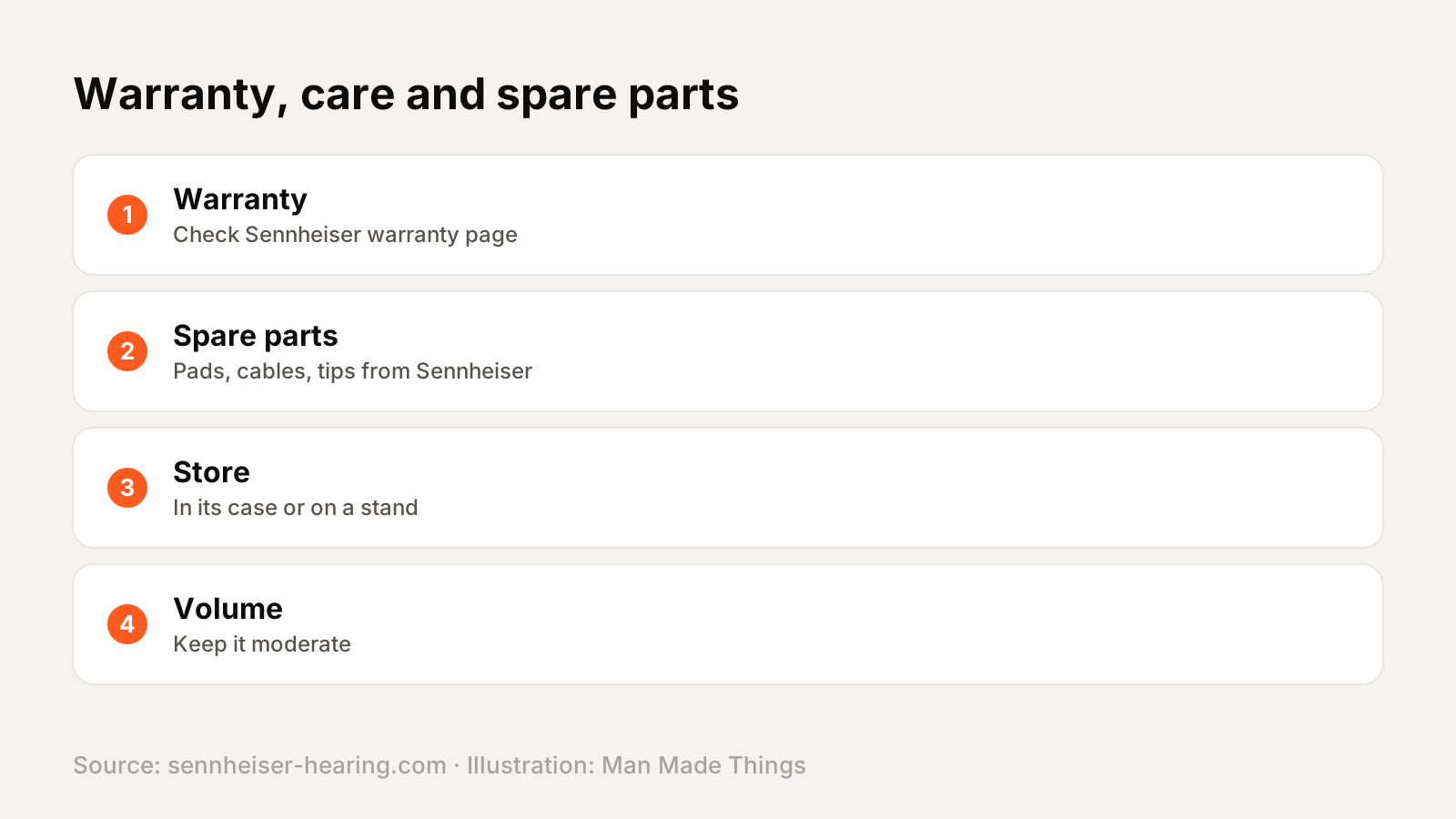
Warranty: the HDB 630 product page doesn't state the warranty length, and Sennheiser's detailed warranty page didn't load for us, so check Sennheiser's warranty information or the documents in the box before you buy.
Spare parts: Sennheiser sells replacement MOMENTUM 4 / MOMENTUM 5 / HDB 630 ear pads ($34.95) and ACCENTUM Wireless / ACCENTUM Plus ear pads ($24.95), plus the BTD 700 Bluetooth dongle ($59.95) for high-quality aptX Adaptive from a computer.
Listen safely: keep the volume moderate, especially with noise-isolating or high-sensitivity headphones, and take breaks during long sessions.
Should you buy the HDB 630?
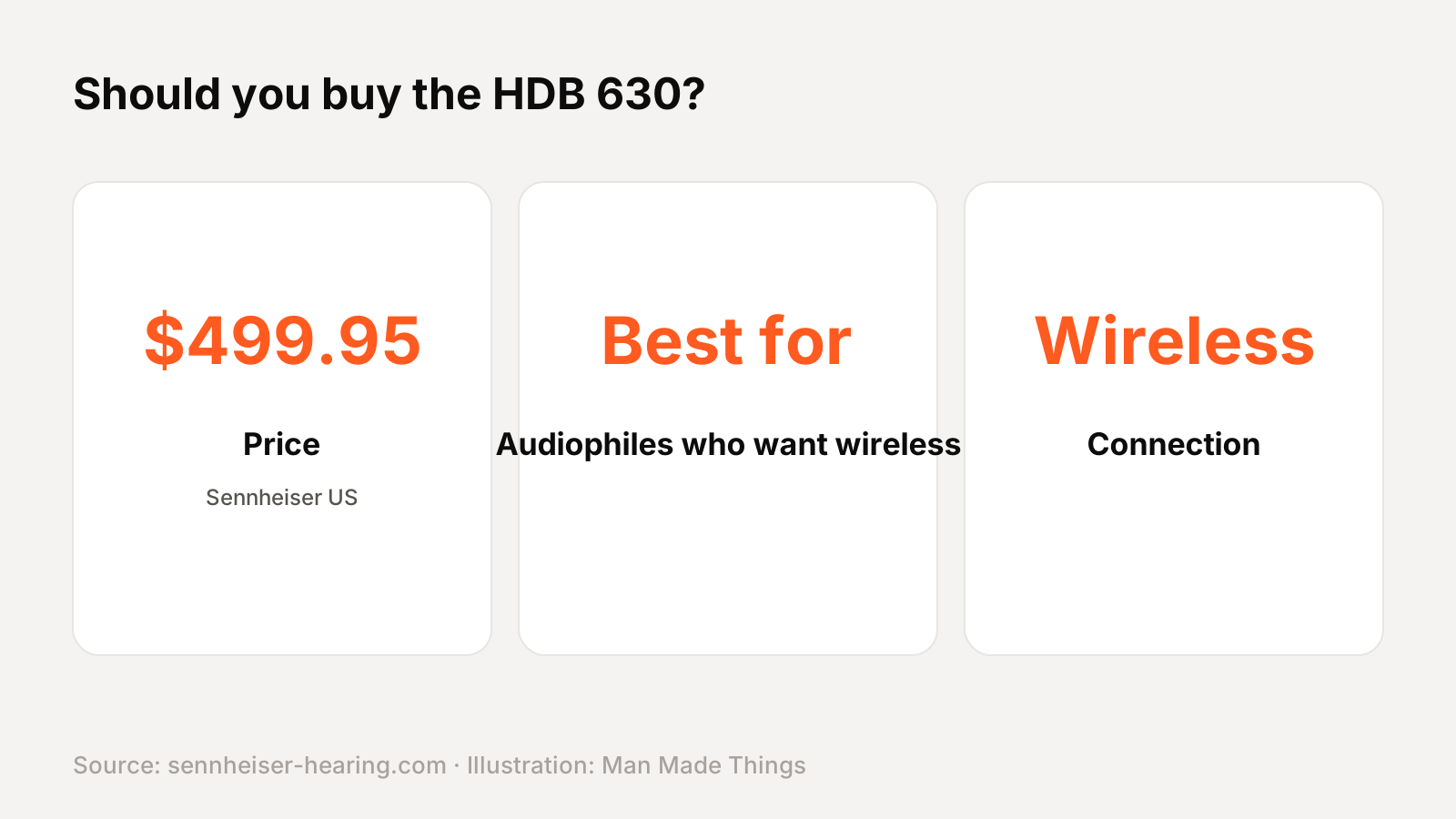
Buy it if: you're looking for audiophiles who want wireless convenience.
What we like:
- Audiophile tuning
- Parametric EQ and Crossfeed
- BTD 700 dongle included
- 24-bit/96 kHz over USB-C
What to consider:
- $499.95
- Heavier at 311 g
- Best features need the dongle or USB
Who should skip it: if you mostly listen at home in a quiet room and want the most sound quality per dollar, a wired open-back like the HD 560S or HD 6XX costs less and needs no charging. And if you want earbuds rather than over-ears, look at the MOMENTUM True Wireless 5.
The bottom line: If you care more about sound quality than smart features, the HDB 630 is the most audiophile-focused wireless headphone Sennheiser makes.
Sennheiser HDB 630 specs
| Weight | 311 g without cable |
|---|---|
| Audio cable | 1.20 m cable with 3.5 mm plug, detachable, right side |
| USB cable | 1.20 m with C-to-C connection |
| Ear coupling | Over-ear |
| Ear pad material | Leatherette (synthetic) |
| Resolution | Up to 24 bit / 96 kHz with USB-C, analog input or BTD 700 Bluetooth® USB C Dongle |
| Connectivity | Bluetooth 5.2 |
| Codec support | aptX™ Adaptive™, aptX™ HD, aptX™, AAC, SBC |
Test report
Hands-on test report: in progress
We don't publish scores or test results until a real unit has gone through our routine: battery rundown at 50% volume, call quality outdoors, noise cancellation on a commute, fit over a full workday, and connection stability across devices. This review will be updated with measured results and a star rating once testing is complete.
Frequently asked questions
How much is the Sennheiser HDB 630?
+
$499.95 on Sennheiser's official US store, November 2026.
Is the HDB 630 wireless?
+
Yes.
Who is the HDB 630 for?
+
Audiophiles who want wireless convenience.
Does the HDB 630 need an amplifier?
+
As a wireless headphone with its own built-in amplifier, it doesn't need an external amp.
Sources
Editor-in-Chief
Rahul has been writing about gadgets and software since 2013, first at Thetechhacker and now at Man Made Things. He edits every review on the site and signs off on every verdict.
More from Rahul →