What Is Active Noise Cancellation, and Is It Worth Paying Extra For?
How active noise cancellation actually works, what it can and can't block, and how to tell if you need it before you buy earbuds or headphones.
We may earn a commission when you buy through links on this page. Learn more
Quick answer
Active noise cancellation uses tiny microphones to hear outside noise and plays an opposite sound wave to cancel it. It works best on steady, low sounds like engines, fans and train rumble, and much less on voices or sudden noises. It's worth paying for if you commute, fly or work somewhere loud.
A few years ago, noise cancellation was something you only got in $300 over-ear headphones that frequent flyers swore by. Now it's on earbuds that cost less than a nice dinner. Almost every product page says "ANC" somewhere near the top.
But the label alone tells you very little. Two pairs of earbuds can both say ANC and perform completely differently. So let's look at how it actually works, what it can and can't do, and whether you should pay more to get a good version of it.
How active noise cancellation works
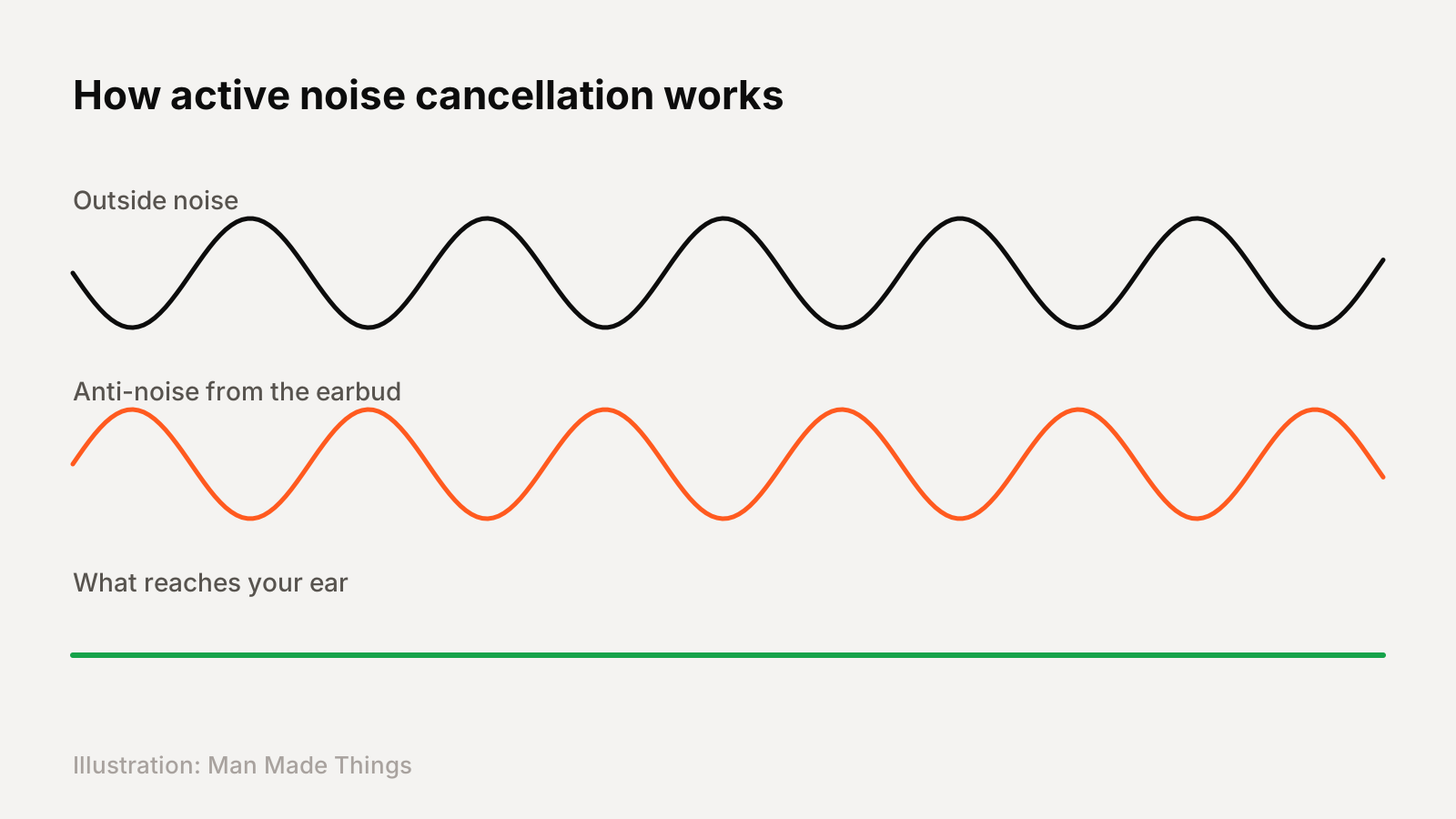
Sound is just a wave of pressure moving through the air. If you take a wave and add its exact opposite (where one has a peak, the other has a dip), the two cancel each other out. That's the whole idea.
ANC earbuds have small microphones that listen to the sound around you. A chip inside analyzes that sound and generates an "anti-noise" signal, which is the same wave flipped upside down. The speaker plays that anti-noise along with your music, and the noise you'd normally hear gets mostly canceled before it reaches your eardrum.
This all has to happen in a tiny fraction of a second. That's why the chip matters so much, and why ANC quality varies so much between brands.
Feedforward, feedback and hybrid ANC
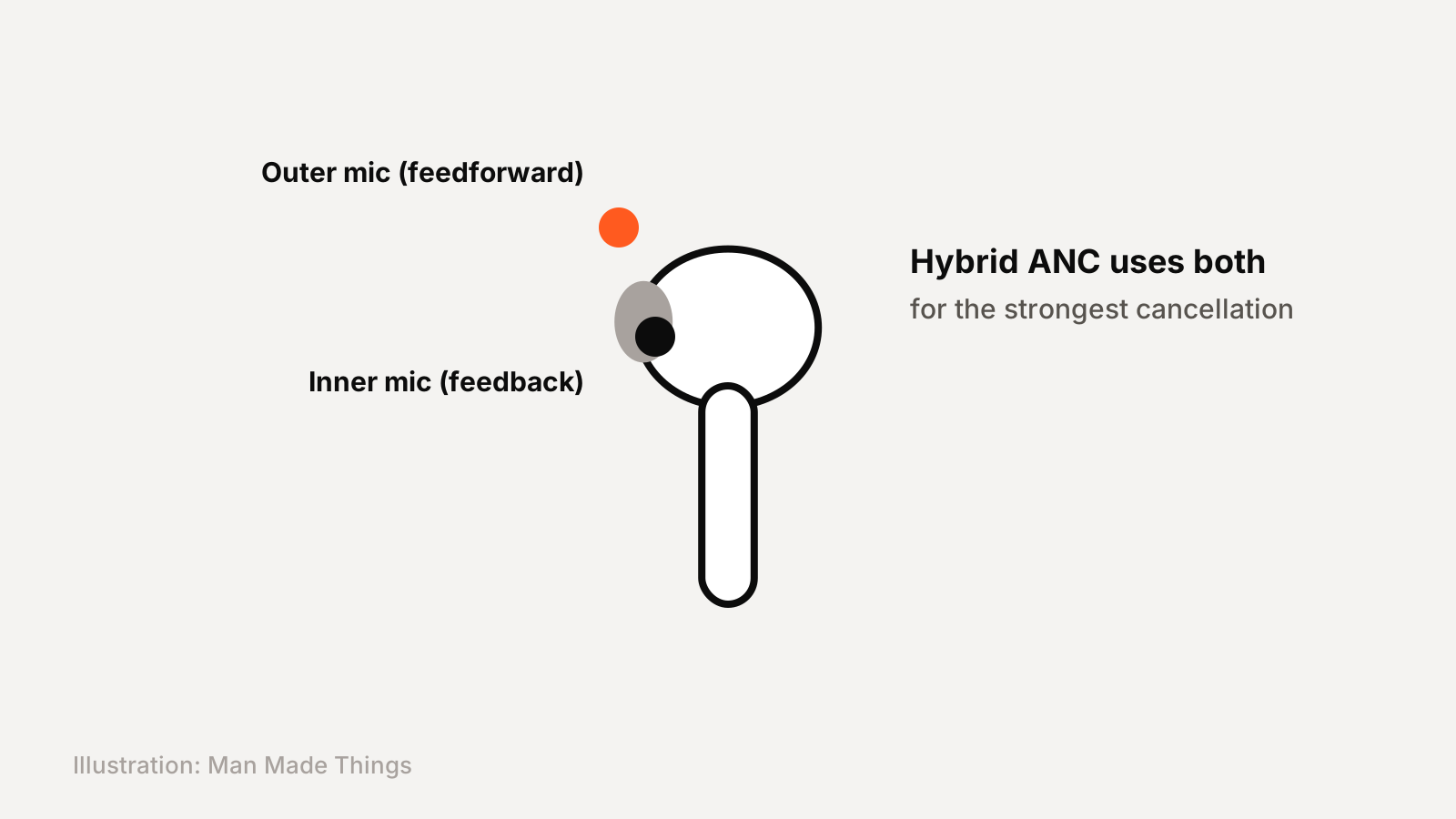
You'll see these three terms on spec sheets. Here's what they mean in plain English.
- Feedforward ANC uses a microphone on the outside of the earbud. It hears noise before it reaches your ear.
- Feedback ANC uses a microphone inside, near your ear canal. It hears what you're actually hearing, including noise that leaked past the seal.
- Hybrid ANC uses both. This is what most good earbuds use today, and it's what you should look for.
If a cheap pair just says "ANC" with no details, it's usually a basic single-mic system. It will help a little, but don't expect miracles.
What ANC blocks well, and what it doesn't
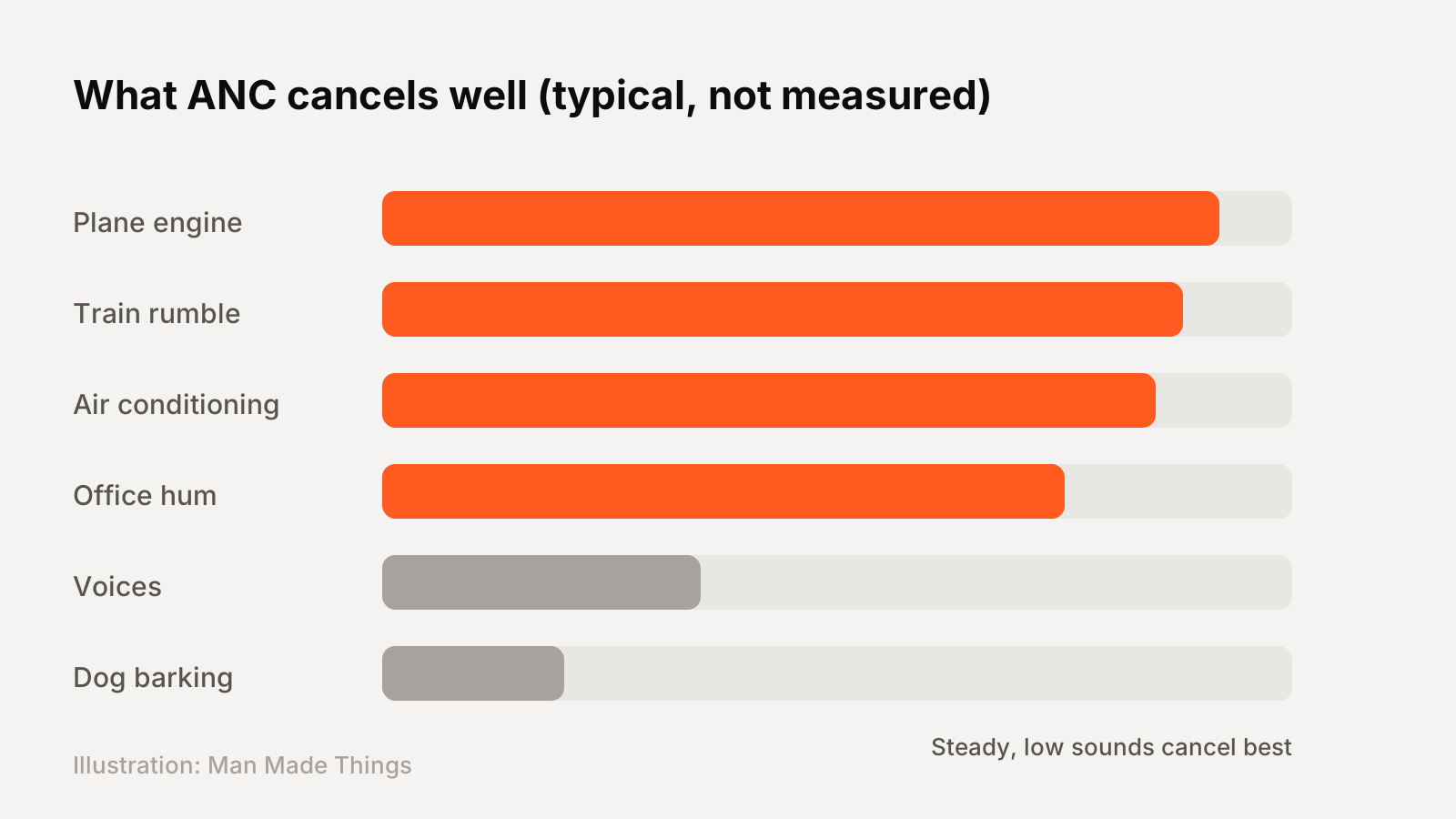
This is the part most product pages leave out.
ANC is very good at steady, low-pitched noise: airplane engines, bus and train rumble, air conditioning, the hum of an office. These sounds are predictable, so the chip can match them easily.
It's much weaker against voices, clattering dishes, a baby crying, or a dog barking. These sounds are higher-pitched and change quickly, so they're hard to predict and cancel.
That's where the fit comes in. Ear tips that seal your ear block higher-pitched sound physically. This is called passive isolation, and it does a lot of the work ANC can't. So a pair with mediocre ANC but a great seal can sometimes beat a pair with strong ANC and a loose fit. Always try the different tip sizes in the box.
Transparency mode and adaptive modes
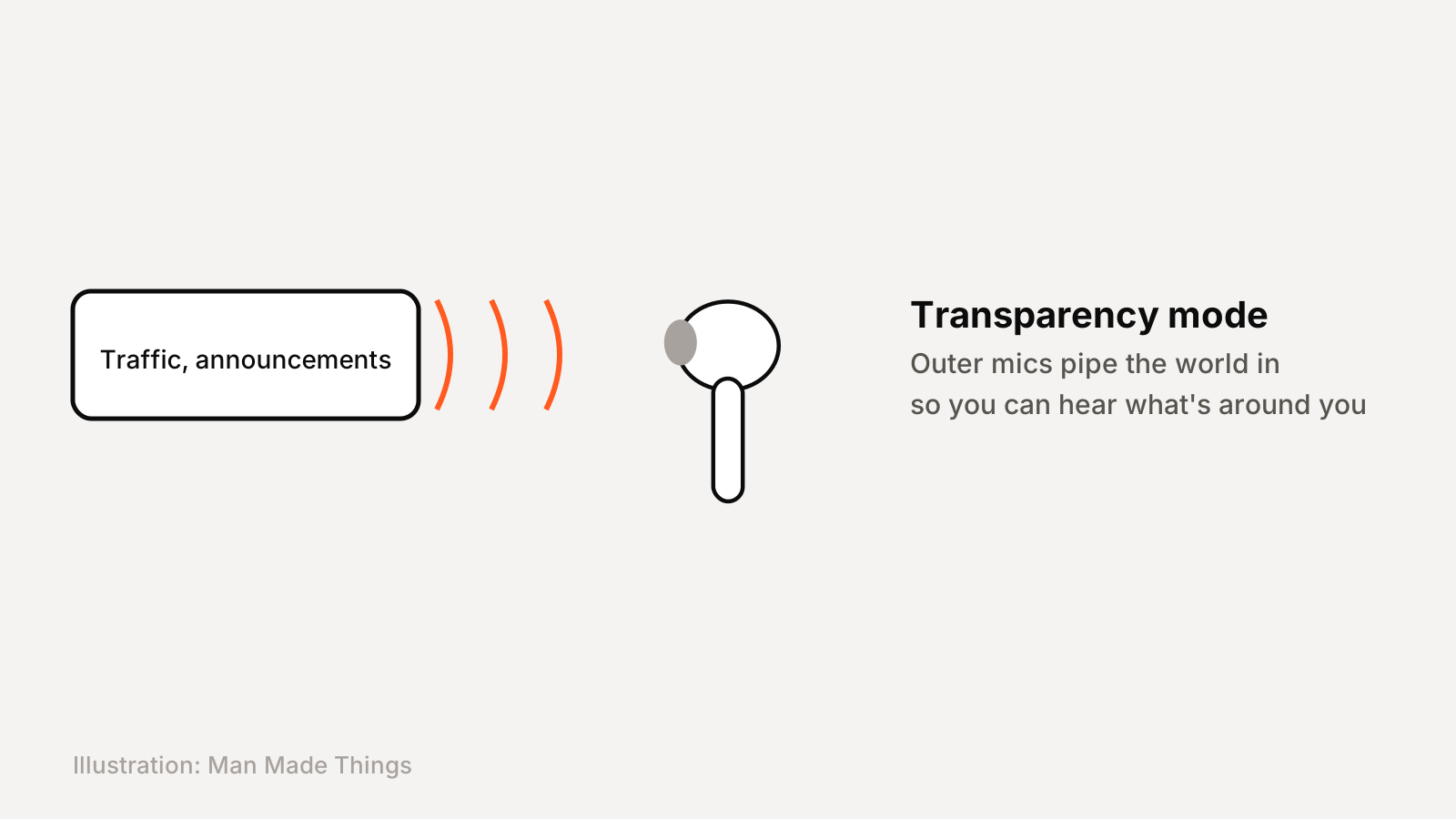
Most ANC earbuds also have a transparency or ambient mode. This does the opposite of ANC. It uses the outside microphones to pipe the world in, so you can hear announcements, traffic or a coworker without taking your earbuds out.
Newer earbuds go one step further with adaptive modes. Apple calls it Adaptive Audio, and other brands have their own names. The earbuds blend ANC and transparency automatically based on how loud your surroundings are. For most people, this is the mode they end up leaving on all day.
The downsides nobody mentions
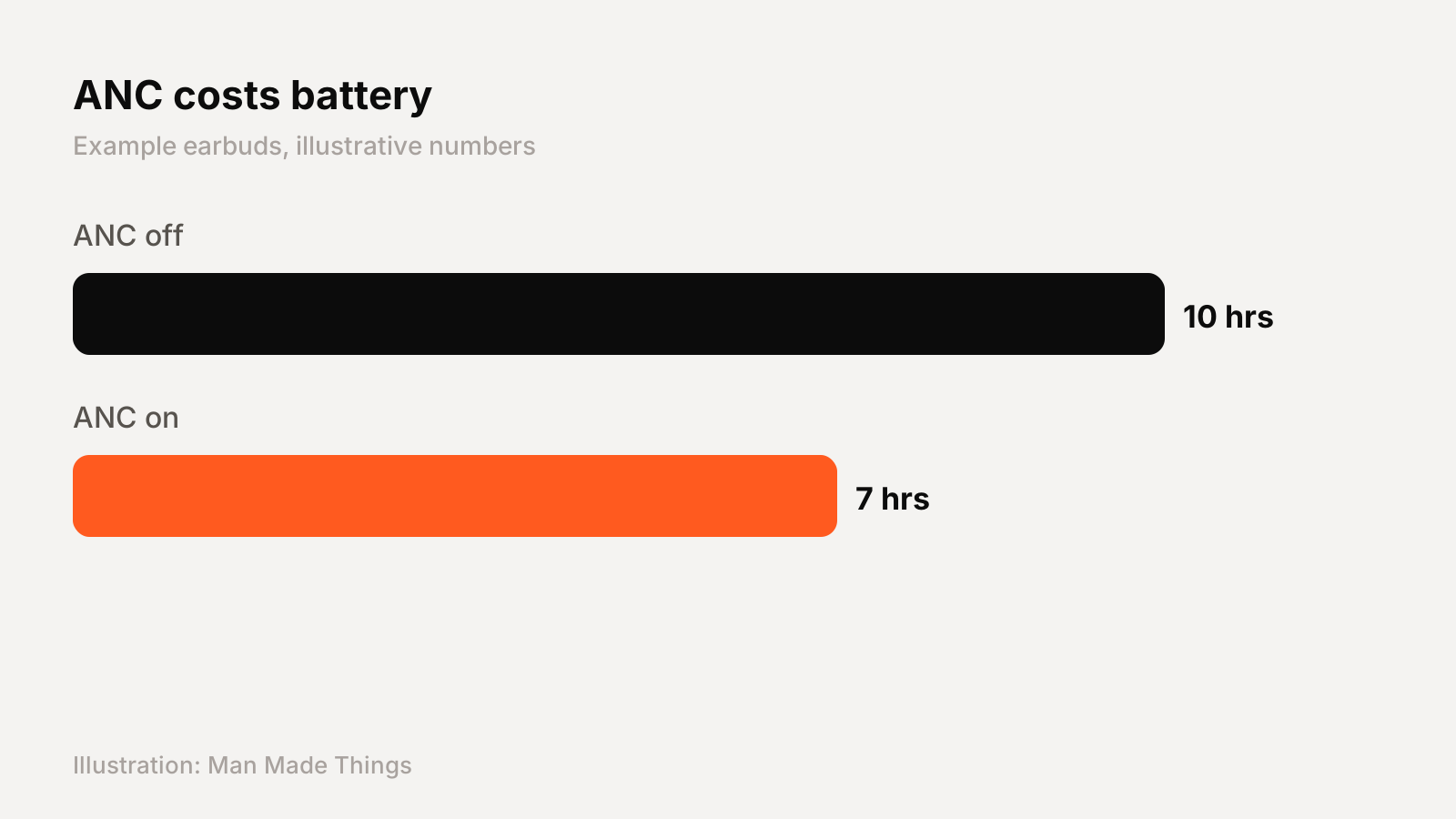
ANC isn't free. There are three trade-offs you should know about.
Battery life. ANC uses power. Most earbuds list two battery numbers, one with ANC on and one with it off, and the ANC number is always lower.
The pressure feeling. Some people feel a slight "plugged ear" sensation with strong ANC, like being on a plane during descent. It's harmless, and many people stop noticing it after a few days. If you're sensitive to it, try the earbuds somewhere you can return them.
A faint hiss. Cheaper ANC systems can add a quiet background hiss that you'll notice in a silent room. Better systems keep it close to inaudible.
How to judge ANC claims when shopping
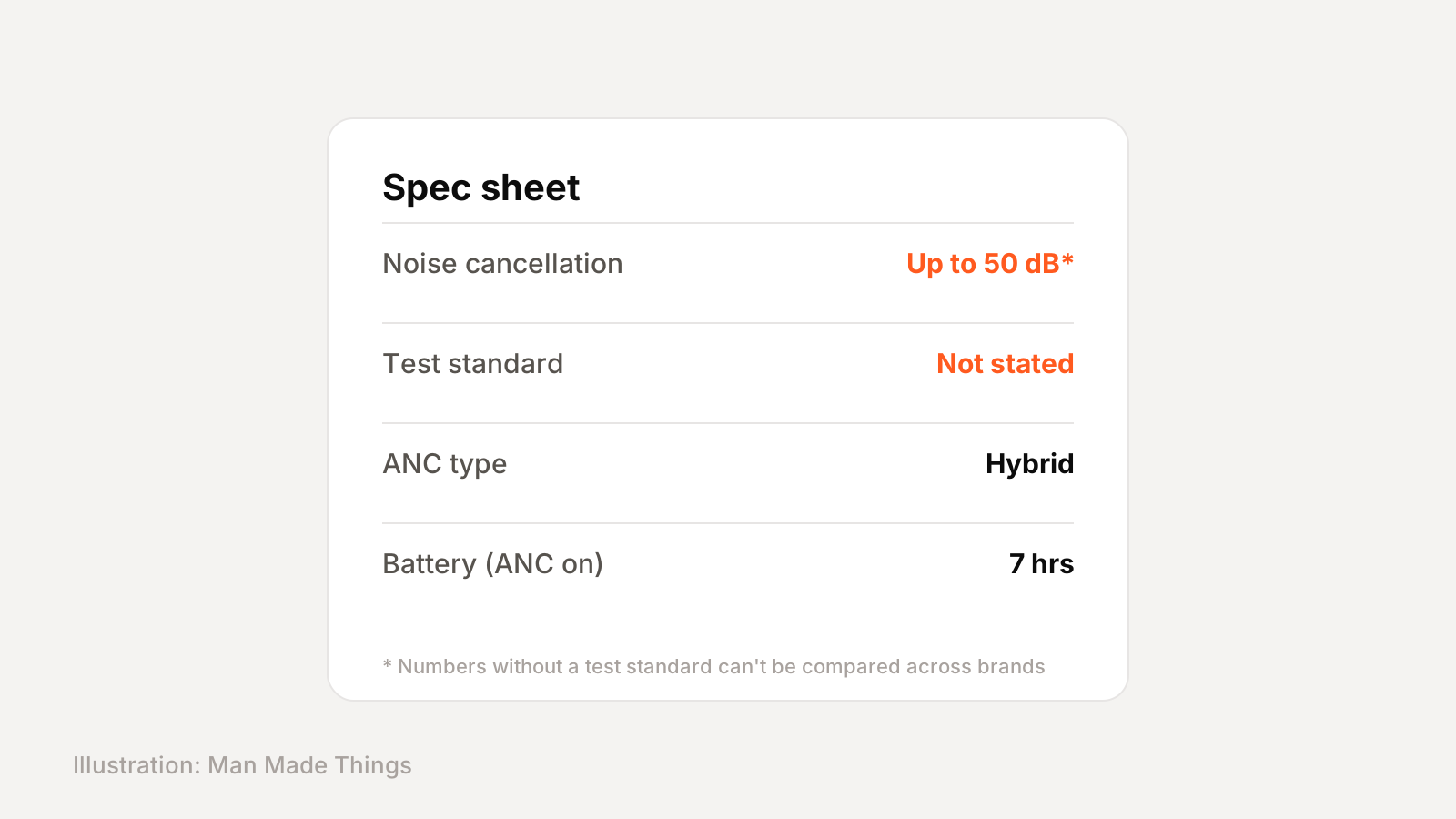
Brands love numbers like "up to 50 dB of noise reduction" or "2x stronger ANC." Treat these carefully. There's no single rule every brand follows for measuring them, so a number from one brand usually can't be compared with a number from another.
The better claims mention a test standard. For example, Apple says it measured the AirPods Pro 3 noise cancellation using IEC 60268-24, an international standard for measuring ANC. That doesn't tell you how they'll feel on your commute, but it means the company is comparing like with like.
My advice: use the specs to build a shortlist, then rely on hands-on reviews to decide.
So, is ANC worth paying for?
Here's the simple answer.
Get good ANC if you take a train, bus or plane regularly, you work in an open office or a loud home, or you tend to turn your music up to drown out noise. Lower volume is better for your hearing in the long run.
Don't pay extra for it if you mostly listen at home, at a quiet desk, or while running outdoors, where you need to hear traffic anyway.
If you're in the middle, a pair with decent hybrid ANC, a good tip seal and a transparency mode covers almost every situation. You don't need the most expensive pair to get most of the benefit.
Frequently asked questions
Does noise cancellation damage your ears?
+
No. ANC plays a quiet anti-noise signal, not loud sound. It can actually protect your hearing because you don't need to turn the volume up to hear over background noise.
Can ANC block out people talking?
+
Only partly. ANC is best at steady low-pitched noise like engines. Voices are higher-pitched and change quickly, so they are reduced mainly by the physical seal of the ear tips.
Does ANC drain the battery faster?
+
Yes. Most earbuds list a shorter battery life with ANC on than with it off.
Sources
Editor-in-Chief
Rahul has been writing about gadgets and software since 2013, first at Thetechhacker and now at Man Made Things. He edits every review on the site and signs off on every verdict.
More from Rahul →