Coffee Roast Levels Explained: Light vs Medium vs Dark
What light, medium and dark roast coffee really mean, how they taste, which has more caffeine, which brewing methods suit each, and how to keep beans fresh.
We may earn a commission when you buy through links on this page. Learn more
Quick answer
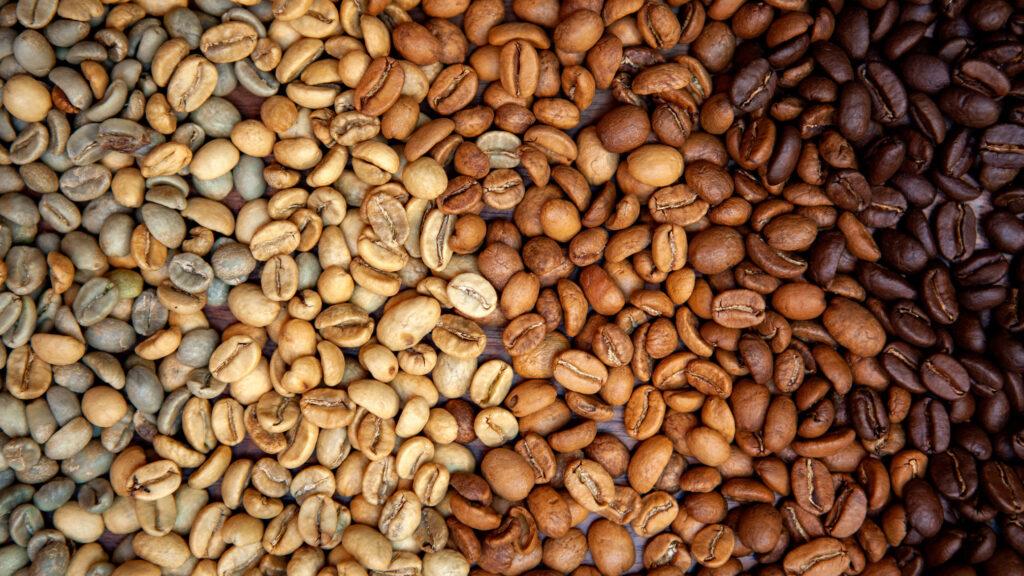
Light roasts are light brown and matte, with bright, fruity, more acidic flavors. Medium roasts are medium brown and balanced, often chocolatey and nutty. Dark roasts are shiny and oily, with bold, bittersweet, low-acid flavors. Caffeine is nearly the same by weight; light roast has slightly more per scoop because the beans are denser.
Walk down the coffee aisle and you'll see "blonde," "breakfast blend," "French roast" and "Italian roast" all on the same shelf. They're all describing one thing: how long and how hot the beans were roasted.
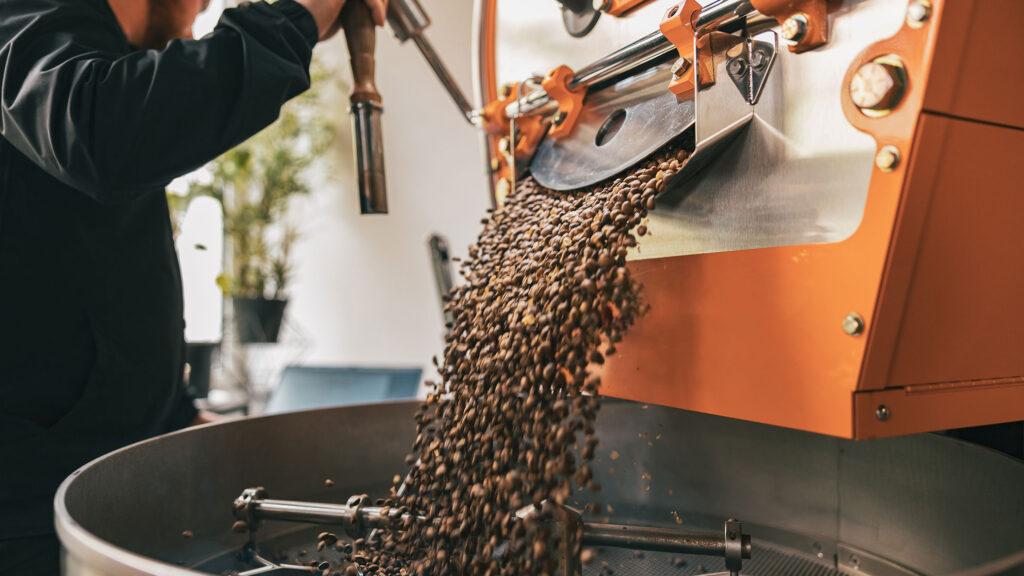
Roasting is what turns green, grassy coffee seeds into the brown beans we brew. The National Coffee Association says beans are quickly brought to an internal temperature of over 400°F, then cooled. Stop early and you get a light roast. Keep going and you get medium, then dark.
One important caveat before we start: there's no official standard. The NCA, Peet's and Stumptown all point out that one roaster's dark roast may be lighter than another's. So use these as a guide, and read the tasting notes on the bag. For brewing, see our how to make pour-over coffee guide.
How roasting works: first and second crack
Roasters listen for two sounds as beans heat up.
First crack is a popping sound, a bit like popcorn. Peet's says it happens at around 380–400°F, and Stumptown says roughly 9 to 10 minutes into a roast. A light roast is pulled from the heat around this point.
Second crack comes later. Peet's says it starts around 430–450°F, as the beans release gases and oils. That's dark roast territory. Medium roasts sit anywhere between first crack and second crack.
Peet's says a standard batch rarely goes beyond 20 minutes or 480°F. Counter Culture explains the trade-off well: lighter roasts emphasize the coffee's own characteristics, while darker roasts highlight the roast itself. That's why single-origin specialty coffees are often roasted lighter.
Light roast
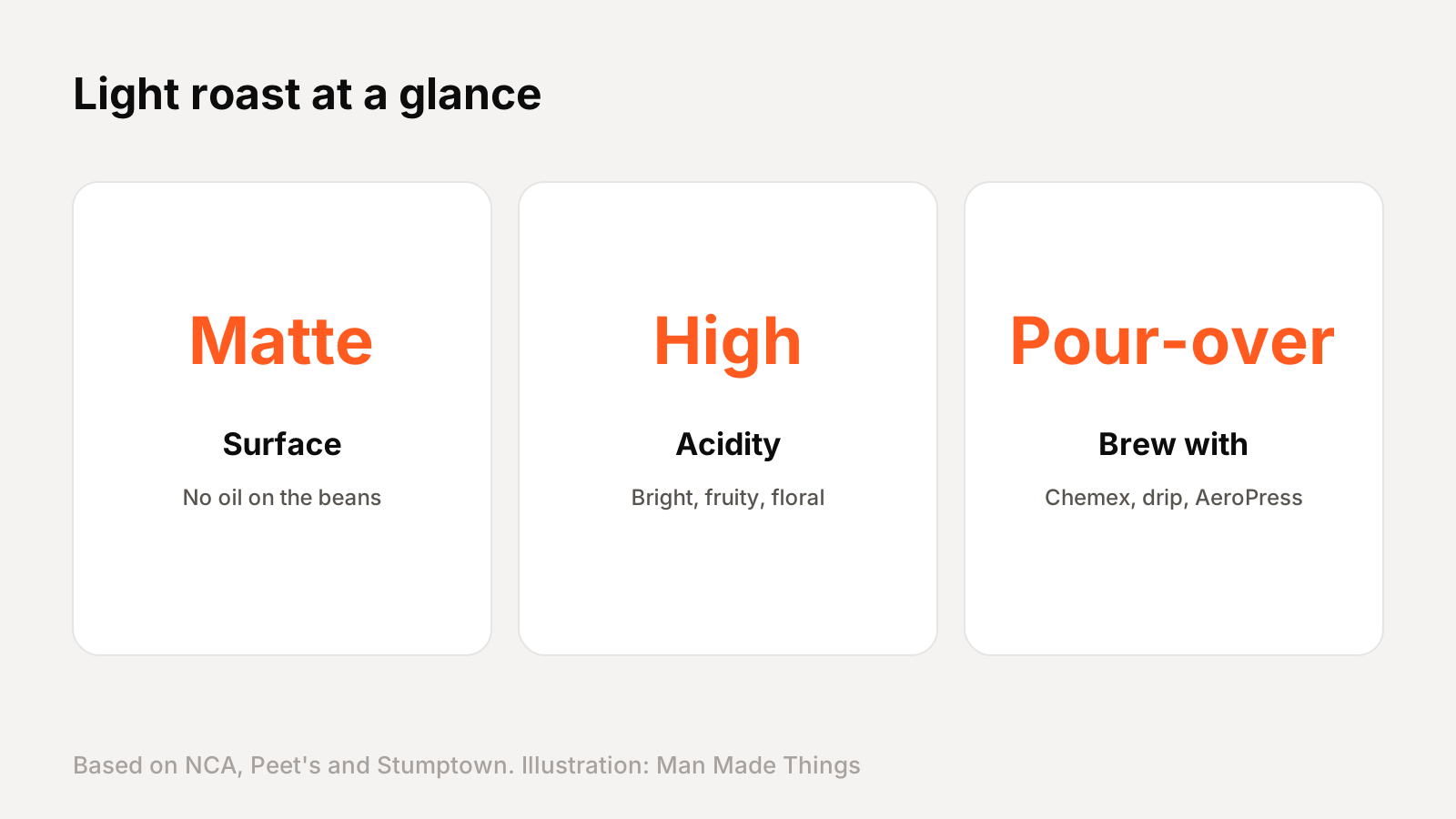
Look: light brown and matte. The NCA says light roasts aren't roasted long enough for oils to reach the surface.
Taste: bright and fruity. Peet's describes floral aromas, hints of bright fruit and a tart, vibrant, light body. Stumptown lists fruit-forward, citrusy notes.
Acidity: the highest. The NCA says the lighter the roast, the more acidic the coffee. "Acidic" here means bright and lively, like a crisp apple, not sour.
Brew it with: pour-over or a Chemex. Peet's recommends paper-filter methods like pour-over, drip and AeroPress, and Stumptown suggests a Chemex.
You may also see light roasts sold as blonde or cinnamon roast, according to the NCA. Peet's notes that lighter roasts often need a few extra days after roasting to rest before they taste their best.
Medium roast
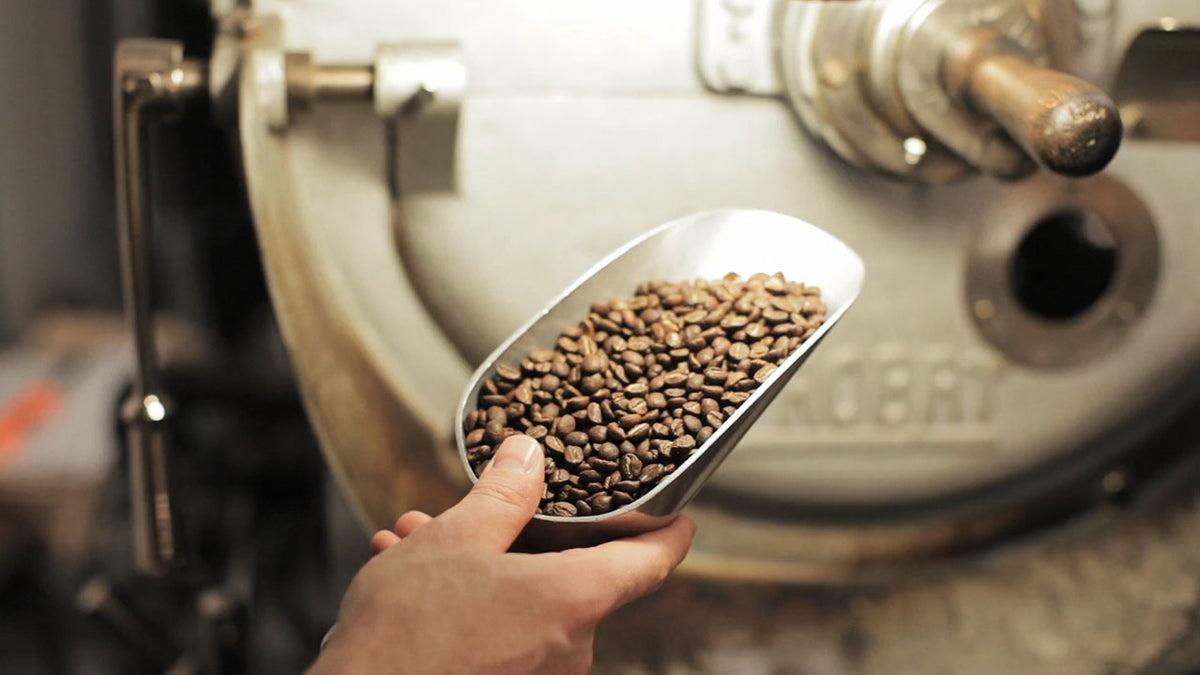
Look: medium brown, with a non-oily surface, says the NCA. Peet's describes them as slightly shiny.
Taste: balanced and smooth. Stumptown describes mellow, chocolatey flavors with notes of brown sugar, nuts or baking spices.
Acidity: medium.
Brew it with: almost anything. Peet's calls medium roast an all-around performer, as good in cold brew as in a pour-over, and Stumptown suggests drip or French press.
The NCA says medium roast is often called the American roast because it's so popular in the US, and many "breakfast blends" are medium roasts. If you're not sure where to start, this is it. It's also a great choice for cold brew, where its chocolatey sweetness really comes through.
Dark roast
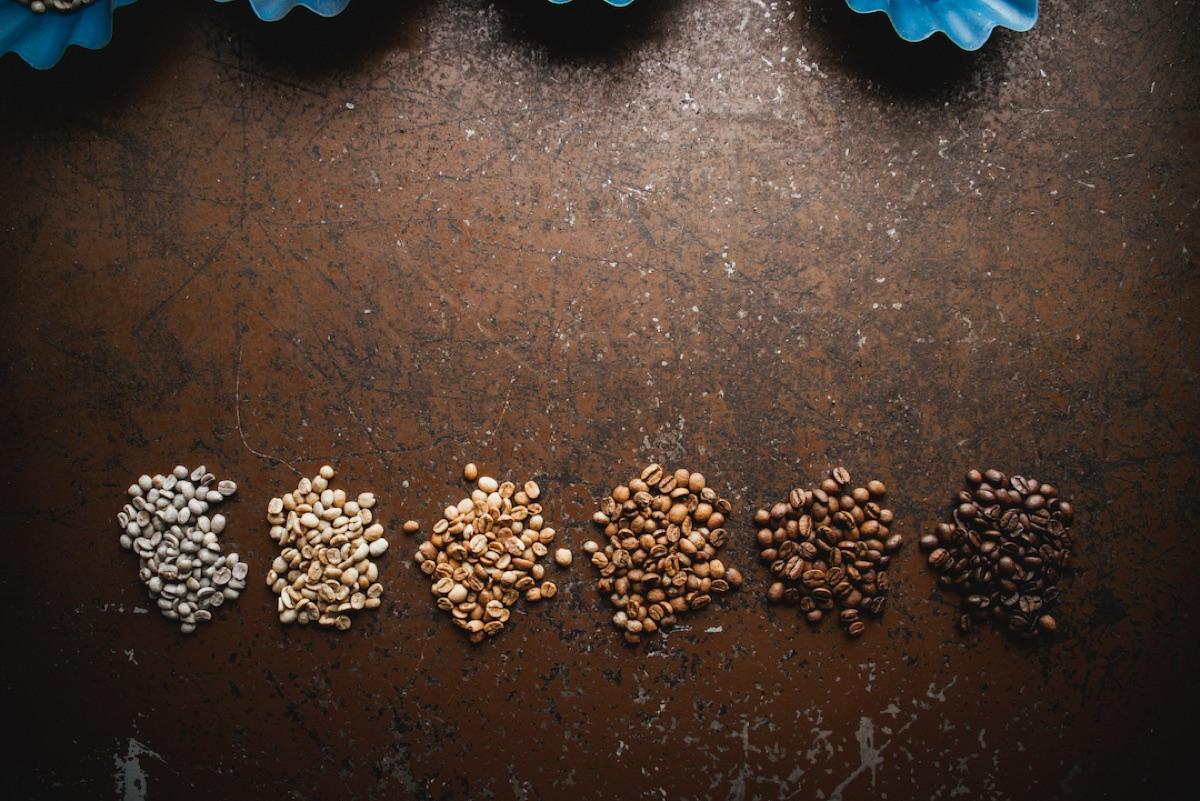
Look: shiny and oily. The NCA says dark roasts produce shiny black beans with an oily surface. Peet's notes that oily beans simply mean a darker roast, not a defect.
Taste: bold and bittersweet. Peet's describes cacao, toasted nuts, caramel and a full body. Stumptown adds dark chocolate and smoky undertones. The NCA notes a pronounced bitterness.
Acidity: the lowest, which some people find easier on the stomach.
Brew it with: French press, espresso, moka pot or cold brew, according to Peet's and Stumptown. Dark roasts also stand up well to milk.
Names to look for, from lightest to darkest dark: Vienna (which Peet's calls medium-dark, with light traces of oil), French and Italian roast. The NCA notes that "espresso roast" isn't a roast level at all, just a blend made for espresso, often medium to dark.
Caffeine and freshness
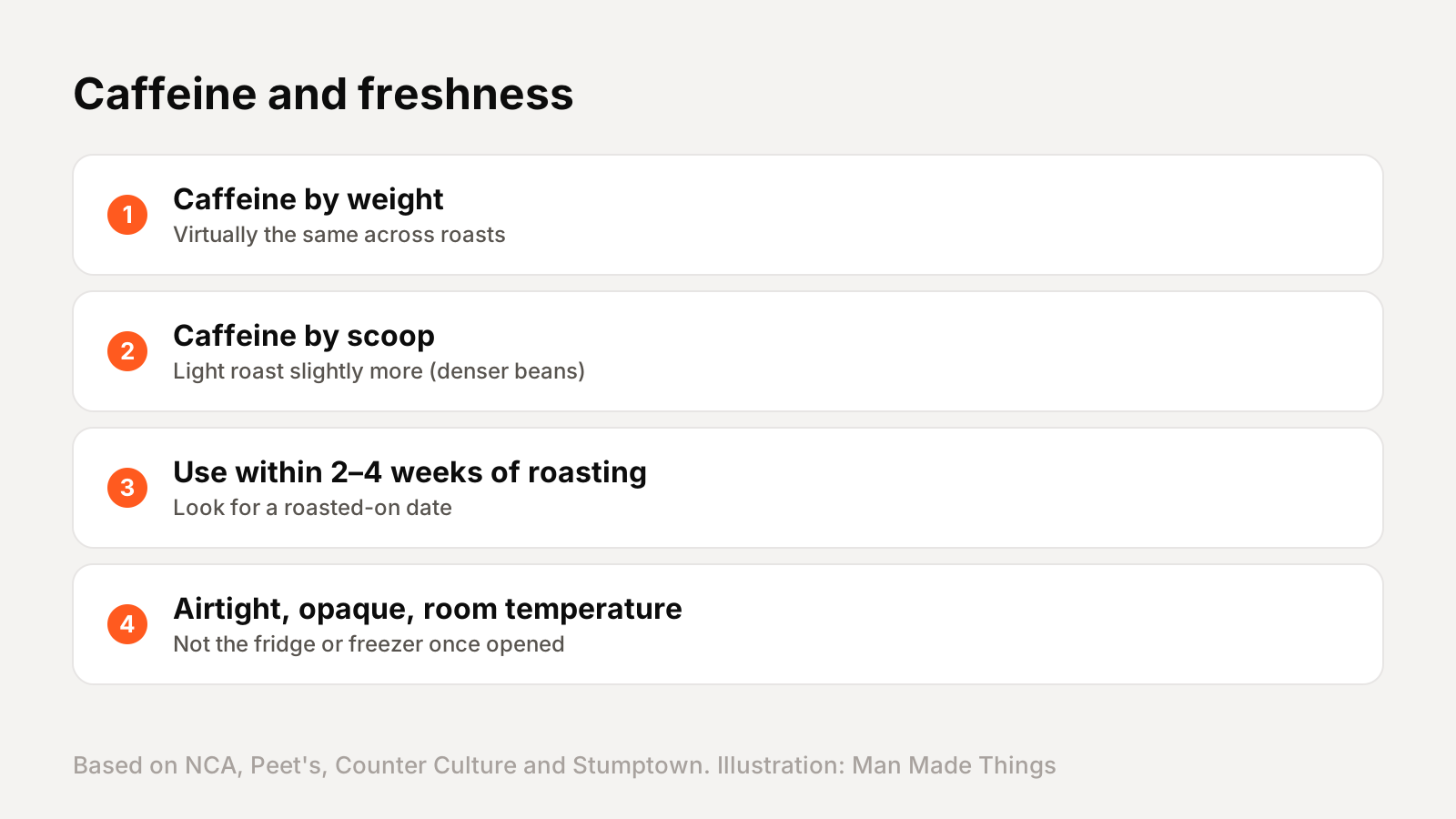
Does dark roast have more caffeine? No, and this is one of coffee's biggest myths. The NCA says light roasts have slightly more caffeine, and that dark roast's strong flavor isn't linked to caffeine. Peet's explains the details: by weight, there's virtually no difference. But dark beans lose more moisture, so they're less dense. A scoop of light roast holds more beans, and so a little more caffeine. Counter Culture adds that the difference is tiny compared with brew method and recipe. Weigh your coffee for consistency.
Freshness: look for a "roasted on" date, says Counter Culture, and use beans within 2 to 4 weeks of roasting. Stumptown says coffee usually tastes best within two weeks, and quality drops off after a month.
Storage: keep beans in an airtight, opaque container at room temperature, away from heat and light. Peet's and Counter Culture advise against storing opened coffee in the fridge or freezer. Buy smaller bags more often, and grind just before you brew. The NCA suggests buying enough for one or two weeks at a time, and Stumptown recommends grinding within about 15 minutes of brewing. If you're unsure which roast you like, buy small bags of a light, a medium and a dark from the same roaster and brew them side by side the same way. Tasting them together is the quickest way to learn the difference.
Frequently asked questions
What is the difference between light and dark roast coffee?
+
Light roasts are roasted for less time, giving brighter, fruitier, more acidic flavors. Dark roasts are roasted longer, giving bold, bittersweet, low-acid flavors and oily beans.
Does dark roast have more caffeine?
+
No. The NCA says light roasts have slightly more. Peet's says by weight it's virtually the same, but a scoop of light roast holds more beans.
Which roast is best for espresso?
+
Espresso is often made with medium to dark roasts, per the NCA, though any roast can be used.
How long does roasted coffee stay fresh?
+
Counter Culture says use it within 2 to 4 weeks of roasting, and within two weeks of opening the bag.
Sources
- National Coffee Association: Coffee roasts guide
- Peet's: An intro to coffee roasts
- Peet's: Light roast vs dark roast
- Peet's: Dark roast coffee guide
- Peet's: Tips to keep your coffee fresh
- Stumptown: Coffee roasts explained
- Counter Culture: Coffee basics, roasting
- Counter Culture: Coffee basics, caffeine
- Counter Culture: Coffee basics, freshness

Watches & Coffee Writer
Aditya is a passionate coffee lover who loves watches. He covers watches and coffee for Man Made Things.
More from Aditya →