Bottled-in-Bond Explained: What It Means on a Whiskey Label
What 'bottled in bond' legally means under US rules (one distiller, one distillery, one season, four years, 100 proof), why the 1897 law exists and how it differs from straight bourbon.
We may earn a commission when you buy through links on this page. Learn more
Quick answer
'Bottled in bond' is a US labeling standard. Under 27 CFR 5.88, the spirit must be made by one distiller at one distillery in a single distilling season, aged at least four years in wooden containers, bottled at exactly 100 proof, and the label must show the distillery's plant numbers. It dates back to the Bottled-in-Bond Act of 1897.
You've probably seen "Bottled in Bond" or "Bonded" on a whiskey label, often on bottles that cost surprisingly little. It sounds old-fashioned, and it is. But it's also one of the most useful phrases on a whiskey label, because it guarantees exactly where, when and how the whiskey was made.
Most label terms are loosely defined marketing. Bottled in bond is a legal standard with strict rules, set by federal regulation and enforced by the government. That makes bonded whiskey one of the most transparent things on the shelf, and often one of the best values.
Below are the exact rules from the US regulations, the story behind the 1897 law, and how bonded whiskey differs from "straight" bourbon. New to whiskey styles? Start with our bourbon vs rye vs Scotch guide.
The rules: what 'bottled in bond' legally means
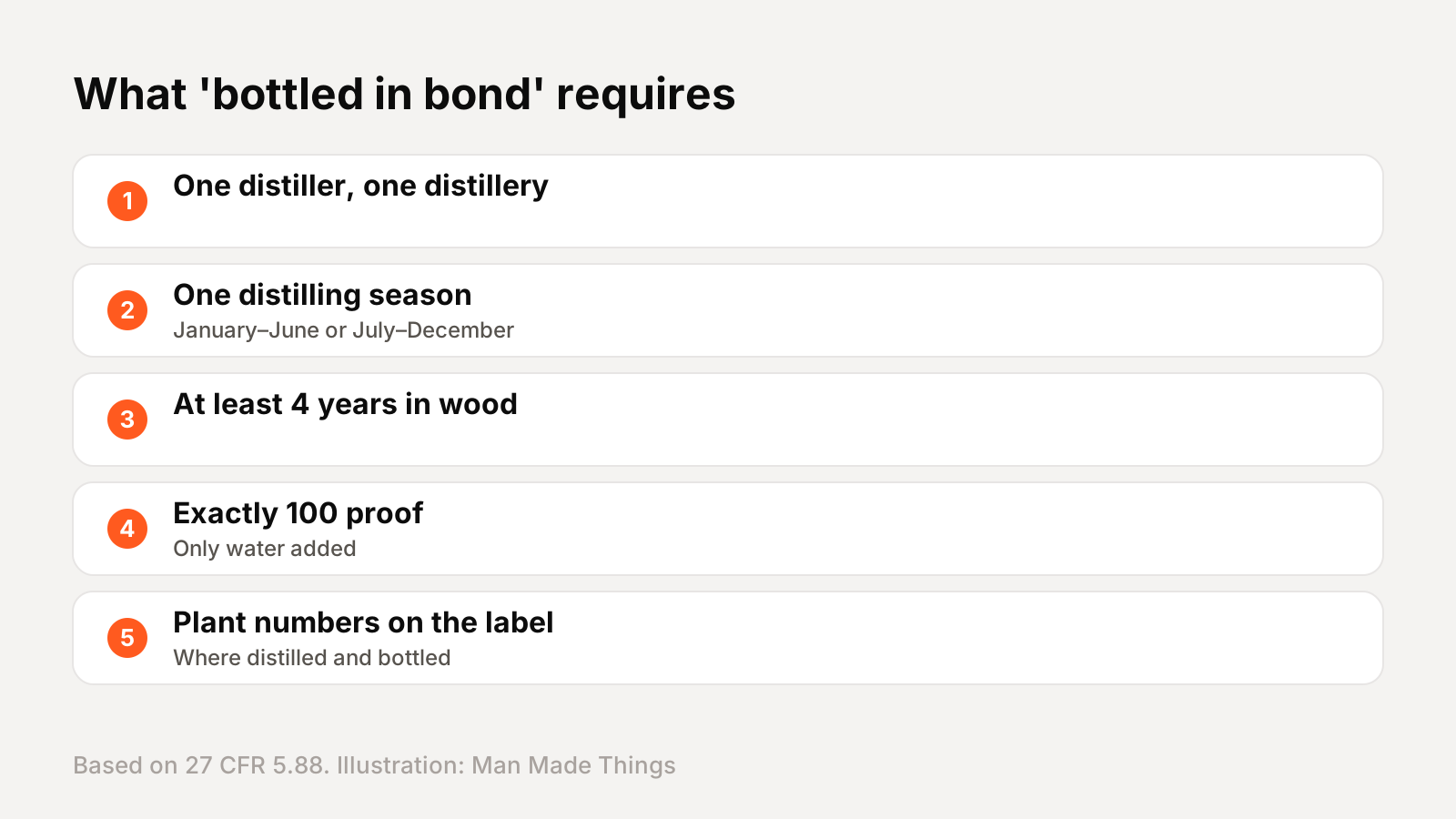
The rules are in the federal regulations at 27 CFR 5.88. A spirit can only be labeled "bottled in bond," "bonded" or similar if it is:
- One kind of spirit, made from the same class of materials.
- Distilled in the same distilling season by the same distiller at the same distillery. The regulations define two seasons: January to June (spring) and July to December (fall).
- Stored for at least four years in wooden containers.
- Unaltered, with nothing added or removed other than physical treatments like filtration.
- Reduced in proof only with pure water, to 100 proof.
- Bottled at exactly 100 proof (50 percent alcohol).
The label must also show the real name of the distillery and the number of the distilled spirits plant (DSP) where it was distilled and where it was bottled. If you see "DSP-KY-" on a bonded label, that's what it is.
Why the law exists: the Bottled-in-Bond Act of 1897
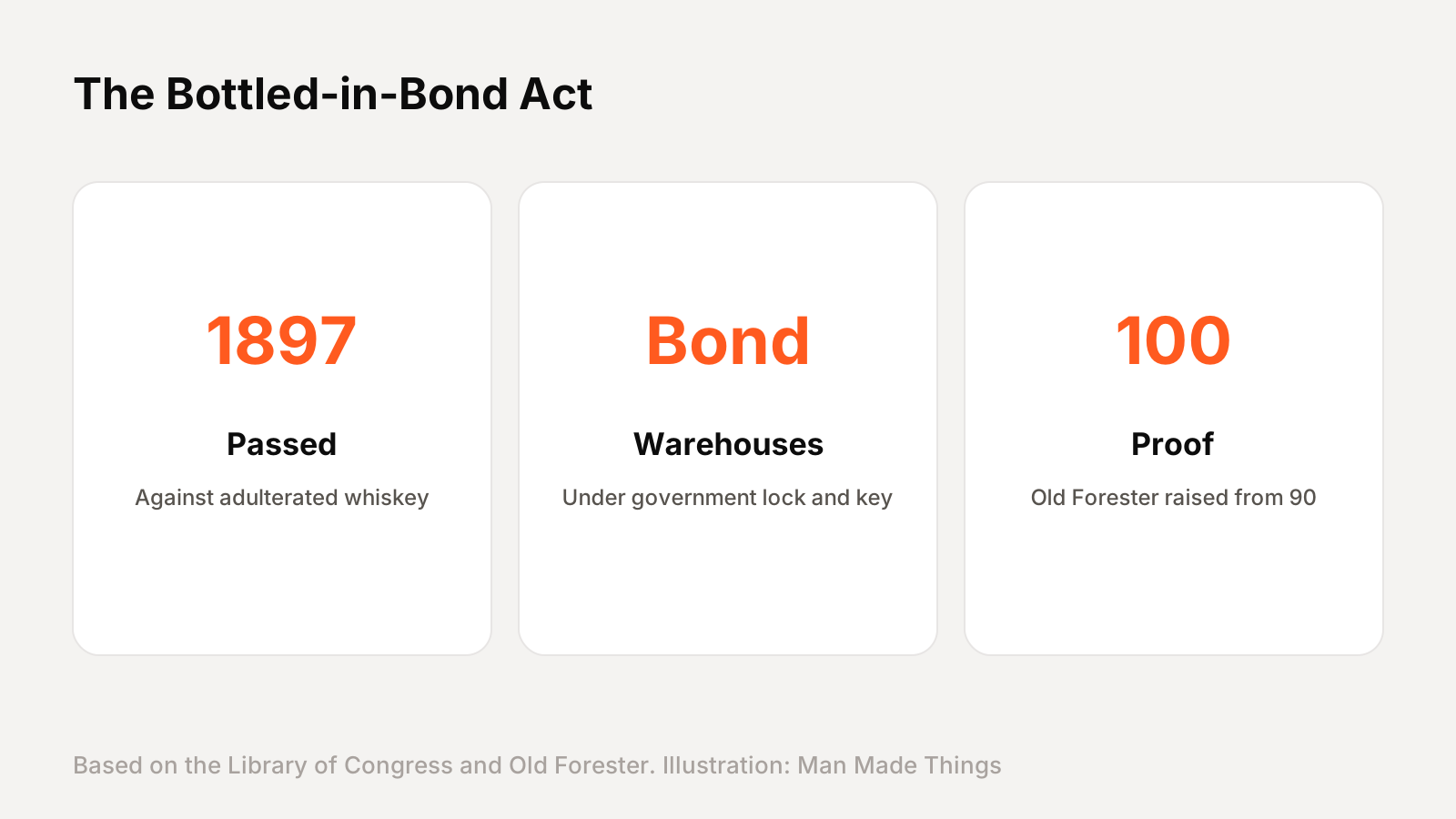
In the late 1800s, a lot of "whiskey" wasn't really whiskey. The Library of Congress says the Bottled-in-Bond Act of 1897 was passed as a reaction to adulteration among spirits and set age and bottling standards. Heaven Hill's history of the act describes merchants stretching whiskey with additives and faking age and origin.
The Library of Congress explains that the bill, presented by Kentucky congressman Walter Evans, proposed bonded warehouses kept under lock and key by government agents, so consumers would know the whiskey was pure and unadulterated. It also helped distillers, because whiskey could age in bond without paying excise tax up front.
Buffalo Trace credits Colonel Edmund Haynes Taylor Jr., one of bourbon's best-known distillers, with pushing for the act's passage. Old Forester says it raised its whiskey from 90 to 100 proof in 1897 to comply.
Bottled in bond vs straight bourbon
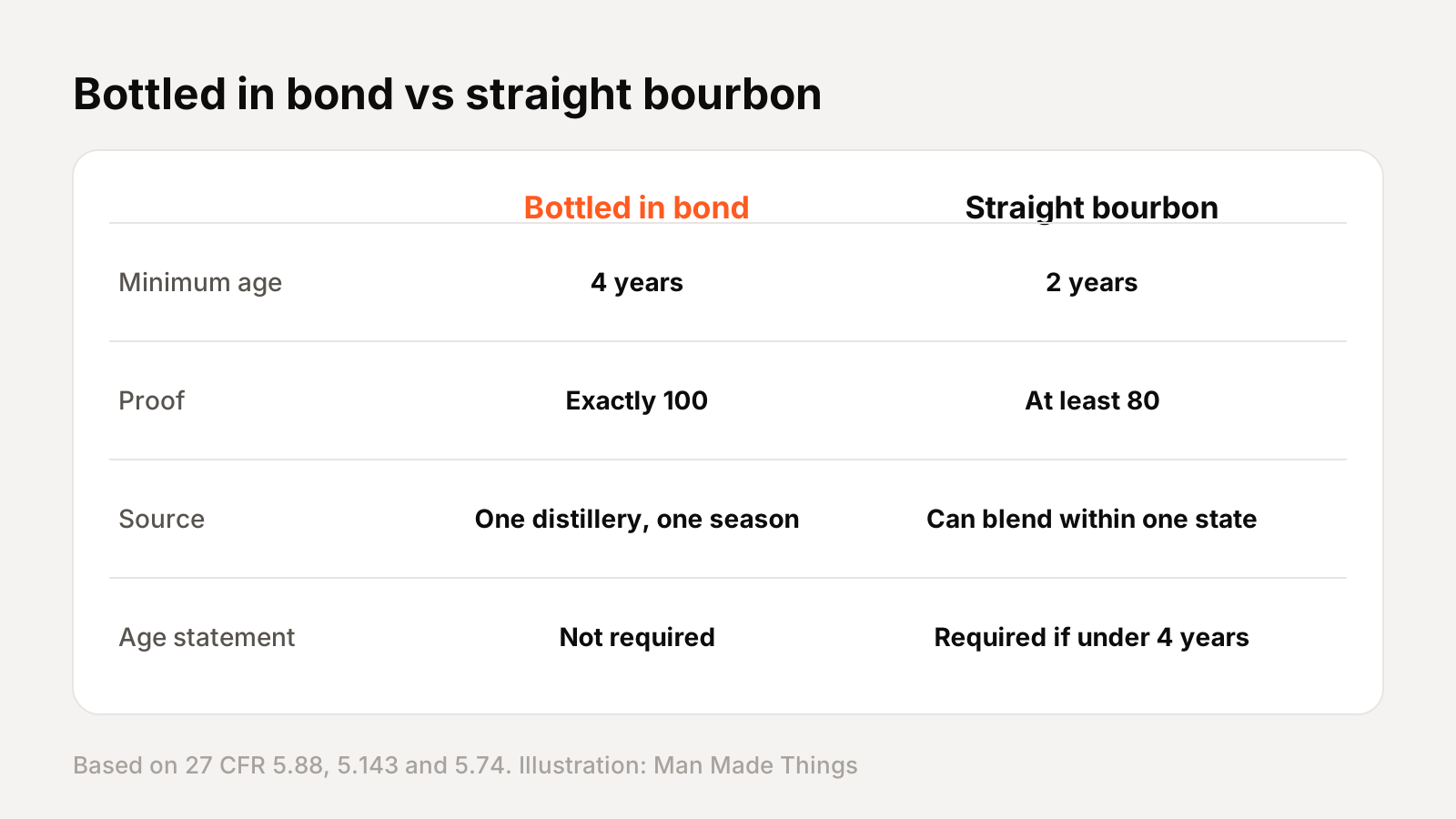
These two terms often appear together, but they mean different things.
Straight bourbon, defined at 27 CFR 5.143, is bourbon aged at least two years in new charred oak barrels, with no added coloring or flavoring. Straight whiskey can be a mix of straight whiskies made in the same state.
Bottled in bond is stricter in some ways:
- Age: at least four years, versus two for straight.
- Proof: exactly 100, versus a minimum of 80 for straight.
- Origin: one distiller, one distillery, one season, versus whiskies from different distilleries in the same state.
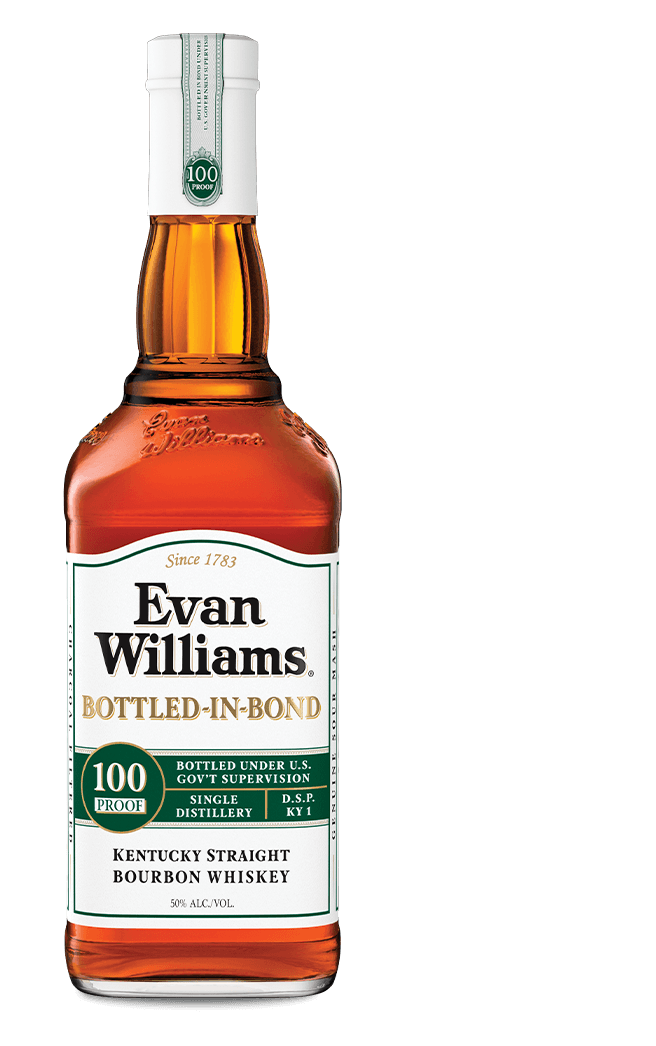
Bottled in bond isn't a type of whiskey; it's a labeling standard that also applies to other spirits, including vodka and gin. A whiskey can be both, though. Evan Williams Bottled-in-Bond, for example, is a Kentucky straight bourbon that also meets bonded rules.
One quirk: US rules require an age statement on whiskey younger than four years, but bonded whiskey is exempt, so many bonded bottles show no age at all.
Three bonded bourbons to try
Bonded bourbon is one of the best values in whiskey, and these three are widely available:
- Evan Williams Bottled-in-Bond (Heaven Hill): 100 proof and four years old, the bonded version of what Heaven Hill calls the world's second best-selling Kentucky straight bourbon.
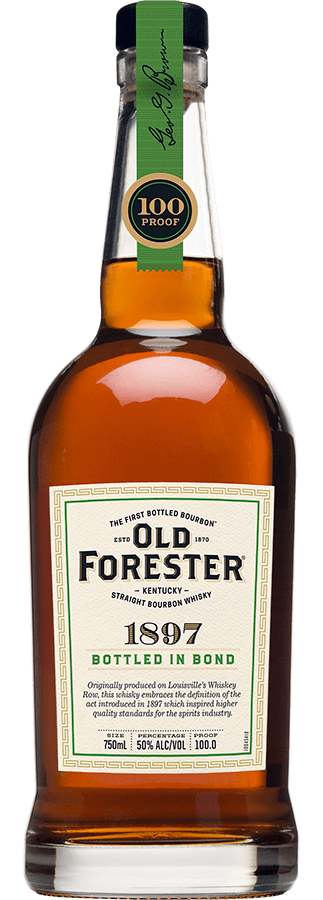
- Old Forester 1897 Bottled in Bond: 100 proof, named for the year of the act. Old Forester says it's aged in a federally bonded warehouse for at least four years.
- Henry McKenna Single Barrel (Heaven Hill): 100 proof and 10 years old, bottled from a single barrel, so each bottle can taste slightly different.
Prices vary by state and retailer, and the brands' official pages don't list them, so compare locally. Heaven Hill also makes its own Heaven Hill Bottled-in-Bond, aged seven years, three longer than the law requires.
How to read a bonded label
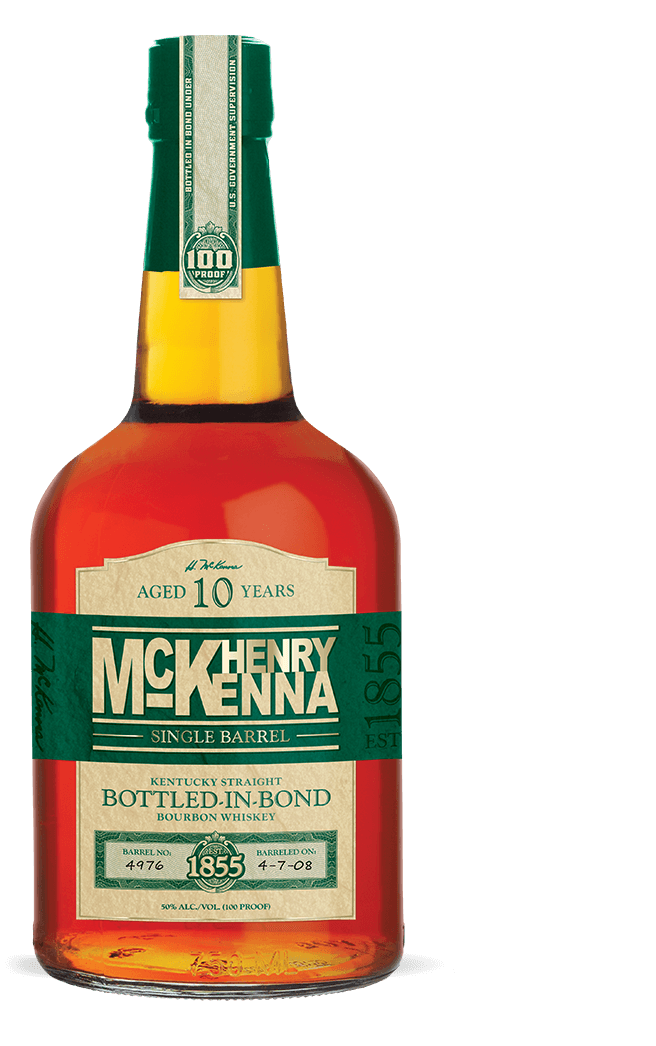
Next time you pick up a bonded bottle, check for these details:
- "Bottled in Bond" or "Bonded" on the front.
- 100 proof (50 percent alcohol by volume). If it's not exactly 100, it isn't bonded.
- The distillery name and DSP number, required by the regulation. These tell you exactly where the whiskey was distilled and bottled.
- An age statement, maybe. It's optional for bonded whiskey, since four years is guaranteed. Some, like Henry McKenna at 10 years, state an older age.
At 100 proof, bonded bourbon has more flavor intensity than standard 80-proof bottles. A splash of water opens it up for sipping, and it stands up well in an Old Fashioned or Manhattan. Pour it into one of our best whiskey glasses and taste it neat first.
Frequently asked questions
What does bottled in bond mean?
+
A US standard: one distiller, one distillery, one distilling season, at least four years in wood and bottled at exactly 100 proof, under 27 CFR 5.88.
Is bottled-in-bond whiskey better?
+
Not automatically, but it's transparent and consistent. Its rules guarantee age, proof and a single source, and it's often good value.
Why is bottled-in-bond 100 proof?
+
The regulation requires bonded spirits to be bottled at exactly 50 percent alcohol by volume, or 100 proof.
What's the difference between bottled in bond and straight bourbon?
+
Straight bourbon needs at least two years of aging; bonded needs four, must be 100 proof and must come from one distillery and season.
Sources
- eCFR: 27 CFR 5.88 Bottled in bond
- eCFR: 27 CFR 5.1 Definitions (distilling season)
- eCFR: 27 CFR 5.143 Whisky
- eCFR: 27 CFR 5.74 Age statements
- Library of Congress: Distilled spirits research guide
- Library of Congress: Mapping whiskey regulation
- Heaven Hill: Bottled-in-Bond history
- Buffalo Trace: Edmund Haynes Taylor Jr.
- Old Forester: Our legacy
- Heaven Hill: Evan Williams Bottled-in-Bond
- Heaven Hill: Henry McKenna Single Barrel
Editor-in-Chief
Rahul has been writing about gadgets and software since 2013, first at Thetechhacker and now at Man Made Things. He edits every review on the site and signs off on every verdict.
More from Rahul →