The Best Pour-Over Coffee Makers: Hario, Kalita and Chemex
Three pour-over coffee makers for different brewers: the classic Hario V60, the forgiving flat-bottom Kalita Wave 185 and the Chemex for brewing for two or more, plus the ratio to start with.
We may earn a commission when you buy through links on this page. Learn more
Quick answer
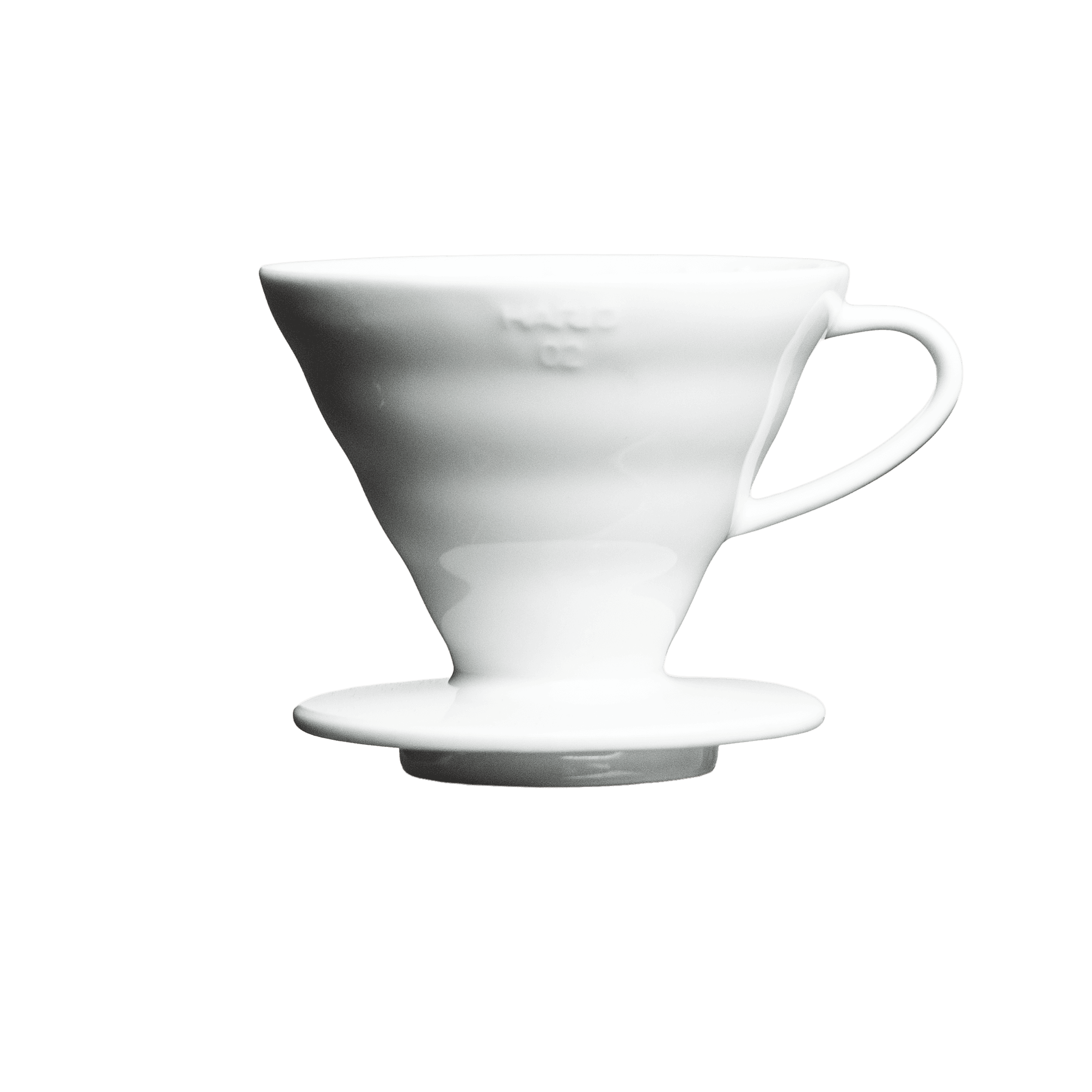
The Hario V60 Ceramic Dripper 02 ($30.50) is the best pour-over coffee maker for most people: handmade Japanese porcelain, cheap and easy-to-find filters, and full control over how your coffee tastes. The Kalita Wave 185 ($42) is the best for beginners, with a flat bottom that's more forgiving. The Chemex Six Cup Classic ($49.50) is the best for brewing for two or more, straight into its own carafe.
Pour-over is the simplest way to make really good coffee at home. A cone, a paper filter, freshly ground beans and hot water. No machine, no pods, nothing to break down. And because you control every step, you can get a cup that tastes noticeably cleaner and brighter than most drip machines make.
The dripper you choose does matter, though. Its shape and the size of its holes control how fast water flows through the coffee, and that changes both the taste and how much technique you need.
I picked three drippers with three different personalities and checked every spec on the brand's own US site. If you want the full step-by-step brewing method, read our how to make pour-over coffee guide, and pair any of these with a good burr grinder. These are research-based picks with no star scores. Let's get into it.
Our picks at a glance
1. Best overall
Hario V60 Ceramic Dripper 02
The V60 is the dripper you see in most specialty coffee shops, and for good reason. Its cone shape lets the grounds settle into a deep bed, the spiral ridges on the inside let air escape, and there's little to slow the flow of water down. Hario says that lets you change the cup by changing how you pour: pour faster for a lighter, more delicate body, slower for a heavier flavor.
This ceramic version is made from Arita-yaki porcelain, handmade in Japan, and holds its heat well once you warm it with hot water. It costs about $30, and the 02 filters are cheap and easy to find at around $8 for 100.
That freedom has a downside. Because the V60 doesn't restrict the flow much, your results depend on your pouring technique, and a gooseneck kettle helps a lot. Porcelain can chip or break if dropped, and it brews one to four cups at most.
Pros
- 01Full control over taste through pour speed
- 02Handmade Japanese porcelain
- 03Cheap, widely available filters
- 04Holds heat well
Cons
- 01Results depend on your technique
- 02Porcelain can break
- 03Brews only 1–4 cups
| Material | Arita-yaki porcelain, handmade |
|---|---|
| Shape | Cone with spiral ridges |
| Capacity | 1–4 cups |
| Size | 140 × 120 × 102 mm |
| Filters | V60 02 paper filters (100 for $8.20) |
| Made in | Japan |
2. Best for beginners
Kalita Wave 185 Stainless Steel Dripper
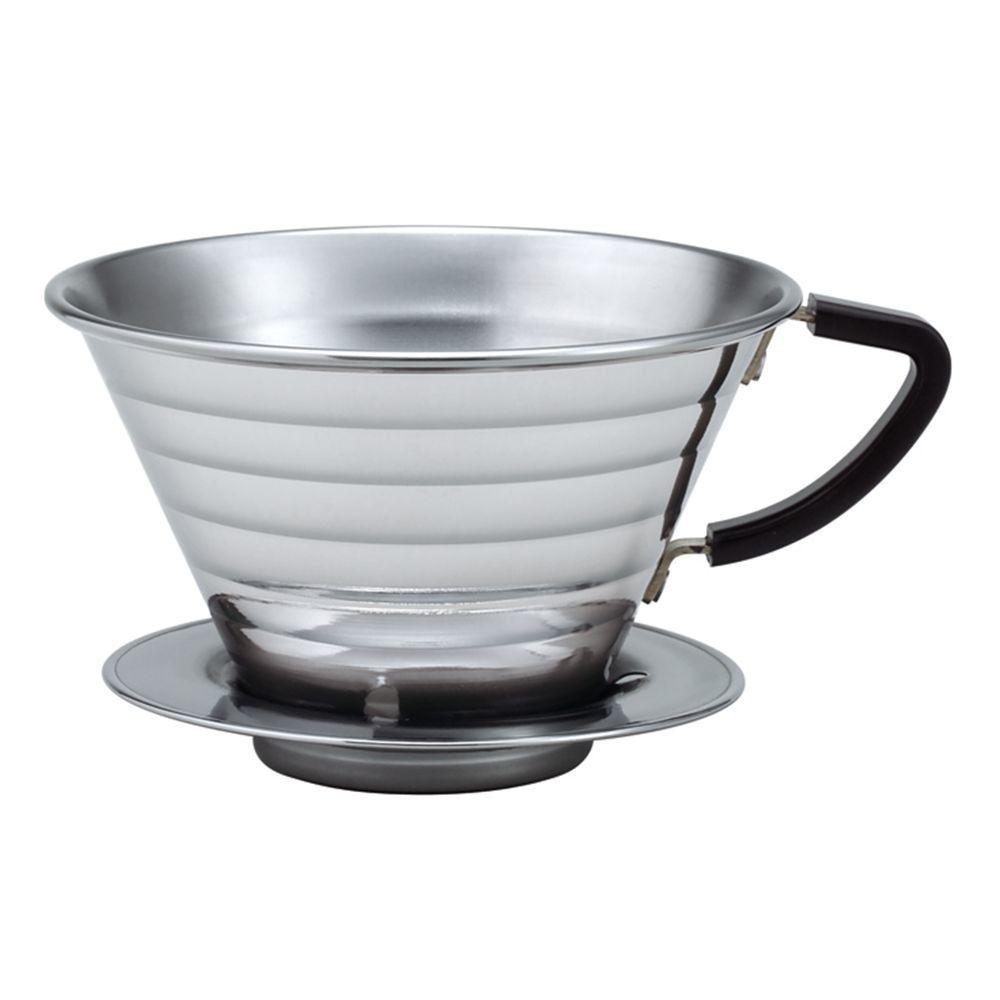
If the V60 sounds a little fussy, the Kalita Wave is the forgiving alternative. It has a flat bottom with three small holes, which keeps the coffee bed level and stops water from rushing through or pooling in one spot. Kalita calls the result an even extraction and describes it as foolproof.
In practice, that means your pour doesn't have to be perfect to get a good, balanced cup. The 185 size brews two to four cups, enough for one large mug or two smaller ones. The stainless steel body won't break if you knock it into the sink, and it's dishwasher safe.
The trade-offs are small but real. It needs Kalita's own wavy Wave 185 filters, which cost more and are harder to find in regular stores than cone filters. Steel also loses heat faster than ceramic, which is why Kalita suggests warming the dripper with hot water before you brew.
Pros
- 01Flat bottom is forgiving for beginners
- 02Even, balanced extraction
- 03Unbreakable steel, dishwasher safe
- 04Made in Japan
Cons
- 01Needs Kalita Wave filters
- 02Steel needs pre-warming
- 03More expensive than the V60
| Material | Stainless steel |
|---|---|
| Shape | Flat bottom, three small holes |
| Capacity | 2–4 cups |
| Filters | Wave 185 filters (100 for $13) |
| Dishwasher safe | Yes |
| Made in | Japan |
3. Best for two or more
Chemex Six Cup Classic
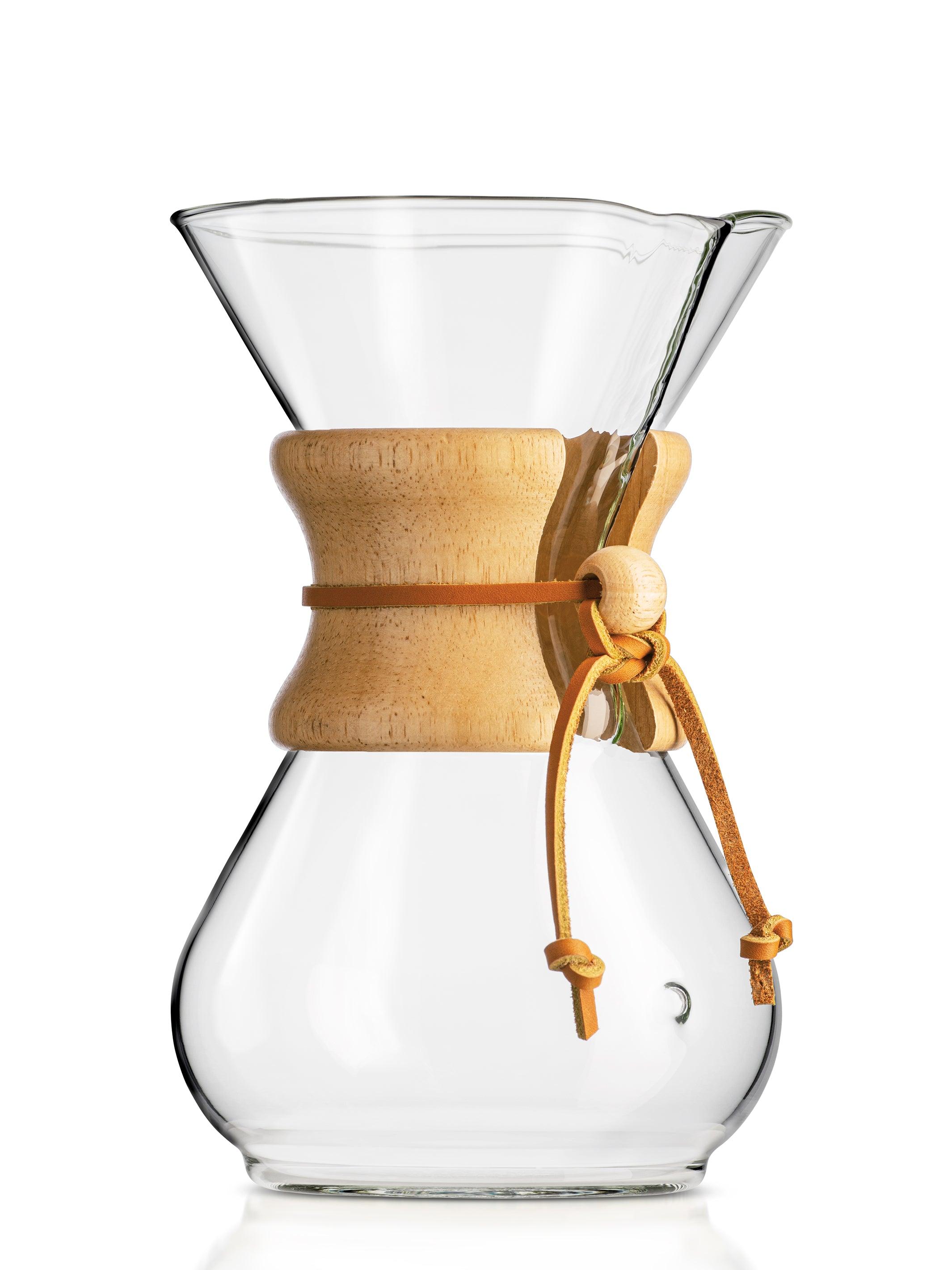
The Chemex is as much a design object as a coffee maker. It's one piece of borosilicate glass with a wooden collar and a leather tie, and it brews straight into its own carafe, so you can make coffee for two or three people and serve it at the table.
The six-cup model holds 30 ounces, though Chemex counts a cup as five ounces, so think three mugs rather than six. Its thick, bonded paper filters are the key to the taste. Chemex says they remove fats, bitterness, acidity and sediment, which gives a very clean, light-bodied cup. Glass doesn't add any flavor, and the carafe goes in the dishwasher once you remove the collar.
It's the most expensive pick at $49.50, and the glass needs careful handling. You'll also need Chemex's own filters, and at 8.5 inches tall, it may not fit under every cabinet.
Pros
- 01Brews up to 30 oz into its own carafe
- 02Very clean cup from bonded filters
- 03Flavor-neutral glass
- 04Classic design
Cons
- 01Needs Chemex filters
- 02Fragile glass
- 03Most expensive pick
| Material | Borosilicate glass, wood collar, leather tie |
|---|---|
| Capacity | 30 oz (Chemex cup = 5 oz) |
| Size | 8.5 in tall, 5.1 in wide |
| Filters | Chemex Bonded filters ($11) |
| Dishwasher safe | Yes, with collar removed |
| Design | Brews and serves in one vessel |
Cone vs flat-bottom drippers
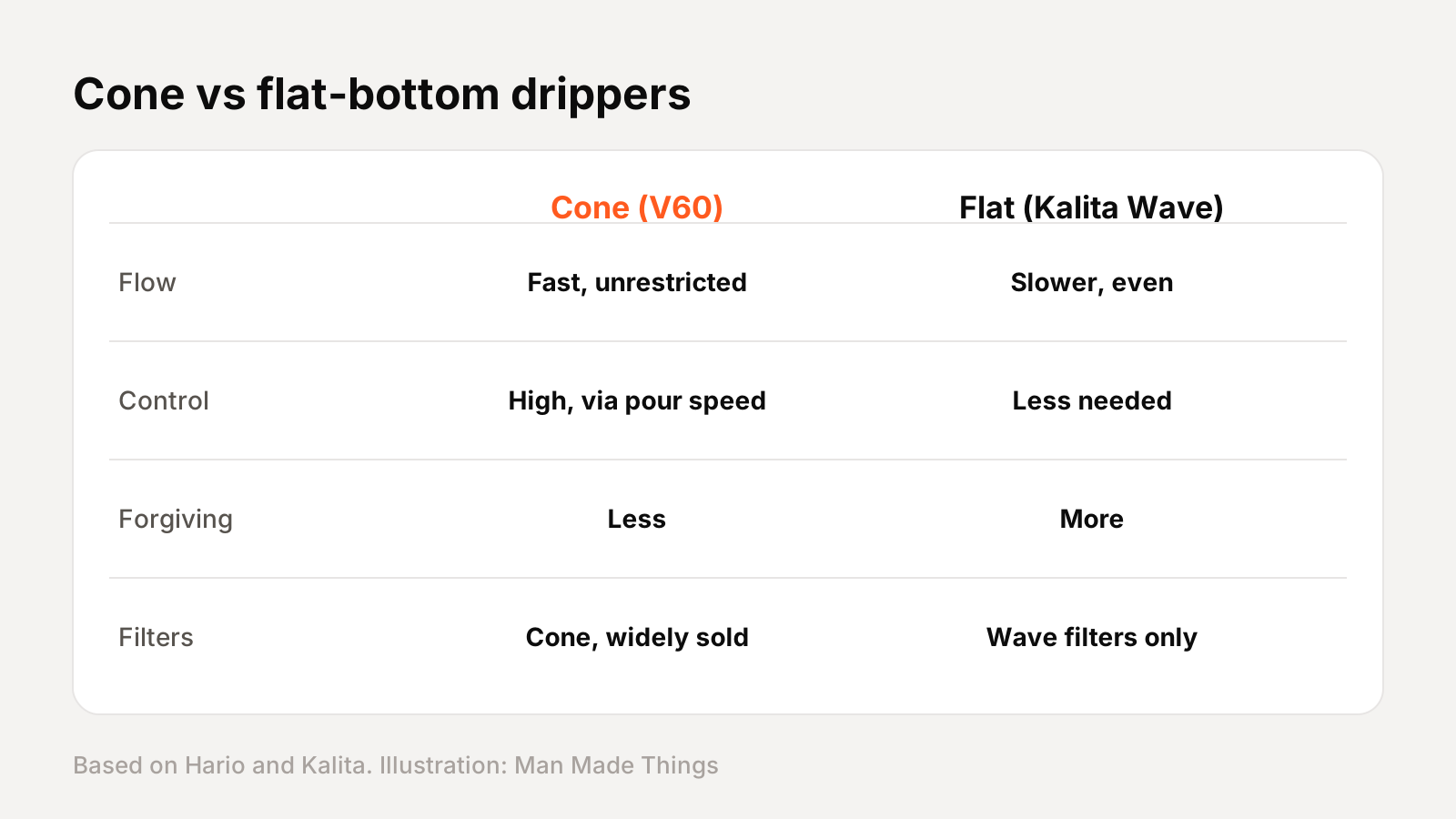
The shape of the dripper decides how fast water moves through the coffee, and that's what separates these picks.
- Cone drippers like the V60 have a deep coffee bed and one large opening. Hario says the cone gives deeper layering of the grounds and little flow restriction, so your pour speed controls the result. More control, but also more room for error.
- Flat-bottom drippers like the Kalita Wave have a level coffee bed and small holes that slow the water down. Kalita says this prevents water from accumulating and gives an even extraction. Hario even describes its own flat-bottom Pegasus dripper as great for beginners because it relies less on pour speed and grind accuracy.
The Chemex sits between them. It's a cone, but its thick filter slows the flow, which is why it needs a slightly coarser grind.
The ratio and grind to start with
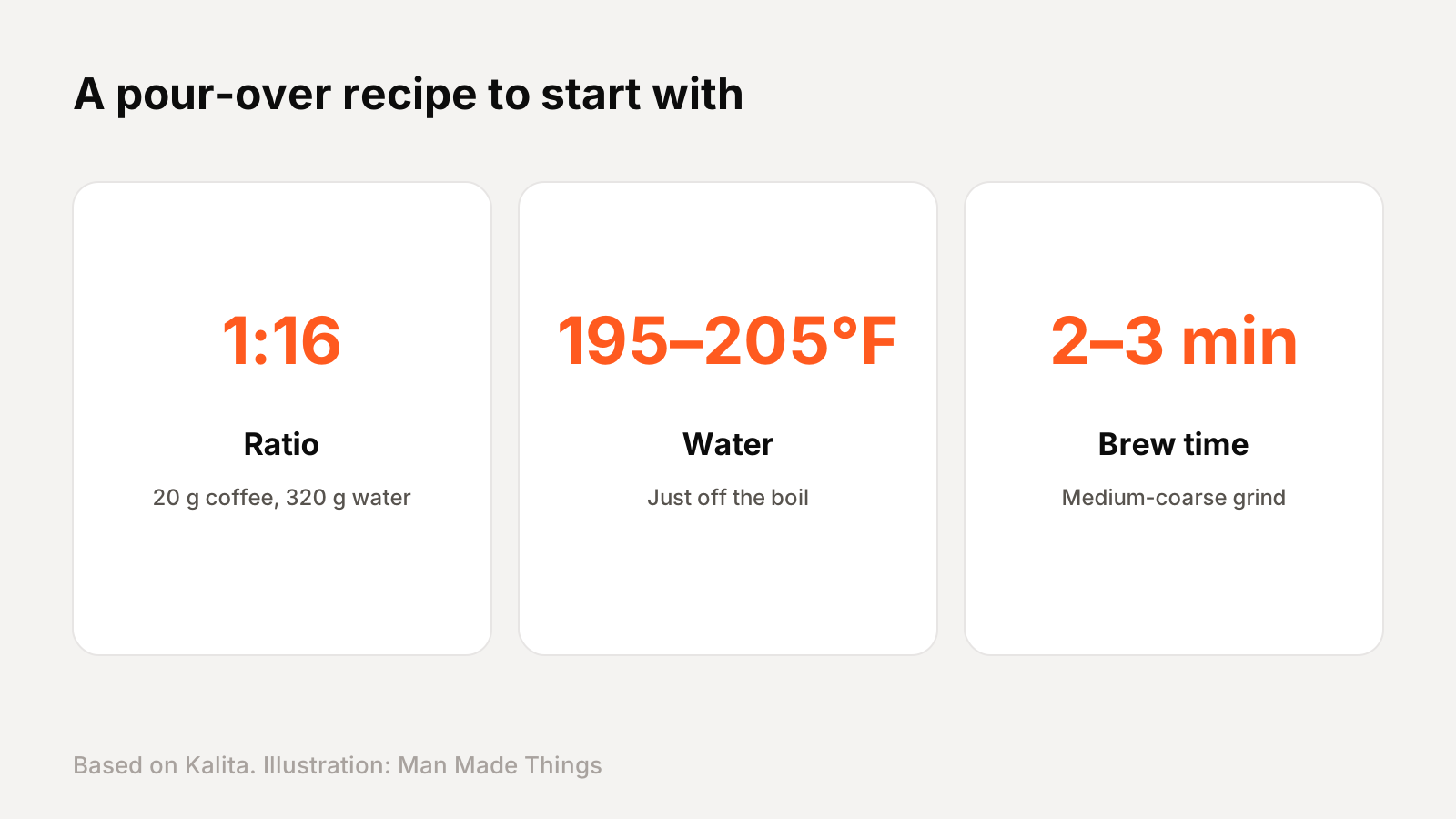
Kalita's pour-over guide gives a reliable starting recipe that works with any of these drippers:
- Ratio: 1:16, or 20 grams of coffee to 320 grams of water. Kalita suggests staying between 1:16 and 1:18.
- Water temperature: 195–205°F, which is just off the boil.
- Grind: about like medium-coarse sea salt. Chemex also recommends medium-coarse for its thicker filters.
- Bloom: pour about 60 grams of water first and wait 30 to 45 seconds to let the coffee release gas.
- Total time: two to three minutes.
Then adjust by taste. Kalita's rule of thumb is simple: if the coffee tastes bitter, grind coarser; if it tastes sour, grind finer. A kitchen scale makes all of this much easier and more consistent.
Frequently asked questions
What is the best pour-over coffee maker?
+
The Hario V60 Ceramic Dripper 02. It's affordable, uses cheap and easy-to-find filters, and gives you full control over the flavor.
Is the Kalita Wave easier than the V60?
+
Yes. Its flat bottom and three small holes slow and even out the flow, so it's more forgiving of an imperfect pour.
What ratio should I use for pour-over?
+
Start with 1:16, or 20 grams of coffee to 320 grams of water. Kalita suggests staying between 1:16 and 1:18.
How many cups does a 6-cup Chemex make?
+
It holds 30 ounces. Chemex counts a cup as 5 ounces, so it's about three standard mugs.
Sources

Watches & Coffee Writer
Aditya is a passionate coffee lover who loves watches. He covers watches and coffee for Man Made Things.
More from Aditya →