Sapphire vs Mineral Crystal (and Acrylic): Is It Worth Paying For?
How sapphire, mineral glass and acrylic watch crystals compare on scratch resistance, shatter resistance, clarity and cost, what anti-reflective coating does, and when sapphire is worth it.
We may earn a commission when you buy through links on this page. Learn more
Quick answer
Sapphire is the most scratch-resistant watch crystal, rated about 9 on the Mohs scale, but it can crack under a hard impact and costs more. Mineral glass, rated about 5 to 6, is a good, affordable middle ground but can't be polished. Acrylic, about 3, scratches easily but resists shattering and can be buffed out. For a daily watch, sapphire is usually worth paying for.
The crystal is the clear cover over your watch's dial, and it takes more abuse than any other part. Door frames, desk edges, keys in a pocket: if your watch gets scratched, it's usually the crystal.
There are three main materials, and spec sheets list them without much explanation. "Sapphire" sounds luxurious and "mineral" sounds cheap, but the trade-offs are more interesting than that. Each one is best at something.
Below, I compare them using what watchmakers themselves say, mainly Timex, which publishes an unusually clear guide to all three, plus Seiko, Citizen, Hamilton and Omega spec sheets, and the Gemological Institute of America for hardness. Shopping on a budget? See our best automatic watches under $500.
Acrylic: soft, shatterproof and fixable
Acrylic is a type of plastic. Timex describes it as a specialized form of plastic similar to Plexiglass. It's the oldest of the three and still shows up on vintage-style watches.
The good: Timex says acrylic is very shatter-resistant. Its blog adds that acrylic will often flex or dent rather than break. And because it's soft, scratches can be buffed out.
The bad: it scratches easily. Timex puts acrylic at about 3 on the Mohs hardness scale, the lowest of the three.
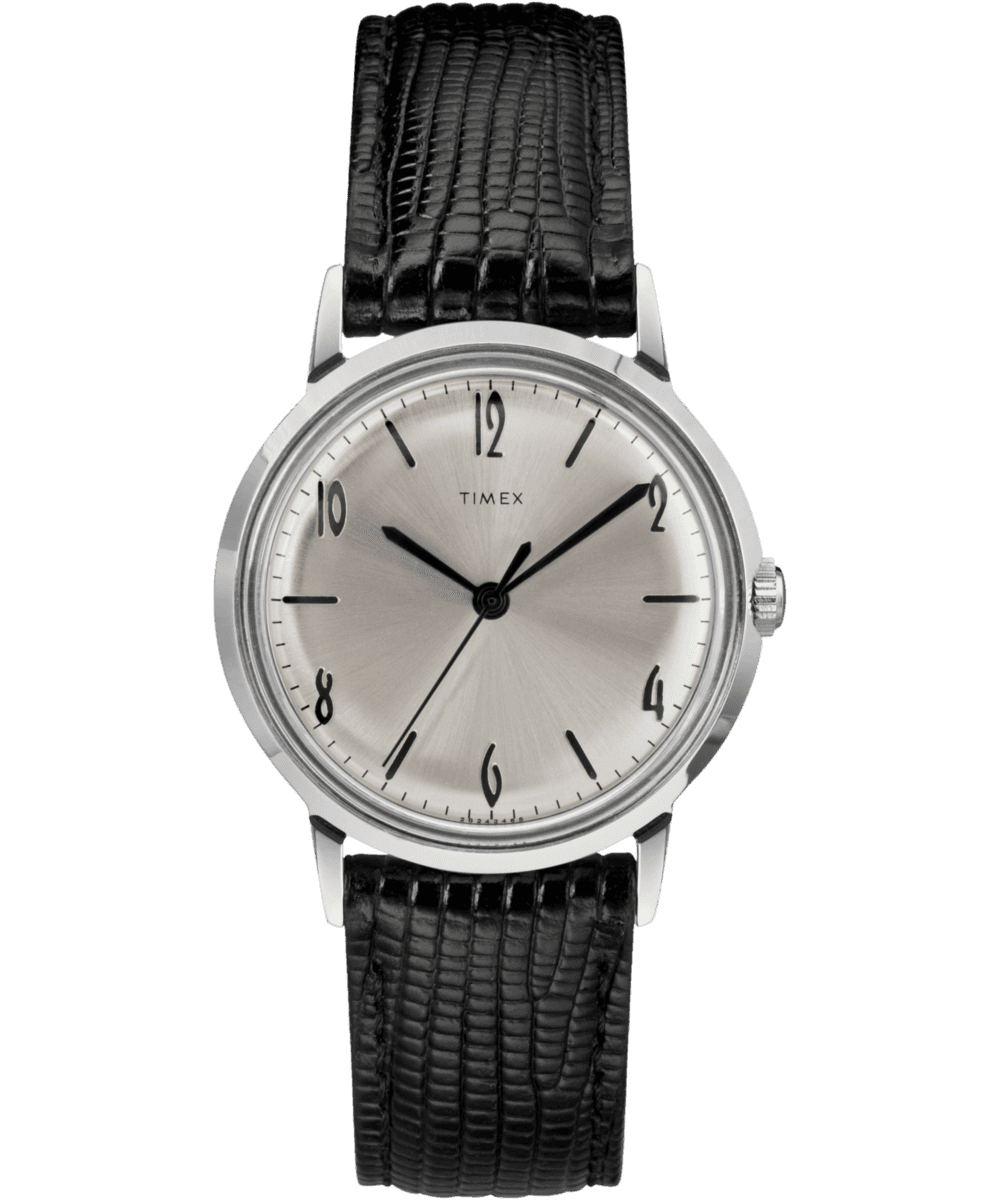
Where you'll see it: vintage reissues, like the Timex Marlin 1965 Reissue ($259), with its domed acrylic crystal, and famously Omega's Speedmaster Moonwatch, which Omega still sells with a hesalite crystal, its name for acrylic, alongside a sapphire version.
Acrylic gives a warm, slightly distorted vintage look that many collectors love. It's also light, which suits slim vintage-style cases.
Mineral glass: the everyday middle ground
Mineral crystal is glass, often tempered or heat-treated to make it tougher. Timex says it uses a similar material to windowpane glass, developed as a harder alternative to acrylic, and calls it the best of both worlds.
The good: it's harder than acrylic, at about 5 to 6 on the Mohs scale according to Timex, and offers better clarity. Citizen describes its mineral crystals as impact and shatter resistant. Timex's blog goes further, saying tempering makes mineral glass more resistant to breaking than sapphire. And it keeps watches affordable.
The bad: Timex notes that once mineral glass is scratched, the scratch can't be buffed out. You'll need to replace the crystal.
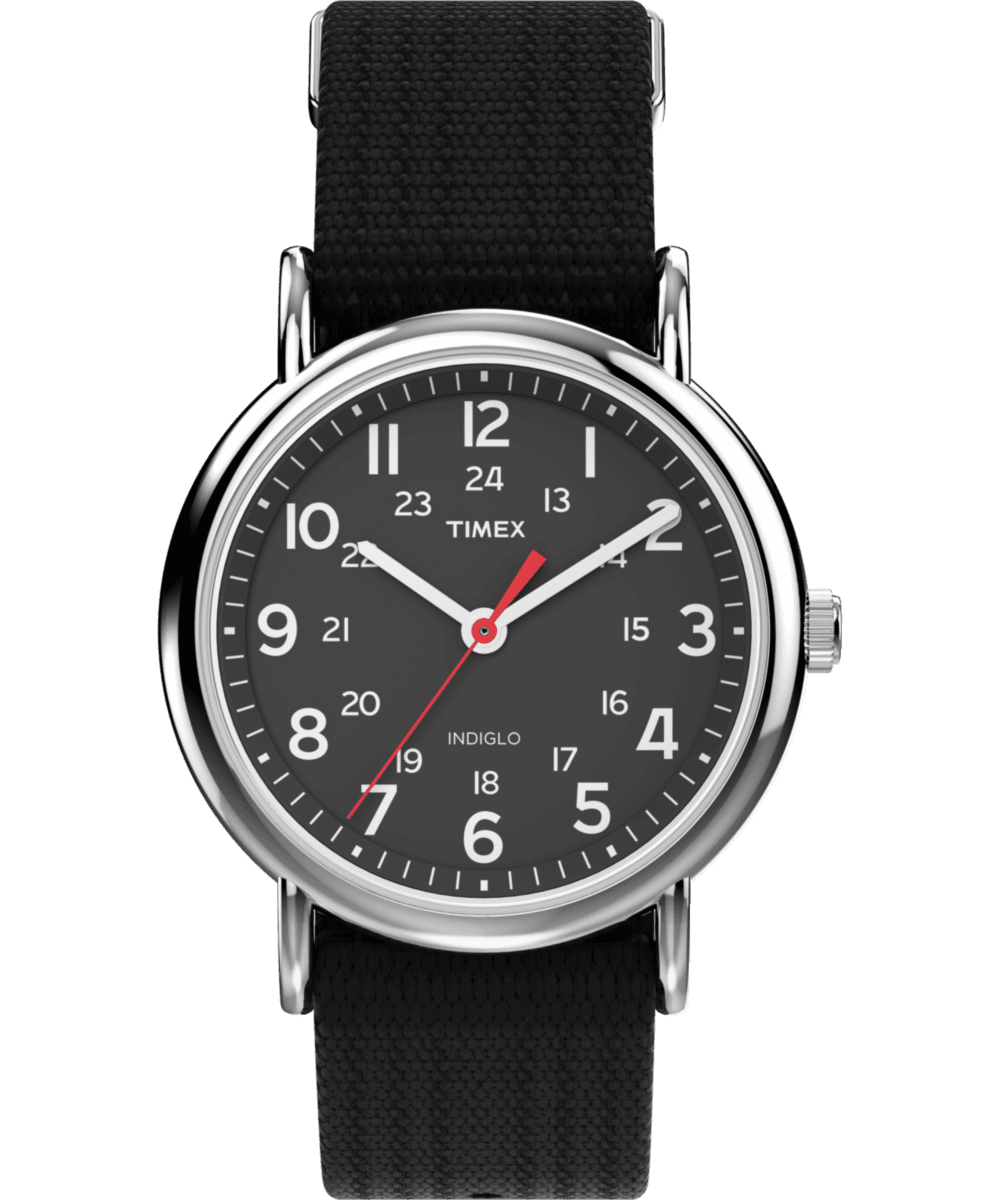
Where you'll see it: most affordable watches, like the Timex Weekender ($77). Seiko uses its own version called Hardlex, which you'll see on the Seiko 5 Sports SRPD55 ($350). Seiko doesn't publish a detailed definition of Hardlex, but it sits in the mineral category.
Sapphire: nearly scratchproof
Watch sapphire is synthetic, grown in a lab. The Gemological Institute of America says synthetic sapphire has essentially the same chemical, physical and optical properties as natural sapphire, which is a form of corundum rated 9 on the Mohs scale. Only diamond, at 10, is harder.
The good: Timex calls sapphire the hardest crystal available and near impossible to scratch. Hamilton puts it memorably: only diamonds could leave a mark.
The bad: hardness comes with brittleness. Timex says sapphire can shatter under a heavy impact, and its blog explains that sapphire's rigidity makes it more vulnerable to cracks or chips. It also costs more, and it can be more reflective.
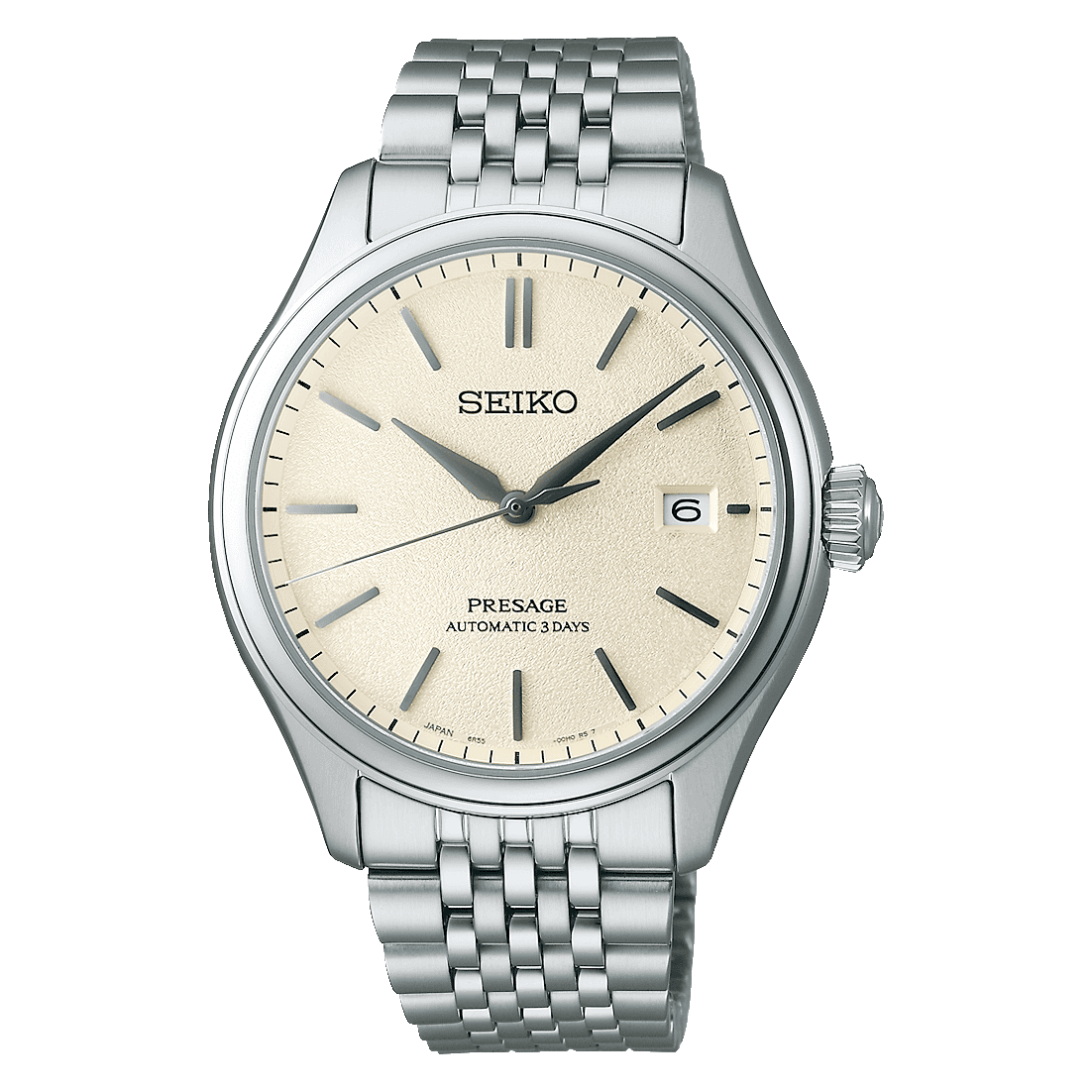
Where you'll see it: many mid-range and higher-end watches. Examples include the Hamilton Khaki Field Mechanical ($675), Seiko Presage SPB463 ($995) and Citizen models from its Promaster and Corso lines. Seiko's Presage range even offers both: some models use Hardlex and others sapphire.
What anti-reflective coating does
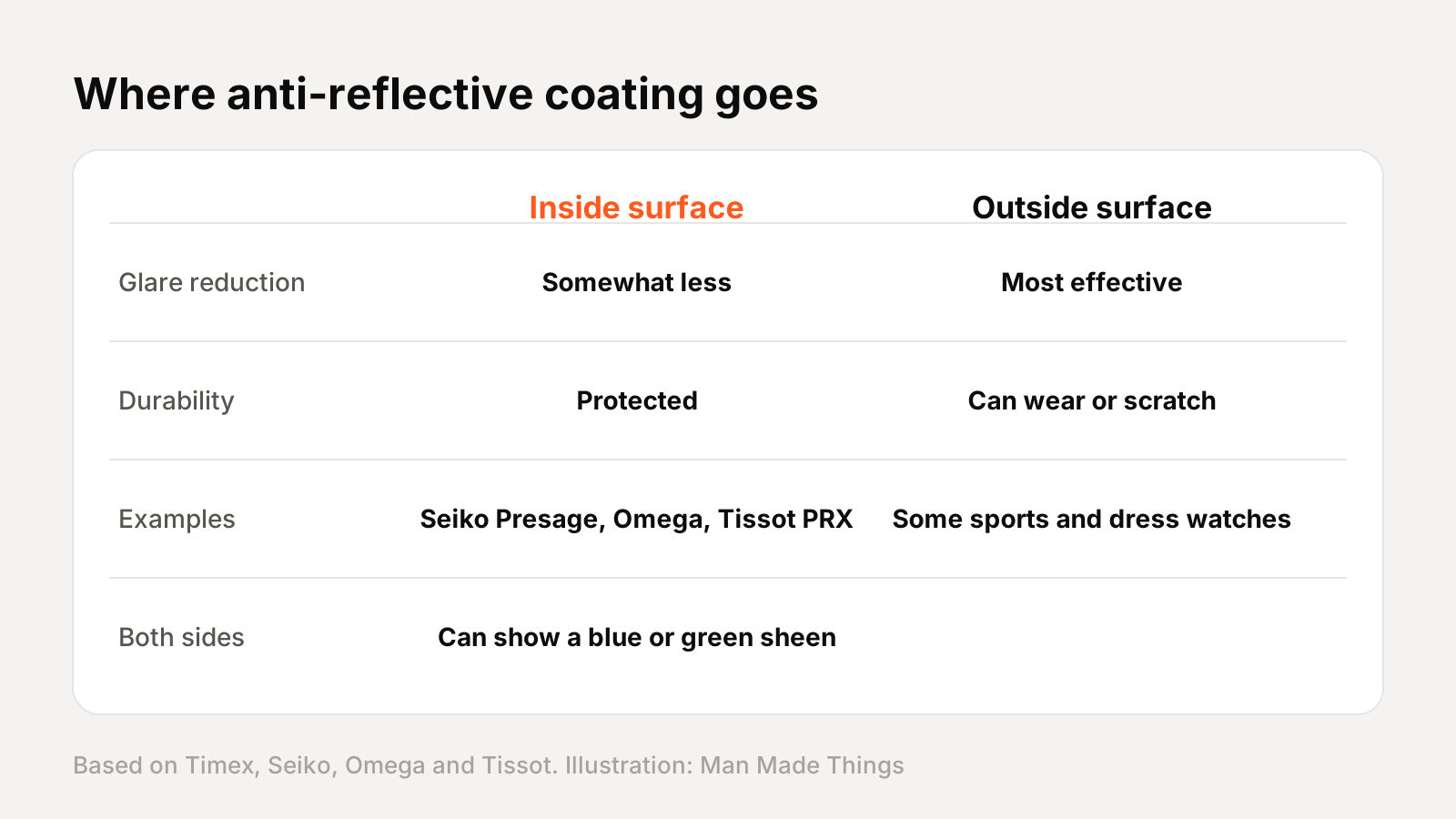
Because sapphire reflects a lot of light, many brands add an anti-reflective (AR) coating, a very thin optical layer that cuts glare so you can read the dial at an angle. Timex says AR coatings are wafer-thin, multi-layer films made from materials like magnesium fluoride, and calls them almost essential on sapphire.
Where the coating goes matters:
- Inside surface: better protected, but somewhat less effective, says Timex. Seiko's Presage and Omega's sapphire Moonwatch list AR on the inner surface, and Tissot's PRX lists one coating on the bottom side.
- Outside surface: the most effective at cutting glare, but more prone to wear. Timex notes AR coatings can be softer than sapphire and pick up fine scratches.
- Both sides: Timex says double-sided coating on sapphire often gives a blue or green sheen at certain angles.
If glare bothers you, look for "anti-reflective" on the spec sheet.
Is sapphire worth paying for?
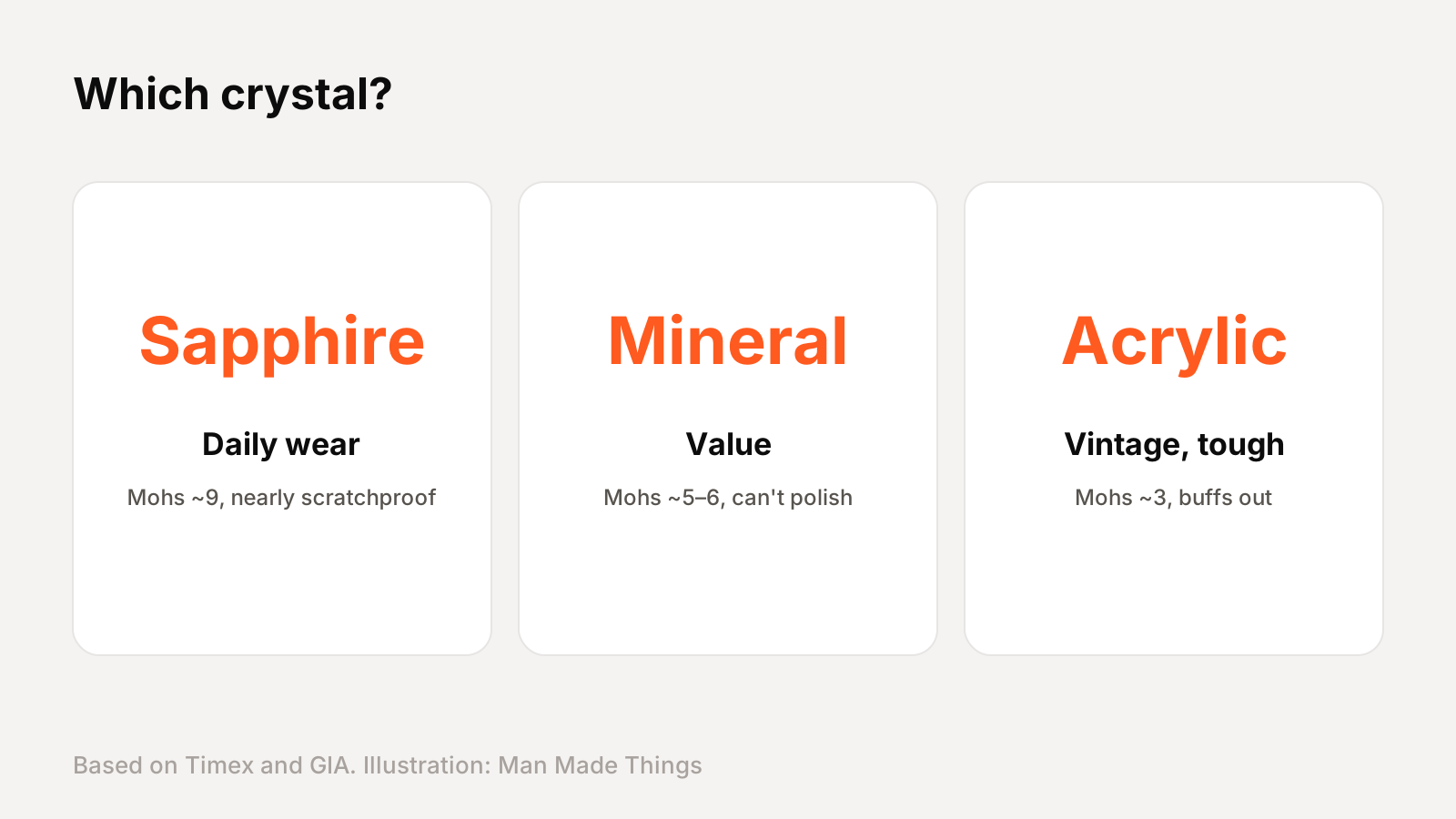
For most people, I think sapphire is worth it on a watch you'll wear every day. Scratches on mineral glass are permanent, and a crystal replacement costs money and time. Sapphire will usually look new for years.
But each material has its place:
- Choose sapphire for a daily watch you want to keep looking pristine. Just avoid dropping it on hard floors.
- Choose mineral if you want the lowest price and don't mind the occasional scratch. A good mineral crystal, like Seiko's Hardlex, is perfectly fine for a beater watch.
- Choose acrylic for vintage character or rough use, since it flexes instead of shattering and scratches can be polished out.
A good rule: check the crystal before you buy. Some watches under $500 offer sapphire, and it's one of the most practical upgrades you can pay for.
Frequently asked questions
Is sapphire crystal better than mineral?
+
It's far more scratch-resistant, about 9 on the Mohs scale versus about 5 to 6 for mineral, but it can crack under a hard impact and costs more.
Can scratches on a watch crystal be removed?
+
On acrylic, yes; Timex says scratches can be buffed out. On mineral and sapphire, scratches usually mean replacing the crystal.
What is Hardlex?
+
Seiko's name for its mineral glass crystal, used on models like the Seiko 5 Sports.
What does anti-reflective coating do?
+
It's a thin optical layer that cuts glare. Timex says inside coatings are better protected, while outside coatings cut more glare but can wear.
Sources

Watches & Coffee Writer
Aditya is a passionate coffee lover who loves watches. He covers watches and coffee for Man Made Things.
More from Aditya →