Safety Razor vs Cartridge Razor: Which Shaves Better?
How safety razors and cartridge razors compare on closeness, irritation, technique and cost per blade, how to shave with a safety razor, and what dermatologists recommend.
We may earn a commission when you buy through links on this page. Learn more
Quick answer
Cartridge razors like Gillette ProGlide and Harry's are easier and faster to use, with pivoting multi-blade heads, but refills cost around $2 or more each. Safety razors use one cheap double-edge blade (around 10 to 12 cents) and can cause less irritation for some people, but take a little practice. Dermatologists say whichever you use, keep it sharp and change blades after 5 to 7 shaves.
Shaving has quietly split into two camps. Most people use a cartridge razor: a plastic handle with a pivoting head and three to six blades. A growing number have switched back to the old-school safety razor, a metal handle that holds one double-edged blade.
Fans of safety razors talk about cheaper blades and less irritation. Cartridge fans point to speed, convenience and fewer nicks. Both have a point.
Below, I compare them using what razor makers and the American Academy of Dermatology publish. Some claims come from the brands themselves, so I flag those. Prefer electric? See our best electric shavers guide, or our best beard trimmers if you'd rather keep some stubble.
How a cartridge razor works
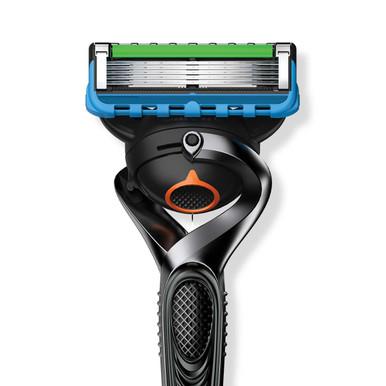
A cartridge razor puts several thin blades in a head that pivots as you shave. Gillette's ProGlide, for example, has five anti-friction blades and what Gillette calls FlexBall technology, which moves with every angle of your face. Harry's uses five German blades on a flex hinge so they follow your face's contours, and says the multi-blade design distributes pressure, helping protect against nicks.
Why people like them: they're forgiving. The pivoting head finds the right angle for you, so there's almost no learning curve. Gillette's advice is simply to keep strokes short and pressure light and let the head track your contours. Most also have a lubricating strip and a trimmer blade for sideburns.
The trade-offs: cost and, for some people, irritation. Rockwell, which makes safety razors, argues that five blades means your skin is scraped five times in a single stroke. That's a competitor's view, but some people with sensitive skin do find fewer blades gentler.
How a safety razor works
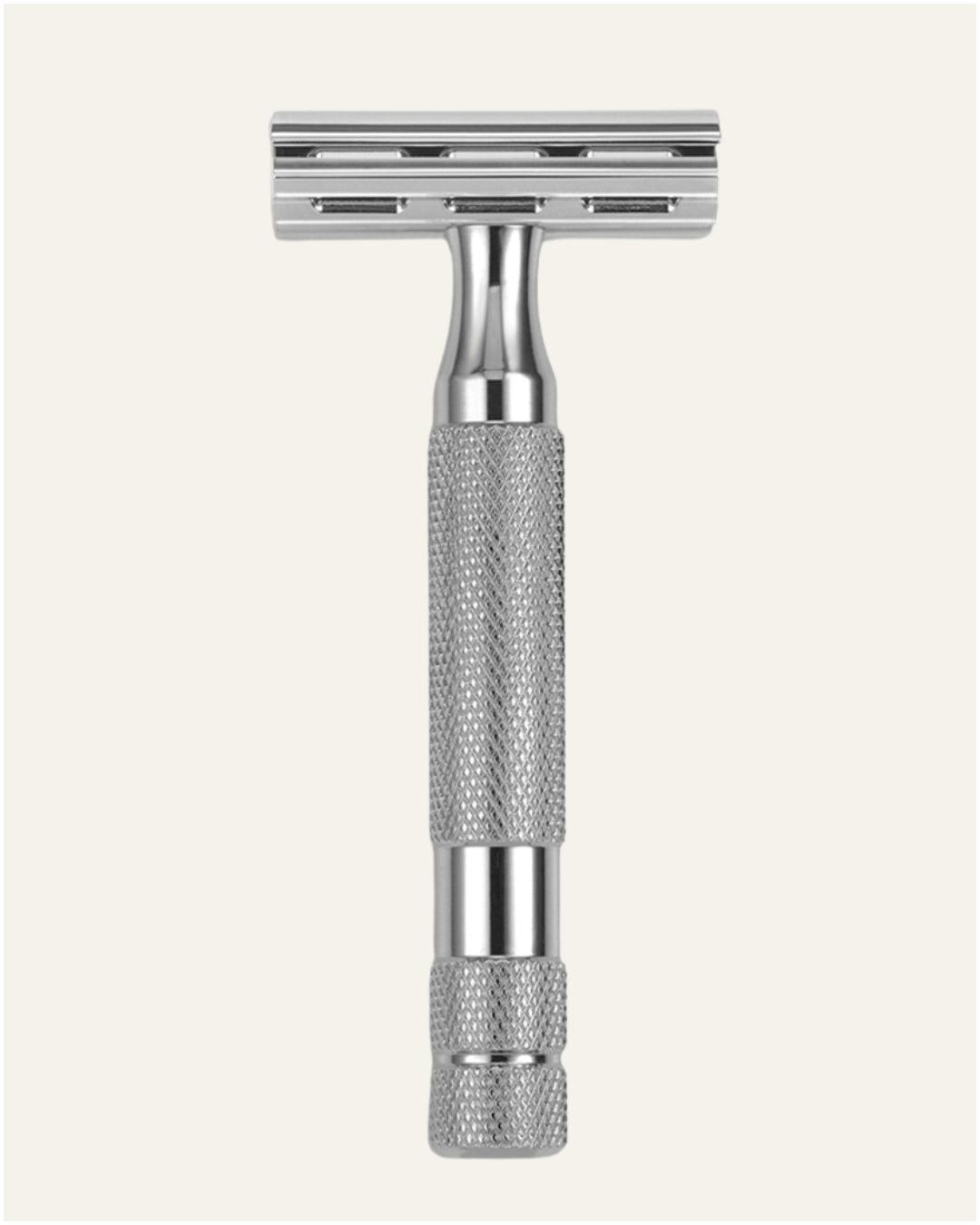
A safety razor holds a single, double-edged blade clamped between a top cap and a base plate. There's no pivot. You set the angle with your wrist.
Henson, a safety razor maker, says it clamps the blade rigidly at a fixed 30-degree angle, and that less blade flex means less tugging and irritation. Henson also says its razor causes less razor burn than multi-blade alternatives in its own split-face testing, though that's the brand's own study.
Some safety razors are adjustable. Rockwell's 6C ($60) has six settings, letting you start mild and get more aggressive as you get comfortable. Its cheaper 2C starts at $40.
The trade-offs: there's a learning curve. You need to hold the right angle and use almost no pressure. Henson says you may be surprised by how little pressure you need. Expect a nick or two in the first week.
The cost difference
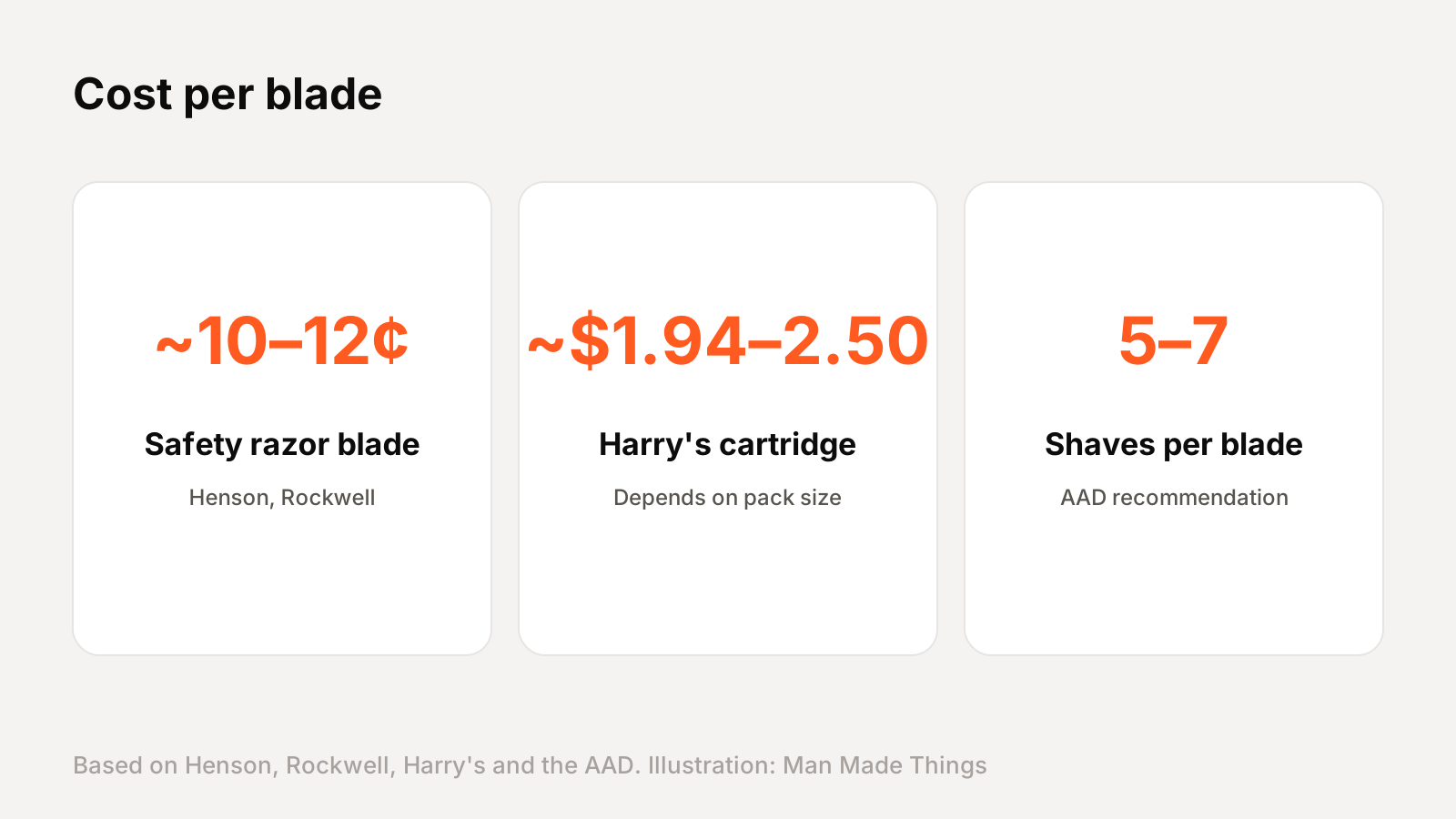
This is where safety razors win clearly.
Safety razor blades: Henson says double-edge blades cost around 10 cents each, and Rockwell says its blades cost 12 cents. They're standard, so any brand fits. Rockwell says a 100-pack covers about two to three years of daily shaving.
Cartridges: Harry's refills cost $2.50 each in a four-pack, dropping to about $1.94 in a 16-pack. Gillette's ProGlide razor starts at $25, with refills sold separately. Dollar Shave Club's six-blade razor is $10, or $7 with a subscription.
Blades last different lengths, though. Gillette says one ProGlide refill can last up to a month, or about 20 shaves. Harry's suggests changing its blades every 6 to 8 shaves, Rockwell says 5 to 8 shaves, and Henson suggests every 2 to 5. Even changing safety razor blades more often, the per-shave cost is much lower. The catch is the upfront price of a good safety razor.
How to shave with a safety razor
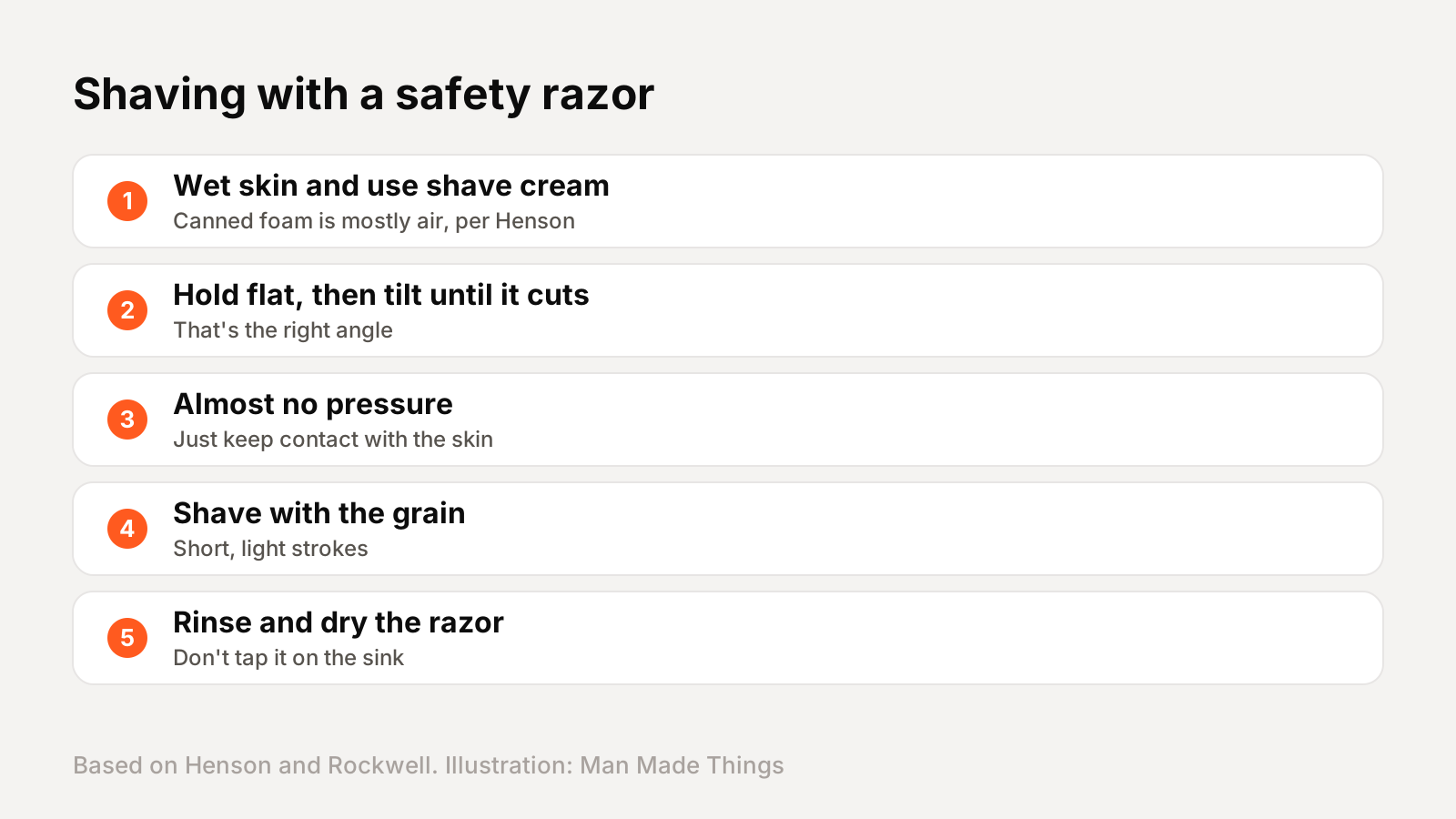
Henson's instructions make the technique simple:
- Load the blade. Unscrew the handle, place a new blade on the top cap by its short edges, then reassemble finger-tight.
- Prep your skin. Wet your face and use a good shave cream. Henson says canned foam is mostly air.
- Find the angle. Henson says to plant the razor flat against your skin, then tilt the handle slightly until it starts cutting. That's the correct angle.
- Use almost no pressure. Just enough to keep the razor in contact with your skin.
- Shave with the grain when you're starting out.
- Rinse it under the tap rather than tapping it on the sink, and store it dry.
Rockwell adds to use short, light strokes on the first pass. Go slowly for the first few shaves, especially around your jaw and neck.
Traveling? TSA says razor blades not in a cartridge aren't allowed in carry-on bags, though they're fine in checked luggage. Cartridge razors are allowed in carry-ons.
What dermatologists recommend
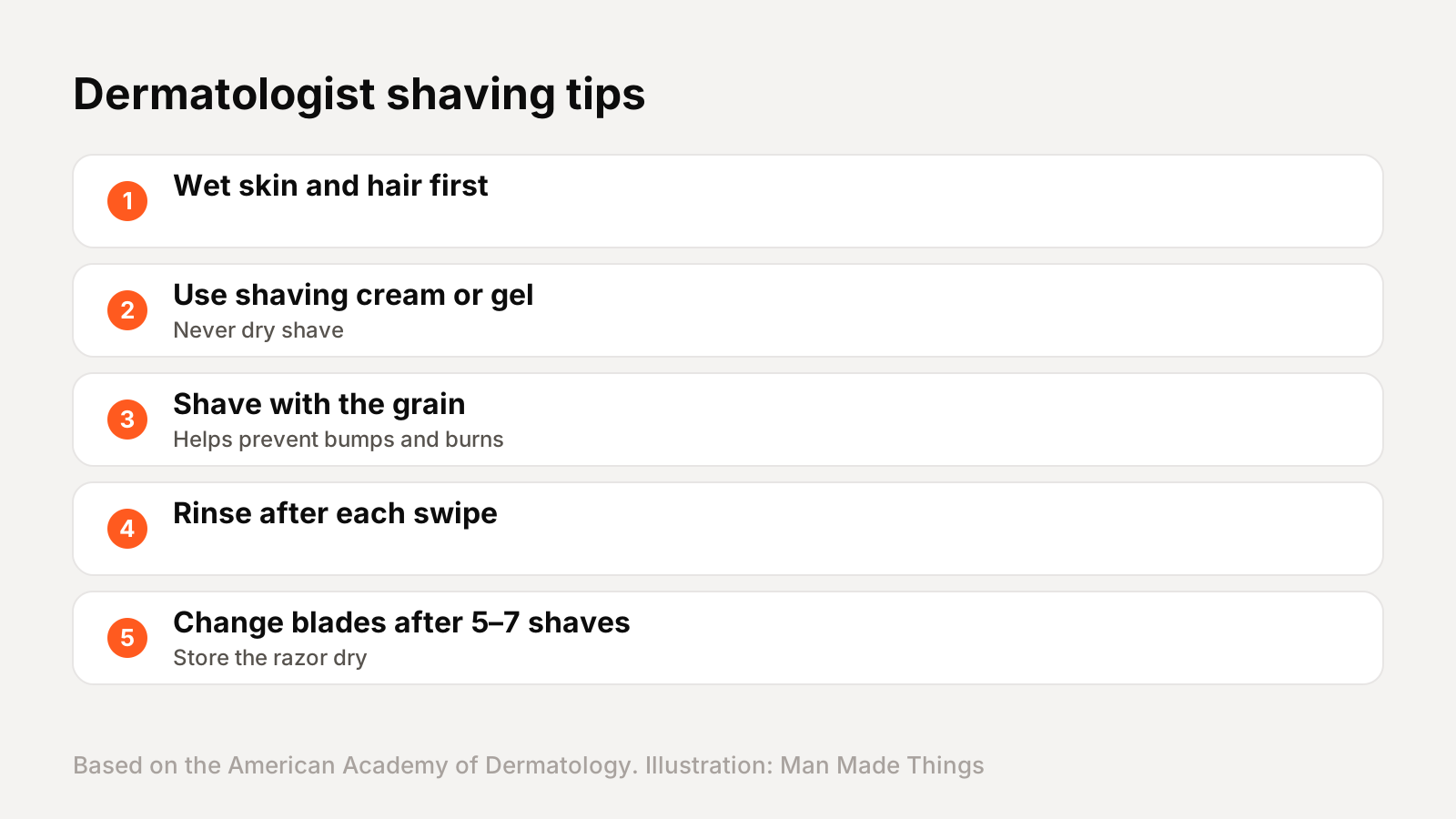
The American Academy of Dermatology's advice applies to either razor:
- Wet your skin and hair before shaving to soften it.
- Apply a shaving cream or gel. The AAD says never dry shave.
- Shave in the direction the hair grows, which it says helps prevent razor bumps and burns.
- Rinse after each swipe of the razor.
- Change your blade after 5 to 7 shaves to minimize irritation, and store your razor somewhere dry.
For people prone to razor bumps, especially men with darker skin tones, the AAD says a single-blade razor or an electric razor is often recommended, and that whichever you use, it must be sharp, because a dull blade greatly increases the risk of razor bumps. It also advises against shaving very closely or pressing hard.
My take: if you value speed and ease, stick with a cartridge. If you get irritation or bumps, or want to cut costs, a safety razor is worth trying for a few weeks.
Frequently asked questions
Is a safety razor better than a cartridge razor?
+
It depends. Safety razors cost far less per blade and may irritate less for some people; cartridges are easier and more forgiving.
How often should I change my razor blade?
+
The American Academy of Dermatology says after 5 to 7 shaves. Brand advice ranges from 2 to 5 shaves (Henson) to up to a month (Gillette).
Do safety razors cause fewer razor bumps?
+
The AAD says a single-blade razor is often recommended for people prone to razor bumps, as long as it's sharp.
Can I take a safety razor on a plane?
+
Not with the blade in your carry-on. TSA says razor blades not in a cartridge must go in checked bags.
Sources
Editor-in-Chief
Rahul has been writing about gadgets and software since 2013, first at Thetechhacker and now at Man Made Things. He edits every review on the site and signs off on every verdict.
More from Rahul →