Polk Bookshelf Speakers: Every Model Compared, From T15 to Reserve R200
A guide to every Polk Audio bookshelf speaker on Polk's US store: T15, Monitor XT, Signature Elite and Reserve, with specs, US prices and which to buy.
We may earn a commission when you buy through links on this page. Learn more
Quick answer
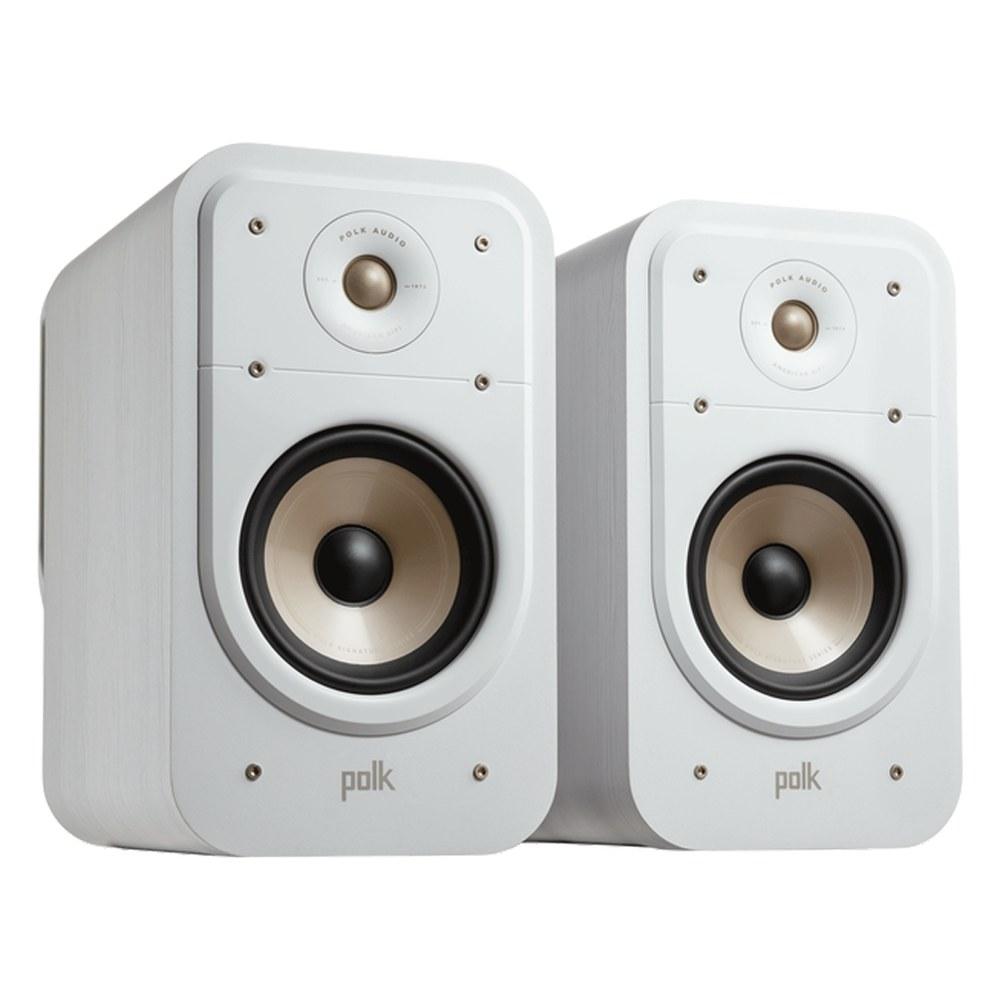
Polk's US store lists 7 bookshelf speakers, all passive. The T15 ($149 a pair) and Monitor XT15 ($179) and XT20 ($279) are the budget picks; the Signature Elite ES15 ($299) and ES20 ($399) are the mid-range; and the premium Reserve R100 ($699) and R200 ($639 on sale) top the range.
Polk Audio is an American brand known for affordable speakers. This guide covers all 7 bookshelf speakers on Polk's US store, using Polk's own specifications and US prices.
A note on how we review: we haven't completed hands-on listening tests of these speakers, so there are no star ratings.
Every Polk bookshelf speaker we reviewed
US prices per pair are from Polk's US store in November 2026. Click any model for its full review.
| Model | US price (pair) | Woofer | Sensitivity |
|---|---|---|---|
| Reserve R200 | $639 | 6.5-inch | 86 dB |
| Reserve R100 | $699 | 5.25-inch | 86 dB |
| Signature Elite ES20 | $399 | 6.5-inch | 86 dB |
| Signature Elite ES15 | $299 | 5.25-inch | 85 dB |
| Monitor XT20 | $279 | 6.5-inch | 87 dB |
| Monitor XT15 | $179 | 5.25-inch | 86 dB |
| T15 | $149 | 5.25-inch | 89 dB |
Reserve: Polk's premium line
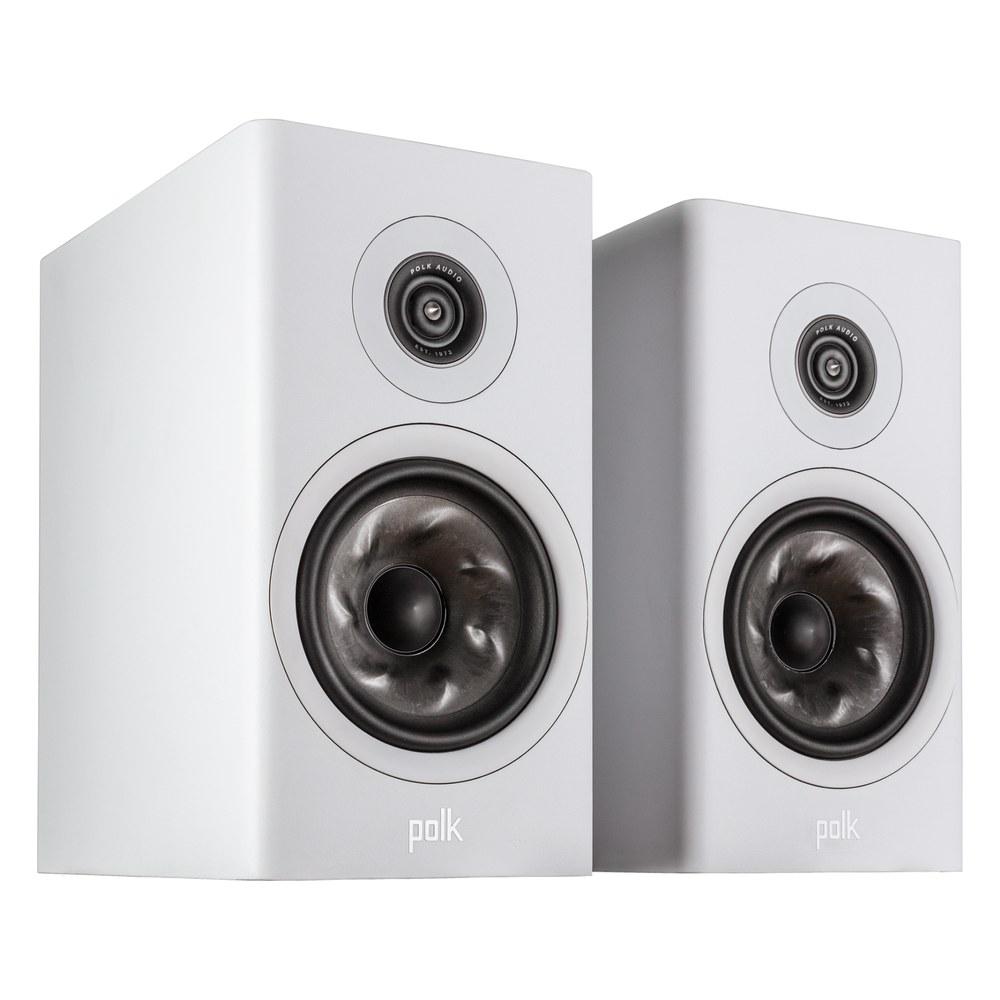
The Reserve series is Polk's premium line, with Pinnacle Ring Radiator tweeters, Turbine Cone woofers and X-Ports.
| Model | US price (pair) | Woofer | Sensitivity |
|---|---|---|---|
| Reserve R200 | $639 | 6.5-inch | 86 dB |
| Reserve R100 | $699 | 5.25-inch | 86 dB |
When we checked, the bigger R200 was on sale for $639, less than the R100 at $699. Both showed limited stock.
Signature Elite: the mid-range
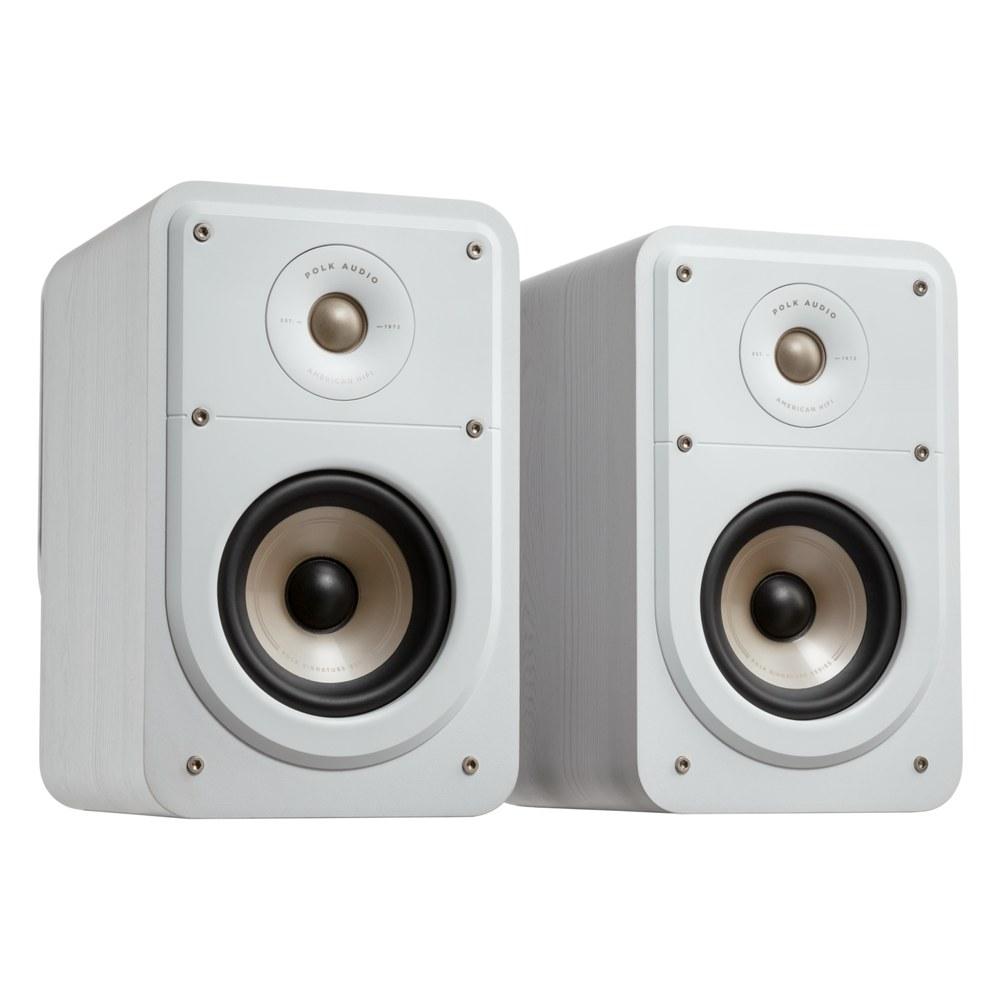
Signature Elite is Polk's mid-range line, with Terylene tweeters, Power Ports and three finishes.
| Model | US price (pair) | Woofer | Sensitivity |
|---|---|---|---|
| Signature Elite ES20 | $399 | 6.5-inch | 86 dB |
| Signature Elite ES15 | $299 | 5.25-inch | 85 dB |
Monitor XT and T Series: the budget picks
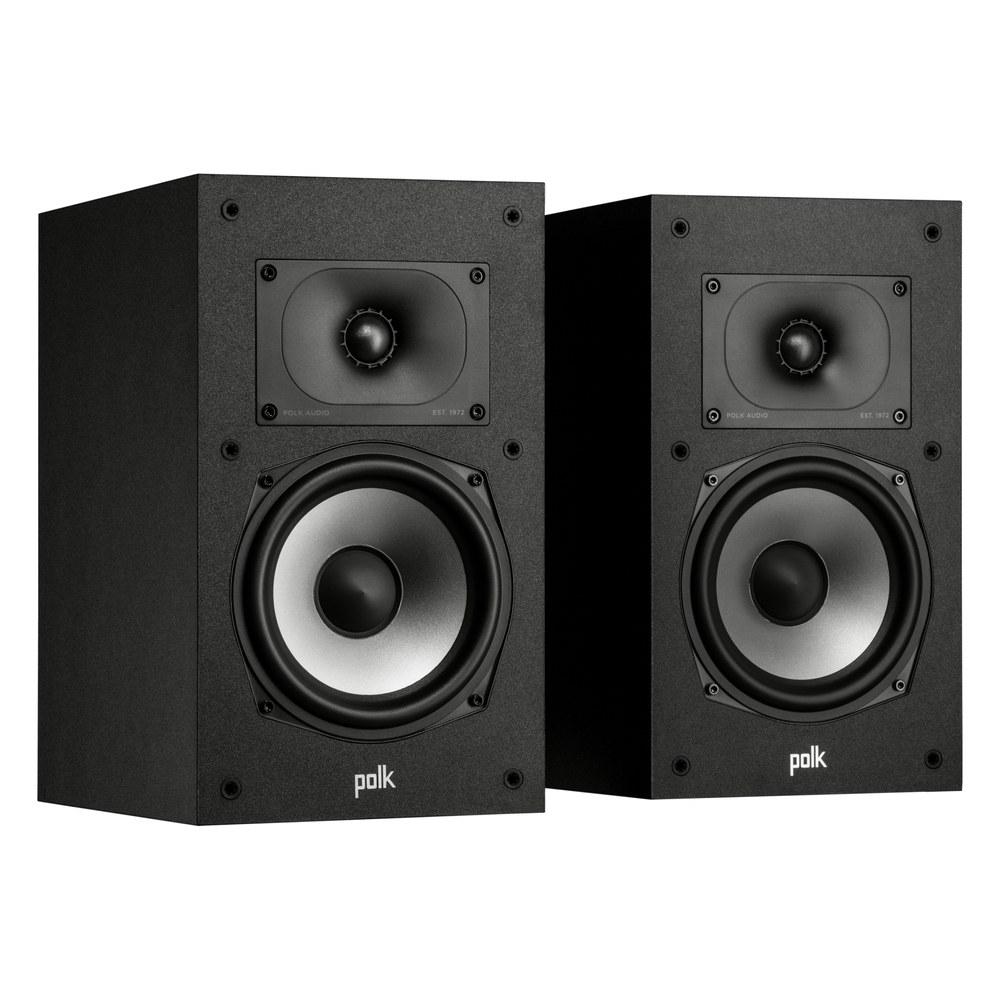
Monitor XT is Polk's budget Hi-Res certified line, in black only. The T Series is Polk's entry-level line.
| Model | US price (pair) | Woofer | Sensitivity |
|---|---|---|---|
| Monitor XT20 | $279 | 6.5-inch | 87 dB |
| Monitor XT15 | $179 | 5.25-inch | 86 dB |
| T15 | $149 | 5.25-inch | 89 dB |
The Monitor XT20 lists the deepest bass of any Polk bookshelf speaker here (38 Hz), and the T15 the highest sensitivity (89 dB).
Which Polk bookshelf speaker should you buy?
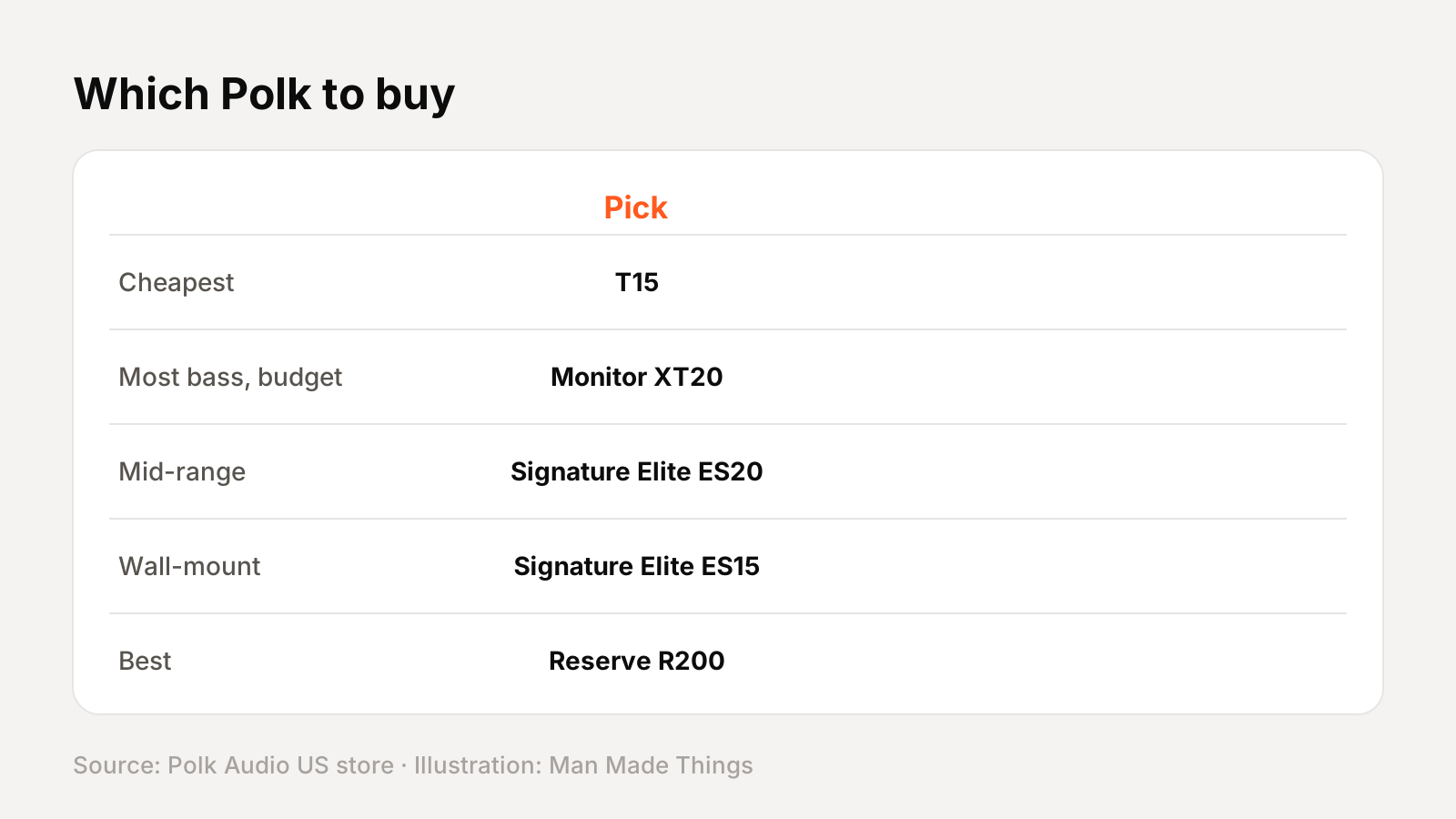
| If you want... | Consider |
|---|---|
| The cheapest pair | T15 |
| The most bass for the money | Monitor XT20 |
| Compact surrounds | Monitor XT15 |
| A mid-range all-rounder | Signature Elite ES20 |
| Wall-mountable bookshelf | Signature Elite ES15 |
| Polk's best | Reserve R200 |
What you need with any Polk bookshelf speaker
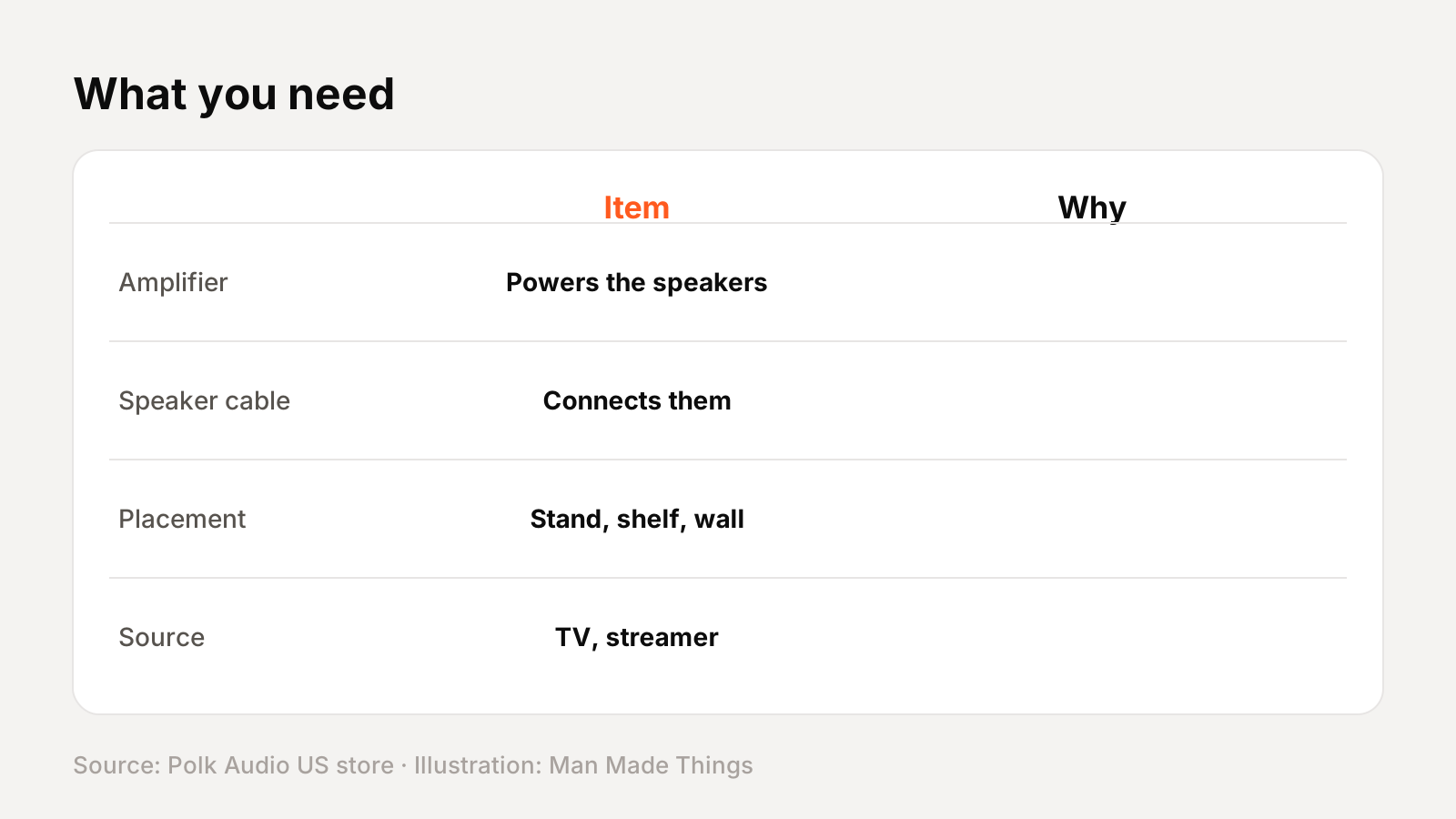
Every Polk model here is passive and needs an amplifier or AV receiver. Polk lists the Monitor XT and Signature Elite models as Dolby Atmos and DTS:X compatible, and most models as compatible with 4 and 8 Ω outputs (the ES15 is listed for 8 Ω outputs).
Polk technologies, explained

Polk uses different technologies at each price point:
- Pinnacle Ring Radiator tweeter: Polk says its "distinctive pointed shape guides the dispersion of high frequency sounds around a room," which "widens the sweet spot."
- Turbine Cone woofer: Polk says the turbine design "delivers a significant increase in cone rigidity without increasing mass," so the woofer moves "with increased accuracy and speed."
- Patented X-Port: Polk says it "uses specially tuned eigentone filters to cancel out unwanted resonances," for "tight, distortion-free bass and a superbly detailed midrange."
- Power Port: Polk's patented port "smoothly transitions the airflow" into the room "to eliminate turbulence and distortion for louder, deeper, more musical bass."
- Terylene dome tweeter: Polk says it enables "playback beyond the range of human hearing—up to 40kHz," and the speaker is Hi-Res Audio certified.
- Dynamic Balance drivers: Polk's driver technology, which Polk says gives "a clean, open mid-range and punchy, responsive bass, with low distortion."
Setting up Polk bookshelf speakers
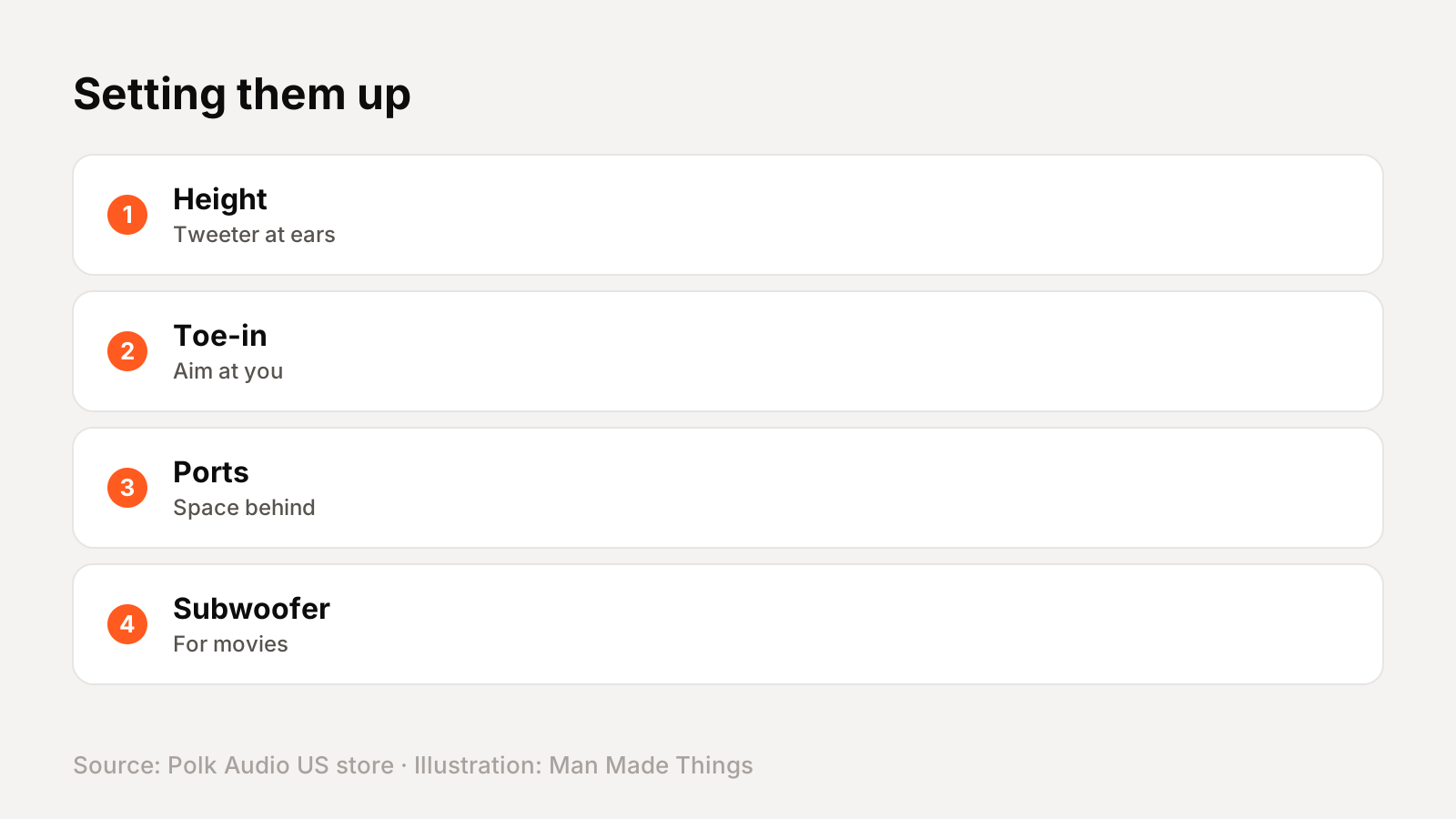
- Put the tweeters at ear height, on stands or a sturdy shelf.
- Toe the speakers in slightly toward your seat.
- Give rear-ported models (Reserve) space behind them; the T15's front port is more forgiving near walls.
- Use the keyhole slots on the ES15 and T15 if you're mounting them as surrounds.
- Add a subwoofer for movies if you choose a smaller model.
Speaker terms, explained
| Term | What it means |
|---|---|
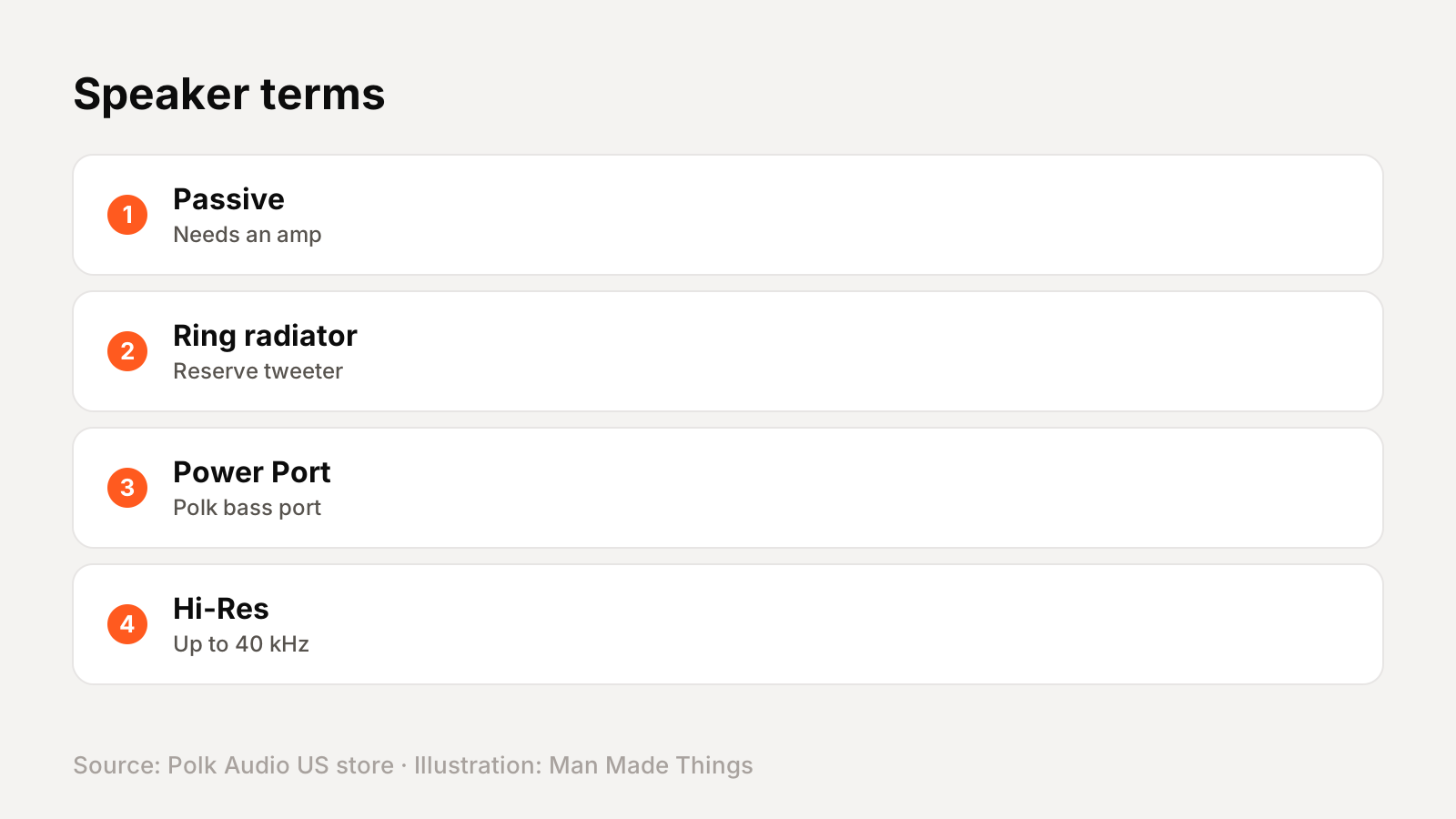
| Passive speaker | A speaker that needs an external amplifier |
| Ring radiator | A tweeter design with a ring-shaped diaphragm; Polk's Pinnacle version has a pointed center |
| Power Port / X-Port | Polk's bass port designs |
| Hi-Res Audio certified | Rated to reproduce frequencies up to 40 kHz |
| Sensitivity | How loud a speaker plays from a given input; higher means easier to drive |
| -3 dB response | The range where output stays within 3 dB; a tighter measure than overall response |
| Dolby Atmos / DTS:X | Surround formats; these speakers work with receivers that support them |
Buying and warranty
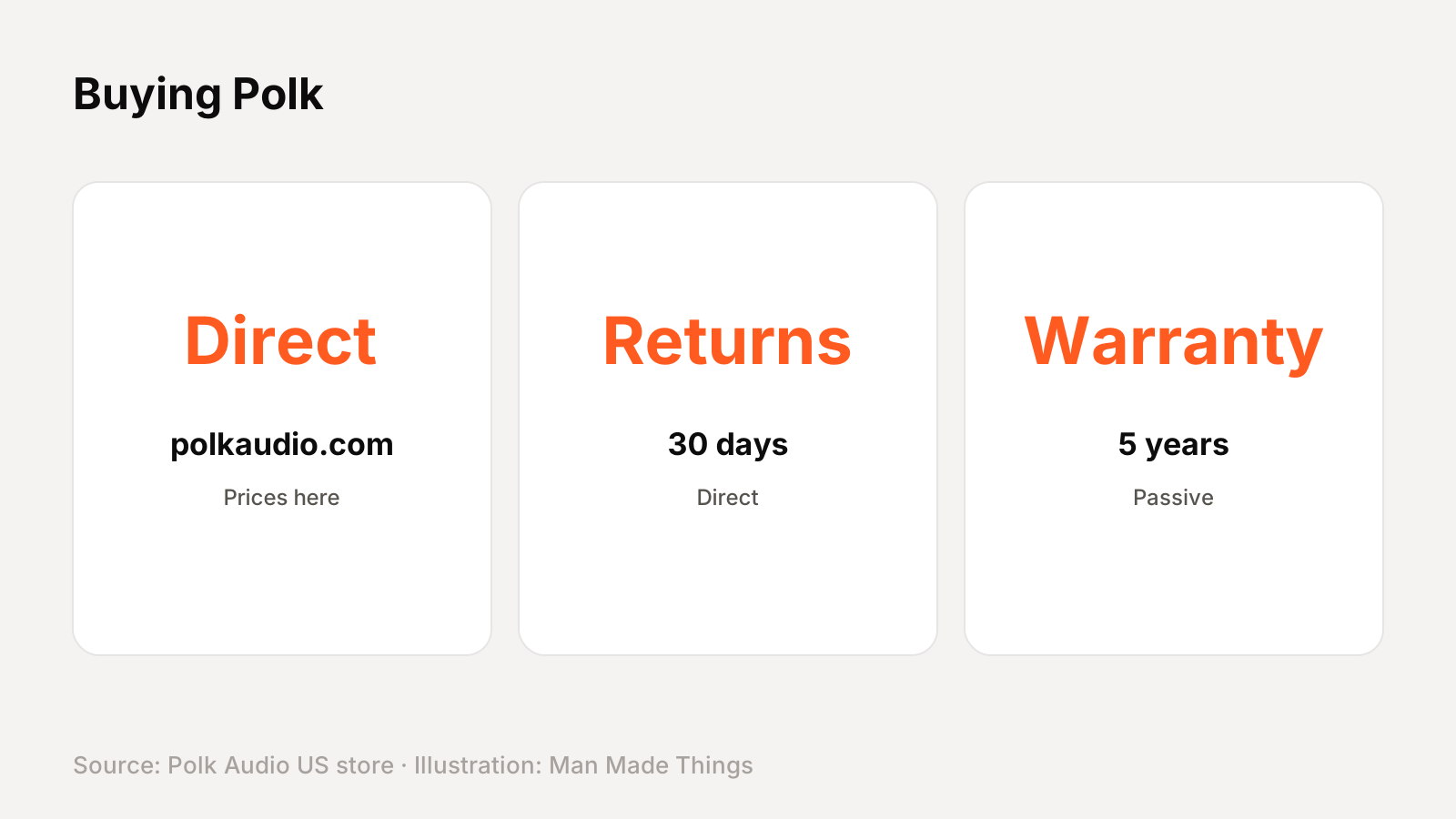
Polk sells directly on its US store with free shipping, 30-day returns and price matching, and through authorized dealers. Prices on this page are from Polk's US store in November 2026; Polk also sells refurbished units of several models.
Polk's warranty covers passive bookshelf speakers for 5 years when bought from polkaudio.com or an authorized Polk dealer; Polk says no warranty is provided for purchases from unauthorized dealers.
We left out floorstanders, center channels, height modules, sound bars and built-in speakers.
Frequently asked questions
What is the cheapest Polk bookshelf speaker?
+
The T15, at $149 a pair on Polk's US store when we checked.
Which Polk bookshelf speaker has the deepest bass?
+
The Monitor XT20 lists 38 Hz, followed by the Reserve R200 at 39 Hz overall.
Is the Reserve R200 worth it over the R100?
+
When we checked, the R200 was on sale for $639 a pair, less than the R100 at $699, with a bigger 6.5-inch woofer. Both had limited stock.
What warranty do Polk speakers have?
+
Polk lists 5 years for passive bookshelf speakers bought from polkaudio.com or an authorized dealer.
Sources
Editor-in-Chief
Rahul has been writing about gadgets and software since 2013, first at Thetechhacker and now at Man Made Things. He edits every review on the site and signs off on every verdict.
More from Rahul →