How to Break In Leather Boots (Without the Blisters)
How to break in new leather boots the right way, using advice from Red Wing, Danner, Blundstone and Thursday: short wears, thick socks, conditioner, how long it takes and when the fit is wrong.
We may earn a commission when you buy through links on this page. Learn more
Quick answer
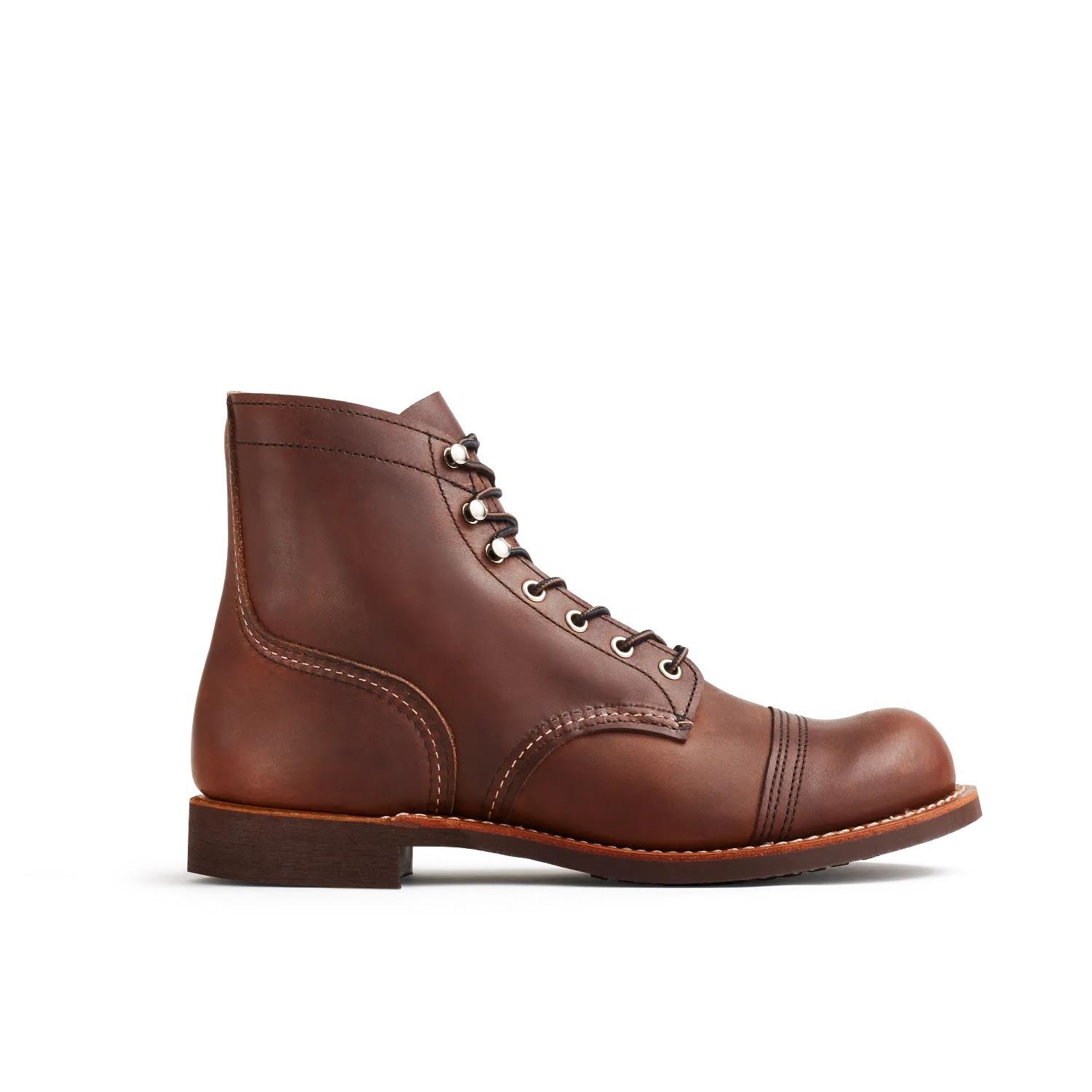
Wear new leather boots around the house for short periods, starting at 15 to 20 minutes or a couple of hours, and build up gradually over a week or more. Wear thick socks, give them rest days, and use a light coat of leather conditioner if needed. Avoid heat and soaking. Danner says boots should relax after a few weeks; pinching or pain means the fit is wrong.
A good pair of leather boots can last for years and end up feeling like they were made for your feet. The first few weeks, though, can be rough. Stiff leather, rubbing at the heel and a blister or two are all part of the story for many people.
It doesn't have to be painful. Most of the trouble comes from wearing new boots too long, too soon, or trying shortcut "hacks" that can damage the leather.
I pulled together the break-in advice that Red Wing, Danner, Blundstone and Thursday Boot Co. publish on their own sites. They agree on almost everything, and where they don't, I say so. Shopping for a pair first? See our best Chelsea boots guide.
Make sure the fit is right first
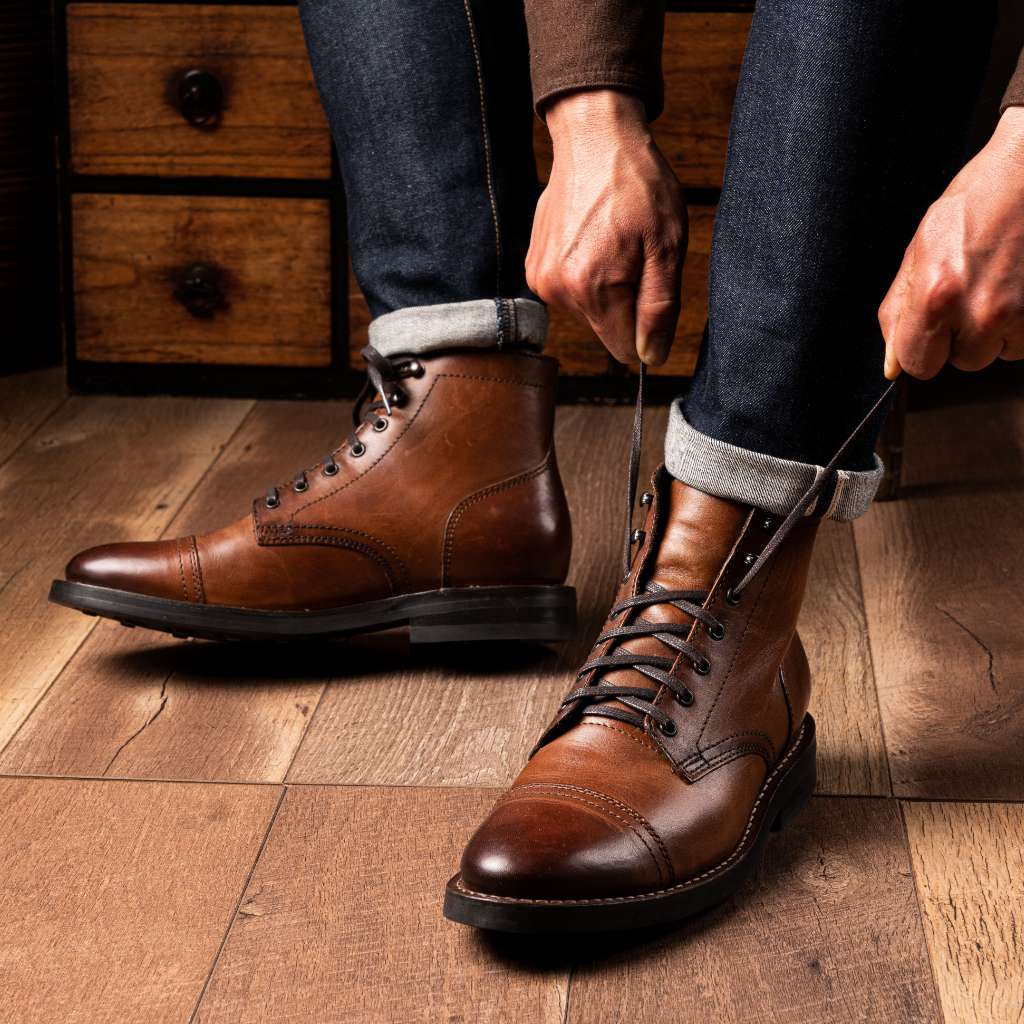
Breaking in softens leather. It can't fix boots that are the wrong size. Blundstone puts it bluntly: no amount of break-in hacks can ease the discomfort of ill-fitting new boots.
What a good fit looks like, according to the brands:
- Toe room: Thursday recommends a full thumb's width from your big toe to the front of the boot. Blundstone says about a quarter inch. Danner says your toes shouldn't touch the end when you stand with your full weight on one foot.
- Snug, not painful: Thursday says new boots should feel snug, since leather stretches, but adds that snug doesn't mean painful.
- Some heel movement is normal: Red Wing says to expect slight heel movement at first as the leather shapes to your foot. Danner adds that your heel shouldn't slide up the back of the boot substantially.
Leather stretches a little across the instep, Blundstone notes, but it never stretches lengthwise. If they're too short, they'll stay too short.
Start with short wears at home
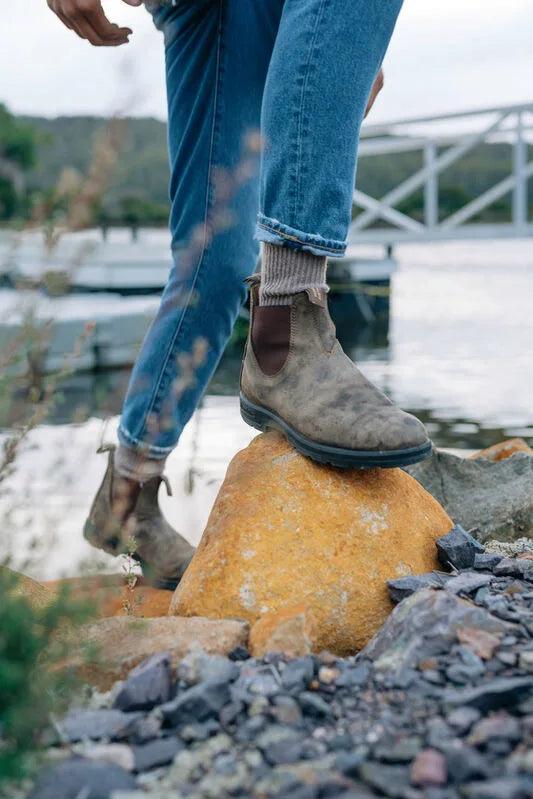
The single most important rule: don't go straight into all-day wear. Red Wing says to start by wearing your boots indoors for a few hours at a time, then gradually build up as the leather softens and molds to your feet.
How long to start with depends on the brand:
- Blundstone: 15 to 20 minutes at a time, increasing each day.
- Danner: a couple of hours a day for about a week, longer for thicker leather or stiffer boots.
Blundstone also suggests walking on carpet or other soft surfaces at first to reduce friction. Wearing them at home also means you can still return them if the fit turns out to be wrong, since many brands only accept unworn returns.
Red Wing adds a good habit: after a few days of continuous wear, give your boots at least a full day off. That lets the leather dry out from sweat and recover its shape.
Thick socks and blister prevention
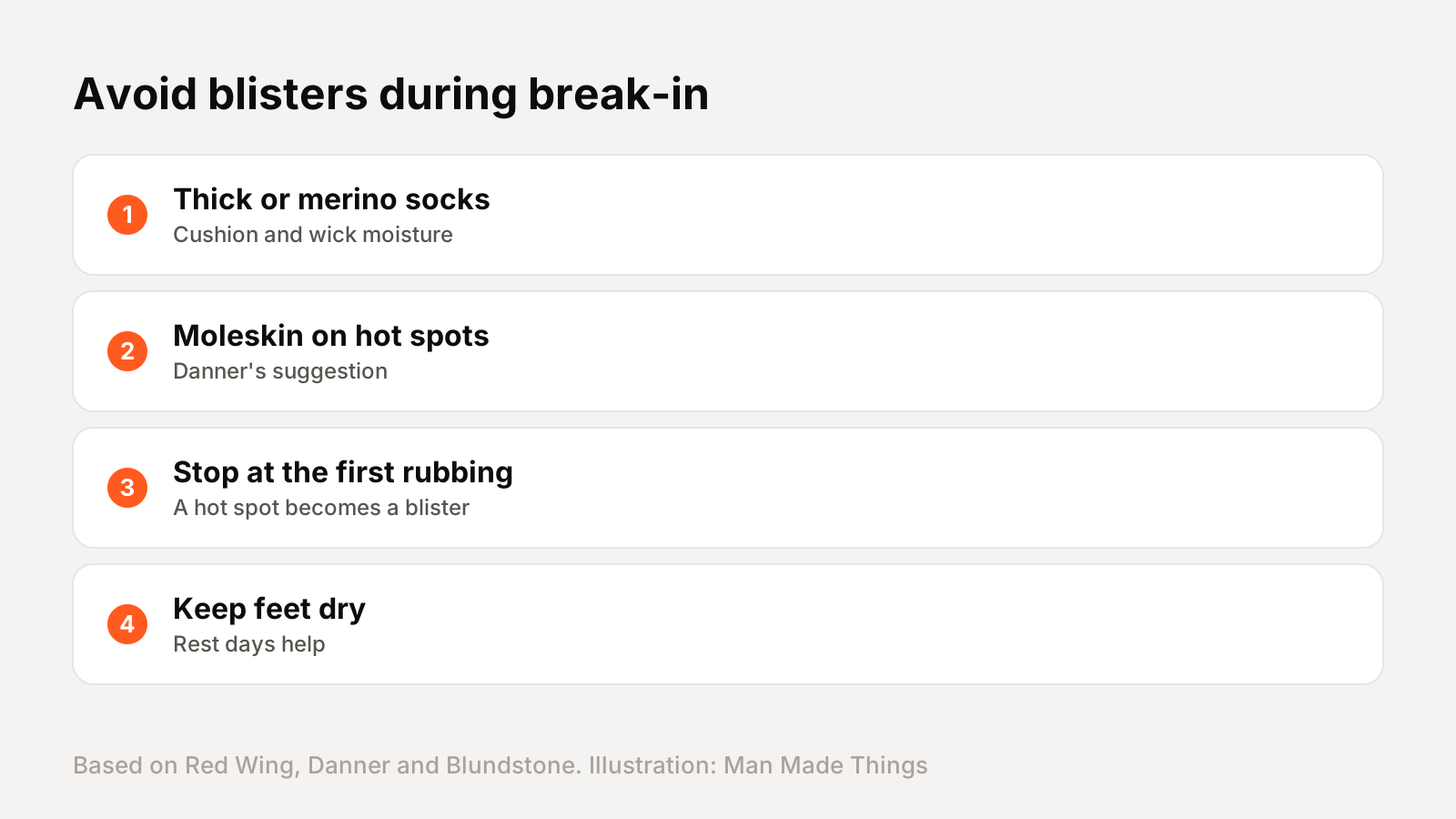
Socks do a lot of the work during break-in. Red Wing says padded socks dramatically reduce friction and cushion your feet while the leather is still stiff. Danner recommends merino wool, since it wicks away moisture, and Blundstone says thick socks reduce the risk of blisters. For Chelsea boots, Blundstone even suggests layering two or three pairs.
If you feel a hot spot starting, stop and deal with it. Danner suggests products like moleskin or blister pads to protect your feet from friction during break-in. A hot spot today becomes a blister tomorrow if you push through.
Keep your feet dry, too. Damp skin blisters more easily, which is another reason merino socks and rest days help.
Conditioner: yes. Heat and water hacks: be careful
Conditioner helps. Red Wing suggests its boot oil or conditioner to soften leather naturally, and Danner says conditioner can speed up softening on full-grain leather. But go light. Blundstone warns against over-conditioning, which can make leather lax and floppy, and Red Wing says excess conditioner can cause a mushy feel, deeper creasing and less support. Thursday notes conditioner can darken leather, so test it on a hidden spot first, like inside the heel.
Heat is risky. Red Wing says never to dry boots near a radiator, heater or direct sunlight, because intense heat dries out leather, causing it to crack and stiffen. Wolverine says if boots get wet, let them air dry and don't use heat.
On hair dryers, even Blundstone contradicts itself: one guide warns against them, another allows gentle warm air from at least six inches away. I'd skip it. And I found no boot brand that recommends soaking boots in water.
How long it takes, and when to give up
Break-in time varies with the leather and construction:
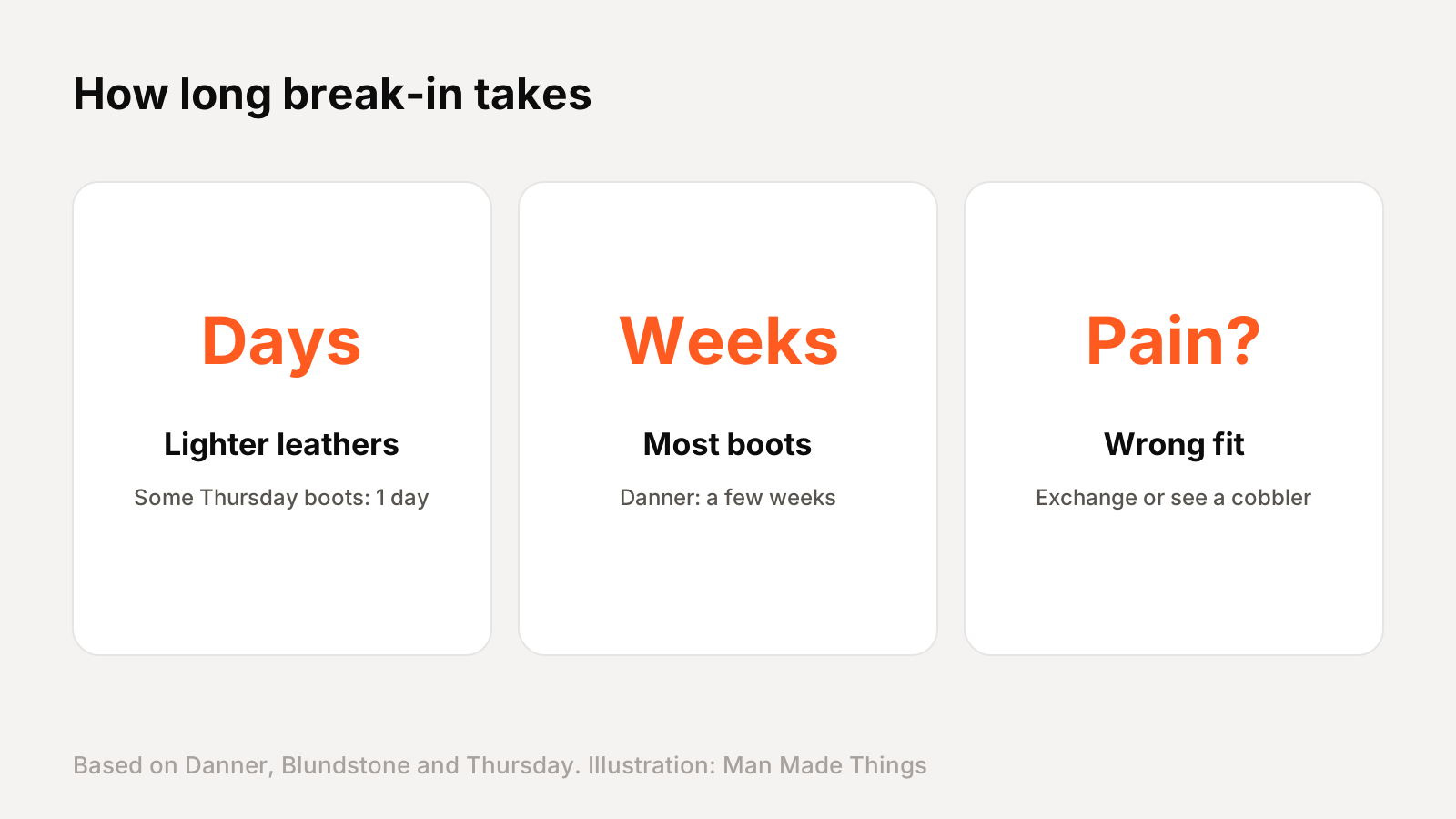
- Danner: boots should relax and soften after a few weeks.
- Blundstone: anywhere from a few days to a few weeks.
- Thursday: some of its boots take just a day of full wear, while tougher leathers take a few extra days.
What isn't normal is real pain. Danner says there shouldn't be any pinching while walking. If there is, especially at your big or little toe, you may need a wider width or larger size. Thursday says if the width is tight to the point of pain, you'll be happier exchanging for a wide version.
If a specific spot is still uncomfortable after a few weeks of consistent wear, Danner suggests taking them to a cobbler to have that area stretched. And Blundstone says if they're still a problem after a few weeks, consider returning or exchanging them.
Frequently asked questions
How long does it take to break in leather boots?
+
Usually a few days to a few weeks. Danner says boots should relax after a few weeks; Blundstone says a few days to a few weeks.
Is heel slip normal in new boots?
+
A little, yes. Red Wing says to expect slight heel movement at first. Danner says the heel shouldn't slide up substantially.
Should I use a hair dryer to break in boots?
+
It's risky. Red Wing warns heat dries out and cracks leather, and brands disagree on hair dryers. Natural wear is safest.
Do leather boots stretch?
+
A little across the instep, according to Blundstone, but never lengthwise. Boots that are too short won't fix themselves.
Sources
Editor-in-Chief
Rahul has been writing about gadgets and software since 2013, first at Thetechhacker and now at Man Made Things. He edits every review on the site and signs off on every verdict.
More from Rahul →