Gas vs Charcoal vs Pellet Grills: Which Should You Buy?
How gas, charcoal and pellet grills compare on convenience, flavor, temperature control, searing and smoking, plus NFPA safety tips, using guidance from Weber, Traeger, Pit Boss and Kingsford.
We may earn a commission when you buy through links on this page. Learn more
Quick answer
Gas grills are the most convenient: instant heat, knob-controlled temperature and easy cleanup. Charcoal grills are cheap and hands-on, great for searing, but take time to light and need ash cleanup. Pellet grills burn wood pellets with an electric controller that holds temperature for you, making them best for low-and-slow smoking, though most top out around 500°F.
Every summer, the same debate starts at backyard barbecues: gas, charcoal or the newer pellet grill? Each camp swears theirs makes the best food.
The truth is they're good at different things. Gas is about speed and convenience. Charcoal is about simplicity, high heat and the ritual of lighting a fire. Pellet grills are about smoke and set-and-forget temperature control.
Below, I compare them using what grill makers themselves publish, Weber, Traeger and Pit Boss, plus Kingsford for charcoal and the National Fire Protection Association for safety. Weber even admits something surprising about flavor, which I'll get to. If you've decided on gas, see our best gas grills under $1,000 guide.
Gas grills: fast and easy
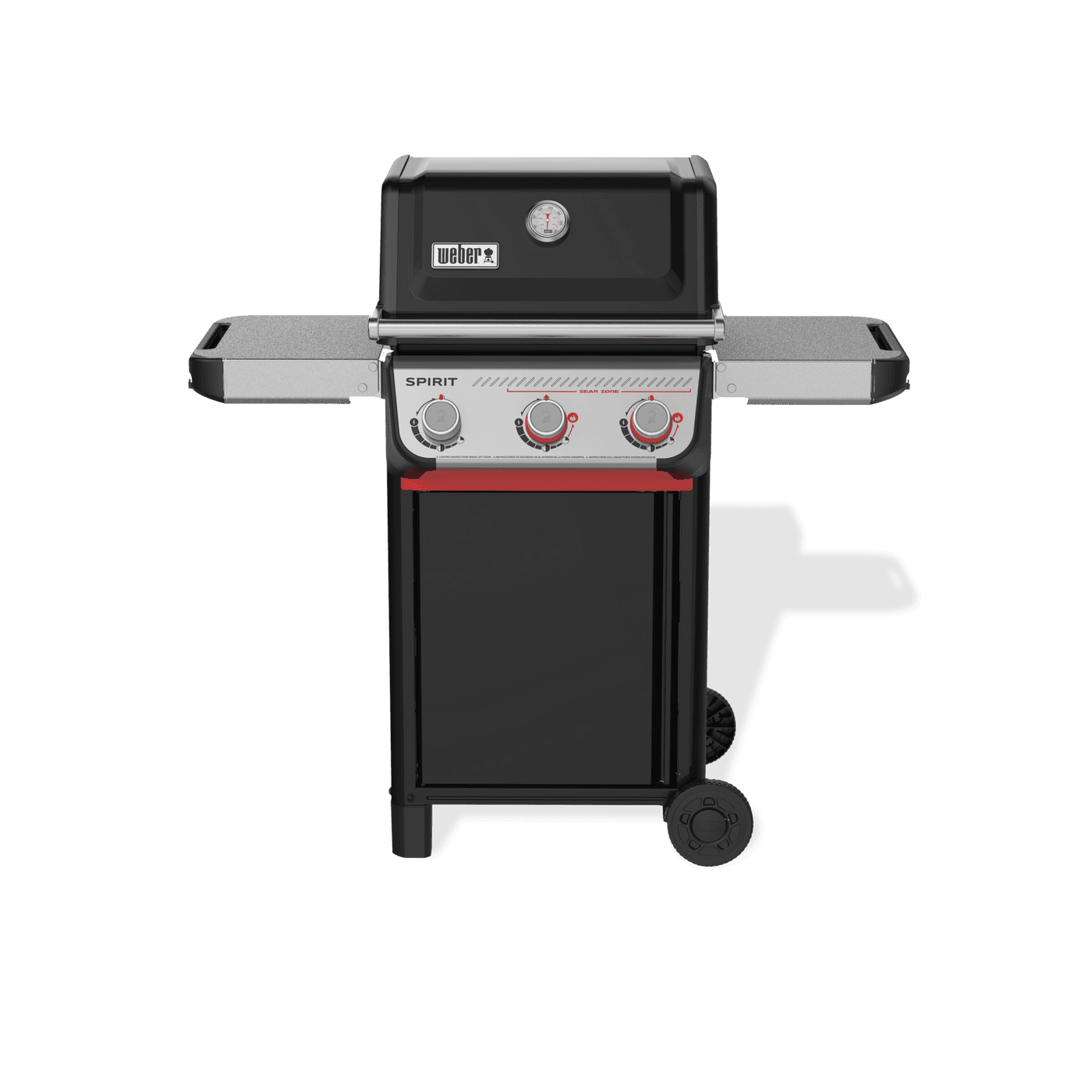
Gas grills run on propane or natural gas and light with a button. Weber says a gas grill lets you instantly fire it up, adjust temperature as easily as turning a knob, and enjoy easy cleanup, since residue burns off during preheating. It also calls gas grills inexpensive to operate.
Best for: weeknight dinners, burgers, chicken, vegetables and anyone who wants to grill without fuss. Weber's buying guide recommends two or more separate burners for better heat control, which also lets you set up a hot side and a cooler side.
What about flavor? This is where Weber surprises people. In an article on the gas versus charcoal debate, Weber says that in blind taste tests it has run, people couldn't detect a significant taste difference between food cooked on charcoal and gas. That article is old, from 1995, but it's still on Weber's site.
Price: Weber says gas grills range from about $300 to $3,000.
Charcoal grills: simple, hot and hands-on
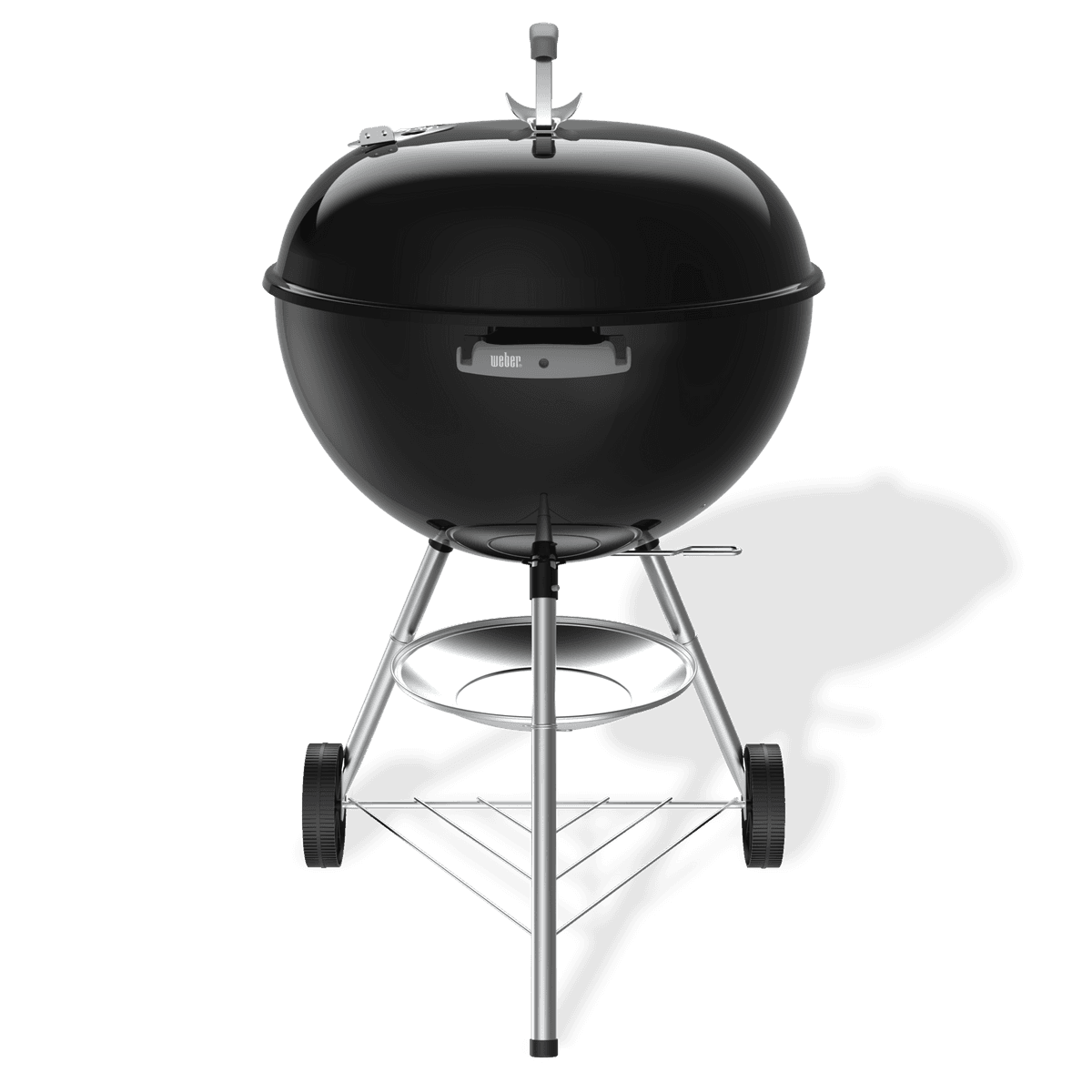
A charcoal grill is just a bowl, a grate and a lid with vents. The classic Weber Original Kettle 22-inch costs $149 and, Weber says, has adjustable dampers for temperature control and a One-Touch system to sweep ash into a catcher.
Lighting takes time. Kingsford says Match Light charcoal is ready when the coals are covered in gray ash, which takes about 10 minutes, and fresh briquets added to lit coals are ready in about 15.
Temperature control comes from the vents. Kingsford says to open the vents to increase heat and close them to reduce it, but never close them completely. For searing steaks or quick cooks, it says to open the vents wide.
Best for: people who enjoy the process. Weber says charcoal fans enjoy the hands-on experience and that waiting for the coals is half the fun. It's also portable and affordable.
Downsides: slower to start, and you have to clear out the ash after every cook.
Pellet grills: smoke on autopilot
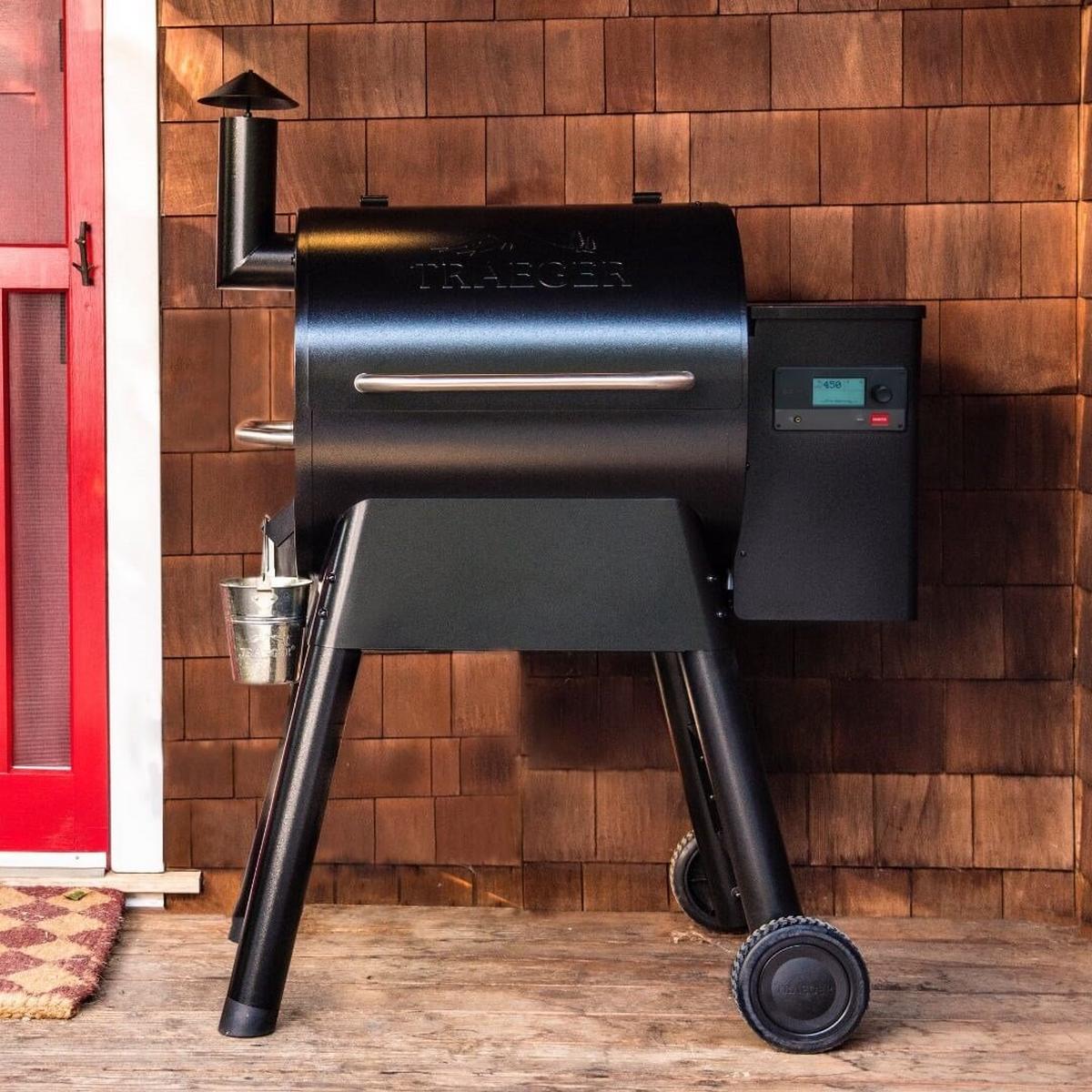
Pellet grills burn compressed wood pellets, controlled by a computer. Traeger explains how it works: an auger feeds pellets from a hopper into a fire pot, where an igniter lights them, a fan circulates heat and smoke, and a controller maintains the temperature you set. They need a power outlet, though Traeger says they use relatively little electricity.
Smoke is the point. Traeger says lower temperatures, between 165°F and 225°F, produce more smoke flavor. Pit Boss says some of its grills can smoke a pork shoulder for 12 hours. Many use a PID controller, which Pit Boss says anticipates and adjusts for heat and wind to hold temperature tightly, though it admits some people feel steadier temperatures produce less smoke.
Example: the Traeger Pro 575 ($799.99) runs from 165°F to 500°F, with WiFIRE app control.
Downside: searing. Most pellet grills top out around 500°F. Traeger says effective searing happens between 350°F and 500°F and recommends a reverse sear.
Searing vs low-and-slow: which grill wins?
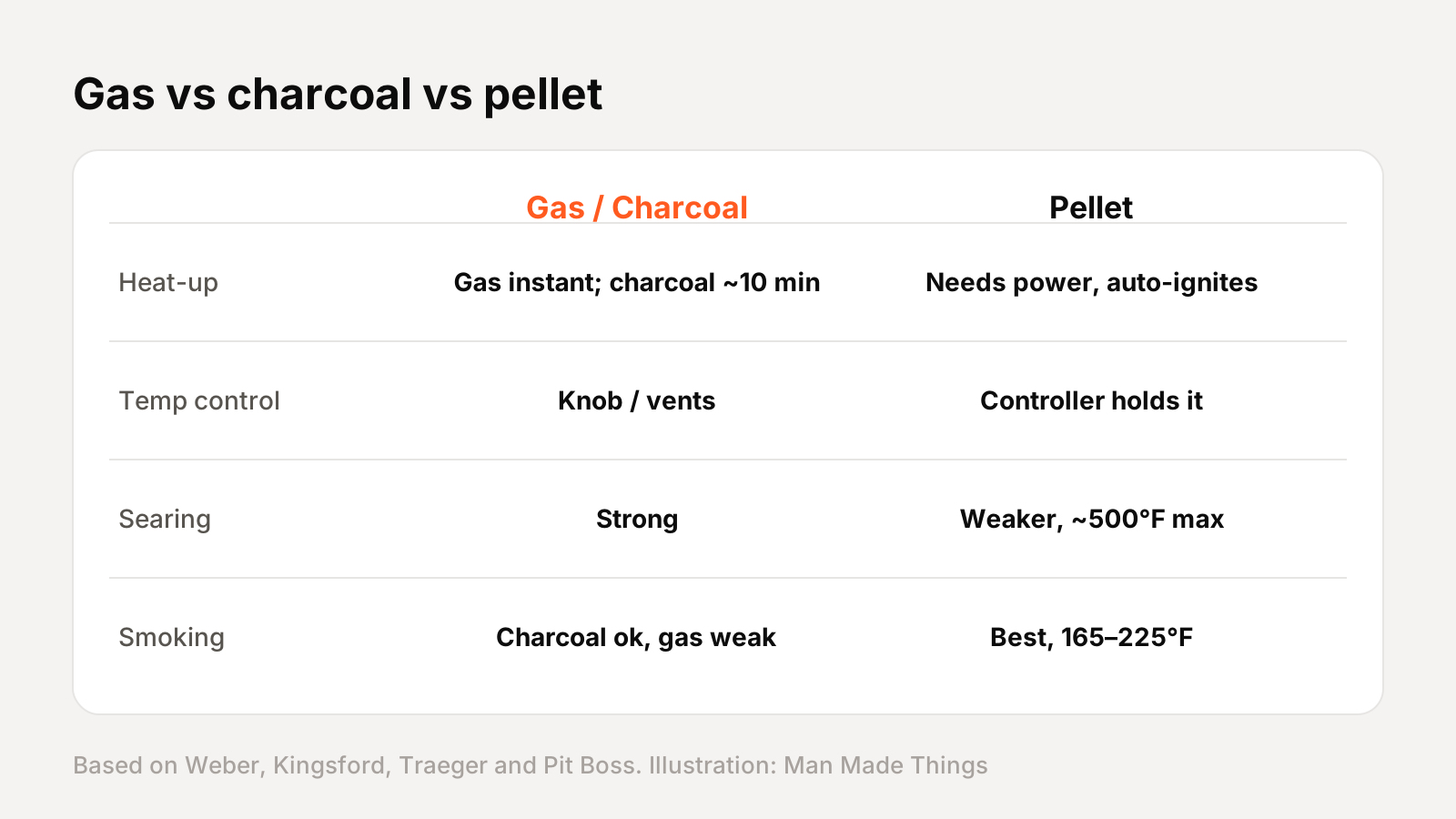
Here's how they stack up for the two big jobs:
Searing (high heat):
- Charcoal is excellent. Kingsford says open the vents wide for searing, and charcoal lets you build a very hot zone.
- Gas works well with all burners on high.
- Pellet is the weakest. Most top out around 500°F, though Pit Boss sells models with a flame broiler it says reaches 1,000°F of direct flame heat.
Low-and-slow smoking:
- Pellet wins. Holding 225°F for hours is what it's designed for.
- Charcoal can do it with a two-zone fire and by adding coals, but it takes attention.
- Gas is the least suited, since it produces little smoke on its own.
My take: if you mostly grill weeknight meals, buy gas. If you love searing and don't mind the ritual, charcoal. If you want brisket and ribs without babysitting a fire, pellet.
Grill safety for every type
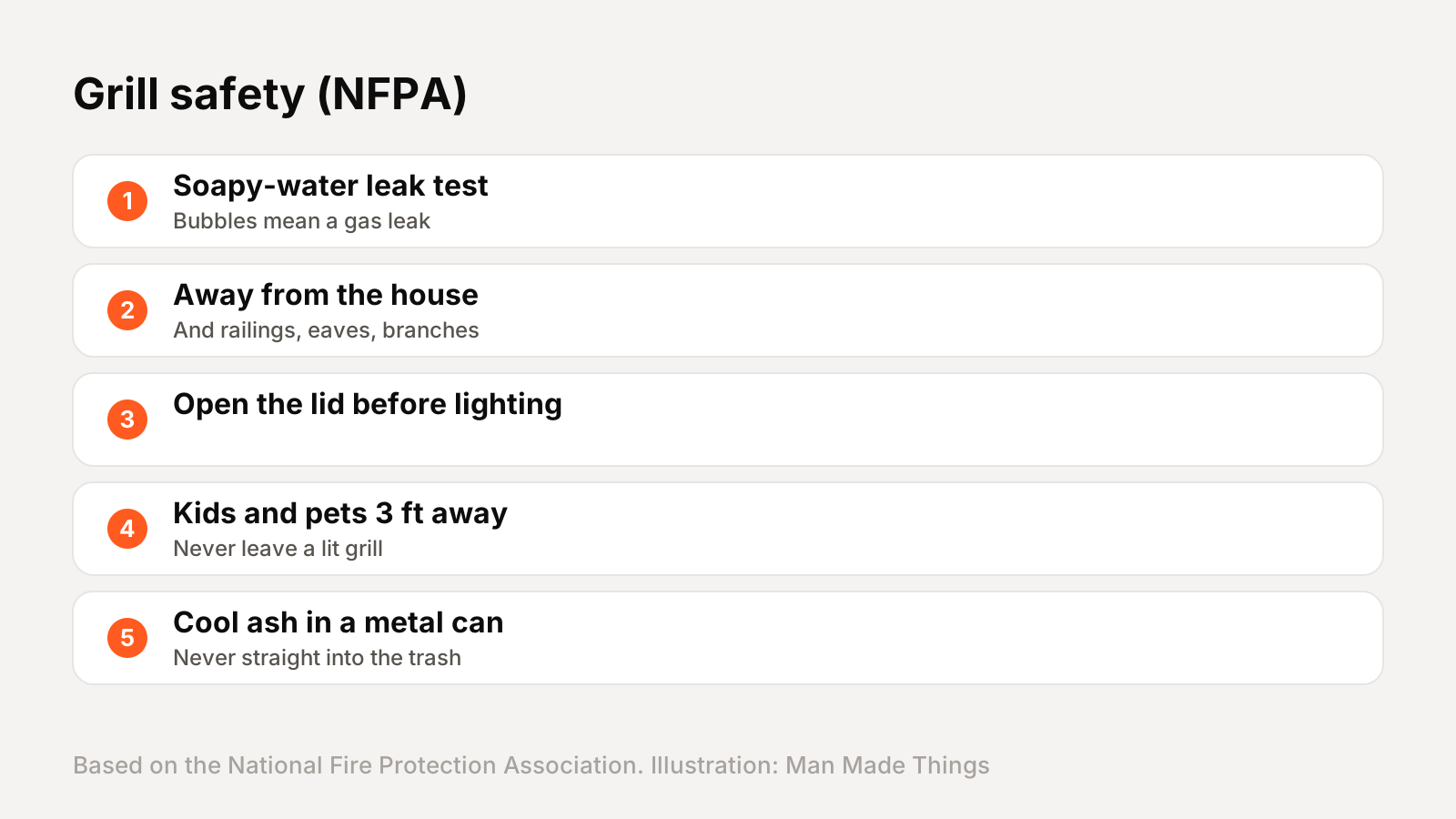
The National Fire Protection Association says gas grills alone are involved in an average of about 9,235 home fires a year. Its key safety tips:
- Check for gas leaks. Brush soapy water on the hose, regulator and connections with the gas on. If bubbles form, turn the gas off immediately.
- Keep the grill away from your home, deck railings, eaves and overhanging branches.
- Open the gas grill lid before lighting.
- Keep kids and pets at least 3 feet away, and never leave a lit grill unattended.
- Charcoal: use only charcoal starter fluid, and never add it or any flammable liquid to a lit fire.
- Ash disposal: let coals cool completely, then put them in a metal container with a tight lid, never directly in a trash can. Kingsford adds that embers can stay hot long after cooking.
NFPA also notes the grill hadn't been cleaned in about 20 percent of grill fires, so clean the grease tray and grates regularly.
Frequently asked questions
Does charcoal taste better than gas?
+
Not necessarily. Weber says that in its blind taste tests, people couldn't detect a significant difference between food cooked on charcoal and gas.
Are pellet grills good for searing?
+
They're weaker at it. Most top out around 500°F; Traeger recommends a reverse sear between 350°F and 500°F.
Which grill is best for smoking?
+
Pellet grills. Traeger says lower temperatures of 165°F to 225°F produce the most smoke, and the controller holds the temperature for you.
How long does charcoal take to light?
+
Kingsford says Match Light charcoal is ready in about 10 minutes, when covered in gray ash.
Sources
- Weber: Gas or charcoal, the debate rages on
- Weber: Grill buying guide
- Weber: Original Kettle 22-inch
- Traeger: How it works
- Traeger: Pro 575
- Pit Boss: PID controller basics
- Pit Boss: Pellet grill vs gas grill
- Kingsford: How to control charcoal grill temperature
- Kingsford: How to light charcoal without lighter fluid
- NFPA: Grilling safety
Editor-in-Chief
Rahul has been writing about gadgets and software since 2013, first at Thetechhacker and now at Man Made Things. He edits every review on the site and signs off on every verdict.
More from Rahul →