Epomaker TH108 Review: A Budget Mechanical Keyboard From $71.19
A research-based review of the Epomaker TH108 ($71.19 to $71.99): Epomaker's official specs, price and how it compares with the rest of Epomaker's keyboards.
We may earn a commission when you buy through links on this page. Learn more
Quick answer
The TH108 is a full size mechanical keyboard from Epomaker's TH series, at $71.19 and up. It's best for buyers who want a feature-packed keyboard for the money.
Epomaker is one of the busiest budget keyboard brands, with dozens of models on its US store. The TH108 belongs to Epomaker's best-selling budget line of plastic, gasket-mounted wireless keyboards, many with screens and big batteries, and Epomaker listed it at $71.19 to $71.99 (compare-at $89.99) as of November 2026.
A note on how we review: I haven't completed a hands-on test of the TH108, so there's no star rating on this page. Everything below comes from Epomaker's official product page and spec table, with plain-English explanations and a comparison with the rest of Epomaker's lineup. See every model in our Epomaker keyboards guide.
Image: Epomaker
Epomaker
Epomaker TH108
The TH108 is a full size mechanical keyboard from Epomaker's TH series, at $71.19 and up.
Best for: Buyers who want a feature-packed keyboard for the money
Pros
- 01Tri-mode wireless
- 02Big 8,000 mAh battery
- 03Gasket mount
- 04Discounted from $89.99
Cons
- 01Plastic case
- 02Heavy (Over 1.2 kg)
- 03Some specs missing from Epomaker's page
What the TH108 is
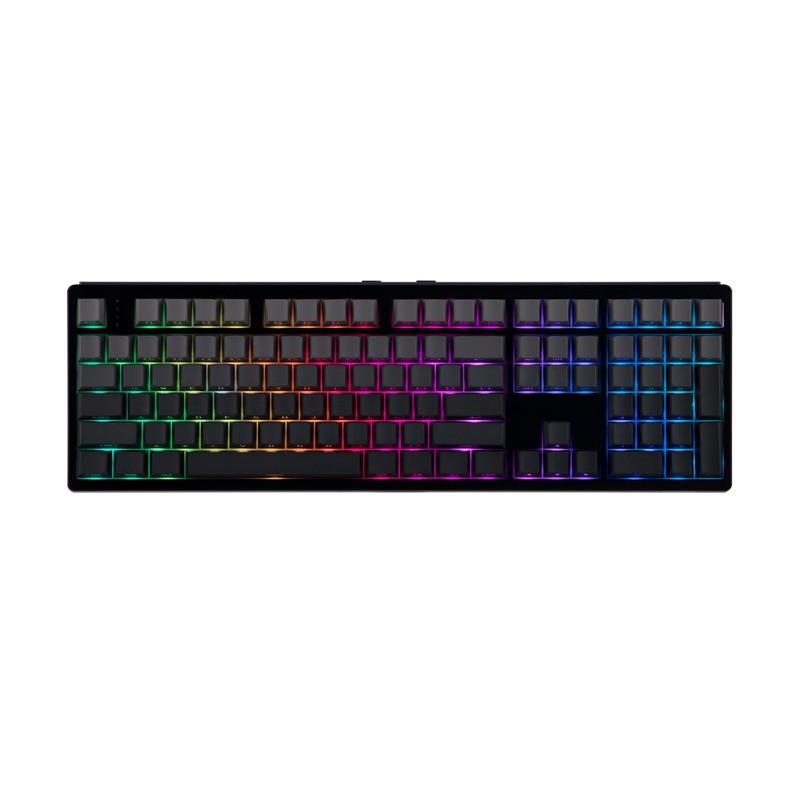
The TH108 is a full size mechanical keyboard with 108 keys, part of Epomaker's best-selling budget line of plastic, gasket-mounted wireless keyboards, many with screens and big batteries. Epomaker says its thick plastic body weighs over 1.2 kg for stable typing, with 108 double-shot PBT keycaps and a 5-layer padded gasket mount.
It connects over 2.4 GHz, Bluetooth, wired, with 1,000 Hz (2.4 GHz); Epomaker lists 2 ms wired latency polling. Epomaker lists thick plastic for the case and a gasket, 5 layers mount. The battery is rated at 8,000 mAh. Keycaps are Double-shot PBT.
TH108 specs
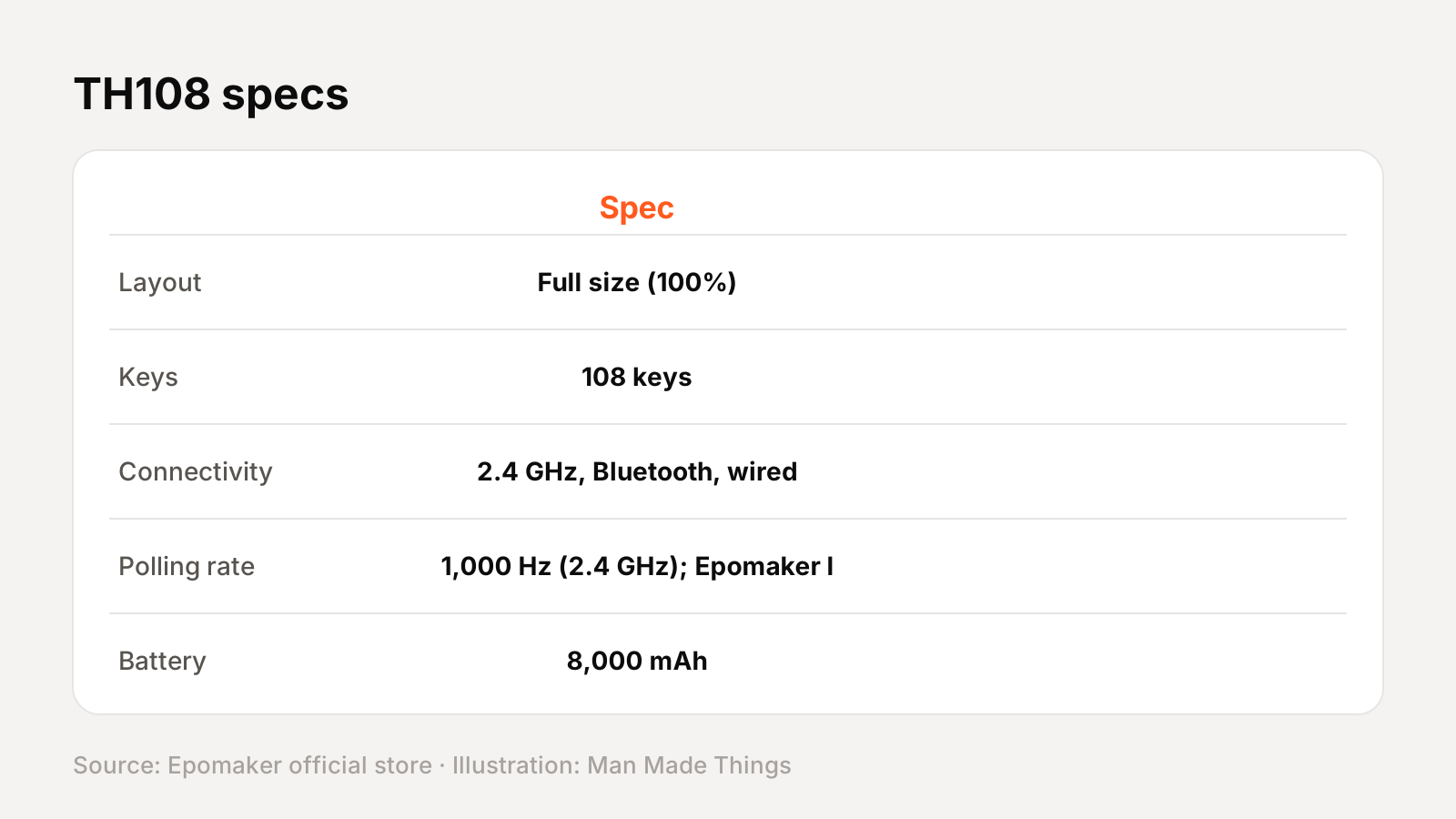
From Epomaker's official spec table:
| Spec | TH108 |
|---|---|
| Layout | Full size (100%) |
| Keys | 108 keys |
| Connectivity | 2.4 GHz, Bluetooth, wired |
| Polling rate | 1,000 Hz (2.4 GHz); Epomaker lists 2 ms wired latency |
| Battery | 8,000 mAh |
| Case | Thick plastic |
| Mount | Gasket, 5 layers |
| Keycaps | Double-shot PBT |
| Weight | Over 1.2 kg |
Epomaker's page doesn't list dimensions for this model, so we've left it out.
Price and versions
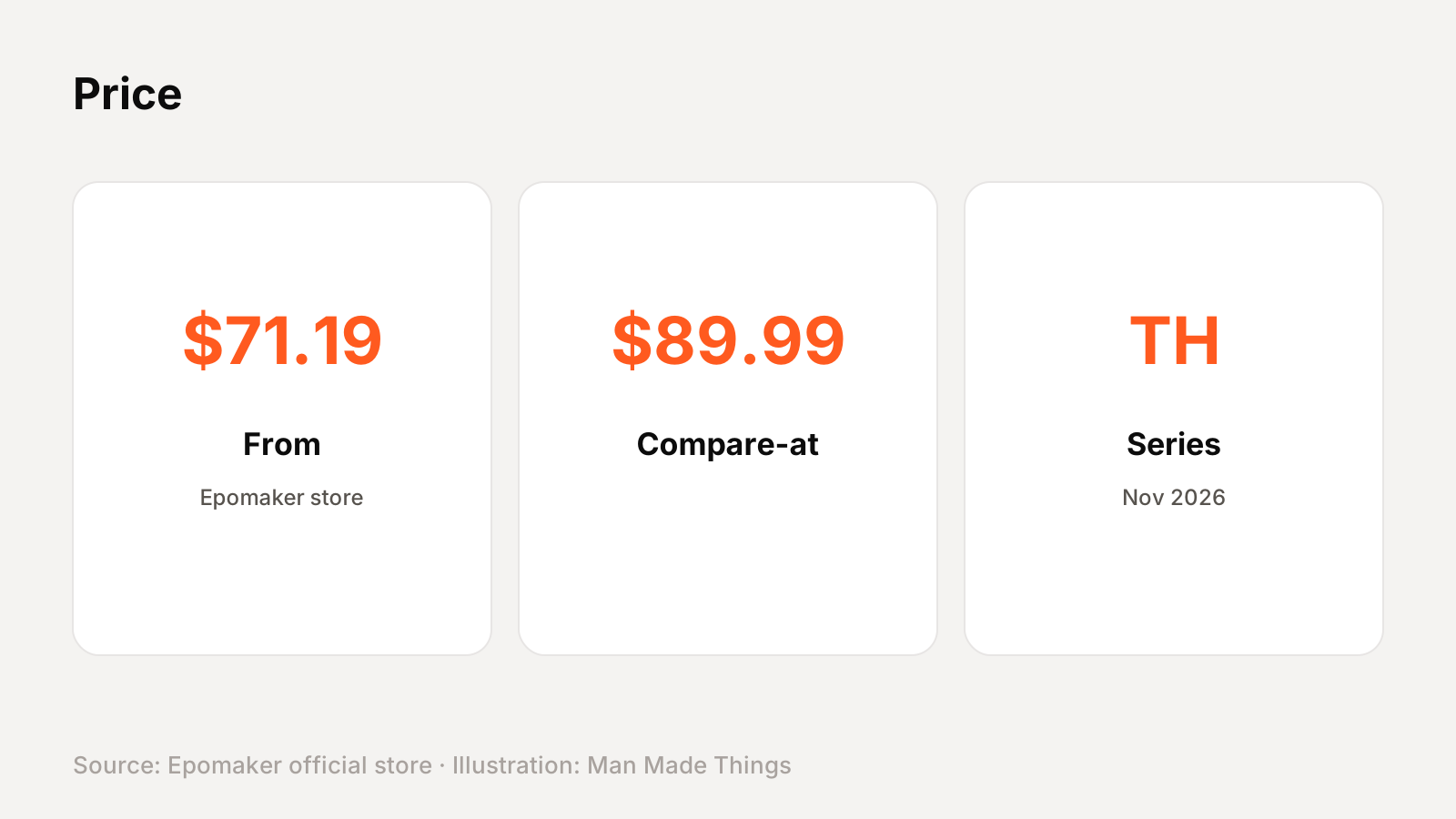
Epomaker's US store listed the TH108 at $71.19 to $71.99, against a compare-at price of $89.99. Prices vary by color and switch choice. Epomaker's prices change often with sales, so check the store before buying.
Epomaker's keyboard series, explained
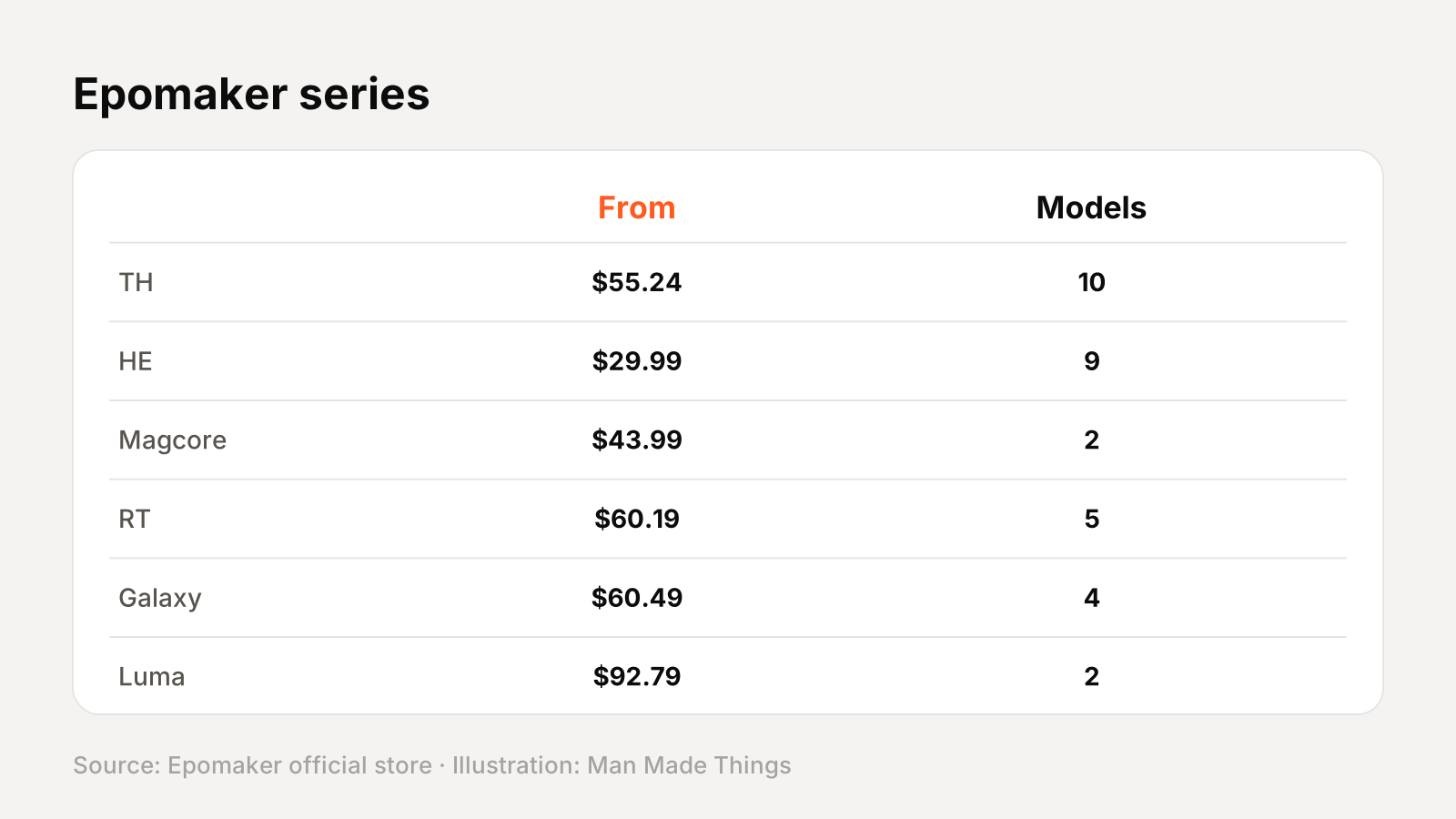
Epomaker sells a lot of keyboards. Here's how its series break down, with the TH108's series in bold:
| Series | What it is | Price on Epomaker's store | Models |
|---|---|---|---|
| TH | Best-selling budget line of plastic, gasket-mounted wireless keyboards, many with screens and big batteries | $55.24 to $94.39 | 10 |
| HE | Magnetic-switch gaming keyboards, with rapid trigger and up to 8,000 hz polling | $29.99 to $109.65 | 9 |
| Magcore | Analog gaming line | $43.99 to $109.99 | 2 |
| RT | Retro-styled keyboards with screens, knobs or modular sections | $60.19 to $101.99 | 5 |
| Galaxy | Aluminum gasket-mount keyboards | $60.49 to $109 | 4 |
| Luma | Low-profile aluminum keyboards | $92.79 to $95.20 | 2 |
| Hack | Unusual-layout keyboards | $48.99 to $76.49 | 2 |
| Split | Split ergonomic keyboards | $98.59 to $101.99 | 2 |
| Numpads | Numpads and macro pads | $33.99 to $42.49 | 3 |
| Other | One-off designs, from bamboo to carbon fiber | $54.99 to $118.15 | 6 |
How the TH108 compares
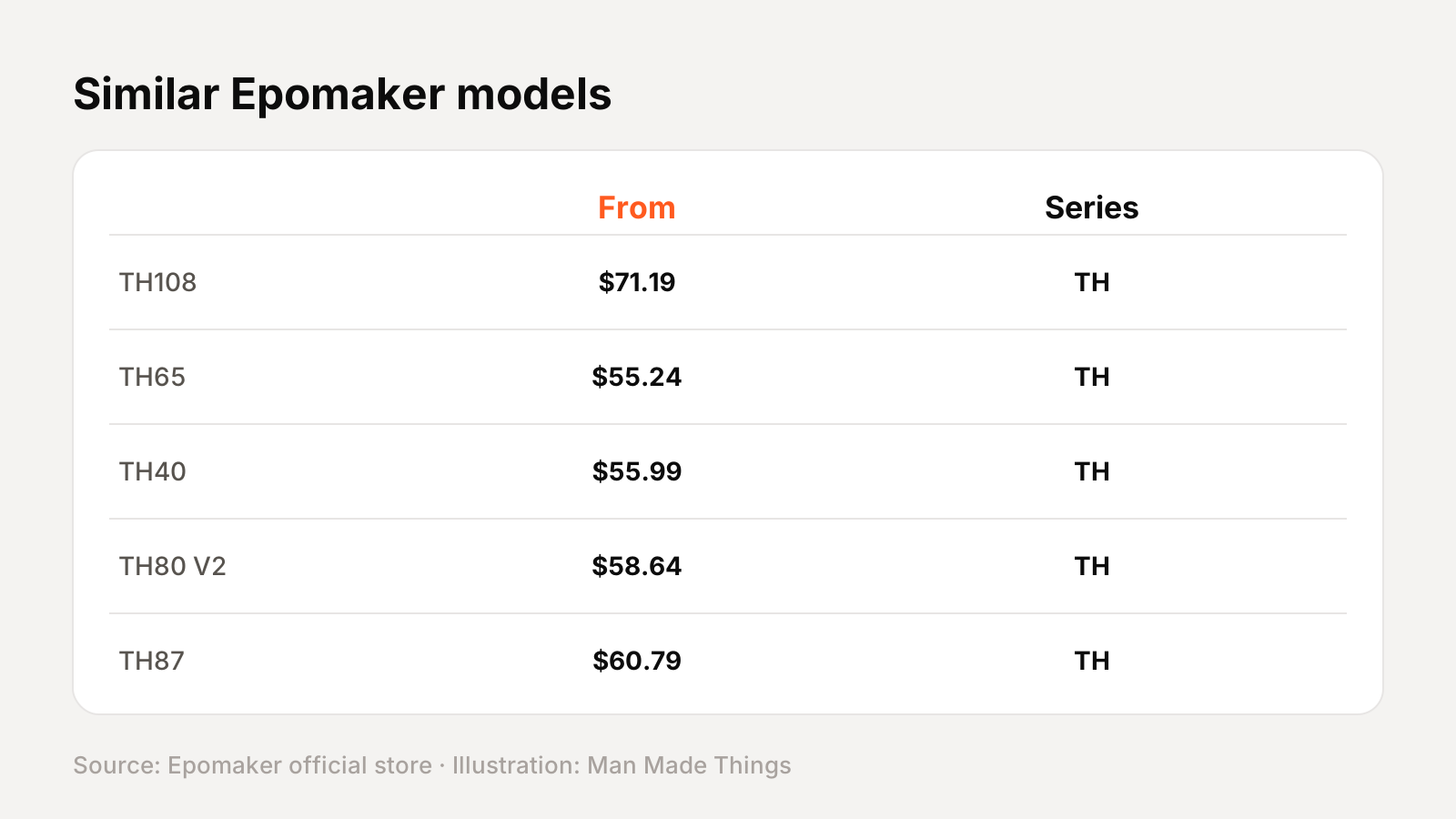
Here's the TH108 next to similar Epomaker models, from the same series or with the same layout:
| Model | Price from | Series | Layout | Type |
|---|---|---|---|---|
| TH108 | $71.19 | TH | Full size | mechanical |
| TH65 | $55.24 | TH | 65% | mechanical |
| TH40 | $55.99 | TH | 40% | mechanical |
| TH80 V2 | $58.64 | TH | 75% | mechanical |
| TH87 | $60.79 | TH | TKL | mechanical |
| TH80 V2 Pro | $66.29 | TH | 75% | mechanical |
| TH99 | $66.39 | TH | 96% | mechanical |
| TH99 Pro | $74.79 | TH | 96% | mechanical |
| TH108 Pro | $84.14 | TH | Full size | mechanical |
| TH108 V2 Pro | $84.14 | TH | Full size | mechanical |
How to choose an Epomaker keyboard
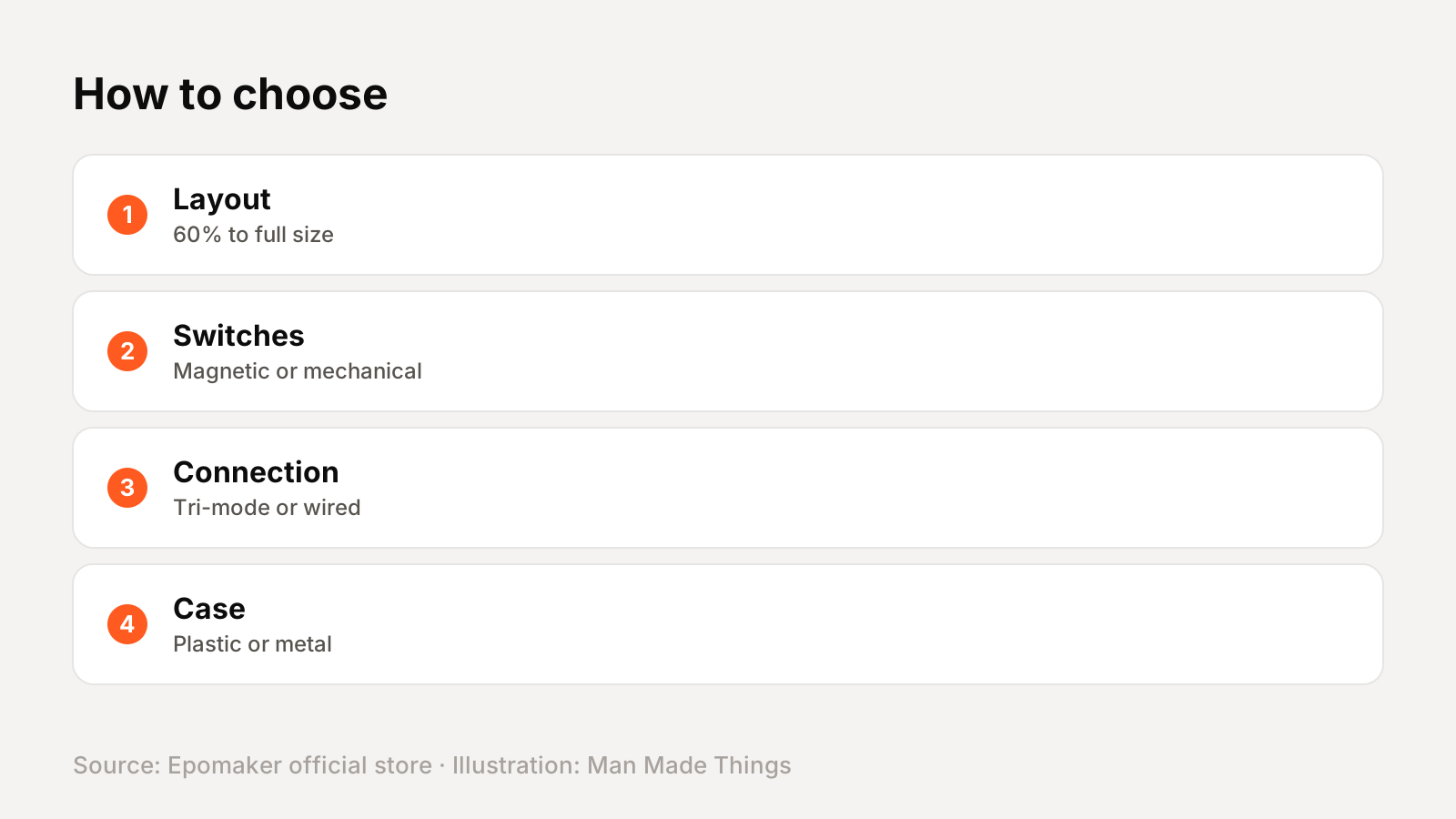
With 45 Epomaker-branded keyboards on its US store, picking one comes down to four questions:
- Layout: 60% and 65% boards (like the HE60 or TH65) save desk space; 75% boards (like the TH80 V2) keep a function row; 96% to full-size boards (like the TH99 or TH108) add a number pad. Epomaker also sells split, Alice-style, ortholinear and one-handed layouts.
- Switches: the HE series and G84 HE use magnetic switches with Rapid Trigger for gaming; most other models use hot-swappable mechanical switches, so you can change them later.
- Connection: most Epomaker boards are tri-mode (2.4 GHz, Bluetooth and wired), but several HE models, the HE30 and the Magcore 87 are wired only.
- Case: the TH and RT series use plastic cases to keep prices down; the Galaxy, Luma and Magcore 87 use aluminum, and the Carbon60 and Bamboo75 use carbon fiber and bamboo.
Keyboard terms, explained
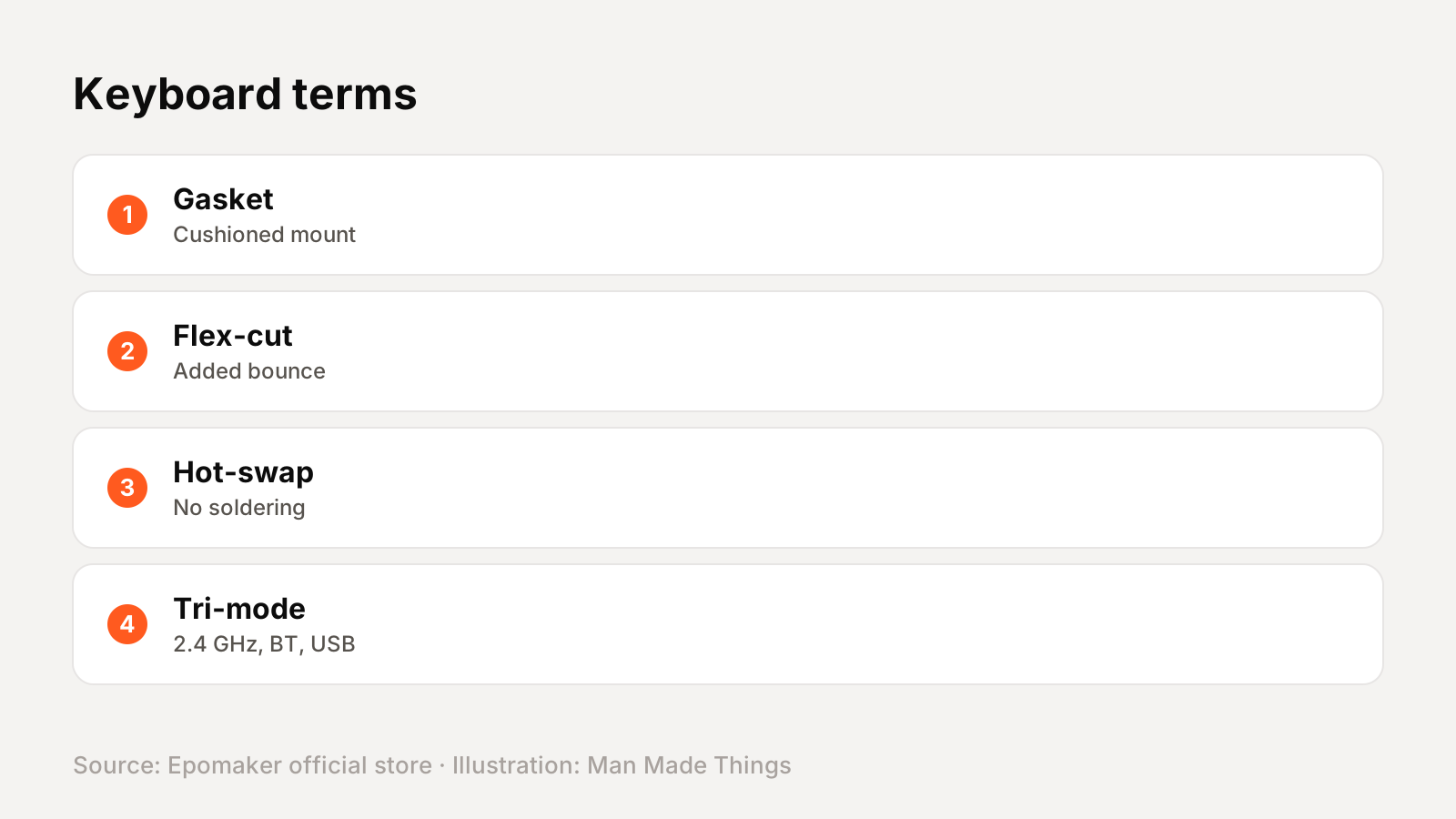
| Term | What it means |
|---|---|
| Gasket mount | The plate sits on soft gaskets for a cushioned feel and softer sound |
| Flex-cut plate / PCB | Slots cut into the plate or circuit board to add a little bounce |
| Hot-swappable (3/5-pin) | Switches pull out without soldering; most MX-style switches fit |
| Tri-mode | Connects over 2.4 GHz, Bluetooth or a USB-C cable |
| Cherry profile | A low, sculpted keycap shape that's popular on enthusiast keyboards |
| Polling rate | How often the keyboard reports to the computer; 1,000 Hz is standard |
Getting the best from the TH108
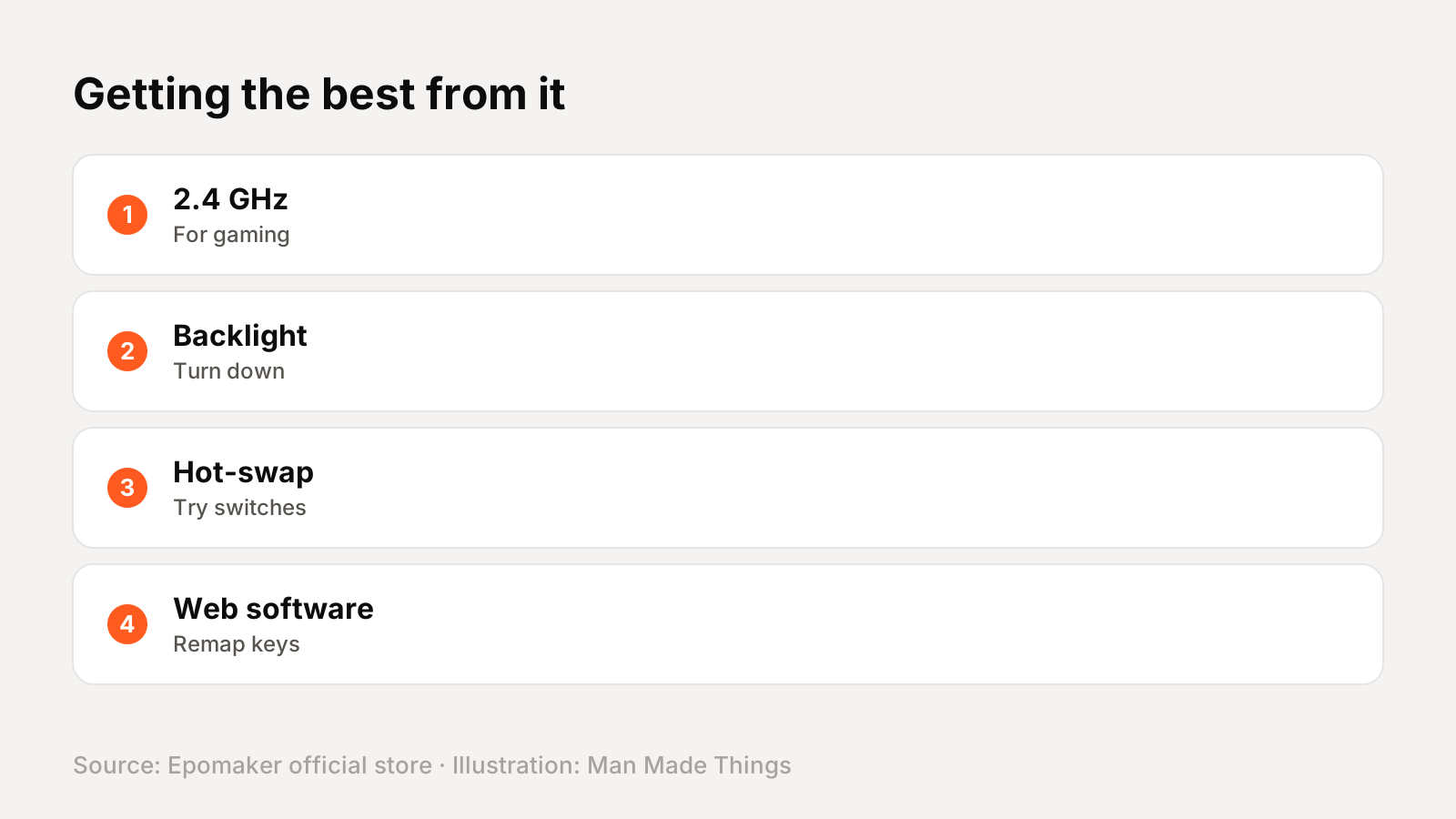
- Use 2.4 GHz for gaming and Bluetooth for tablets and phones; Epomaker lists 125 Hz polling over Bluetooth.
- Turn down the backlight to stretch battery life.
- Try different switches: most Epomaker boards are hot-swappable.
- Use Epomaker's web software for remapping and lighting, from a Chrome-based browser.
Buying direct
Epomaker's US store listed the TH108 at $71.19 to $71.99 (compare-at $89.99) as of November 2026. Epomaker runs frequent sales, so the compare-at price is mostly a reference point.
Epomaker also sells co-branded keyboards with AULA (see our AULA keyboards guide). We couldn't find a warranty length on the product page, so check Epomaker's warranty policy before buying.
Should you buy the TH108?
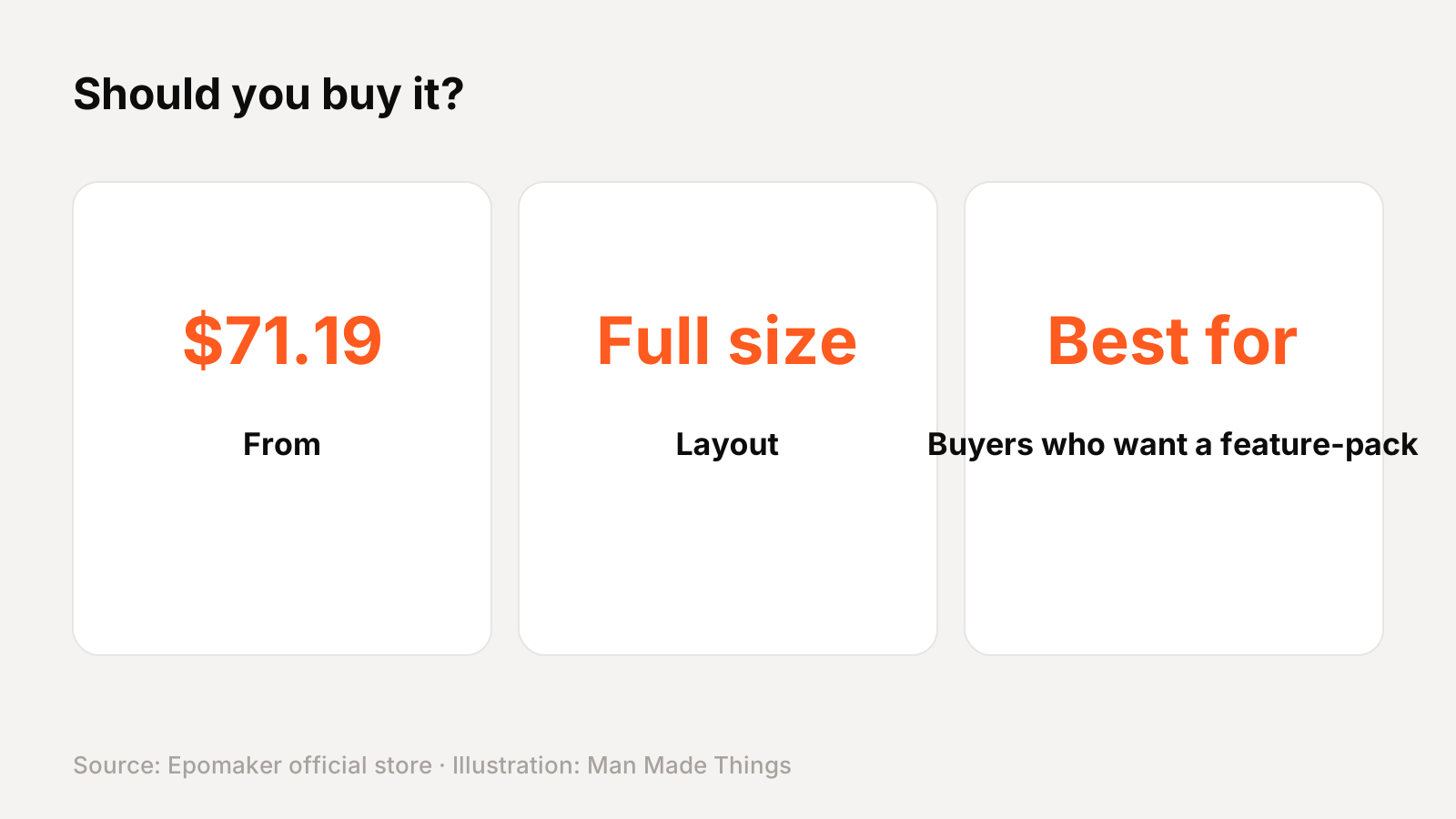
Buy it if: you're one of the buyers who want a feature-packed keyboard for the money.
What we like:
- Tri-mode wireless
- Big 8,000 mAh battery
- Gasket mount
- Discounted from $89.99
What to consider:
- Plastic case
- Heavy (Over 1.2 kg)
- Some specs missing from Epomaker's page
Who should skip it: The TH65 ($55.24) is a TH-series alternative. For other brands, see our guide to unique keyboard brands.
The bottom line: The TH108 is a full size mechanical keyboard from Epomaker's TH series, at $71.19 and up.
Epomaker TH108 specs
| Layout | Full size (100%) |
|---|---|
| Keys | 108 keys |
| Connectivity | 2.4 GHz, Bluetooth, wired |
| Polling rate | 1,000 Hz (2.4 GHz); Epomaker lists 2 ms wired latency |
| Battery | 8,000 mAh |
| Case | Thick plastic |
| Mount | Gasket, 5 layers |
| Keycaps | Double-shot PBT |
Test report
Hands-on test report: in progress
We don't publish scores or test results until a real unit has gone through our routine: battery rundown at 50% volume, call quality outdoors, noise cancellation on a commute, fit over a full workday, and connection stability across devices. This review will be updated with measured results and a star rating once testing is complete.
Frequently asked questions
How much is the Epomaker TH108?
+
$71.19 to $71.99 on Epomaker's US store, November 2026.
Is the TH108 wireless?
+
Yes: 2.4 GHz, Bluetooth, wired.
Does the TH108 have magnetic switches?
+
No.
What series is the TH108 in?
+
Epomaker's TH series.
Sources
Editor-in-Chief
Rahul has been writing about gadgets and software since 2013, first at Thetechhacker and now at Man Made Things. He edits every review on the site and signs off on every verdict.
More from Rahul →