De/code: A Shirt Label. What Supima, Egyptian Cotton, Two-Ply and 100s Really Mean
Every term on a dress shirt label and spec, decoded with the FTC's labeling rules and official definitions from Supima, the Egyptian Cotton Association and leading shirtmakers: fiber content, care labels, Supima, Egyptian cotton, two-ply, yarn counts like 100s and 140s, non-iron, and oxford, poplin and twill.
We may earn a commission when you buy through links on this page. Learn more
Quick answer
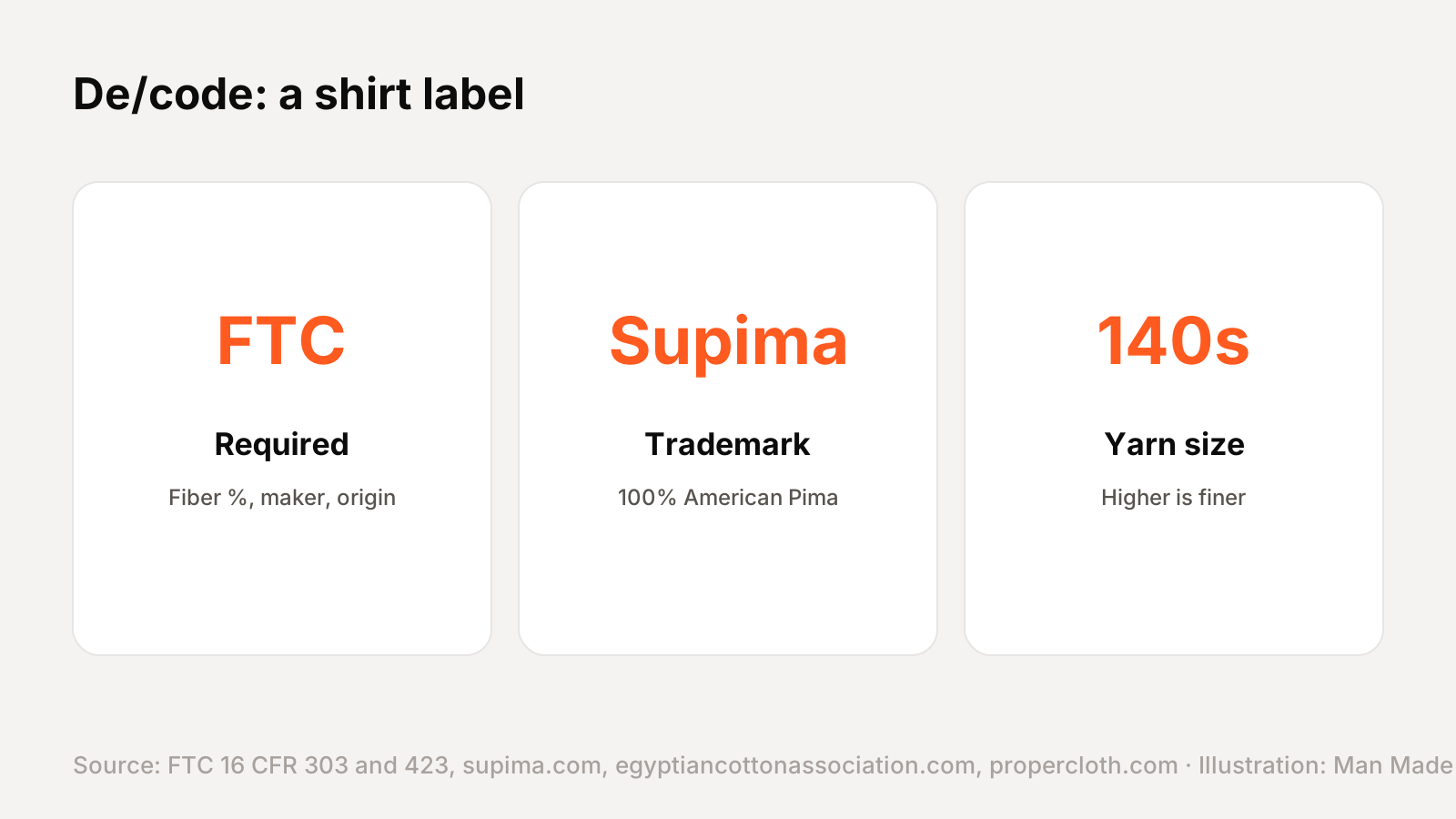
On a shirt: the FTC requires fiber content by percentage, the maker's name or RN number, and the country of origin, which on a shirt goes at the inside center of the neck. "Supima" is a trademark requiring 100% American Pima cotton. The Egyptian Cotton™ logo means certified 100% Egyptian cotton, while plain "Egyptian cotton" only names the country. "100s" or "140s" is yarn size, not thread count: higher is finer. "Two-ply" means two yarns twisted together. Non-iron shirts are treated as a whole garment; wrinkle-resistant ones are treated at the fabric stage.
A good dress shirt can cost $50 or $500, and the label is supposed to explain the difference. But shirt labels mix legally required information with marketing terms, and they don't tell you which is which.
This De/code explains it all. The legal parts come from the US Federal Trade Commission's Textile Rules (16 CFR 303) and Care Labeling Rule (16 CFR 423). The fabric terms come from the organizations that own them, like Supima and the Egyptian Cotton Association, and from shirtmakers' own guides, including Proper Cloth, Turnbull & Asser and Charles Tyrwhitt.
Shopping for shirts? See our best luxury white shirts and best henley shirts.
What the law requires on the label
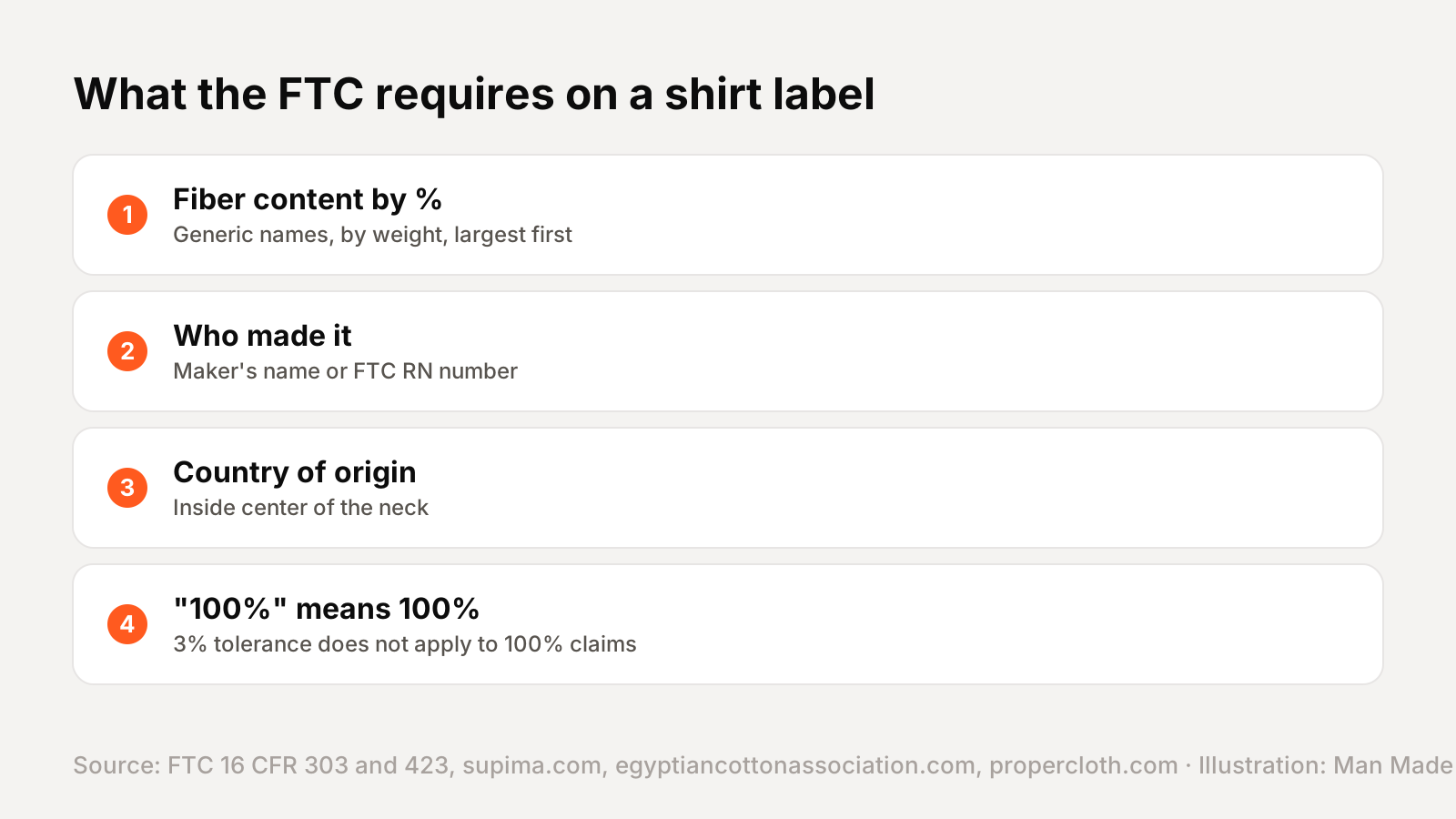
Under the FTC's Textile Rules, a shirt label must show:
- Fiber content: the generic fiber names and percentages by weight, in order of how much there is, like "95% Cotton, 5% Elastane." Fibers under 5% are usually listed as "other fiber," unless they have a clear purpose, like stretch.
- Who made it: the manufacturer's name or its FTC RN (Registered Identification Number).
- Country of origin: where the shirt was made. On anything with a neck, this label goes at the inside center of the neck, between the shoulder seams.
"100% Cotton" means exactly that. The FTC allows a 3% tolerance on stated percentages, but not on "100%" or "All" claims.
"Made in USA" is allowed only if the shirt was made in the US from US materials. Otherwise, the label must explain, like "Made in USA of imported fabric."
The care label
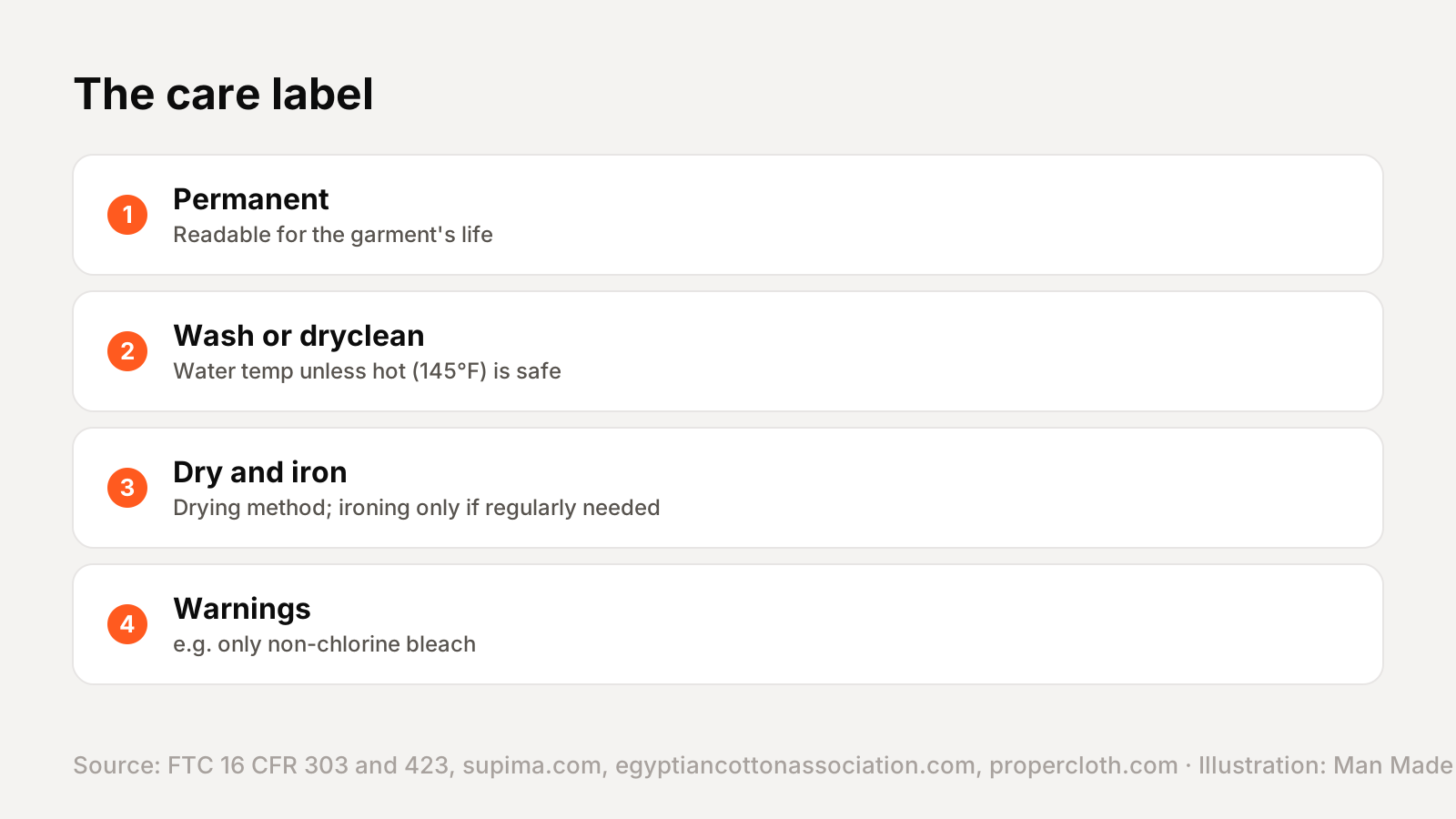
The FTC's Care Labeling Rule requires a permanent care label that stays readable for the shirt's life. It must give washing or drycleaning instructions, plus:
- Water temperature, unless regular hot water (up to 145°F) won't harm it;
- Drying method, and temperature if machine drying;
- Ironing, only if it's regularly needed; and
- Bleach warnings where needed, like "Only non-chlorine bleach, when needed."
The maker must have reliable evidence that following the instructions won't harm the shirt. Symbols can replace words.
Supima vs Pima vs Egyptian cotton
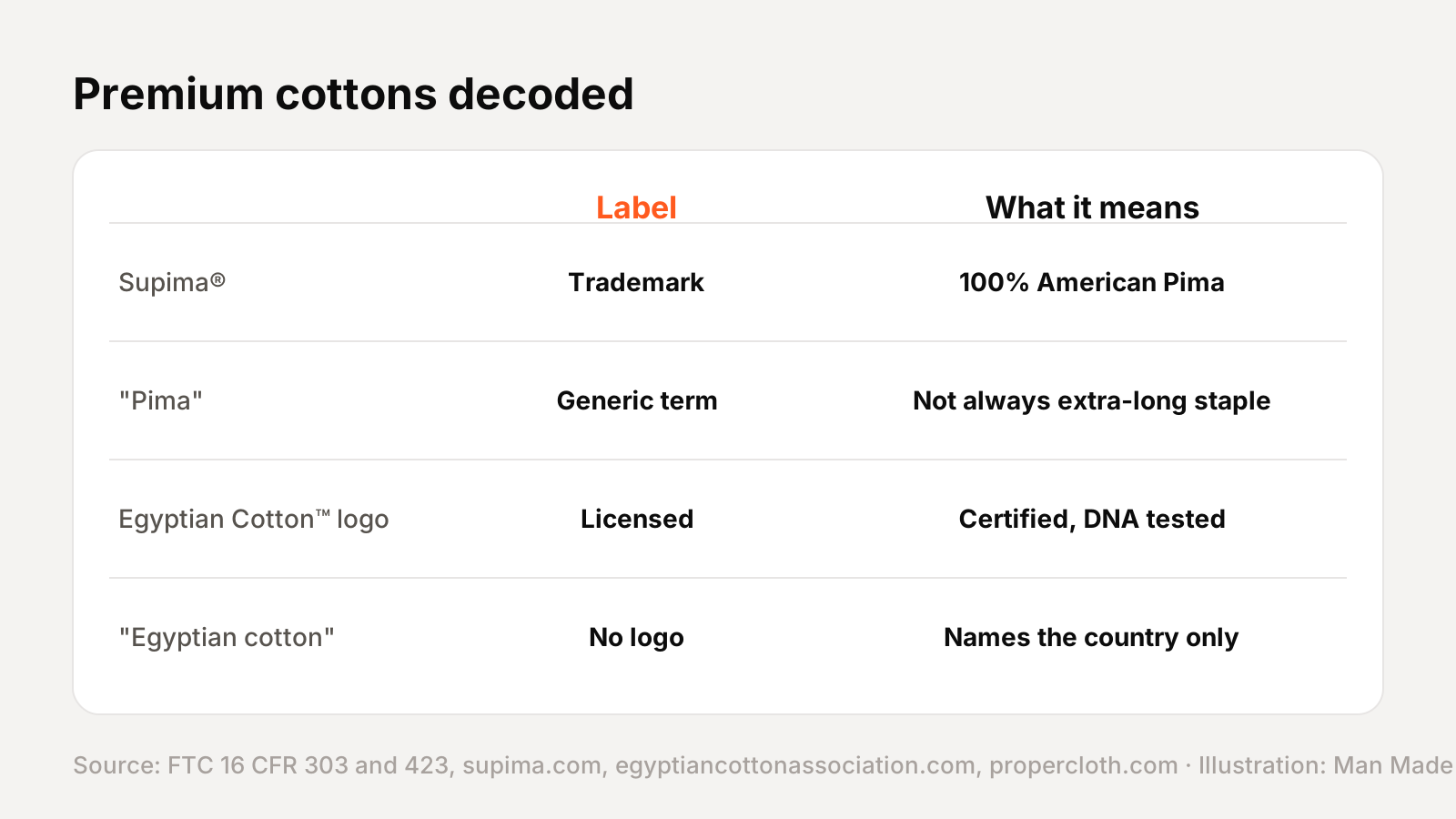
| Label | What it means |
|---|---|
| Supima® | A trademark: the product must be made of 100% American Pima cotton, verifiable through purchase invoices. Only licensees may use it. |
| "Pima" | Supima says retailers use "Pima" as a generic term for better cotton; it doesn't necessarily mean extra-long staple. |
| Egyptian Cotton™ logo | A licensed logo meaning 100% pure Egyptian cotton, with every party in the supply chain approved and DNA testing by Bureau Veritas, according to the Egyptian Cotton Association. |
| "Egyptian cotton" (no logo) | Supima notes that, by itself, it only names the country of origin. |
Why it matters: Supima says its cotton makes up less than 1% of the world's cotton, with fibers of about 1.4–1.5 inches, versus about 1 inch for regular cotton. Longer fibers make finer, stronger yarns. Supima also says its supply chain can be traced through forensic testing and blockchain records.
"100s", "140s" and two-ply
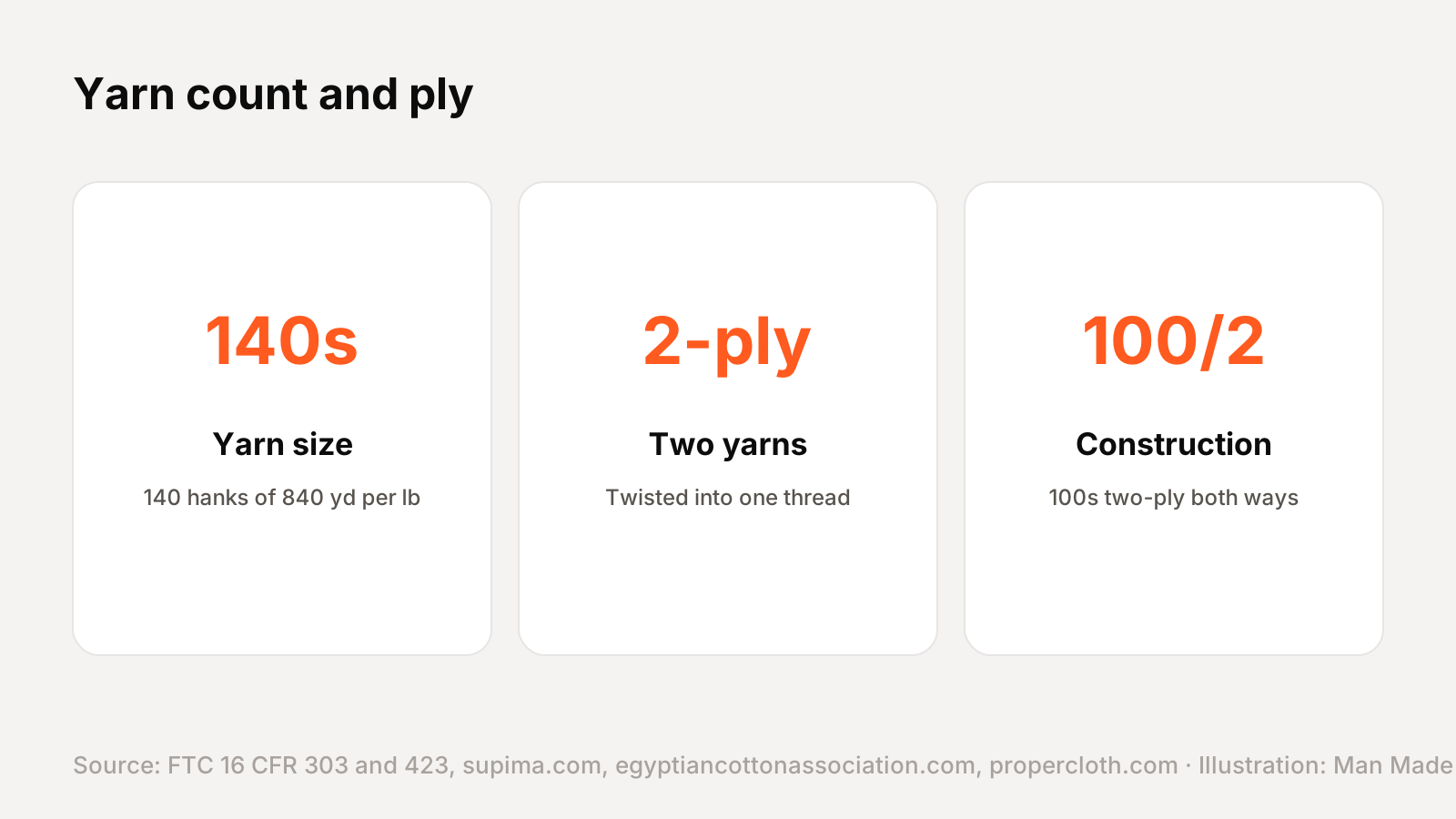
This is where labels get confusing. Numbers like 80s, 100s or 140s are often called thread count, but Proper Cloth explains they're actually yarn size: "140s" means 140 hanks of yarn per pound, where one hank is 840 yards. Higher numbers mean finer yarn, and a typical range is about 50s to 200s.
Two-ply (or "two-fold") means two yarns twisted together into one thread. Proper Cloth calls two-ply "generally superior" to single-ply. You'll sometimes see a construction written like 100/2 × 100/2, meaning 100s two-ply yarn in both directions of the weave.
Turnbull & Asser, for example, describes fabrics like "mid-weight two-fold 120s" and its finest "2-fold 200." Higher isn't always better for everyday wear: finer fabrics feel smoother but can be more delicate.
Non-iron vs wrinkle-resistant
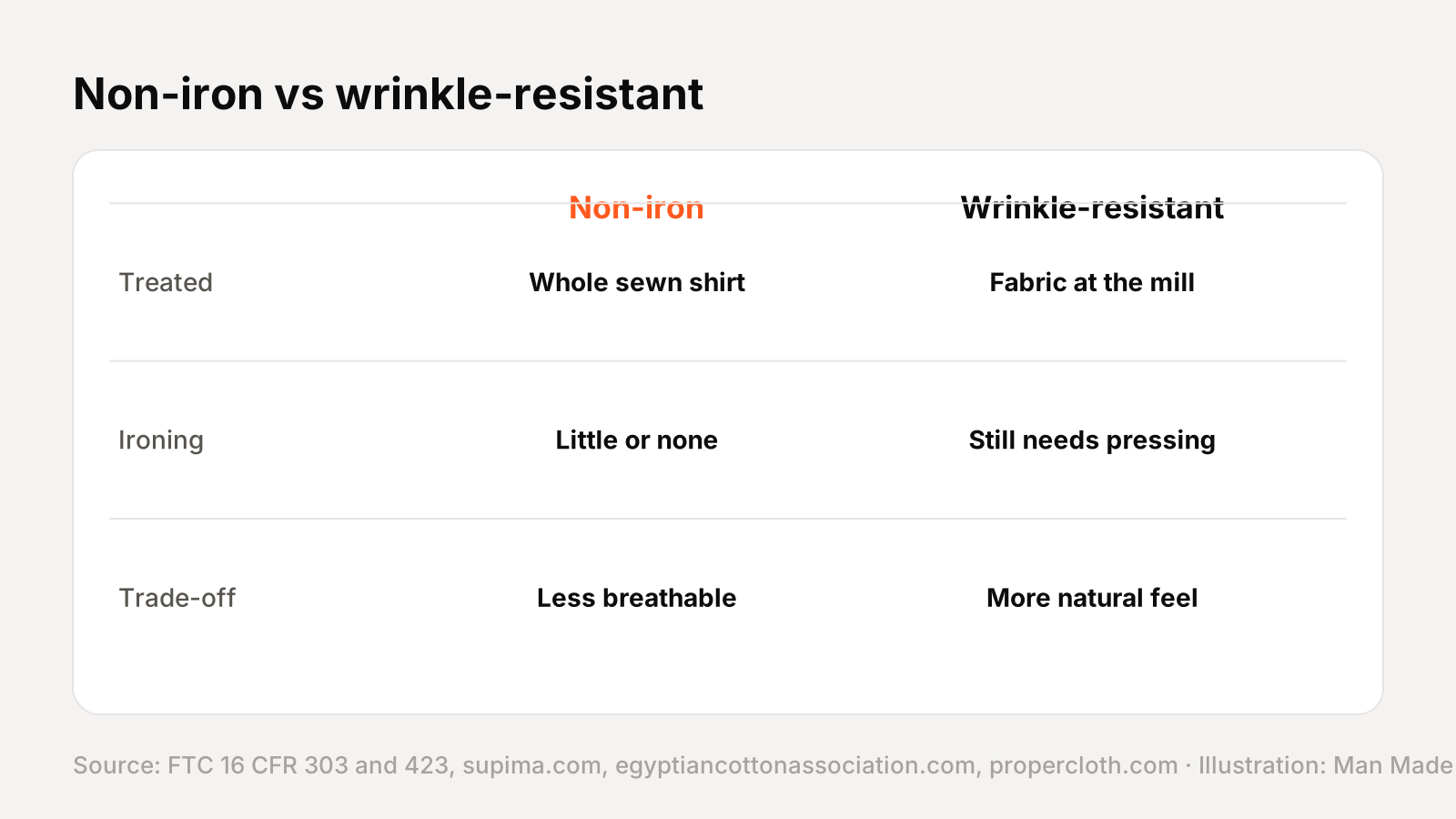
- Non-iron: Proper Cloth explains the whole sewn shirt is treated, bonding the cotton fibers so it needs little or no ironing, though it's less breathable. Charles Tyrwhitt describes treating the whole garment at high temperature with resins, with taped seams.
- Wrinkle-resistant: the fabric is treated at the mill, so the shirt resists wrinkles but still needs pressing.
Tyrwhitt recommends washing its non-iron shirts at 40°C with a slow spin and a cool tumble dry.
Weaves: poplin, twill, oxford and pinpoint
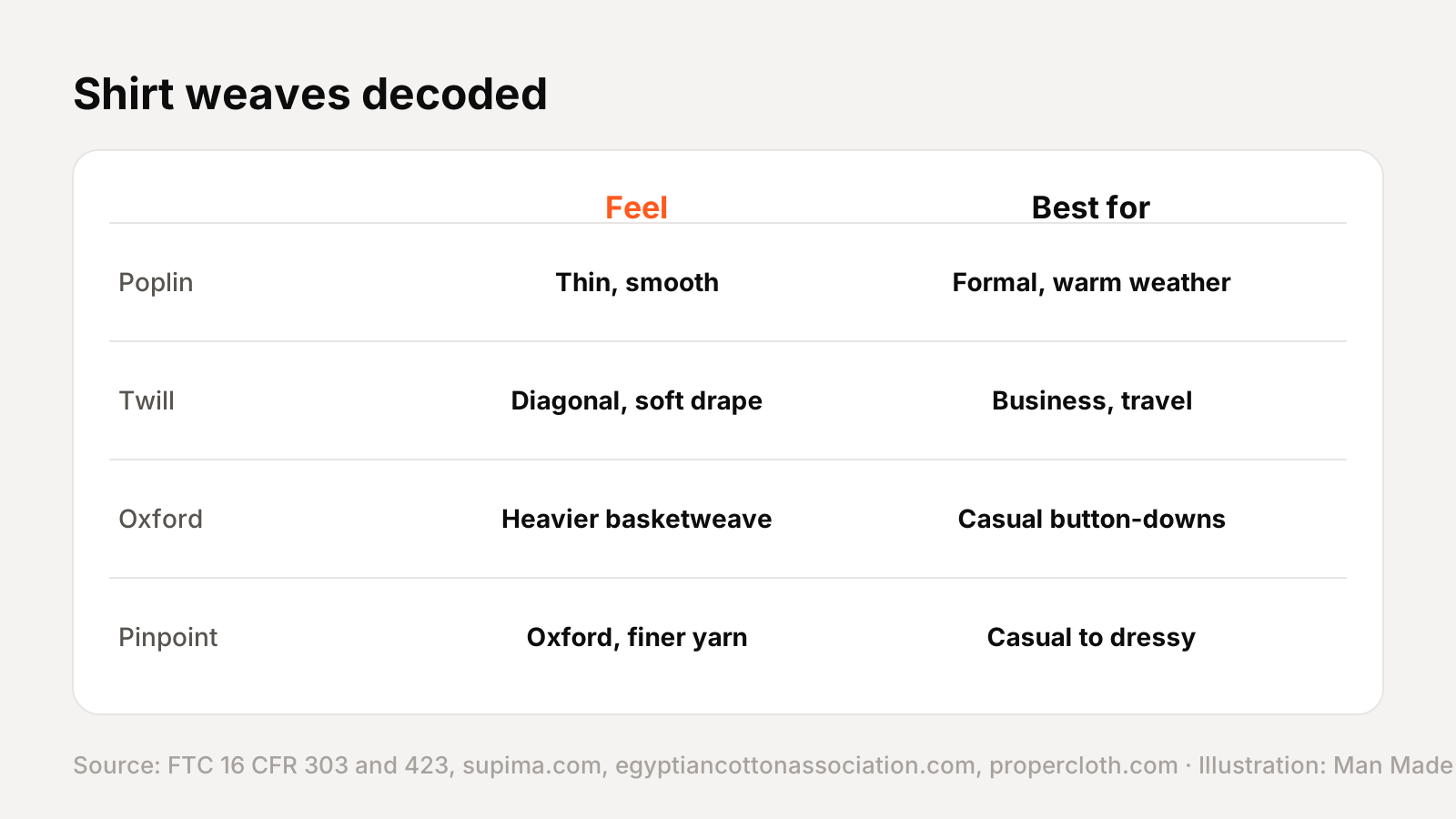
From Proper Cloth's fabric guide:
| Weave | What it's like | Best for |
|---|---|---|
| Poplin (broadcloth) | Plain over-under weave; thin, smooth, wrinkles most | Formal, warm weather |
| Twill | Diagonal texture, slight sheen, softer drape, more wrinkle-resistant | Business, travel |
| Oxford | Basketweave with heavier yarn and a looser weave | Casual, button-downs |
| Pinpoint | Oxford weave with finer yarn | Between casual and dressy |
Note that royal oxford is a different, dressier fabric despite the name.
Pre-shrunk (Sanforized): you may see "Sanforized" on labels. It refers to a mechanical pre-shrinking process patented in 1928, applied as a final finishing step at the mill.
The quick cheat sheet
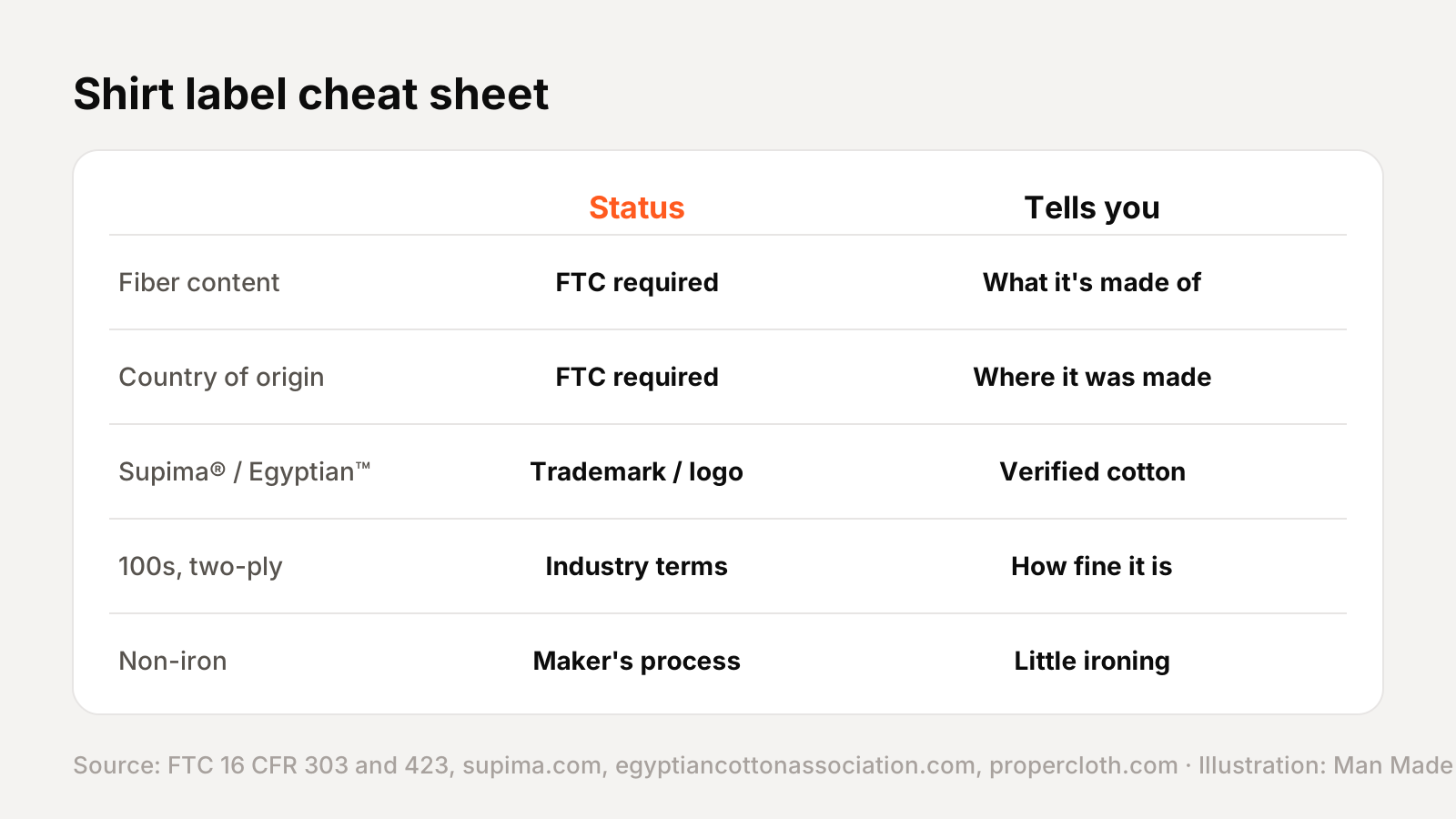
| Term | Required or regulated? | What it tells you |
|---|---|---|
| Fiber content (%) | Required by the FTC | Exactly what it's made of |
| Country of origin | Required by the FTC | Where it was made |
| Care instructions | Required by the FTC | How to wash it |
| Supima® | Trademark | 100% American Pima cotton |
| Egyptian Cotton™ logo | Licensed logo | Certified 100% Egyptian cotton |
| 100s / 140s | Industry term | Yarn fineness |
| Two-ply | Industry term | Two yarns twisted per thread |
| Non-iron | Maker's process | Needs little or no ironing |
The takeaway: the FTC-required details tell you what a shirt is made of. Trademarks like Supima and the Egyptian Cotton™ logo add verified quality claims. Yarn counts and ply tell you how fine it is. Everything else is marketing, so read it with a skeptical eye.
Frequently asked questions
What does Supima mean on a shirt?
+
Supima is a trademark requiring the product to be made of 100% American Pima cotton, verified through purchase invoices.
Is Egyptian cotton always better?
+
Not necessarily. Supima notes that "Egyptian cotton" alone only names the country. The licensed Egyptian Cotton™ logo means certified 100% Egyptian cotton.
What does 100s or 140s mean on a shirt?
+
Yarn size, not thread count. Higher numbers mean finer yarn; 140s means 140 hanks (of 840 yards each) per pound.
What does two-ply mean?
+
Two yarns twisted together into one thread, which shirtmakers like Proper Cloth consider generally superior to single-ply.
Where is the country of origin on a shirt?
+
The FTC requires it at the inside center of the neck, between the shoulder seams, on any garment with a neck.
Sources
- eCFR: 16 CFR 303 (FTC Textile Rules)
- eCFR: 16 CFR 423 (Care Labeling Rule)
- Supima: FAQ
- Supima: Trademark guidelines
- Supima: The cotton
- Egyptian Cotton Association
- Proper Cloth: Thread count and ply
- Proper Cloth: Dress shirt fabrics
- Proper Cloth: Wrinkle-resistant vs non-iron
- Turnbull & Asser: The anatomy of our shirts
- Charles Tyrwhitt: About our non-iron shirts
- Permashrink: About (Sanforized history)
Editor-in-Chief
Rahul has been writing about gadgets and software since 2013, first at Thetechhacker and now at Man Made Things. He edits every review on the site and signs off on every verdict.
More from Rahul →