beyerdynamic DT 280 MK II Review: The Single-Ear Gooseneck Broadcast Headset
A research-based review of the beyerdynamic DT 280 MK II ($449.99 (out of stock)): broadcast headset, with beyerdynamic's official specs and price, what they mean, how it compares with other beyerdynamic models and who it's for.
We may earn a commission when you buy through links on this page. Learn more
Quick answer
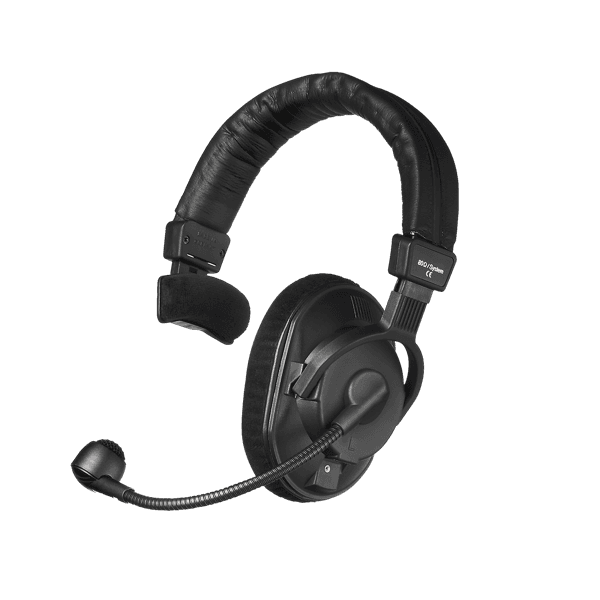
The beyerdynamic DT 280 MK II is the single-ear version of the DT 290 MK II, priced at $449.99 on beyerdynamic's North America store. The DT 280 MK II is for directors and producers who need to talk on comms while hearing the room.
beyerdynamic is a German audio company, and the DT 280 MK II is the single-ear version of the DT 290 MK II. It costs $449.99 on beyerdynamic's official North America store as of November 2026, where it was listed as out of stock when we checked.
A note on how we review: I haven't completed a hands-on test of the DT 280 MK II, so there's no star rating on this page. Everything below comes from beyerdynamic's official product page, with plain-English explanations and a comparison with the rest of the lineup. See every model in our guide to beyerdynamic headphones.
Image: beyerdynamic
beyerdynamic
beyerdynamic DT 280 MK II
The DT 280 MK II is for directors and producers who need to talk on comms while hearing the room.
Best for: Directors and producers
Pros
- 01One ear free
- 02Gooseneck mic
- 03Made in Germany
Cons
- 01Cable sold separately
- 02Out of stock when we checked
What the DT 280 MK II is
The DT 280 MK II is a single-ear headset with a rotatable gooseneck microphone boom, which beyerdynamic says is ideal for command purposes in radio and TV. It highlights a hypercardioid dynamic mic with very high feedback prevention, a neodymium magnet system and a more flexible swivelling gooseneck. It's made in Germany.
It comes in 80 ohm and 250 ohm versions, with a 10 to 30,000 Hz response and 100 dB SPL. It's supplied without a connection cable and was out of stock when we checked.
DT 280 MK II specs
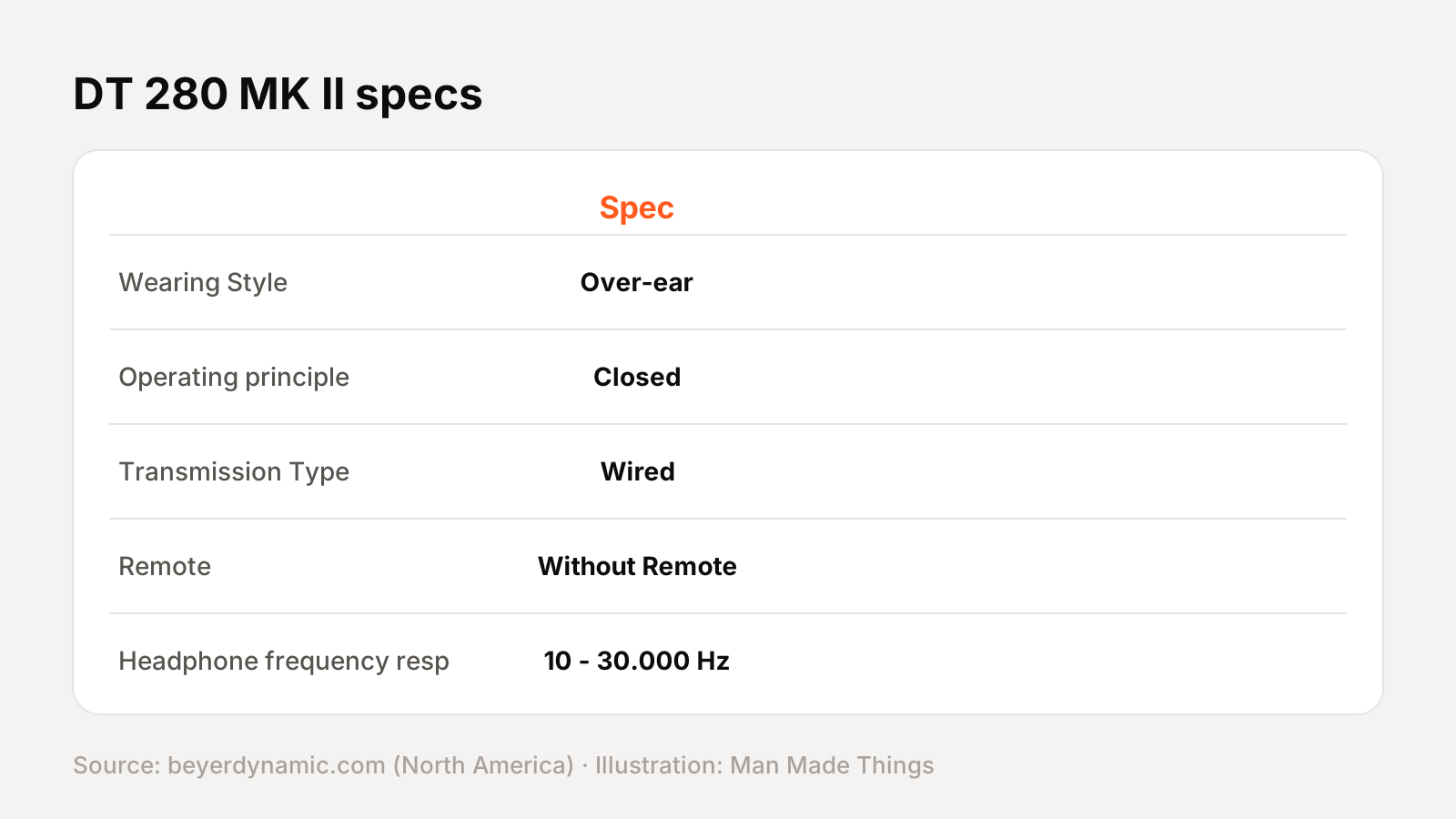
From beyerdynamic's official product page:
| Spec | DT 280 MK II |
|---|---|
| Wearing Style | Over-ear |
| Operating principle | Closed |
| Transmission Type | Wired |
| Remote | Without Remote |
| Headphone frequency response | 10 - 30.000 Hz |
| Nominal sound pressure level | 100 dB SPL |
| Sound coupling to the ear | Circumaural (around the ear) |
| Cable & Plug | Detachable cable – various connectors available |
| Polar Pattern For Microphone | Hypercardioid |
| Transducer type for microphone | Dynamic - Hypercardioid |
| Article No. | DT 280: SELECT OPTION |
| Versions | 80 ohms, 250 ohms |
Price: $449.99, beyerdynamic North America store, November 2026.
What a broadcast headset does
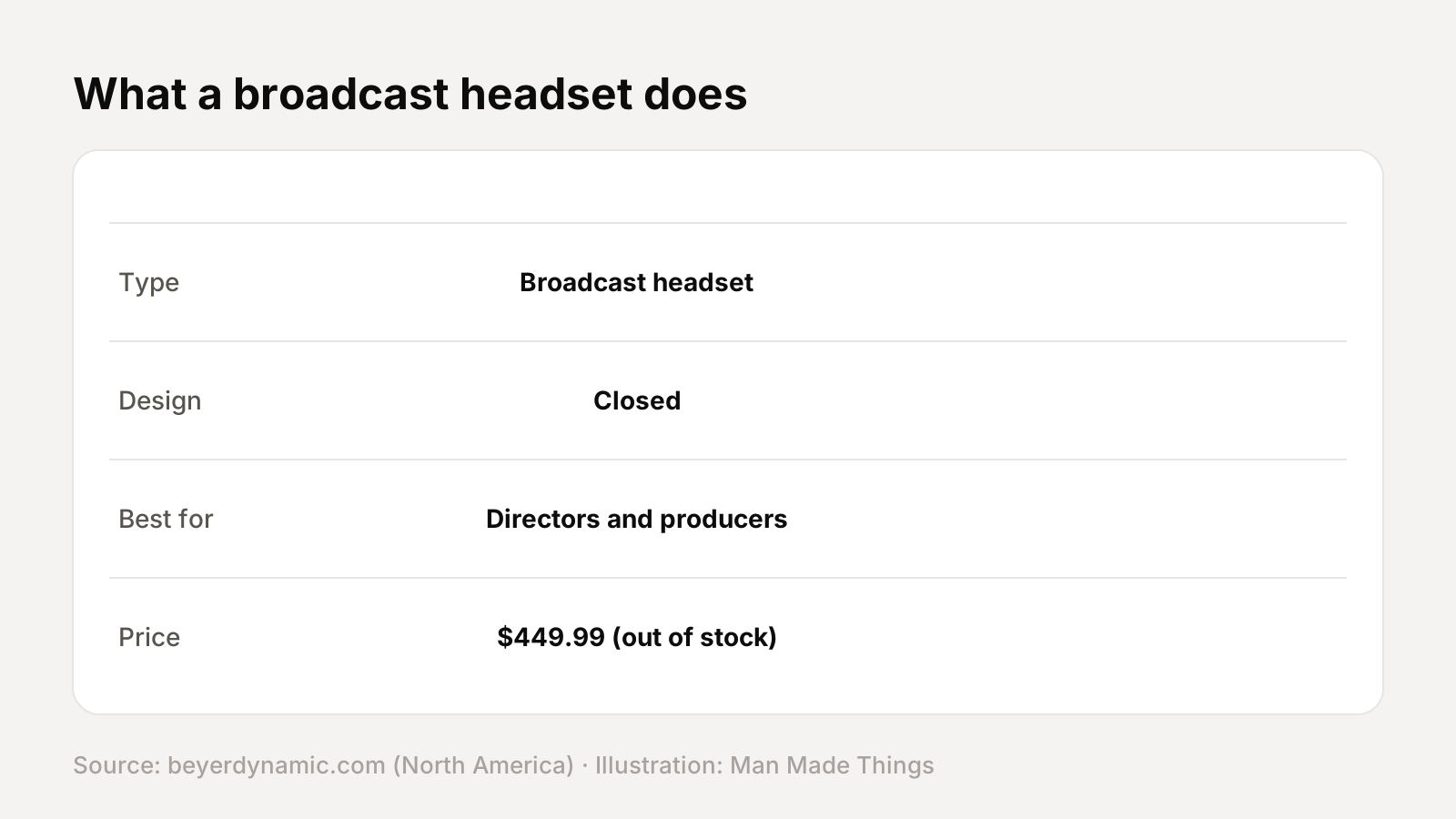
Broadcast headsets combine headphones with a microphone for presenters, commentators, camera operators and intercom users. Key points:
| Feature | Why it matters |
|---|---|
| Hypercardioid or cardioid mic | Picks up the voice and rejects surrounding noise and feedback |
| Closed earcups | Hear the program or talkback over crowd noise |
| Single-ear vs dual-ear | Single-ear lets you hear the room; dual-ear isolates |
| Impedance options | Match the intercom or broadcast system |
| Cable (often sold separately) | Choose the connector your system uses |
beyerdynamic notes several of its headsets ship without a connection cable, because the right connector depends on your equipment.
How it compares with the rest of beyerdynamic's lineup
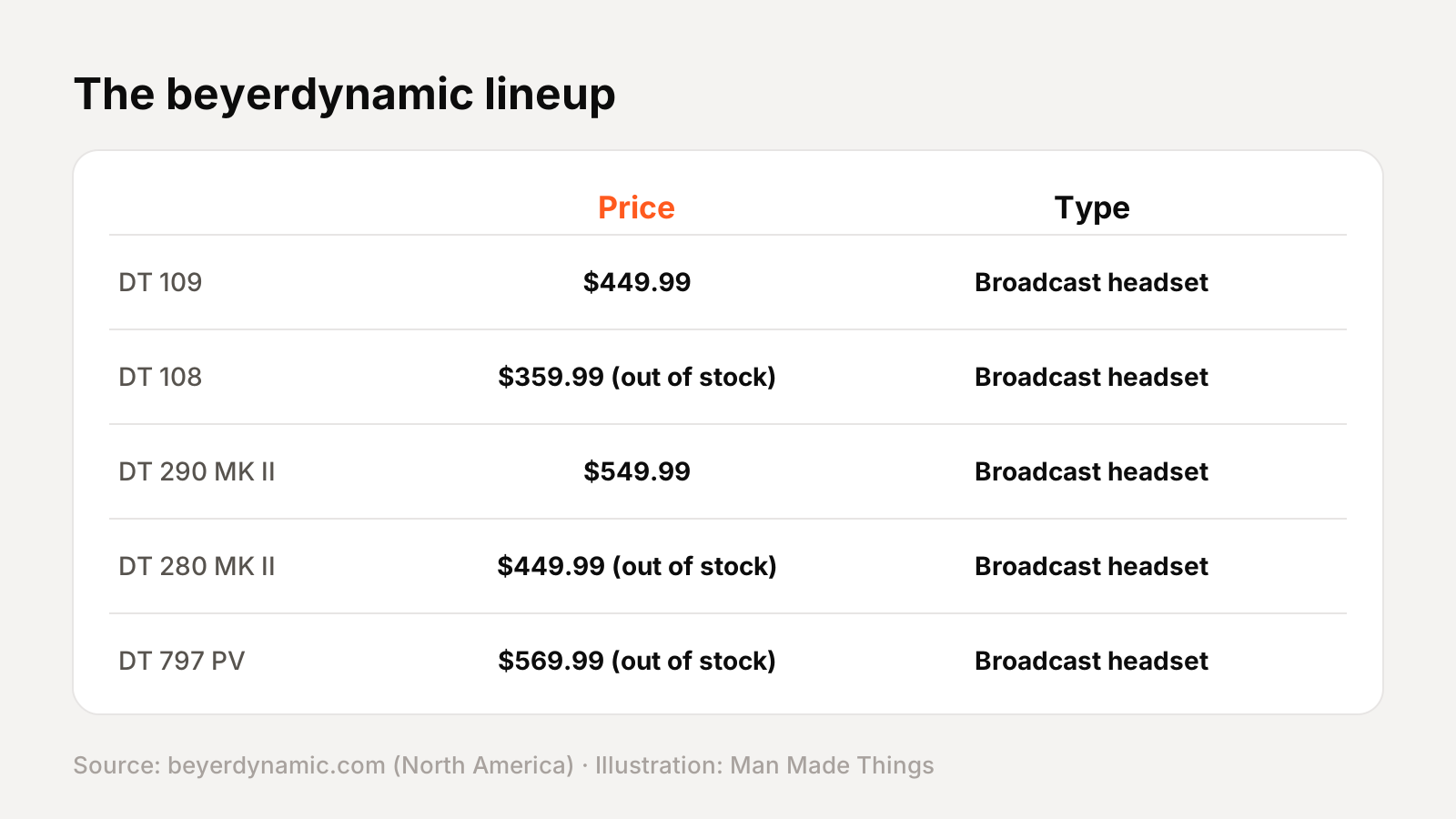
Closest relatives (broadcast headset):
| Model | Price | Type |
|---|---|---|
| DT 109 | $449.99 | Broadcast headset |
| DT 108 | $359.99 (out of stock) | Broadcast headset |
| DT 290 MK II | $549.99 | Broadcast headset |
| DT 280 MK II | $449.99 (out of stock) | Broadcast headset |
| DT 797 PV | $569.99 (out of stock) | Broadcast headset |
Other beyerdynamic categories:
- Studio headphones: DT 770 PRO, DT 990 PRO, DT 880 PRO, DT 770 PRO X, DT 990 PRO X
- Monitoring headphones: DT 275 PRO, DJ 300 PRO X, DT 770 M, DT 150, DT 100
- Hi-fi headphones: T1 (3rd Generation), T5 (3rd Generation), DT 990 Edition, DT 880 Edition
- Wireless headphones: AVENTHO 300, AVENTHO 100, AVENTHO Y
- True wireless earbuds: AMIRON 300, AMIRON 200, AMIRON ZERO
- Gaming headset: MMX 300 PRO, MMX 330 PRO, MMX 230 wireless, MMX 150 wireless, MMX 130 wireless
- In-ear monitor: DT 30 IE, DT 70 IE, 71 IE, 72 IE and 73 IE
Prices from beyerdynamic's North America store, November 2026, during its pre-Black Friday sale.
beyerdynamic specs, explained
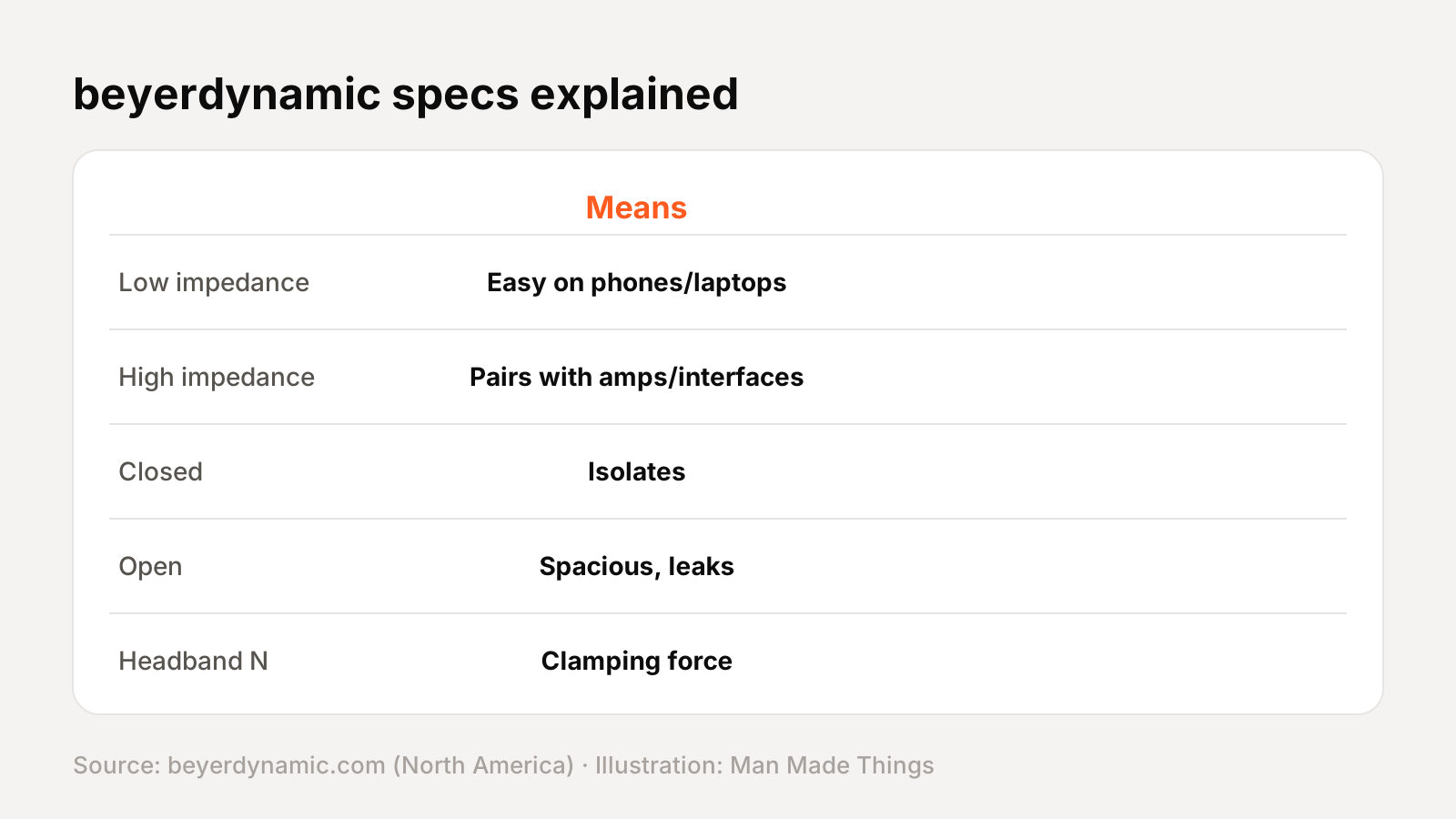
beyerdynamic's spec sheets use a few terms worth understanding before you buy:
| Term | What it means |
|---|---|
| Impedance (ohms) | How much electrical resistance the headphone presents. Low-impedance models (16 to 48 ohms) are easy to drive from phones and laptops; high-impedance models (250 to 600 ohms) generally pair with interfaces or amplifiers that have strong headphone outputs |
| Closed / semi-open / open | How sealed the back of the earcup is: closed isolates, open breathes and leaks |
| STELLAR.45 | beyerdynamic's driver in its PRO X studio models and the AVENTHO 300 |
| TESLA | beyerdynamic's driver technology in its premium models, such as the T1, T5 and MKII studio headphones |
| Nominal headband pressure (N) | How firmly the headband clamps, in newtons: about 2.8 N on the hi-fi Editions, 5.5 N on PRO X, 6.5 N on the DT 770 M |
| Nominal SPL (dB) | How loud the headphone gets at a given input; higher means louder with the same power |
| Mini-XLR | A locking detachable connector used on PRO X and MKII models |
| Made in Germany | beyerdynamic builds many models in Germany, and says some (like the T1 and DT 7x IE) are handmade there |
Why impedance versions exist: older beyerdynamic models like the DT 770 PRO and DT 990 PRO come in several impedances so you can match your equipment. The newer PRO X models use a single 48-ohm version that beyerdynamic says works across devices.
Getting the best from the DT 280 MK II
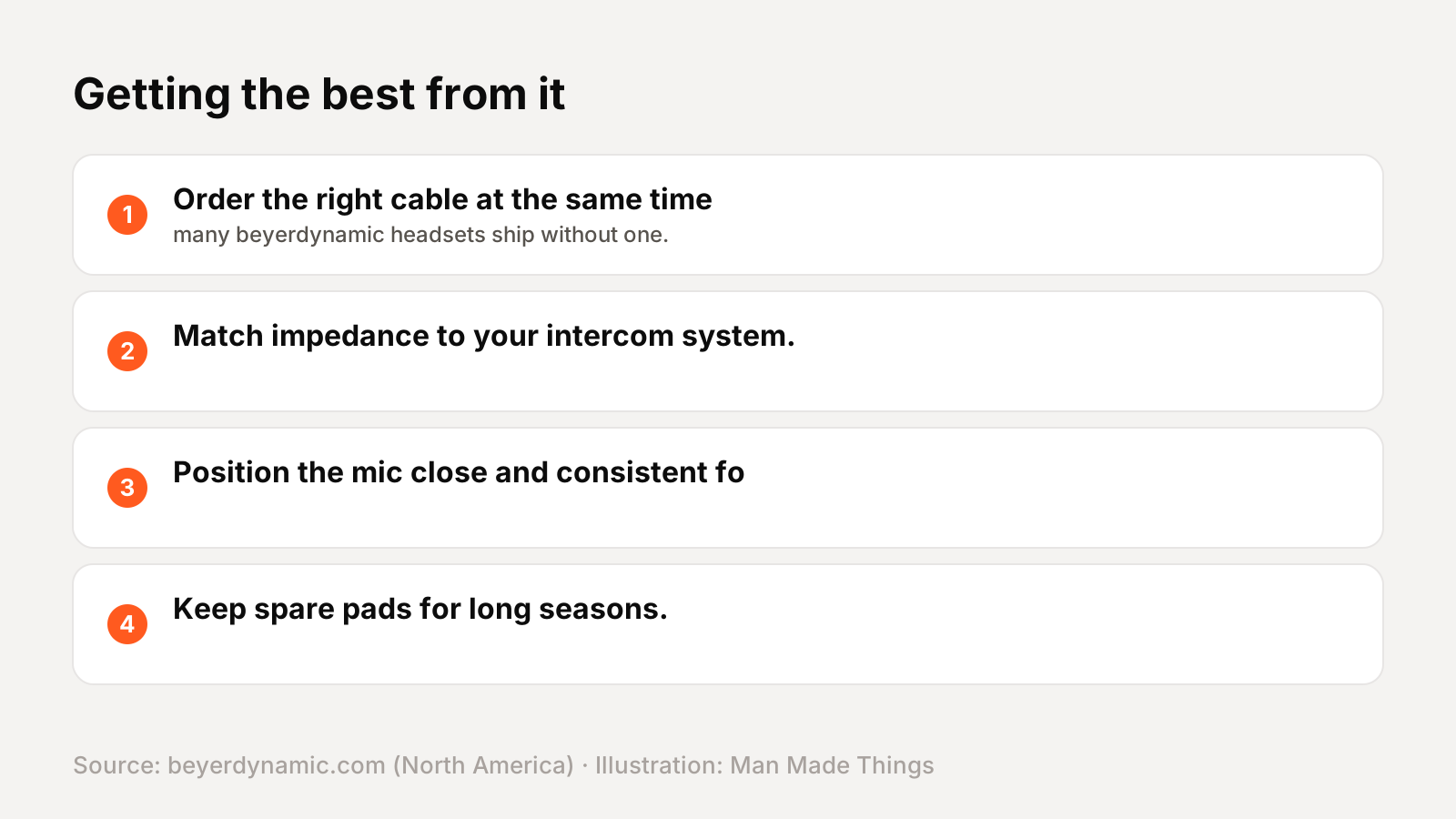
- Order the right cable at the same time: many beyerdynamic headsets ship without one.
- Match impedance to your intercom system.
- Position the mic close and consistent for clean speech.
- Keep spare pads for long seasons.
Buying direct, sales and warranty
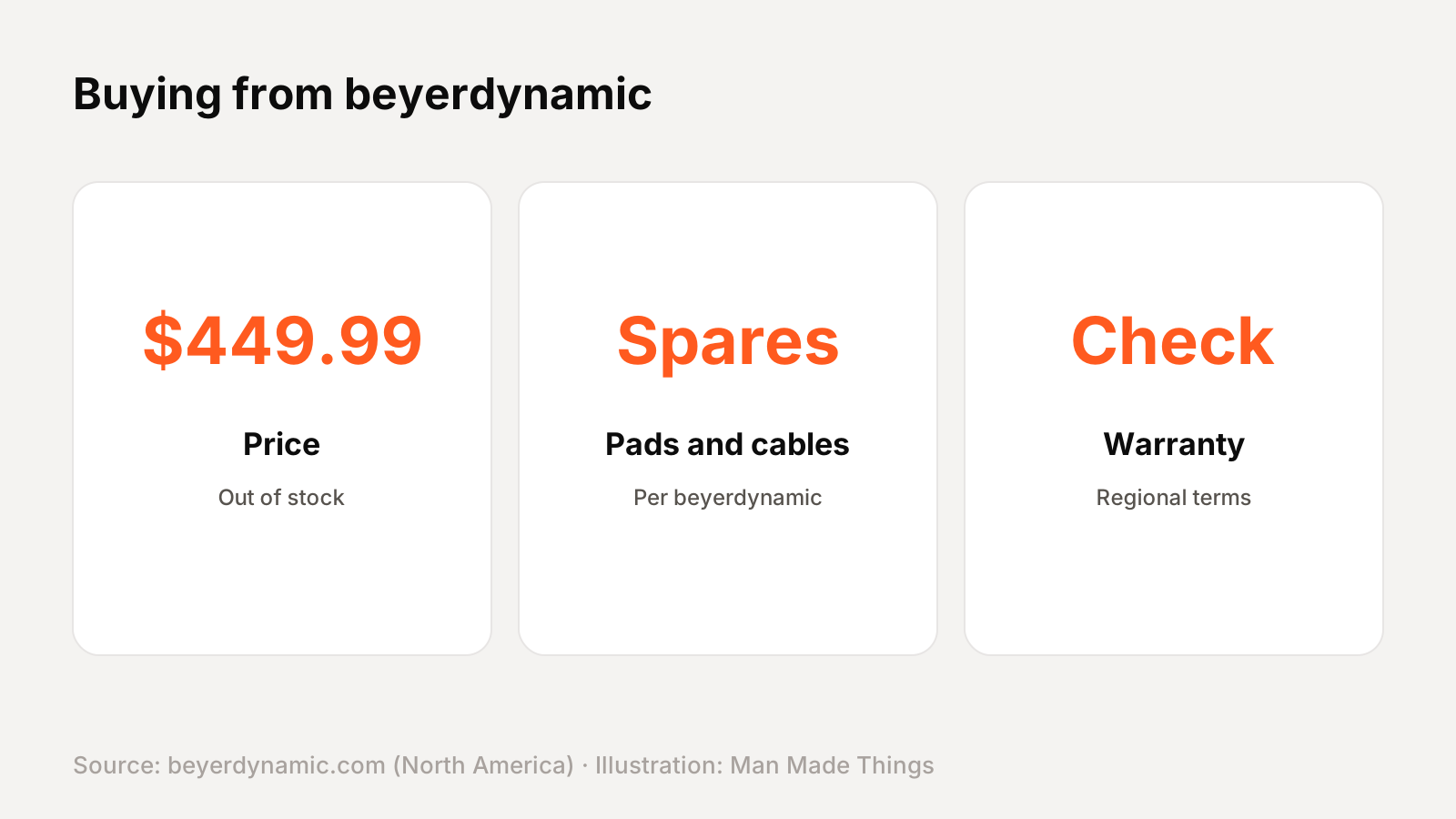
beyerdynamic's North America store lists the DT 280 MK II at $449.99. It was out of stock when we checked, so check availability or authorized dealers. beyerdynamic also sells spare parts such as ear pads and cables for many models.
Warranty: we couldn't confirm the warranty length on the product page itself, so check beyerdynamic's warranty terms for your region before buying.
Should you buy the DT 280 MK II?
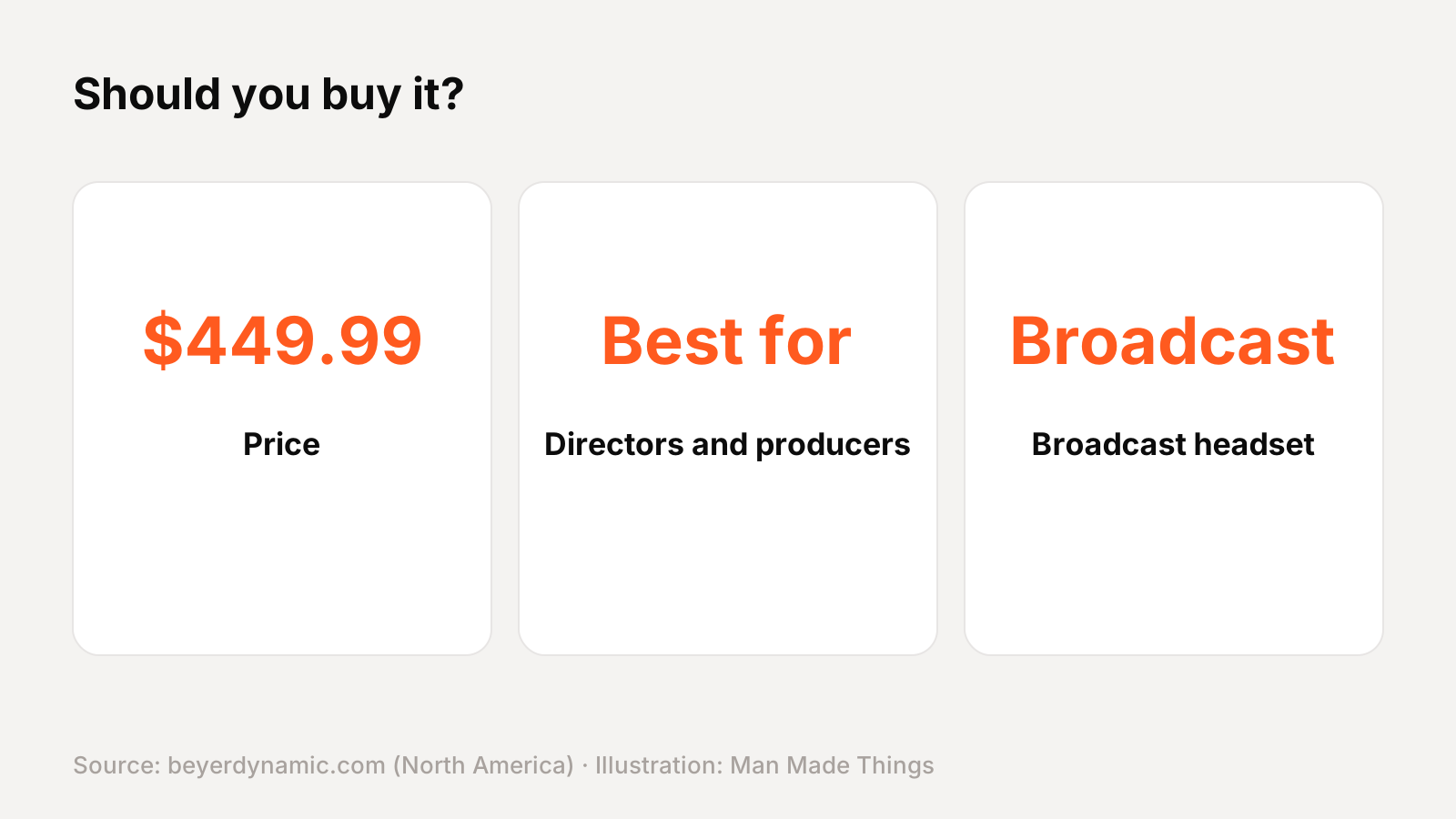
Buy it if: you're shopping for directors and producers.
What we like:
- One ear free
- Gooseneck mic
- Made in Germany
What to consider:
- Cable sold separately
- Out of stock when we checked
Who should skip it: If you only need a gaming or office headset, the MMX 300 PRO or a consumer headset is a better fit.
The bottom line: The DT 280 MK II is for directors and producers who need to talk on comms while hearing the room.
beyerdynamic DT 280 MK II specs
| Wearing Style | Over-ear |
|---|---|
| Operating principle | Closed |
| Transmission Type | Wired |
| Remote | Without Remote |
| Headphone frequency response | 10 - 30.000 Hz |
| Nominal sound pressure level | 100 dB SPL |
| Sound coupling to the ear | Circumaural (around the ear) |
| Cable & Plug | Detachable cable – various connectors available |
Test report
Hands-on test report: in progress
We don't publish scores or test results until a real unit has gone through our routine: battery rundown at 50% volume, call quality outdoors, noise cancellation on a commute, fit over a full workday, and connection stability across devices. This review will be updated with measured results and a star rating once testing is complete.
Frequently asked questions
How much is the beyerdynamic DT 280 MK II?
+
$449.99 on beyerdynamic's North America store, November 2026.
Is the DT 280 MK II open or closed?
+
beyerdynamic lists it as closed.
Who is the DT 280 MK II for?
+
Directors and producers.
Sources
Editor-in-Chief
Rahul has been writing about gadgets and software since 2013, first at Thetechhacker and now at Man Made Things. He edits every review on the site and signs off on every verdict.
More from Rahul →