The Best Solar Watches: Citizen Eco-Drive and Seiko Prospex
Three solar-powered watches that never need a battery change: the Citizen Promaster Diver, the compact Seiko Prospex SNE573 and the atomic-synced Citizen Skyhawk A-T, plus how solar watches charge.
We may earn a commission when you buy through links on this page. Learn more
Quick answer
The Citizen Promaster Diver BN0150-28E ($450) is the best solar watch for most people: a 200m dive watch that runs about six months on a full charge, with a 5-year warranty. The Seiko Prospex SNE573 ($475) is the best compact pick, at 38.5mm with sapphire and about 10 months of reserve. The Citizen Promaster Skyhawk A-T ($795) is the best feature-packed pick, with atomic timekeeping.
A solar watch is the closest thing to a watch you can forget about. It charges from light, any light, and stores enough power to keep running for months in a drawer. No battery changes every couple of years, no winding, and none of the accuracy drift of a mechanical watch.
Citizen pioneered the idea and has made light-powered watches since 1976, under the Eco-Drive name since 1996. Seiko and Casio make excellent solar watches too.
I picked three solar watches for different tastes and checked every spec on the brand's own US site. I couldn't verify Casio G-Shock's US pages this time, so it's not included. If you want a cheaper solar option, the Timex in our field watches under $200 guide runs on light for about $107. These are research-based picks with no star scores. Let's get into it.
Our picks at a glance
1. Best overall
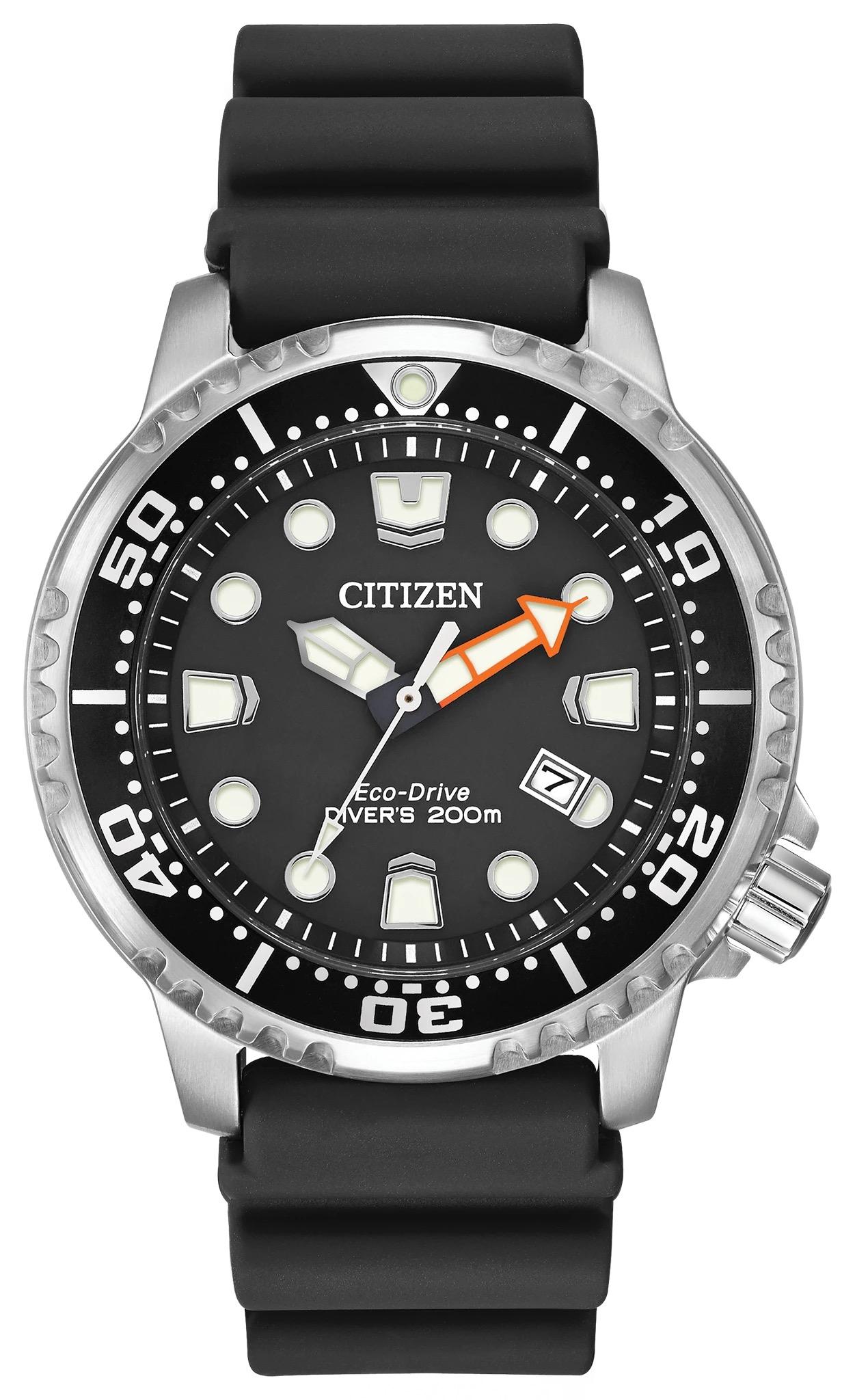
Citizen Promaster Diver Eco-Drive
The Promaster Diver has been one of the most recommended affordable dive watches for years, and solar power is a big part of why. Because it never needs a new battery, you never have to open the caseback, which protects the seals that keep it waterproof. That matters on a 200-meter, ISO-compliant dive watch.
Citizen's manual says it runs about six months on a full charge, and a built-in overcharge prevention feature means you can leave it in the sun without worry. It has a one-way rotating bezel for timing dives, bold luminous hands and markers, and a date window.
The trade-offs are typical at this price. The crystal is mineral glass rather than sapphire, so it can scratch, and at 44mm, it wears big on smaller wrists. Accuracy is a quartz-standard ±15 seconds a month, with no automatic time sync.
Pros
- 01Real 200m ISO dive rating
- 02About 6 months of power reserve
- 03Bold, legible lume
- 045-year warranty
Cons
- 01Mineral crystal, not sapphire
- 02Large at 44mm
- 03No automatic time sync
| Case | 44mm stainless steel, 20mm lugs |
|---|---|
| Movement | Eco-Drive solar, caliber E168 |
| Power reserve | About 6 months fully charged |
| Accuracy | ±15 seconds per month |
| Crystal | Anti-reflective mineral |
| Water resistance | 200m, ISO-compliant diver |
| Warranty | 5 years |
2. Best compact
Seiko Prospex Solar Diver
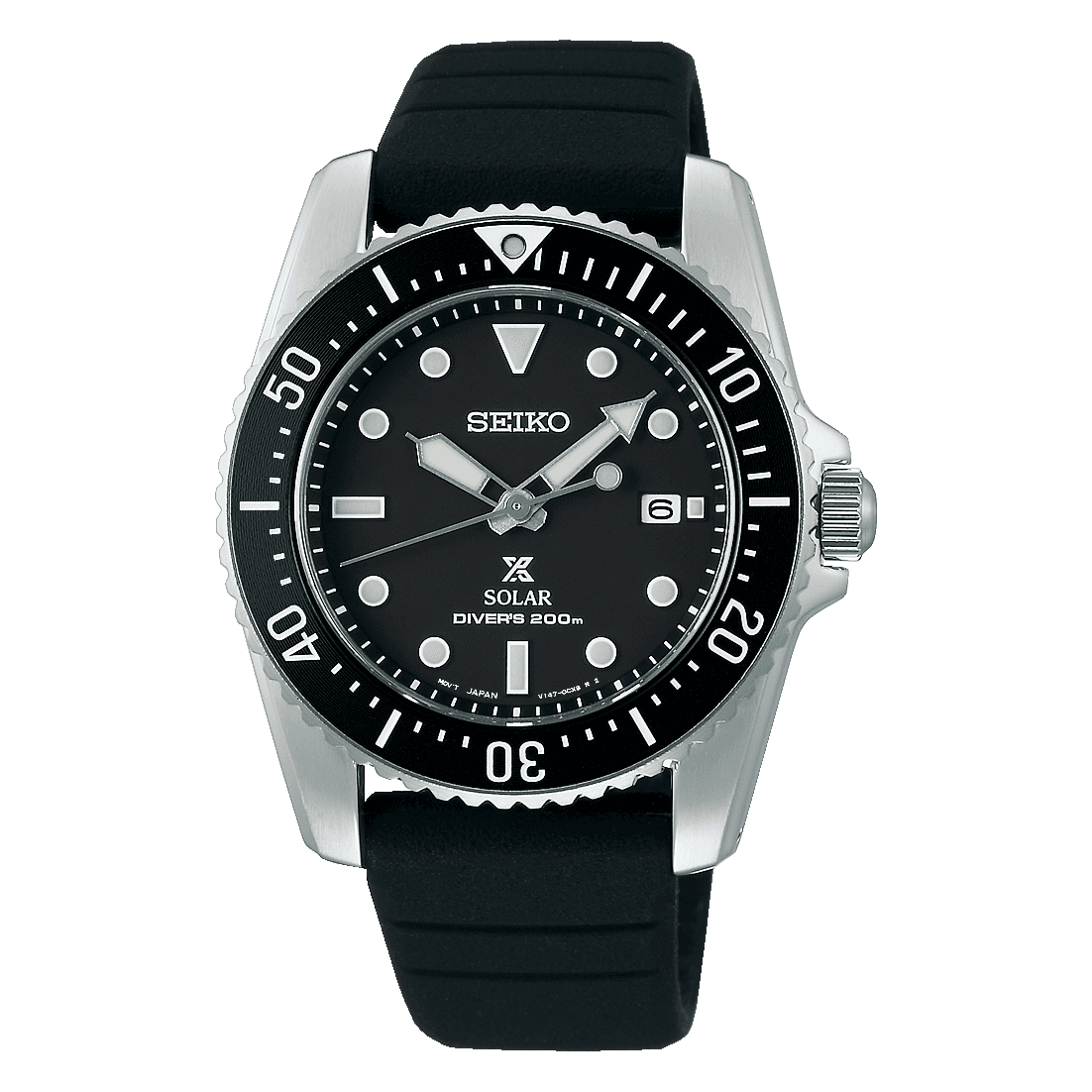
If the Citizen is too big, the SNE573 is the answer. At 38.5mm across and 10.6mm thick, it fits most wrists, and it weighs just 79 grams. Despite the smaller size, it's a proper 200-meter dive watch with a screw-down crown, screw-down caseback and one-way bezel.
It's also better equipped. The crystal is sapphire, which is far more scratch resistant than mineral glass, and Seiko's LumiBrite covers the hands, indexes and bezel. Seiko says a full charge runs it for about 10 months, longer than the Citizen, with overcharge prevention and a quick-start feature when it's been in the dark.
It costs a little more at $475, and it comes on a silicone strap. Seiko's product page didn't list the warranty, so check with the retailer.
Pros
- 01Compact 38.5mm, fits most wrists
- 02Sapphire crystal
- 03About 10 months of reserve
- 04Lume on the bezel too
Cons
- 01Costs a bit more
- 02Warranty not listed on the page
- 03Silicone strap only
| Case | 38.5mm × 10.6mm stainless steel, 46.5mm lug to lug |
|---|---|
| Movement | Solar, caliber V147 |
| Power reserve | About 10 months fully charged |
| Accuracy | ±15 seconds per month |
| Crystal | Sapphire |
| Water resistance | 200m diver's |
| Lume | LumiBrite on hands, indexes and bezel |
3. Best feature-packed
Citizen Promaster Skyhawk A-T Blue Angels
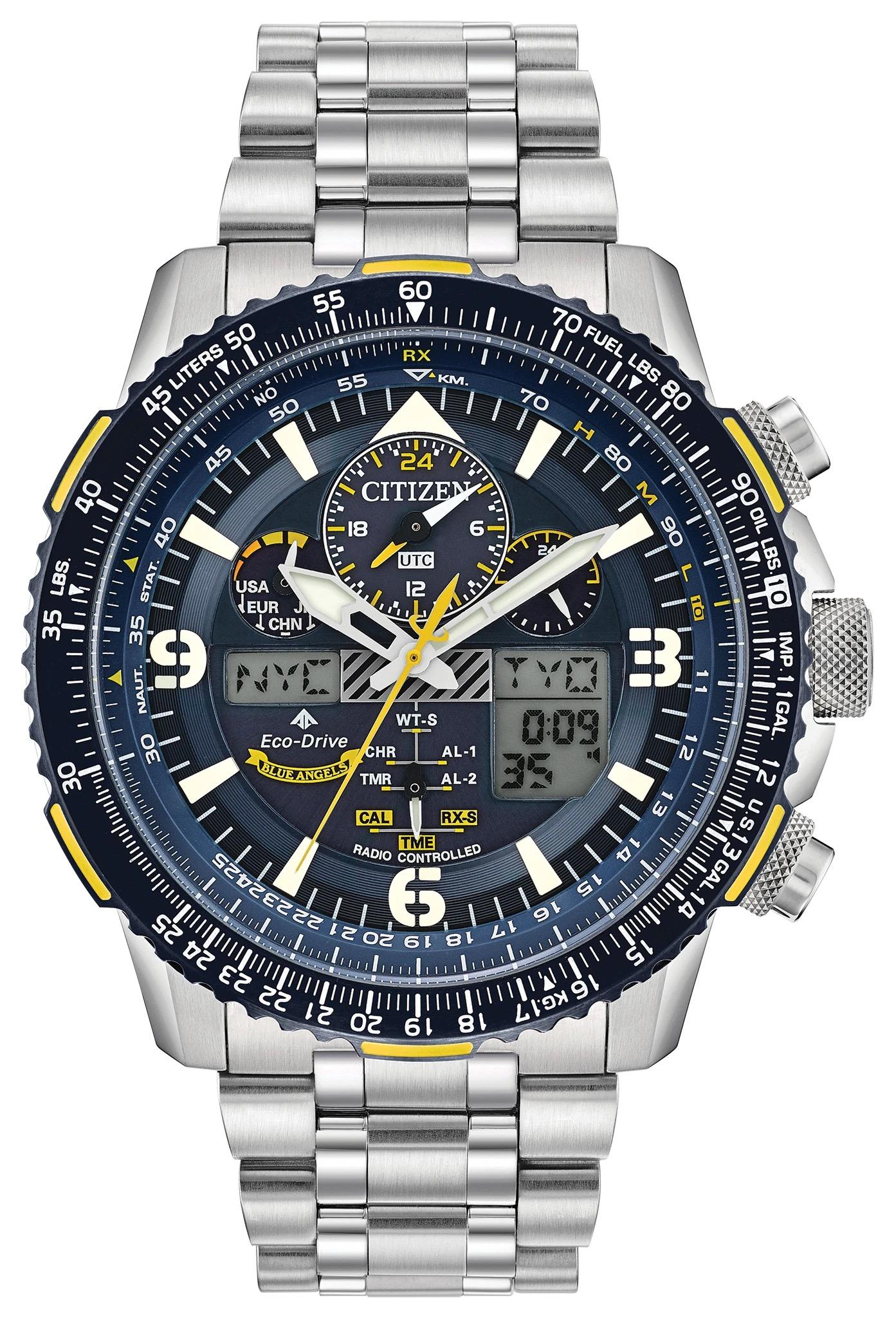
The Skyhawk A-T is the solar watch for people who like gadgets. Its "A-T" stands for atomic timekeeping: it syncs to radio time signals, and Citizen says it keeps atomic time in 43 world cities. That means it corrects itself and changes for daylight saving time on its own.
It combines analog hands with digital displays and packs in a 1/100-second chronograph, a perpetual calendar, dual time and UTC, two alarms, a countdown timer and a backlight. There's a slide-rule bezel for pilots, a sapphire crystal and 200-meter water resistance. This version is styled after the US Navy's Blue Angels flight team.
It's a lot of watch, literally. At 45mm on a steel bracelet, it's big, the dial is busy, and the Blue Angels branding won't suit everyone. At $795, it's the priciest pick, though Citizen often runs sales.
Pros
- 01Atomic time sync, never needs setting
- 02Sapphire crystal and 200m
- 03Huge feature set
- 045-year warranty
Cons
- 01Big 45mm case on a bracelet
- 02Busy dial
- 03Most expensive at $795
| Case | 45mm stainless steel, 22mm lugs |
|---|---|
| Movement | Eco-Drive solar, caliber U680 |
| Time sync | Atomic timekeeping in 43 world cities |
| Functions | Chronograph, perpetual calendar, UTC, 2 alarms, timer |
| Crystal | Anti-reflective sapphire |
| Water resistance | 200m |
| Warranty | 5 years |
How solar watches work
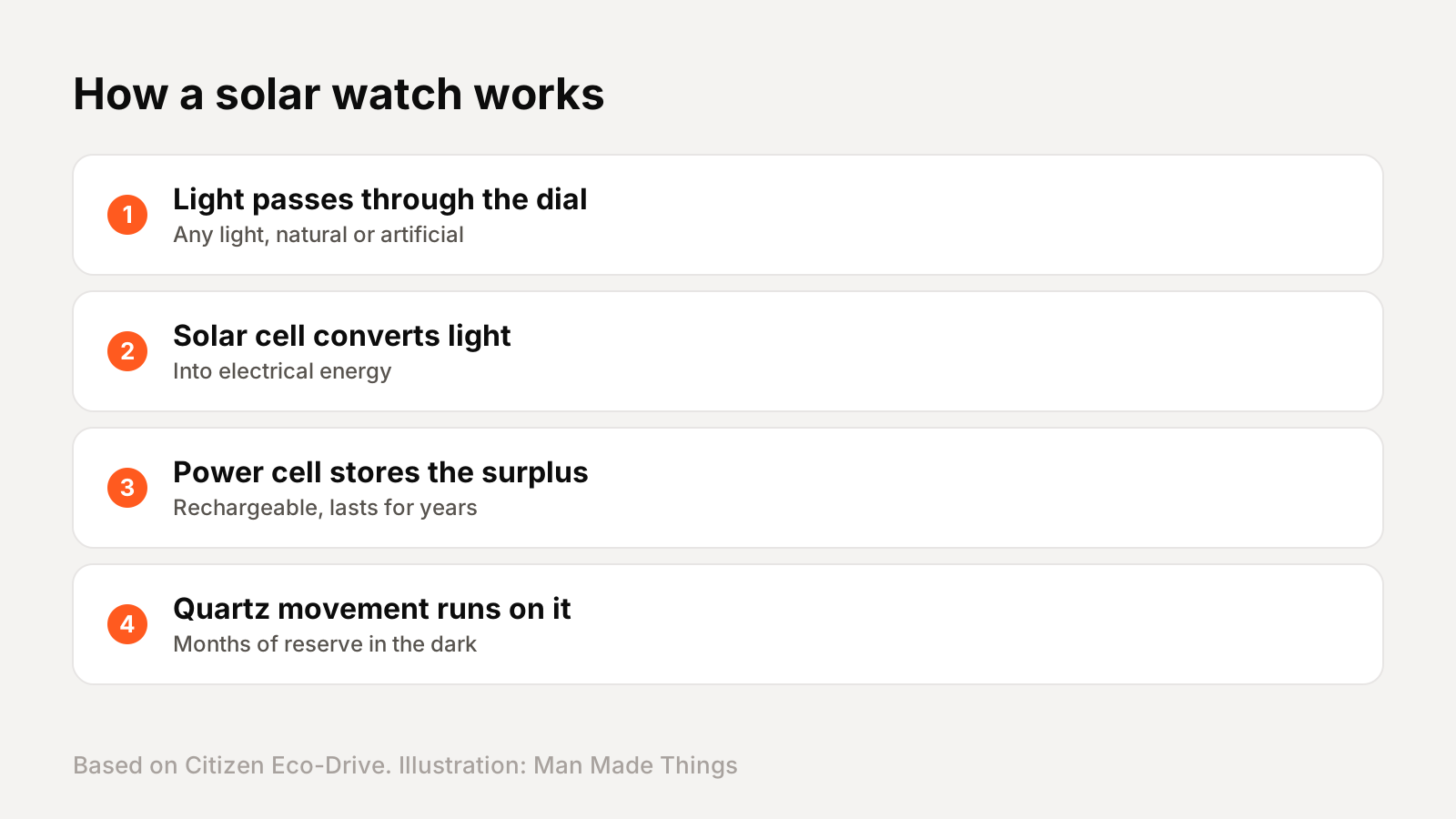
A solar watch is a quartz watch with a rechargeable power cell instead of a disposable battery. Citizen explains that light passes through the dial to a solar cell underneath, which turns light into energy and stores the surplus in the power cell.
A few things that surprise people:
- It doesn't need sunlight. Citizen's Eco-Drive charges from any light, natural or artificial, though it charges faster in brighter light.
- It runs a long time in the dark. Citizen says a fully charged Eco-Drive runs more than six months in total darkness, and some models with a power-save mode last up to seven years.
- The cell lasts for years. Citizen's manual says the power cell is designed to last a long time and should only be replaced by an authorized service center.
Citizen also says Eco-Drive has kept over 100 million batteries out of landfills, which is a nice bonus.
How to charge and care for a solar watch
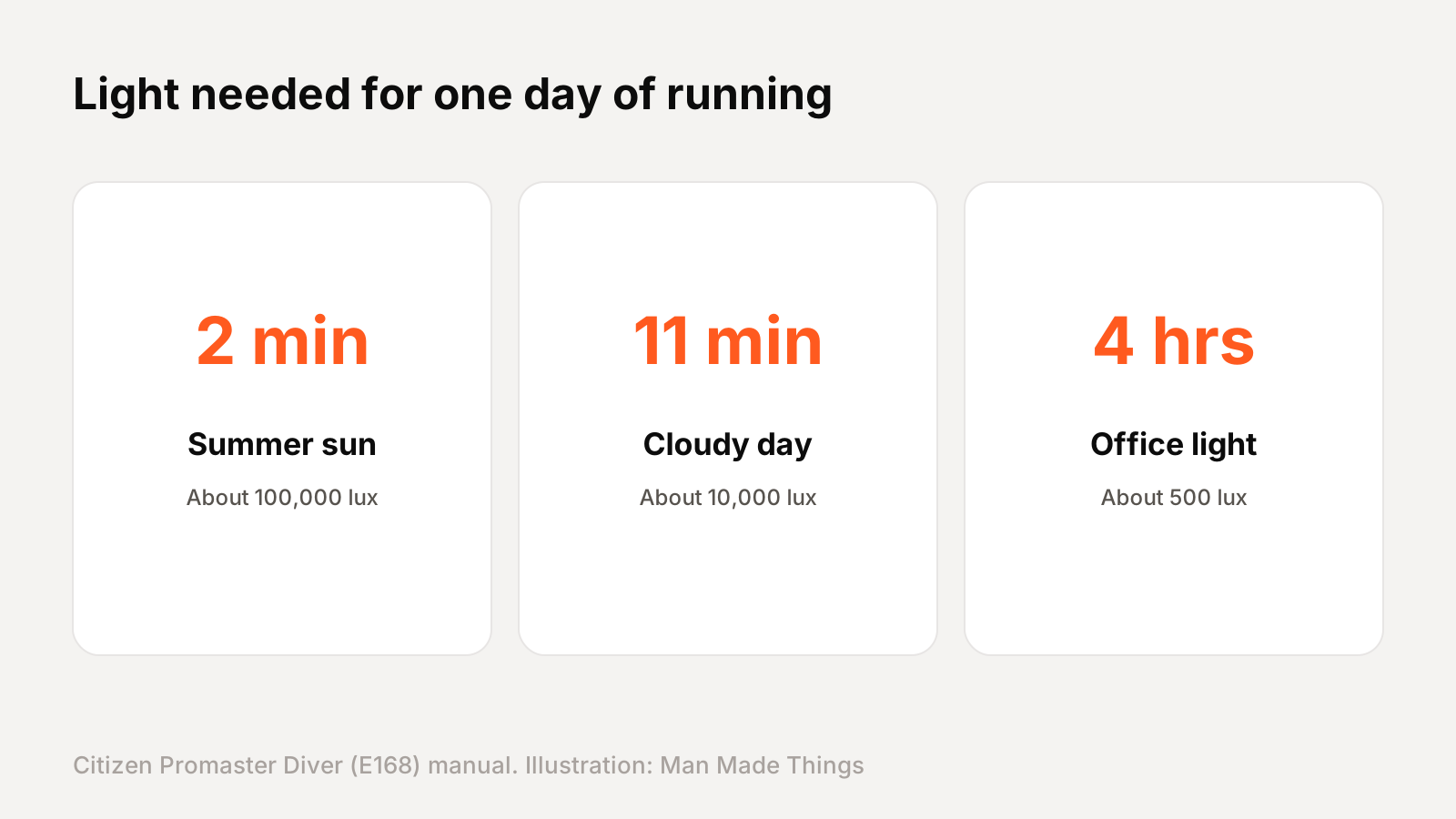
Most of the time, normal wear keeps a solar watch charged. Citizen's manual for the Promaster Diver gives a sense of how fast it charges:
- Sunny summer day: about 2 minutes for one day of use.
- Cloudy day outdoors: about 11 minutes for a day.
- Close to an indoor fluorescent light: about 40 minutes for a day.
- Typical office light: about 4 hours for a day.
A few care tips from the same manual:
- Don't let it overheat. Avoid charging above about 140°F, keep it away from halogen bulbs and never leave it on a car dashboard.
- Long sleeves block light. When you take the watch off, leave it somewhere bright, not in a drawer.
- Watch for the warning. When the charge runs low, the second hand jumps every two seconds. Put it in light.
- Service the seals every two to three years if you swim with it, to keep it water resistant.
Frequently asked questions
What is the best solar watch?
+
The Citizen Promaster Diver BN0150-28E. It's a 200m dive watch that runs about six months on a full charge and has a 5-year warranty.
Do solar watches need direct sunlight?
+
No. Citizen's Eco-Drive charges from any light, natural or artificial, though bright sunlight charges it much faster.
How long do solar watches last on a charge?
+
It depends on the model. Citizen's Promaster Diver runs about six months, and Seiko's SNE573 about 10 months, on a full charge.
Do solar watch batteries need replacing?
+
Rarely. The power cell is rechargeable and designed to last many years; Citizen says replacement should be done by an authorized service center.
Sources

Watches & Coffee Writer
Aditya is a passionate coffee lover who loves watches. He covers watches and coffee for Man Made Things.
More from Aditya →