The Best Running Shoes for Beginners: Brooks and ASICS
Three men's running shoes for new runners: the cushioned Brooks Ghost 18, the supportive Brooks Adrenaline GTS 26 and the $80 ASICS GEL-Contend 10, plus how running shoes should fit.
RVRahul VithalaEditor-in-ChiefPublished · 5 min read
We may earn a commission when you buy through links on this page. Learn more
Image: ASICS
Quick answer
The Brooks Ghost 18 ($150) is the best running shoe for most beginners: a cushioned, neutral daily trainer in four widths that Brooks pitches at new and experienced runners alike. The Brooks Adrenaline GTS 26 ($155) is the best pick if you need extra support. The ASICS GEL-Contend 10 ($80) is the best budget shoe, with GEL cushioning and an 8mm drop.
Running is about the cheapest sport there is. You don't need a gym, a team or much gear. But you do need decent shoes. The pair you've had sitting in the closet for years, or a fashion sneaker, can make those first weeks more uncomfortable than they need to be.
The good news is that beginners don't need the latest racing shoe with a carbon plate. You want comfort, a secure fit and enough cushioning to soften the miles while your body adapts. The rest is marketing.
I picked three men's shoes and checked every spec on the brand's own US site. Brooks and ASICS make shoes specifically aimed at newer runners, and both publish clear fit advice. I couldn't verify New Balance, HOKA, Saucony or Nike pages this round, so they're not included. These are research-based picks with no star scores. Let's get into it.
The Ghost has been one of Brooks' most popular shoes for years, and the Ghost 18 keeps the formula simple: soft but not mushy cushioning, a secure heel and a smooth ride. Brooks itself says it's perfect for beginner or experienced runners, and it's built for daily runs, long runs and easy recovery days.
The DNA LOFT v3 foam gives what Brooks calls balanced cushioning, and the shoe's secure heel and flexible forefoot add some natural stability without being a support shoe. The new pillowy tongue and breathable mesh upper should help with comfort, and it carries the APMA Seal of Acceptance from the American Podiatric Medical Association.
Fit is where it really shines. It comes in four widths, from narrow to extra wide, which most shoes don't offer. On the downside, it weighs 10.2 ounces, the 10mm drop is on the high side, and $150 is a real investment for a first pair.
If your feet roll inward a lot when you run, or a store fitting suggested a stability shoe, the Adrenaline GTS is the one to look at. Brooks calls it its most trusted support shoe, and GTS stands for "Go-To Support."
Its GuideRails system works like bumpers on a bowling lane. Rather than forcing your foot into position, it helps keep excess movement in check, which Brooks says is engineered to support natural knee motion. The nitrogen-infused DNA LOFT v3 foam keeps it cushioned, so it doesn't feel stiff the way older stability shoes could.
It also comes in four widths and works well for walking, so it's a good fit if you mix runs with long walks. The catches: at $155 it's the most expensive pick, Brooks doesn't publish its weight, and if you don't need support, a neutral shoe like the Ghost is a better choice.
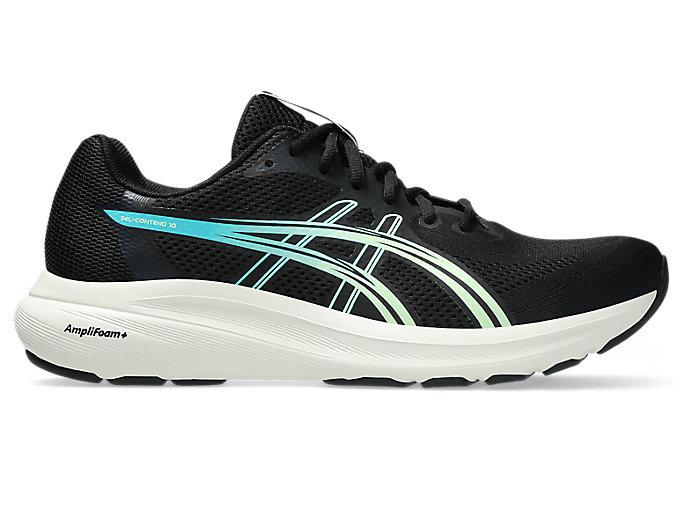
For about half the price of the Brooks shoes, the GEL-Contend 10 is an easy way to start running without a big investment. ASICS added 2mm more foam underfoot than the previous version, and pairs its AMPLIFOAM PLUS midsole with GEL in the heel to soften landings.
The 8mm drop is a moderate middle ground, and the engineered mesh upper needs fewer overlays, so it's breathable and comfortable. An OrthoLite sockliner adds a bit more cushioning underfoot. It's a neutral shoe, recommended for runners with neutral or underpronating feet.
You'll notice the savings in a few places. At 11.2 ounces, it's the heaviest pick here, and ASICS rates its cushioning as "regular" rather than plush. There's no stability version, and the extra-wide model is sold as a separate product. Watch for sales, too. It was discounted when I checked.
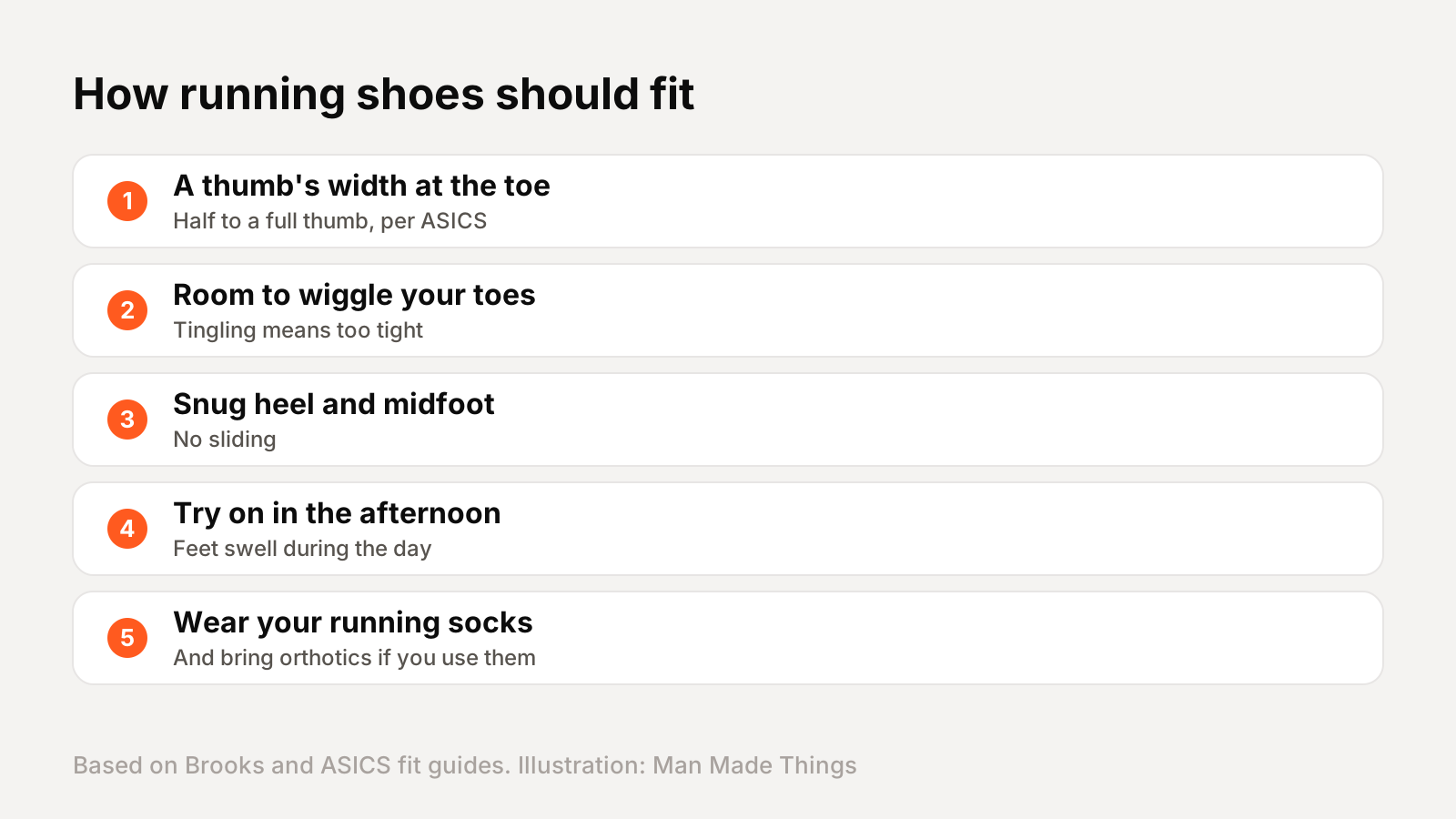
Brooks and ASICS give nearly the same fit advice, and it's worth following closely:
Leave about a thumb's width between your longest toe and the front of the shoe. ASICS says half to a full thumb's width, and to go up half a size if you have less.
You should be able to wiggle and spread your toes. Tingling or numbness means it's too tight.
The heel and midfoot should feel snug, with no sliding. ASICS notes the heel should fit more snugly than an everyday shoe.
Try shoes on in the afternoon or evening. Feet swell during the day, so morning fittings can lead you to buy too small.
Wear your running socks, and bring orthotics if you use them.
Brooks also points out that your running shoe size may be different from your everyday size, so don't assume. Many runners end up half a size bigger.
When to replace running shoes
Image: Man Made Things
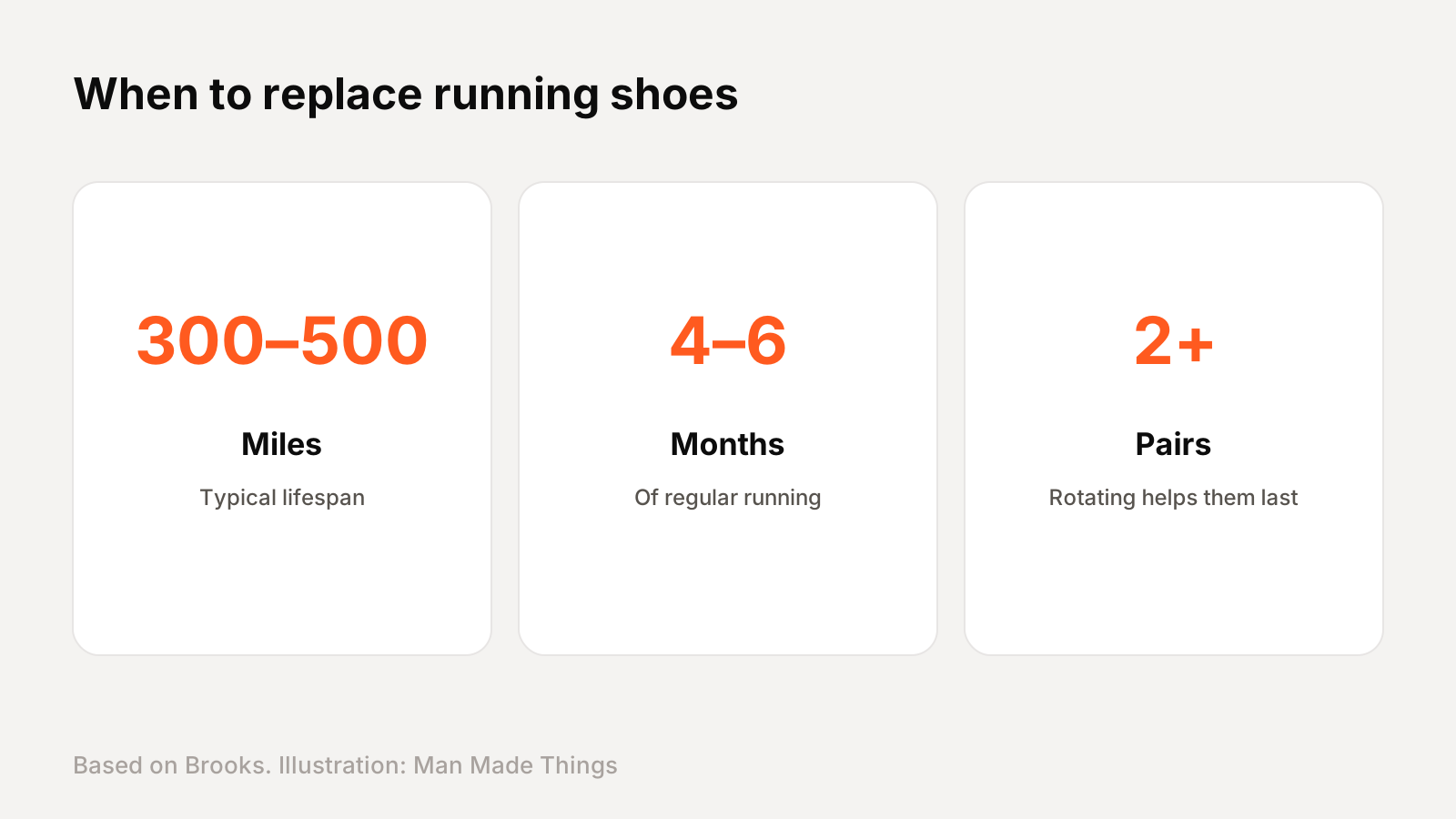
Running shoes wear out on the inside before they look worn on the outside. Brooks says performance running shoes typically last 300 to 500 miles, which is about four to six months of regular running.
Signs it's time for a new pair, according to Brooks:
The tread is worn smooth.
The midsole looks compressed or creased.
The upper is tearing or fraying.
They feel flat or less supportive than they used to.
New aches or soreness show up after runs.
Two habits help them last. Brooks notes that wearing running shoes for walking or work breaks them down faster, and that rotating two or more pairs helps. A simple way to track mileage is to note the date you start using a pair, or log them in a running app.
Frequently asked questions
What are the best running shoes for beginners?
+
The Brooks Ghost 18. It's a cushioned, neutral daily trainer that Brooks says is perfect for beginner or experienced runners, and it comes in four widths.
How much room should be at the toe of a running shoe?
+
About a thumb's width. ASICS says half to a full thumb's width, and to go up half a size if you have less.
Do I need a stability running shoe?
+
Only if you need extra support. Stability shoes like the Brooks Adrenaline GTS 26 help keep excess movement in check; neutral shoes suit most runners.
How often should I replace running shoes?
+
Brooks says performance running shoes typically last 300 to 500 miles, or about four to six months of regular use.
Rahul has been writing about gadgets and software since 2013, first at Thetechhacker and now at Man Made Things. He edits every review on the site and signs off on every verdict.