The Best Open-Ear Headphones for Running: Shokz and Soundcore
Three open-ear headphones that let you hear traffic while you run: the Shokz OpenRun Pro 2, the clip-on Soundcore AeroClip and the $50 Soundcore V30i, plus how bone conduction works.
We may earn a commission when you buy through links on this page. Learn more
Quick answer
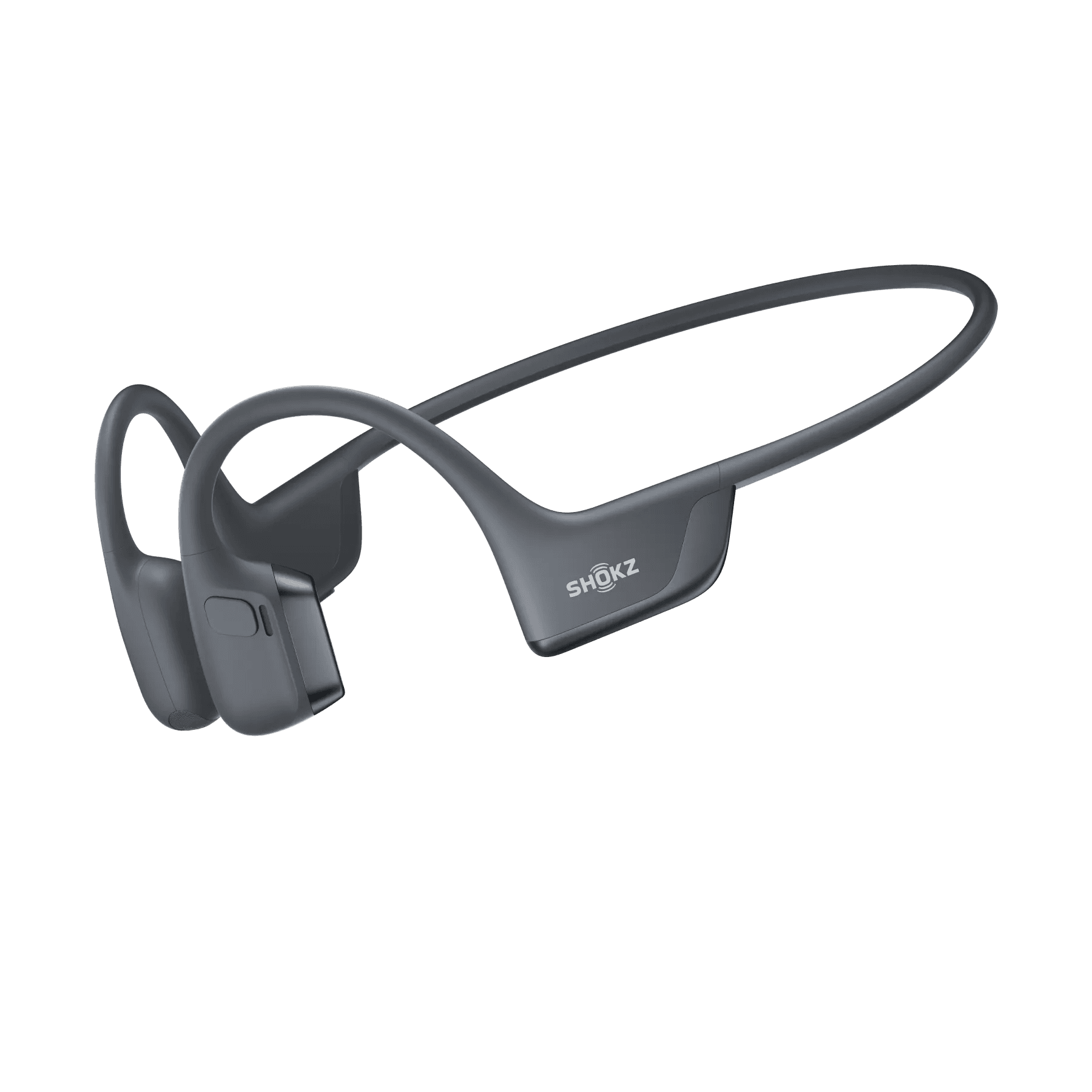
The Shokz OpenRun Pro 2 ($179.95) is the best open-ear headphone for running: 12-hour battery, hybrid bone and air conduction drivers, multipoint and a 2-year warranty. The Soundcore AeroClip ($169.99) is the best clip-on alternative at just 6 grams per bud. The Soundcore V30i ($49.99) is the best budget pick, with a 12-hour ear-hook design.
When I run on the road, I want my music, but I also want to hear the car coming up behind me. That's the whole idea of open-ear headphones. They sit outside or just in front of your ear instead of sealing it, so you hear your playlist and the world around you at the same time.
Shokz puts it plainly in its runner safety advice: in-ear and over-ear headphones can make it hard to hear what's happening around you, especially on busy roads or in poor light. Open-ear designs leave the ear canal open.
There are three main styles now: bone conduction headbands, clip-on "ear cuffs" and ear hooks. I picked one of each and checked every spec on the brand's own US site. If you'd rather have sealed earbuds for the gym, see our best workout earbuds guide. These are research-based picks with no star scores. Let's get into it.
Our picks at a glance
1. Best overall
Shokz OpenRun Pro 2
Shokz basically created this category, and the OpenRun Pro 2 is its best running headphone. The wraparound neckband sits behind your head, so it stays put on long runs and can't fall out the way a loose earbud can.
What's new is the sound. It pairs a bone conduction driver for mids and highs with a small air conduction driver for bass, which addresses the thin sound older bone conduction headphones were known for. The Shokz app gives you six EQ presets and two custom modes, and dual wind-resistant mics help on calls.
Battery life is 12 hours, and five minutes on the charger gets you 2.5 hours, handy when you realize it's dead before a morning run. It supports multipoint and comes in a Mini size for smaller heads. The downsides: it's IP55, not as tough as some Shokz models, it only supports the basic SBC codec, and it's the priciest here.
Pros
- 0112-hour battery with quick charge
- 02Hybrid drivers sound fuller than older bone conduction
- 03Multipoint and Mini size option
- 042-year warranty
Cons
- 01IP55, less rugged than some Shokz models
- 02SBC codec only
- 03Most expensive pick
| Type | Neckband, bone + air conduction drivers |
|---|---|
| Battery | 12 hours; 5 min charge = 2.5 hours |
| Water resistance | IP55 |
| Weight | 30.3 g (Mini 30 g) |
| Bluetooth | 5.3, multipoint, SBC |
| Charging | USB-C, full charge in 1 hour |
| Warranty | 2 years (bought from Shokz) |
2. Best clip-on
Soundcore AeroClip
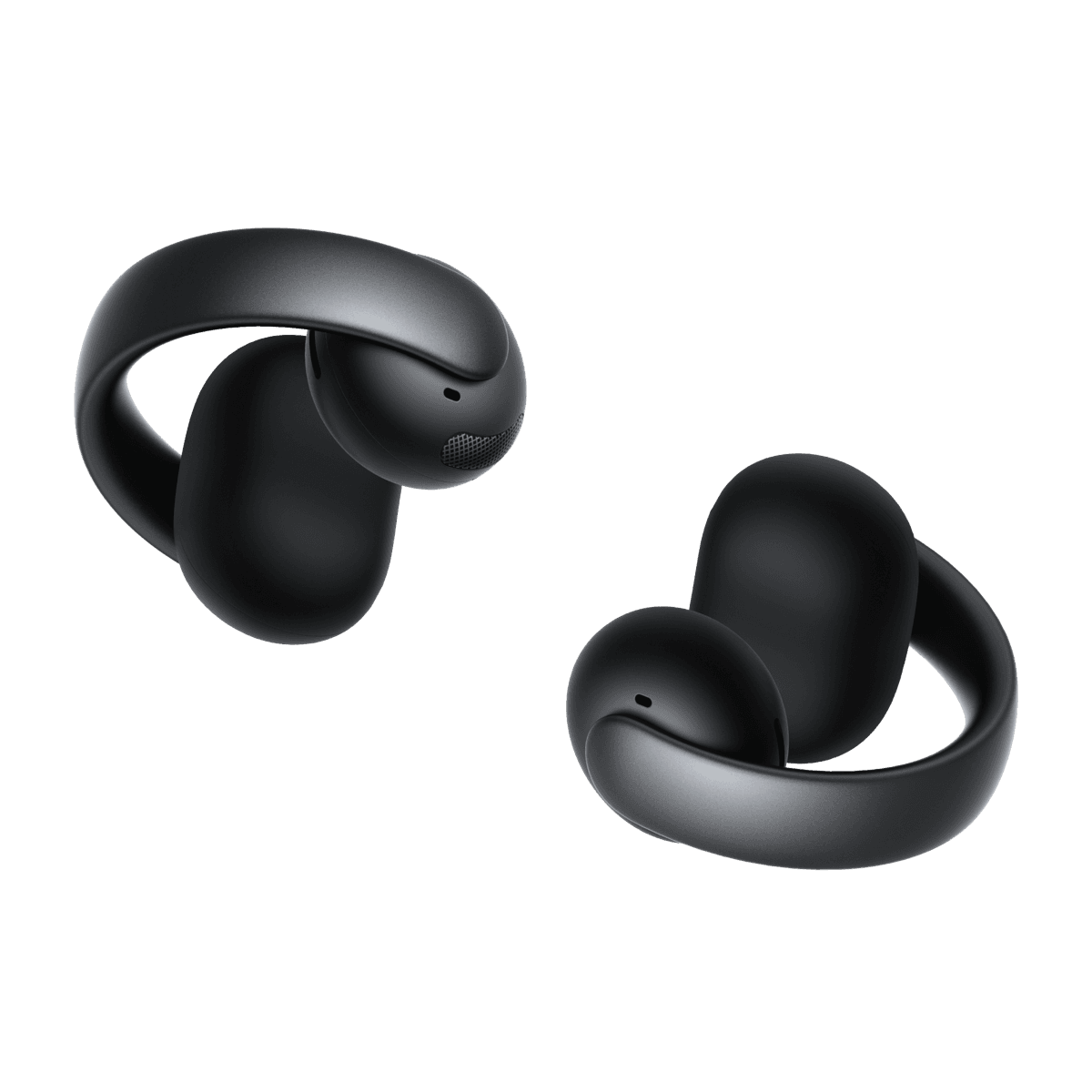
Clip-on earbuds are the newest open-ear style, and the AeroClip is a good example. Each bud hooks over the edge of your ear like an ear cuff, with the speaker resting just outside the ear canal. At six grams, you can forget you're wearing them, and there's no band around the back of your head to bump against a hat or hood.
You get 12mm drivers, Bluetooth 5.4 with multipoint, four mics for calls and IP55 sweat and water resistance. Battery life is eight hours per charge and 32 with the case, and a 10-minute charge gives you three hours.
The trade-offs are in the design. Without a neckband tether, there's nothing to catch a bud if it gets knocked off. Eight hours is less than the other two picks, and the 18-month warranty is shorter than Shokz's two years, at a price that's close to the OpenRun Pro 2.
Pros
- 01Very light at 6 g per bud
- 02No neckband, works with hats and hoods
- 03Multipoint and Bluetooth 5.4
- 0432 hours with the case
Cons
- 018 hours per charge
- 02No tether if a bud gets knocked off
- 0318-month warranty
| Type | True wireless clip-on, air conduction |
|---|---|
| Battery | 8 hours; 32 hours with case |
| Fast charge | 10 min = 3 hours |
| Water resistance | IP55 |
| Weight | 6.0 g per bud |
| Bluetooth | 5.4, multipoint |
| Warranty | 18 months |
3. Best budget
Soundcore V30i
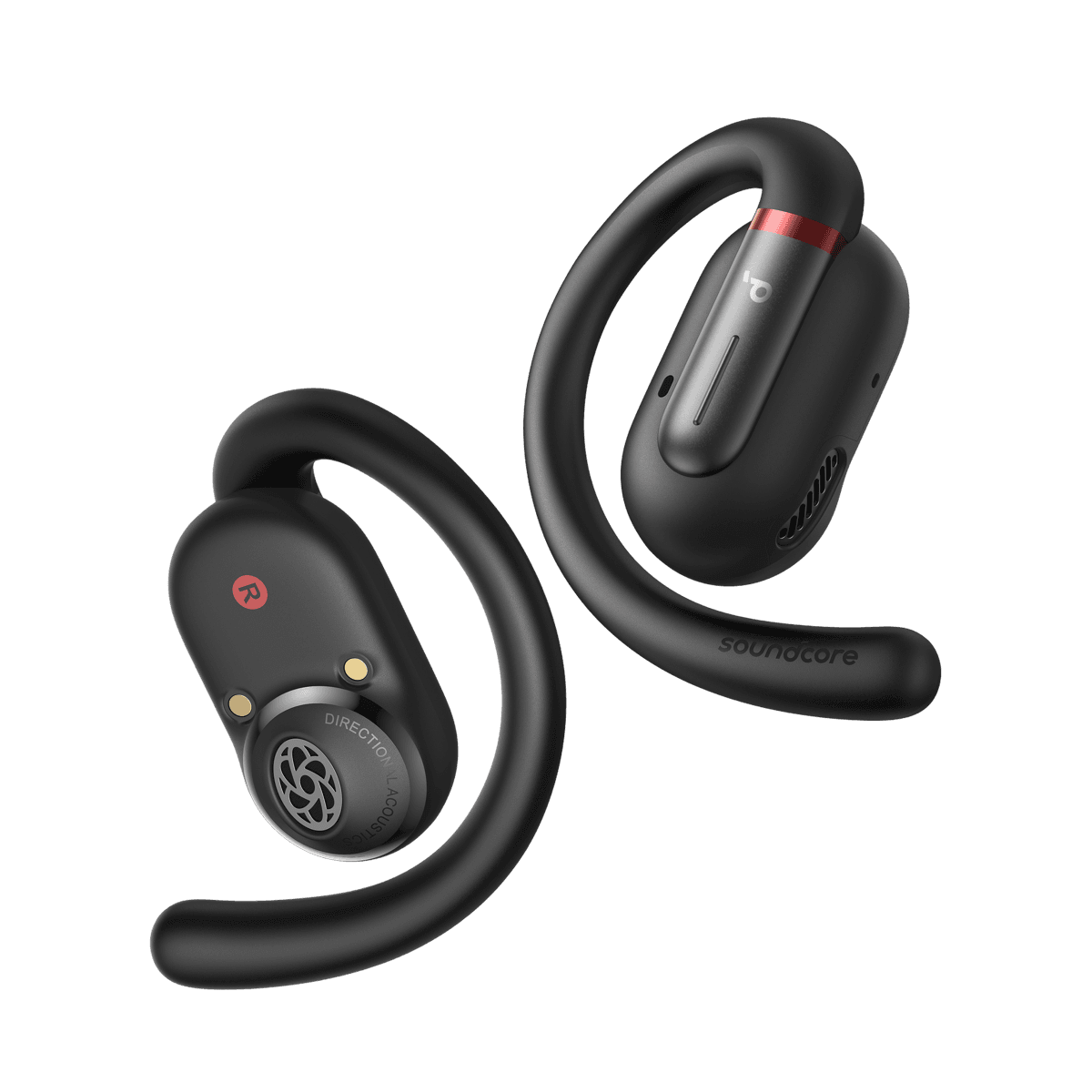
At $49.99, the V30i is a cheap way to try open-ear listening. It uses a flexible ear hook that wraps over the top of your ear, so it stays stable when you run, and the speaker sits just outside your ear canal.
Battery life is the surprise: 12 hours on the buds, matching the OpenRun Pro 2, and 36 with the case. It supports AAC, which iPhone users will appreciate, and has four mics with AI noise reduction for calls.
The budget shows elsewhere. There's no multipoint, no wireless charging and no wear detection. The buds are rated IPX5 for sweat, but the case isn't water resistant. Soundcore's own FAQ notes they may sound quiet in loud outdoor noise, which is typical of open-ear designs at this price.
Pros
- 01Only $49.99
- 0212-hour battery
- 03AAC support
- 04Secure ear-hook fit
Cons
- 01No multipoint
- 02Can sound quiet in loud places
- 03Case isn't water resistant
| Type | True wireless ear hook, air conduction |
|---|---|
| Battery | 12 hours; 36 hours with case |
| Water resistance | IPX5 (earbuds only) |
| Weight | 9.3 g per bud |
| Bluetooth | 5.3, SBC and AAC |
| Multipoint | No |
| Warranty | 18 months |
Bone conduction vs open-ear air conduction
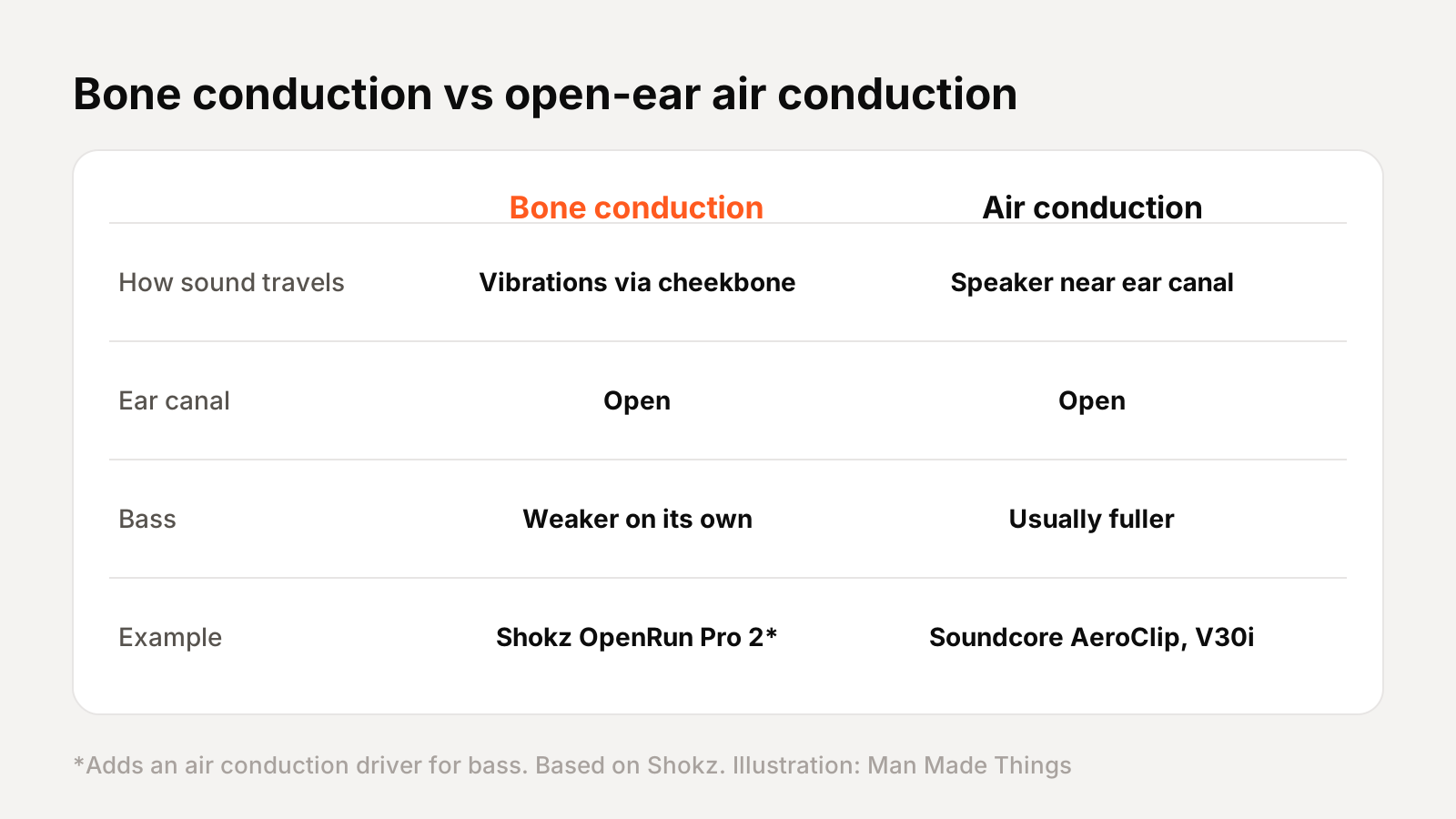
All three picks leave your ears open, but they don't all deliver sound the same way.
- Air conduction is how most headphones work. A speaker moves air, the sound waves travel down your ear canal and vibrate your eardrum. Open-ear air conduction buds, like the AeroClip and V30i, simply place that speaker near your ear instead of in it.
- Bone conduction works differently. Shokz explains that a transducer rests on your cheekbone and turns audio into vibrations that travel through bone to the inner ear, skipping the eardrum. As Shokz puts it, bone conduction only changes the pathway.
Bone conduction has historically struggled with bass, which is why the OpenRun Pro 2 adds an air conduction driver for the low end. Open-ear air conduction buds can sound fuller, but they need careful design to limit sound leaking to people nearby.
How to run safely with headphones
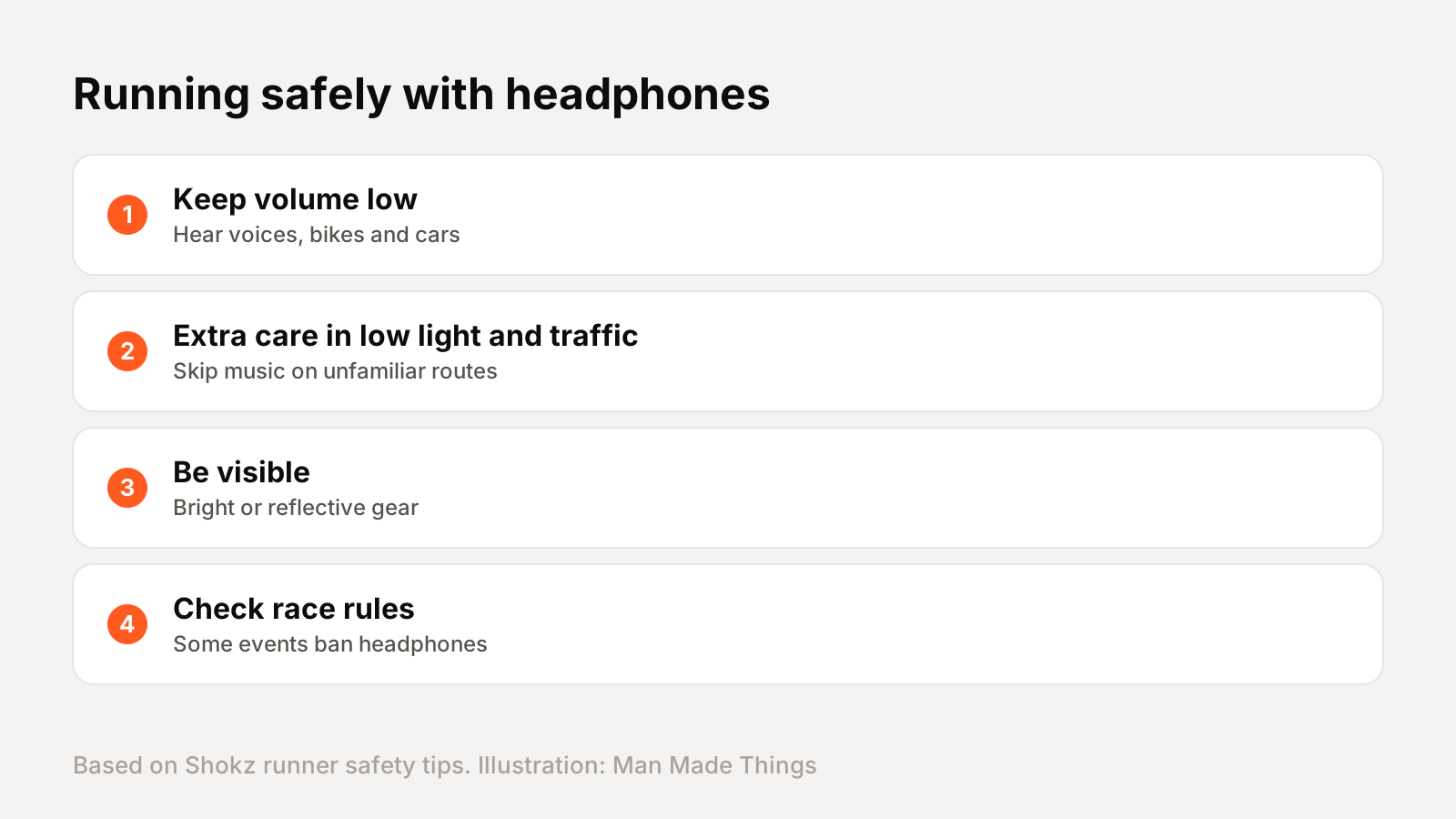
Open-ear headphones help, but they aren't a free pass. A few habits make a big difference, many of them from Shokz's runner safety tips:
- Keep the volume low enough to hear voices, bikes and cars. If you can't hear your own footsteps, it's too loud.
- Be extra careful in low light and heavy traffic, and consider skipping music entirely on unfamiliar routes.
- Be visible. Wear bright or reflective gear when running early or late.
- Check your local rules. Some races don't allow headphones at all, so read the event rules before race day.
Also remember that sweat and rain are the real enemies of running headphones. All three picks are rated for sweat, but none is made for swimming, so wipe them down after a run and let them dry before charging.
Frequently asked questions
What are the best open-ear headphones for running?
+
The Shokz OpenRun Pro 2. It has a 12-hour battery, bone plus air conduction drivers, multipoint and a secure neckband fit.
Are open-ear headphones safer for running?
+
They let you hear surroundings like traffic because they don't seal your ear canal, but you should still keep the volume low and stay alert.
What is the difference between bone conduction and open-ear?
+
Bone conduction sends vibrations through your cheekbone to the inner ear. Open-ear air conduction plays sound from a speaker near your ear canal.
What are the best cheap open-ear earbuds?
+
The Soundcore V30i at $49.99, with a 12-hour battery, AAC support and an ear-hook fit.
Sources
Editor-in-Chief
Rahul has been writing about gadgets and software since 2013, first at Thetechhacker and now at Man Made Things. He edits every review on the site and signs off on every verdict.
More from Rahul →