The 5 Best Home EV Chargers (Level 2) for 2026
The best Level 2 home EV chargers, from the $349.99 Grizzl-E Classic Connect to the ChargePoint Home Flex, Emporia Pro, Wallbox Pulsar Plus and two-car Grizzl-E Duo, with official specs, breaker sizes, NACS options and prices.
We may earn a commission when you buy through links on this page. Learn more

Quick answer
The best home EV charger for most people is the ChargePoint Home Flex ($549), adjustable up to 50 amps with a 23-foot cable, ENERGY STAR certification and J1772 or NACS versions. The Emporia Pro ($599) is best if your electrical panel is small, thanks to dynamic load management. The Grizzl-E Classic Connect (list $349.99) is the best value, the Wallbox Pulsar Plus (from $649.99) is best for solar, and the Grizzl-E Duo Connect charges two EVs from one circuit.
If you own an electric car, a home charger is the single best accessory you can buy. Most owners charge overnight at home, and a Level 2 charger makes that fast enough that you'll wake up with a full battery most mornings.
The Department of Energy's Alternative Fuels Data Center (AFDC) says Level 1 charging, from a regular 120V outlet, adds about 5 miles of range per hour. A Level 2 charger, on 240V, adds about 25 miles per hour, and some chargers here are rated for more.
I picked five Level 2 chargers from ChargePoint, Emporia, Grizzl-E and Wallbox, from about $300 to $900. Every spec and price comes from each maker's official US website or datasheet as of November 11, 2026. These are research-based picks, not hands-on tests, and there are no star ratings.
Two things to know first. Every charger here needs a dedicated 240V circuit, and the makers recommend a licensed electrician. And the federal home charger tax credit has ended: the IRS says the 30C credit isn't allowed for property placed in service after June 30, 2026. Still shopping for the car? See our best electric cars of 2026.
Our picks at a glance
1. Best overall
ChargePoint Home Flex
The Home Flex is the most flexible charger here, which is how it got its name. In the app, you can set it to 16, 24, 32, 40, 48 or 50 amps to match your circuit. The hardwired version works on circuits from 20A to 80A and delivers up to 50A, or 12 kW, while the plug-in versions for NEMA 14-50 or 6-50 outlets top out at 40A.
ChargePoint sells it with a J1772 or NACS connector. The NACS handle has a button that opens a Tesla's charge port door, and a conversion kit lets you switch later. It has a 23-foot cable, Wi-Fi and Bluetooth, scheduling, over-the-air updates and ENERGY STAR certification.
A bonus: the same ChargePoint app works at ChargePoint's public stations. The hardwired J1772 version costs $549, with a 3-year warranty. ChargePoint doesn't list load management or solar charging for the Home Flex.
Pros
- 01Adjustable 16–50A
- 02J1772 or NACS
- 03ENERGY STAR certified
- 04Same app as public ChargePoint stations
Cons
- 01No load management or solar features listed
- 02Plug-in versions limited to 40A
- 03Type 3R, not Type 4
| Max output | 50A / 12 kW (hardwired) |
|---|---|
| Plug-in versions | NEMA 14-50 or 6-50, up to 40A |
| Connector | J1772 or NACS (separate models) |
| Cable | 23 ft |
| Enclosure | Type 3R, -22°F to 122°F |
| Certification | UL listed, ENERGY STAR |
| Warranty | 3 years |
2. Best for small electrical panels
Emporia Pro Smart EV Charger
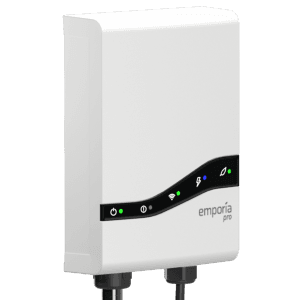
Many older homes don't have spare electrical capacity for a charger, and a panel upgrade can be expensive. Emporia's answer is PowerSmart dynamic load management. Paired with the included Vue 3 energy monitor, the Emporia Pro adjusts charging around the rest of your home's power use, and Emporia says it works "even with older 60 or 100 amp service panels."
It also charges from excess solar, manages peak demand and handles scheduling, with no subscription. Output is up to 48A (11.5 kW) hardwired, or 40A on a NEMA 14-50 plug, through a 25-foot cable. The NACS version has a sensor that opens a Tesla's charge port.
It's Type 4 rated, ENERGY STAR certified and costs $599 with the energy monitor. Emporia's cheaper Classic charger starts at $449, but load management costs extra with it.
Pros
- 01Load management for small panels
- 02Solar charging
- 03Energy monitor included
- 04No subscription
Cons
- 01Energy monitor adds install work
- 02$150 more than Emporia Classic
- 03Load management needs the Vue 3 installed
| Max output | 48A / 11.5 kW hardwired; 40A / 9.6 kW plug-in |
|---|---|
| Connector | J1772 or NACS |
| Cable | 25 ft |
| Breaker | 50A+ for 40A; 60A+ for 48A |
| Enclosure | Type 4, -22°F to 122°F |
| Certification | UL 2594, ENERGY STAR |
| Smart features | Dynamic load management with Vue 3, solar charging |
| Warranty | 3 years |
3. Best value
Grizzl-E Classic Connect 40A
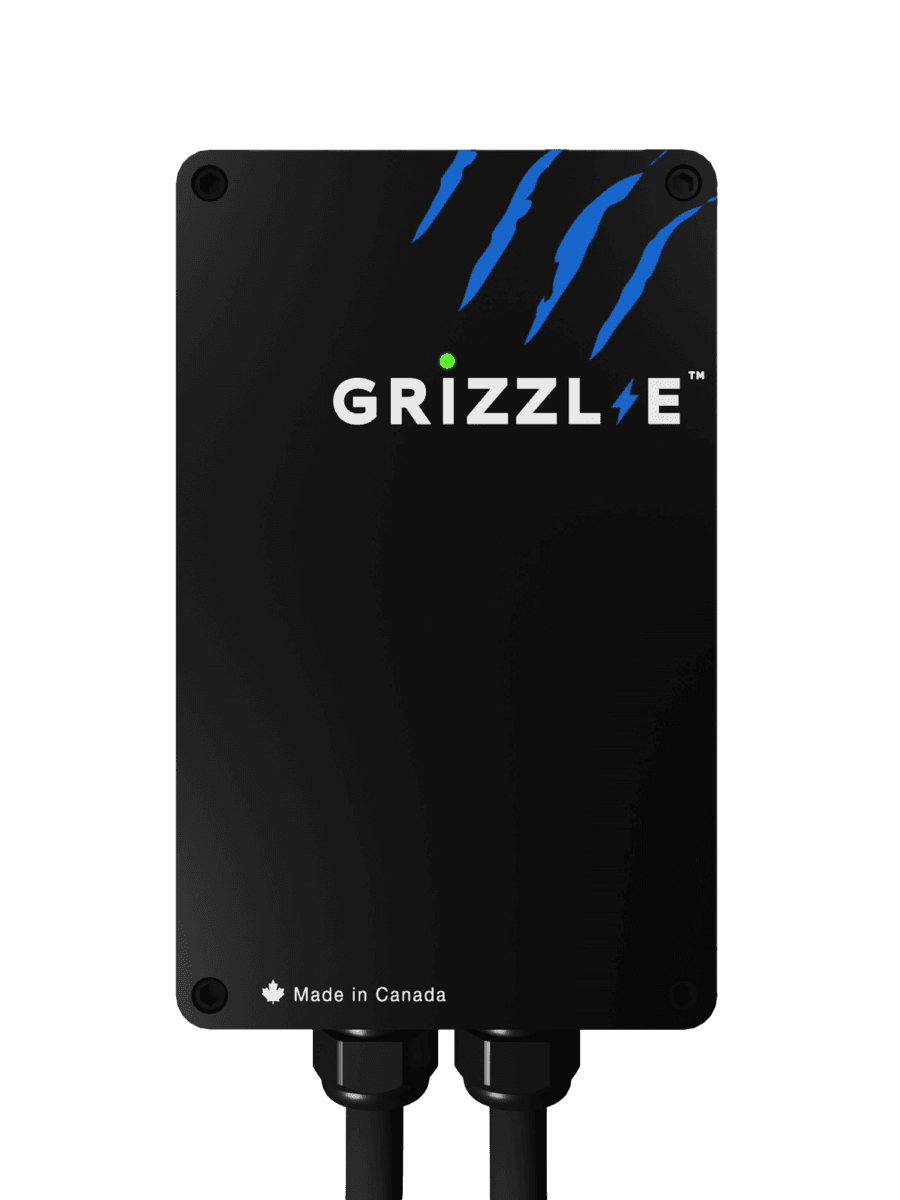
The Grizzl-E Classic Connect is a tough, simple charger at a fair price. It has an aluminum Type 4 enclosure, rated for indoor and outdoor use from -22°F to 122°F, and it's made in Canada.
It plugs into a NEMA 14-50 outlet and delivers up to 40 amps, adjustable down to 16A. You can choose a J1772 or NACS connector, both with a 25-foot cable. The "Connect" version adds a 2.4 GHz Wi-Fi app for schedules, charging history and remote control.
List price is $349.99, and it was on sale for $299.99 when I checked. The warranty is 3 years, with a 5-year option. Grizzl-E doesn't list load management or solar charging, and while its non-Wi-Fi Classic is ENERGY STAR certified, the Connect page doesn't say so.
Pros
- 01Lowest price here
- 02Rugged aluminum Type 4 case
- 03J1772 or NACS
- 04Optional 5-year warranty
Cons
- 0140A max
- 02No load management or solar features listed
- 032.4 GHz Wi-Fi only
| Max output | 40A (adjustable 16–40A) |
|---|---|
| Install | NEMA 14-50 plug |
| Connector | J1772 or NACS |
| Cable | 25 ft |
| Enclosure | Type 4 aluminum, -22°F to 122°F |
| Certification | UL / cUL listed |
| Warranty | 3 years (5-year option) |
4. Best for solar
Wallbox Pulsar Plus
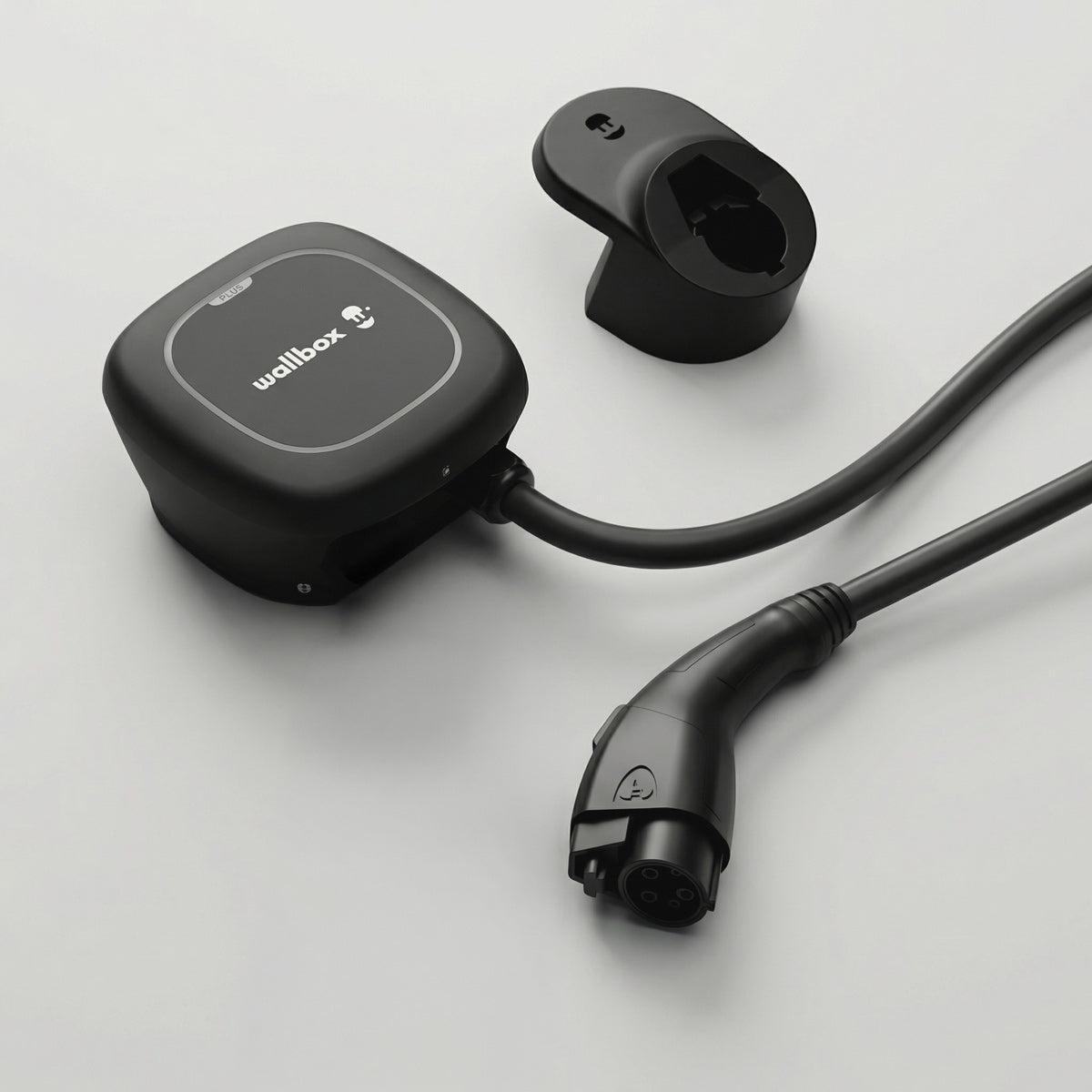
The Wallbox Pulsar Plus is one of the smallest Level 2 chargers you can buy, at about 8 inches square and 4.4 pounds. Wallbox says it adds up to 44 miles of range per hour, depending on the car and charger.
Its standout feature is solar charging: Wallbox says it can charge your car on 100% solar or a solar and grid mix, and it also supports dynamic load management. Both need Wallbox's power meter accessory, and solar charging doesn't work with multiple-charger setups. You also get Wi-Fi, Bluetooth, scheduling, over-the-air updates and OCPP support.
The 40A model costs $649.99 and works with a NEMA 14-50 plug or hardwiring. The 48A model is hardwired only and costs $699.99. When I checked, only the 48A J1772 version was in stock, and the NACS versions were sold out.
Pros
- 01Very compact
- 02Solar charging and load management
- 03Type 4, ENERGY STAR
- 04OCPP support
Cons
- 01Most expensive single charger here
- 02Power meter sold separately
- 03NACS versions sold out when checked
| Max output | 40A / 9.6 kW or 48A / 11.5 kW |
|---|---|
| Install | 40A: NEMA 14-50 or hardwired; 48A: hardwired |
| Connector | J1772 or NACS |
| Cable | 25 ft |
| Size | 7.9 x 7.8 x 3.9 in, 4.4 lb |
| Enclosure | Type 4, -22°F to 104°F |
| Certification | UL, ENERGY STAR |
| Warranty | 3 years |
5. Best for two EVs
Grizzl-E Duo Connect 40A
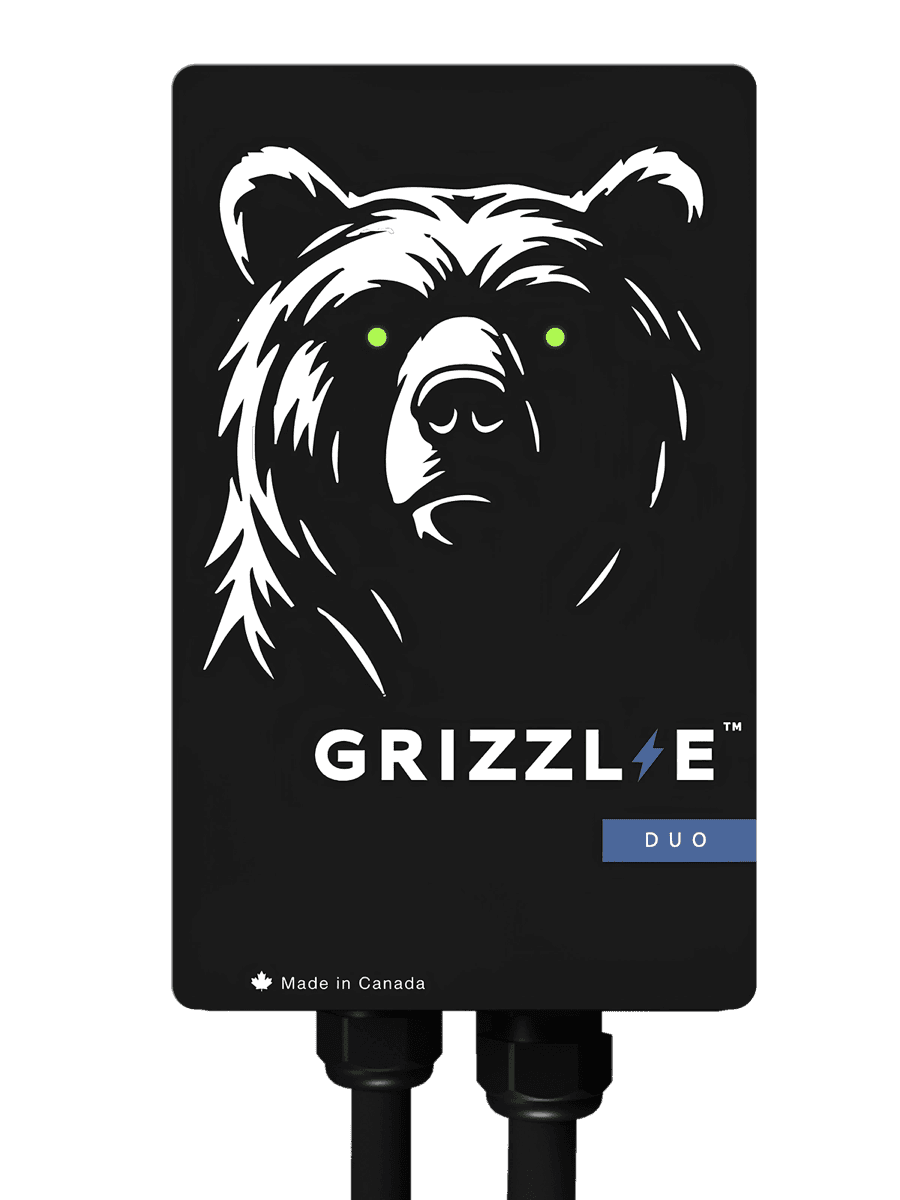
Two EVs, one outlet. The Grizzl-E Duo Connect has two 25-foot cables and a power-sharing system that splits the current: up to 40A for one car, or 20A each when both are plugged in.
That's the key trade-off. Each car charges more slowly when both are connected, but you only need one 240V circuit and one NEMA 14-50 outlet, not two. You can choose J1772 or NACS for each cable, so a Tesla and a non-Tesla can share the same charger.
It has the same rugged Type 4 build and Wi-Fi app as the Classic Connect. The list price is $899.99, and it was on sale for $599.99 when I checked.
Pros
- 01Charges two cars from one circuit
- 02Mix J1772 and NACS
- 03Rugged Type 4 build
- 04Big discount when checked
Cons
- 01Only 20A per car when sharing
- 02High list price
- 03No load management with home panel listed
| Max output | 40A total; 20A each when sharing |
|---|---|
| Install | NEMA 14-50 plug |
| Connectors | Two 25 ft cables, J1772 or NACS each |
| Enclosure | Type 4, -22°F to 122°F |
| Certification | UL / cUL listed |
| Smart features | Wi-Fi app, power sharing |
| Warranty | 3 years (5-year option) |
All five compared
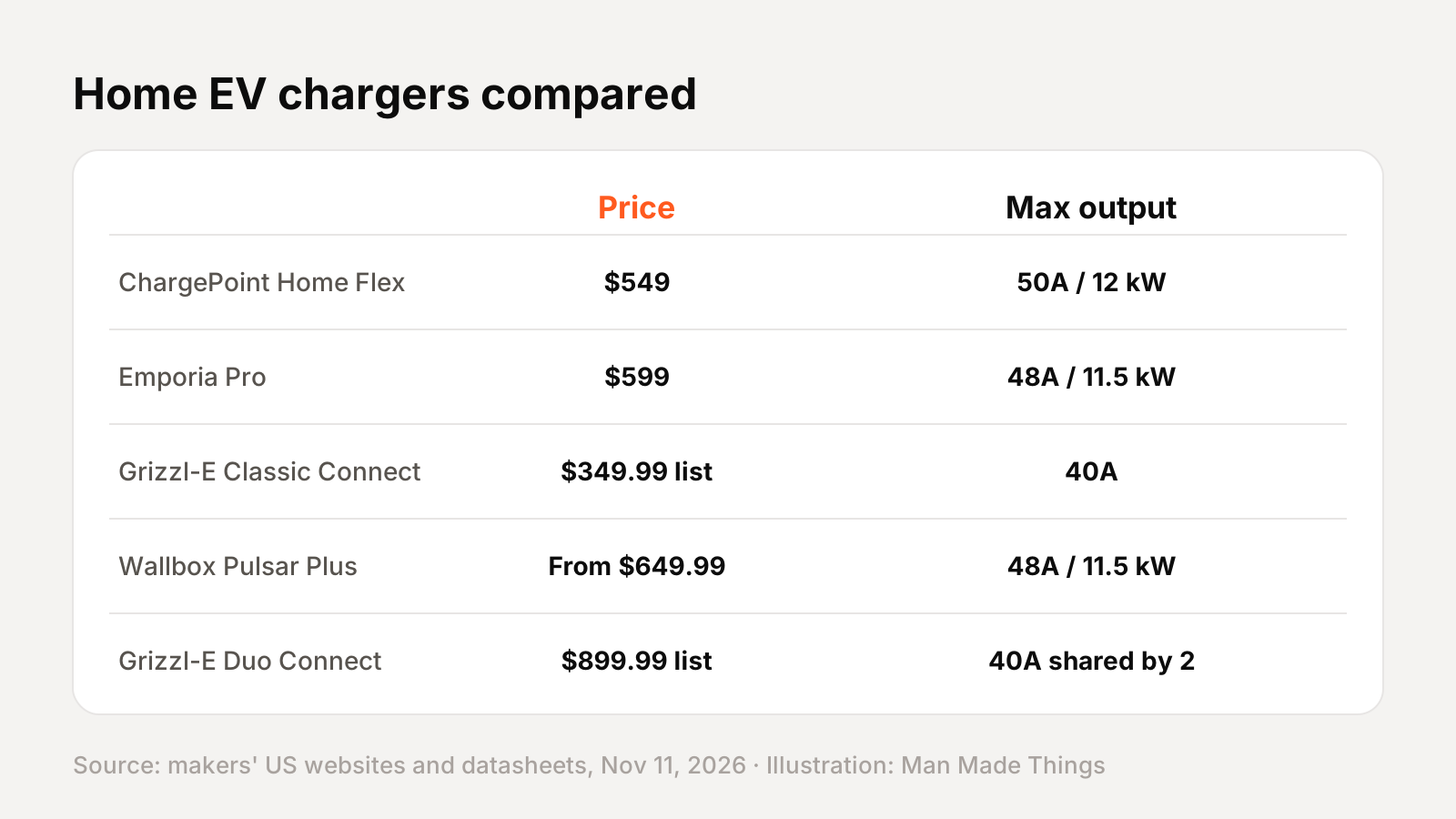
| Charger | Price | Max output | Install | Connector |
|---|---|---|---|---|
| ChargePoint Home Flex | $549 | 50A / 12 kW | Hardwired or plug | J1772 or NACS |
| Emporia Pro | $599 | 48A / 11.5 kW | Hardwired or plug | J1772 or NACS |
| Grizzl-E Classic Connect | $349.99 list | 40A | NEMA 14-50 plug | J1772 or NACS |
| Wallbox Pulsar Plus | From $649.99 | 48A / 11.5 kW | Hardwired or plug (40A) | J1772 or NACS |
| Grizzl-E Duo Connect | $899.99 list | 40A shared | NEMA 14-50 plug | Two, J1772 or NACS |
All five have Wi-Fi apps, 3-year warranties and work indoors or out.
Level 1 vs Level 2, and how fast is fast enough?
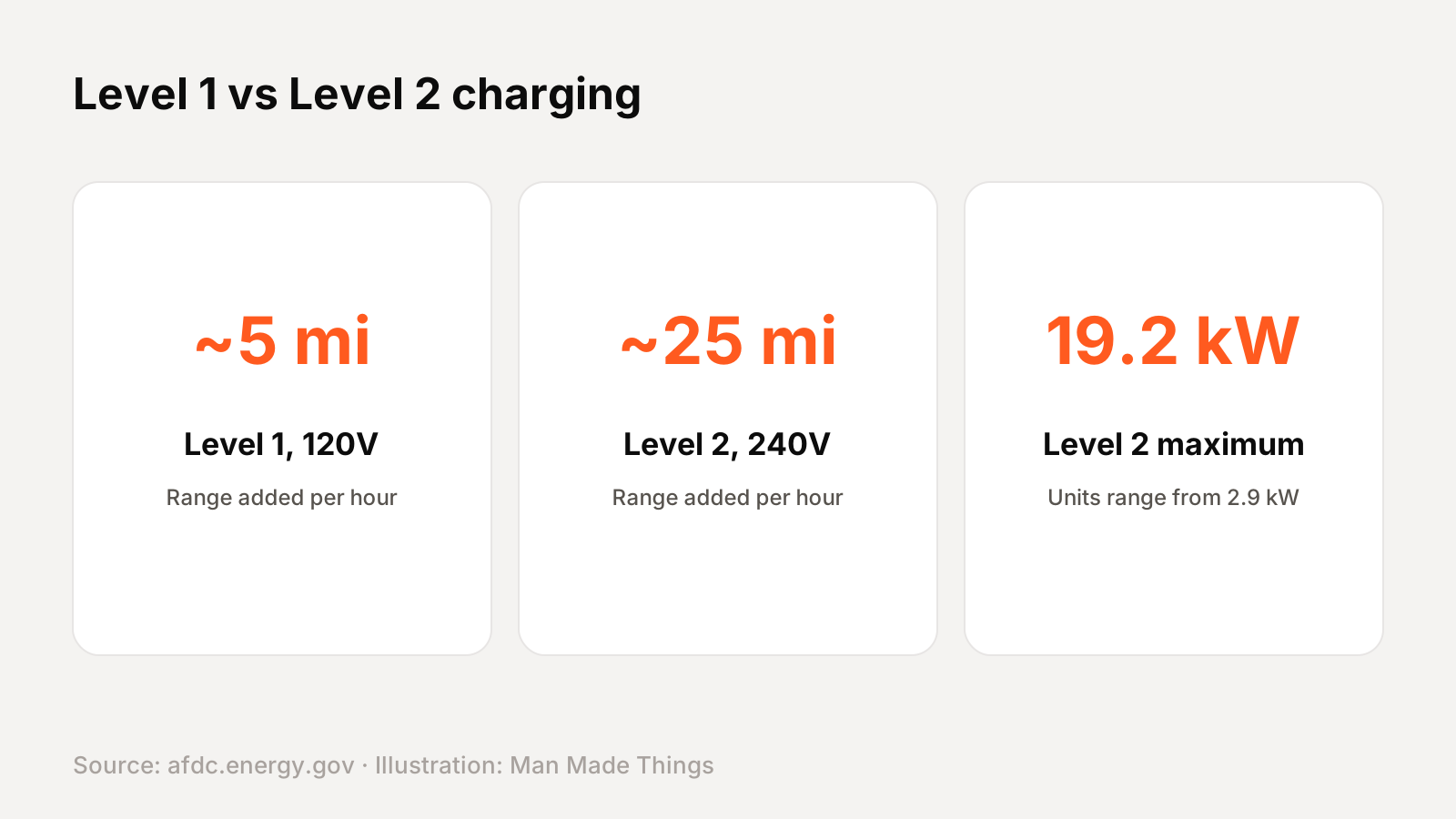
The AFDC explains the difference simply:
- Level 1 (120V): about 5 miles of range per hour. Eight hours overnight adds about 40 miles.
- Level 2 (240V): about 25 miles of range per hour. Level 2 units range from 2.9 to 19.2 kW, and the AFDC says most home units run at up to 30 amps (7.2 kW).
All five chargers here go higher, up to 40 to 50 amps. That's useful if you drive a lot or have a big battery, but only if your car can accept that much. Check your car's maximum AC charging rate before paying for amps you can't use.
Installation: breakers, outlets and permits
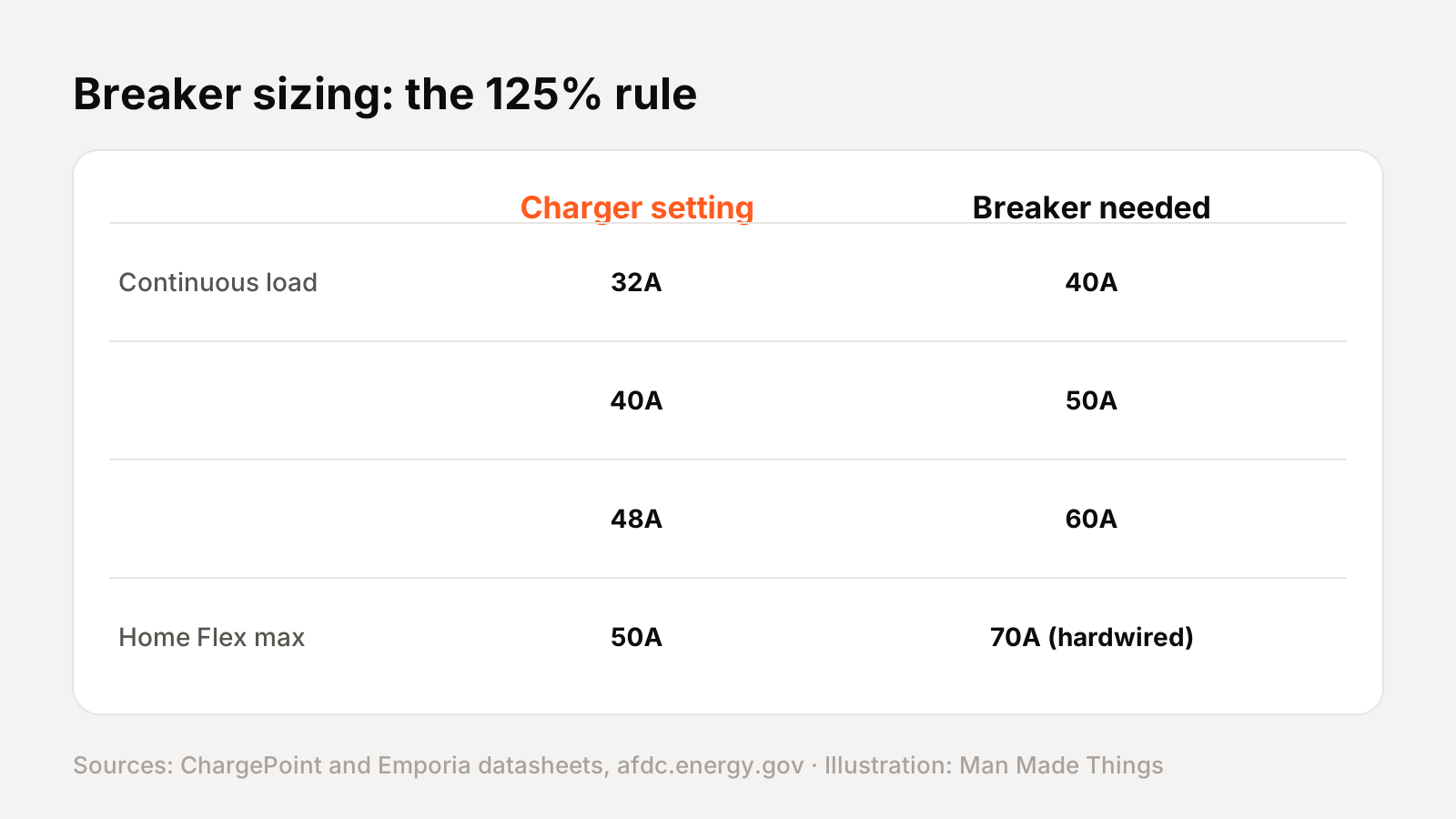
EV charging is a continuous load under the National Electrical Code, the AFDC says. That's why the circuit must be rated for 125% of the charger's current. ChargePoint gives the example of a 50A breaker for 40A output, and Emporia specifies a 60A breaker for its 48A setting.
| Charger setting | Breaker needed |
|---|---|
| 32A | 40A |
| 40A | 50A |
| 48A | 60A |
Plug-in or hardwired? A plug-in charger uses a NEMA 14-50 or 6-50 outlet, which makes it easy to take with you if you move. Hardwiring allows higher output, up to 50A on the Home Flex, and ChargePoint recommends hardwiring outdoors.
Hire a pro. ChargePoint recommends a licensed electrician and pulling a permit as required, Emporia says Level 2 needs a licensed electrician to run a dedicated 240V circuit, and the AFDC notes that local permits may be required.
J1772 vs NACS: which plug should you choose?
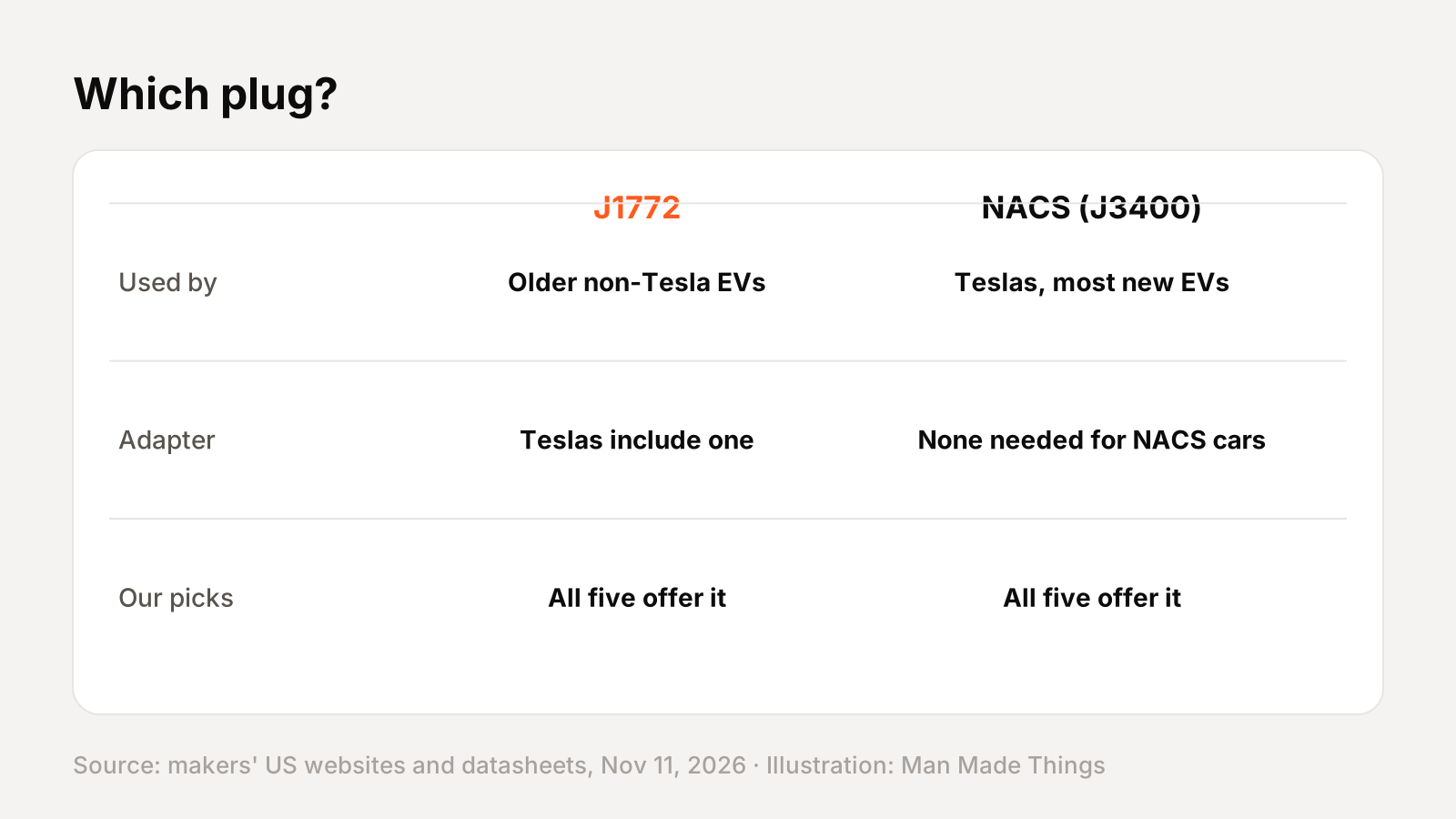
Every charger here comes in J1772 and NACS (SAE J3400) versions. Match the plug to your car. As our best electric cars of 2026 guide explains, most new EVs now have a NACS port, including the Hyundai Ioniq 5, Kia EV9, Chevrolet Equinox EV and Tesla Model Y. The AFDC notes that Teslas come with a J1772 adapter.
If you have one of each, or might switch cars, consider the ChargePoint Home Flex, which offers a NACS conversion kit, or the Grizzl-E Duo, which can have one cable of each.
About tax credits: the federal 30C credit for home charging equipment covered property placed in service through June 30, 2026, per the IRS. Some charger stores still mention it, so check the IRS page before counting on it. State and utility rebates may still be available.
Frequently asked questions
What is the best home EV charger?
+
For most people, the ChargePoint Home Flex ($549): adjustable up to 50A, ENERGY STAR certified, with J1772 or NACS versions.
What size breaker do I need for an EV charger?
+
One rated for 125% of the charger's current: a 50A breaker for a 40A charger, or 60A for a 48A charger.
How many miles per hour does a Level 2 charger add?
+
About 25 miles of range per hour, according to the Department of Energy's AFDC, versus about 5 miles for Level 1.
Is there still a tax credit for home EV chargers?
+
Not for new installs. The IRS says the 30C credit isn't allowed for property placed in service after June 30, 2026.
Can I charge two EVs with one charger?
+
Yes, with a dual charger like the Grizzl-E Duo Connect, which splits 40A between two cars, 20A each.
Sources
- ChargePoint: Home Flex
- ChargePoint: Home Flex datasheet (PDF)
- ChargePoint: Home Flex install guide (PDF)
- ChargePoint Store: Home Flex Hardwired
- Emporia: Pro EV Charger
- Emporia: Pro EV Charger spec sheet (PDF)
- Grizzl-E: Classic Connect
- Grizzl-E: Duo Connect 40A
- Wallbox: Pulsar Plus
- Wallbox Shop: Pulsar Plus
- AFDC: Charging stations
- AFDC: Charging at home
- IRS: Alternative fuel vehicle refueling property credit
Editor-in-Chief
Rahul has been writing about gadgets and software since 2013, first at Thetechhacker and now at Man Made Things. He edits every review on the site and signs off on every verdict.
More from Rahul →