The Best Down Jackets for Men: Arc'teryx, Rab and Eddie Bauer
Three men's down jackets for winter: the warm Arc'teryx Thorium Hoody, the packable PFAS-free Rab Microlight Alpine and the $149 Eddie Bauer CirrusLite, plus what fill power really means.
We may earn a commission when you buy through links on this page. Learn more
Quick answer
The Arc'teryx Thorium Hoody ($500) is the best down jacket for cold everyday wear, with 750-fill RDS-certified goose down, a tough ripstop shell and a PFAS-free DWR. The Rab Microlight Alpine ($325) is the best lightweight, packable pick at 428 grams. The Eddie Bauer CirrusLite Hooded Jacket ($149) is the best budget down jacket, with 650-fill down and a hood.
Nothing beats down for warmth. Gram for gram, it traps more heat than any synthetic, and a good down jacket squashes small enough to stuff in a bag, then puffs back up when you need it. That's why it's the default winter jacket for so many people, from city commuters to climbers.
But down jackets vary a lot. A fill power number on a label doesn't tell you how warm a jacket is on its own, the shell fabric decides how well it handles wind and drizzle, and brands differ in how clearly they explain where their down comes from.
I picked three at three prices and checked every spec on the brand's own US site, including the exact wording on down sourcing and PFAS. Need a waterproof layer for wet days? See our best rain jackets guide. These are research-based picks with no star scores. Let's get into it.
Our picks at a glance
1. Best for warmth
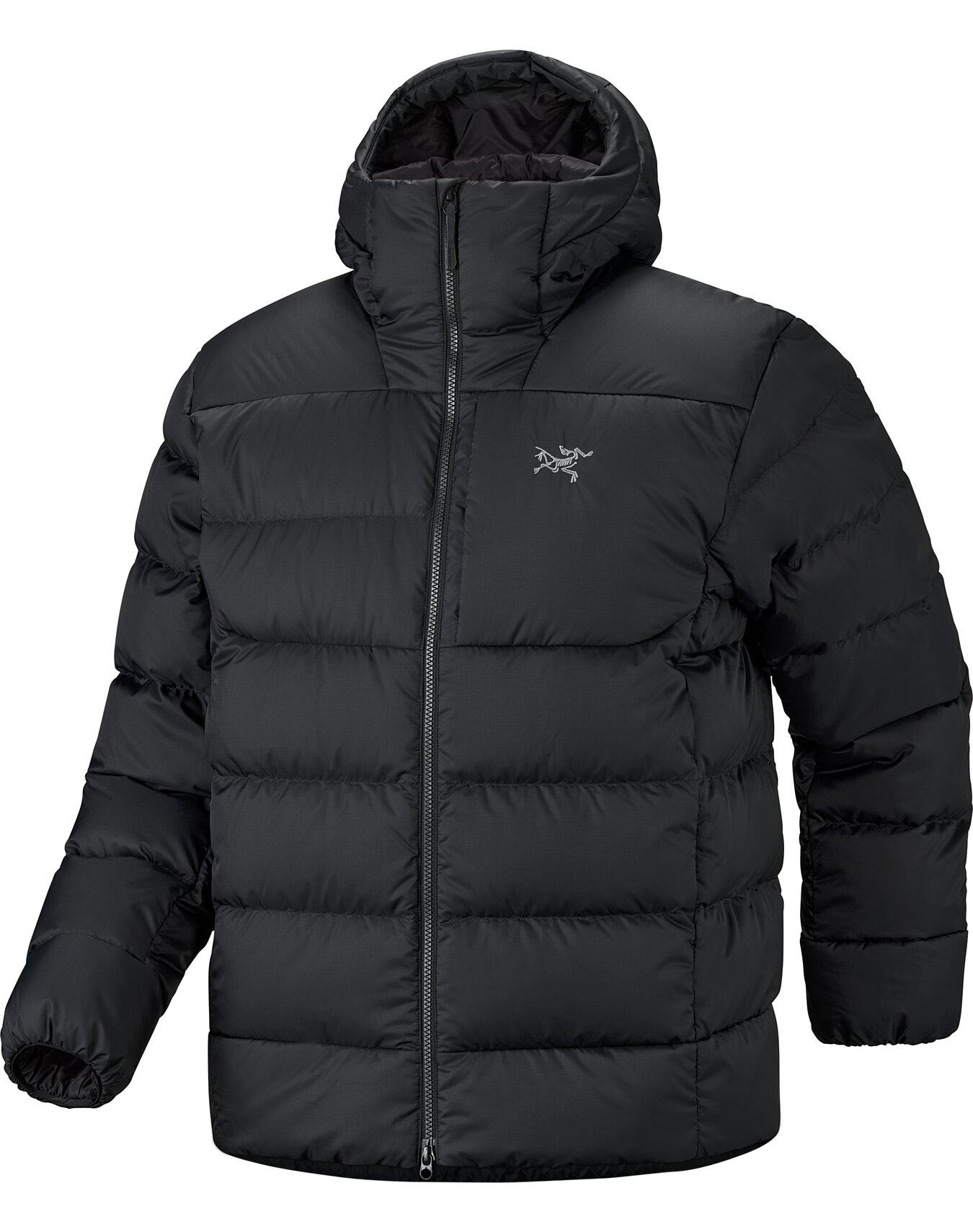
Arc'teryx Thorium Hoody Men's
The Thorium is the jacket for genuinely cold days. It's filled with 750-fill-power European grey goose down certified to the Responsible Down Standard, and Arc'teryx says it added more down for extra warmth. Synthetic Coreloft insulation is used in some areas too, which keeps its warmth better if it gets damp.
The shell is a tough 30-denier mini-ripstop nylon, so it stands up to backpack straps and daily wear better than the thin fabrics on ultralight jackets. Arc'teryx says its DWR finish is free from intentionally added PFAS, the clearest PFAS statement of these three.
It's practical, too. There's a two-way front zip, fleece-lined hand pockets, two big internal pockets for gloves and a helmet-compatible hood. The boxier fit leaves room for a sweater underneath. It's the priciest and heaviest pick, at $500 and 598 grams, and Arc'teryx doesn't list a fill weight.
Pros
- 01750-fill RDS-certified goose down
- 02Tough 30D ripstop shell
- 03PFAS-free DWR
- 04Two-way zip and internal pockets
Cons
- 01Expensive at $500
- 02Heaviest pick at 598 g
- 03Fill weight not listed
| Down | 750-fill European grey goose, RDS certified |
|---|---|
| Other insulation | Coreloft 80 synthetic |
| Shell | 30D Arato nylon mini-ripstop |
| DWR | FC0, free from intentionally added PFAS |
| Weight | 598 g (1 lb 5.1 oz) |
| Hood | Insulated, helmet compatible |
| Fit | Regular, boxier for layering |
2. Best packable
Rab Microlight Alpine Down Hoody Men's
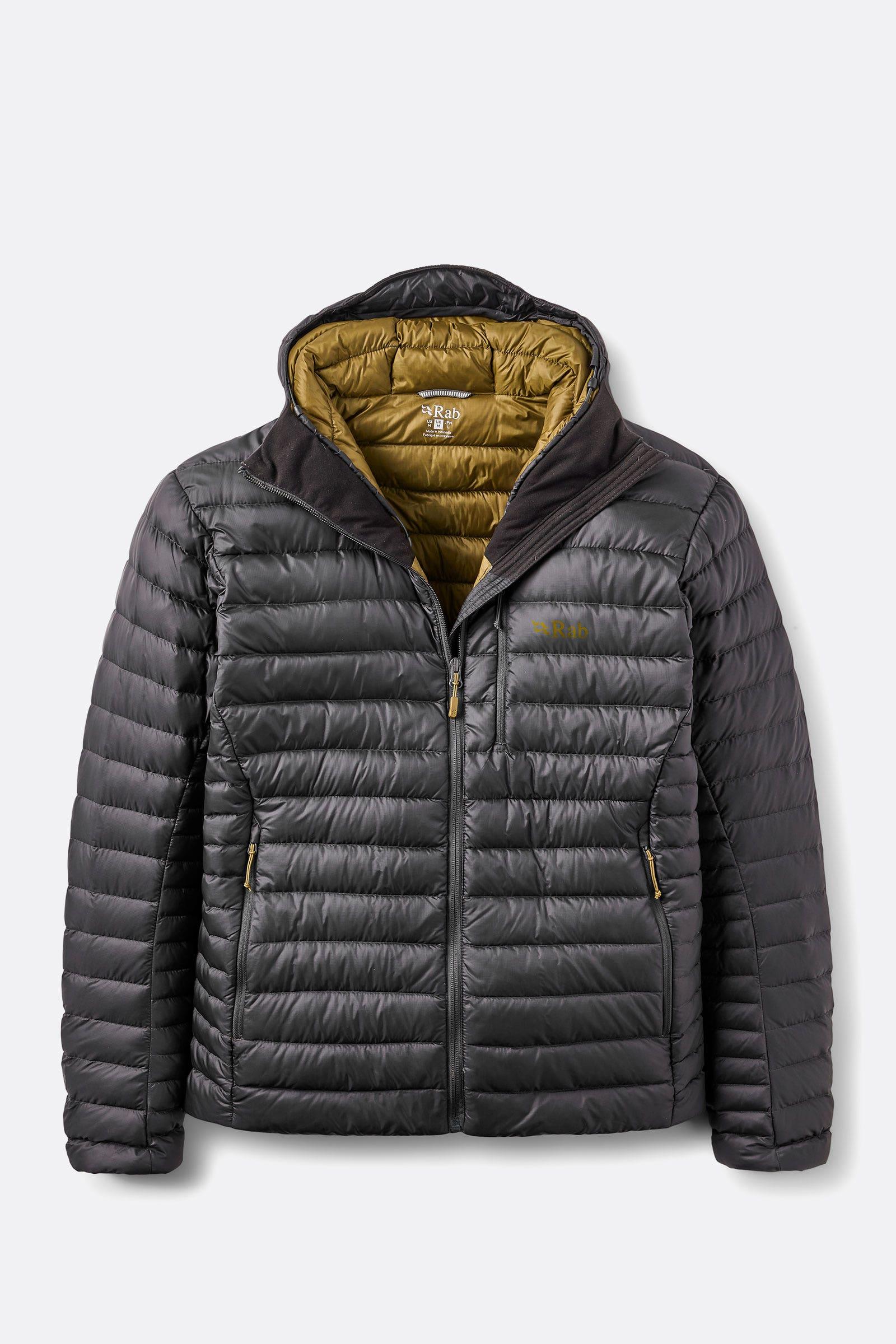
The Microlight Alpine is the jacket I'd pack for travel. At 428 grams, it's light, and it stuffs into one of its own pockets, which has a loop so you can clip it to a bag or harness. Rab calls it lightweight, packable and windproof, and that sums it up.
It's filled with 152 grams of 700-fill recycled down treated to resist moisture, and the shell is windproof Pertex Quantum. Rab says the whole jacket is fluorocarbon (PFAS) free, and it's made with more than 75 percent recycled materials. The adjustable hood has a wired peak that you can shape to keep rain or snow off your face.
It's not a deep-winter parka. Rab itself rates the insulation level 3 out of 5, so it's best as a mid-warmth jacket or a layer under a shell when it's very cold. The 30D shell is reasonably durable but not tough, and because the down is recycled, Rab doesn't list RDS certification.
Pros
- 01Light at 428 g, packs into its own pocket
- 02Windproof Pertex Quantum shell
- 03Fully PFAS-free
- 04Fill weight is published
Cons
- 01Mid-level warmth, not a parka
- 02Not cheap at $325
- 03No RDS certification listed (recycled down)
| Down | 700-fill recycled down, hydrophobic finish |
|---|---|
| Fill weight | 152 g (5.3 oz), size M |
| Shell | 30D Pertex Quantum, windproof |
| PFAS | Fluorocarbon (PFAS) free product |
| Weight | 428 g (15.1 oz) |
| Packable | Stuffs into a hand pocket |
| Hood | Adjustable, wired peak |
3. Best budget
Eddie Bauer Men's CirrusLite Down Hooded Jacket
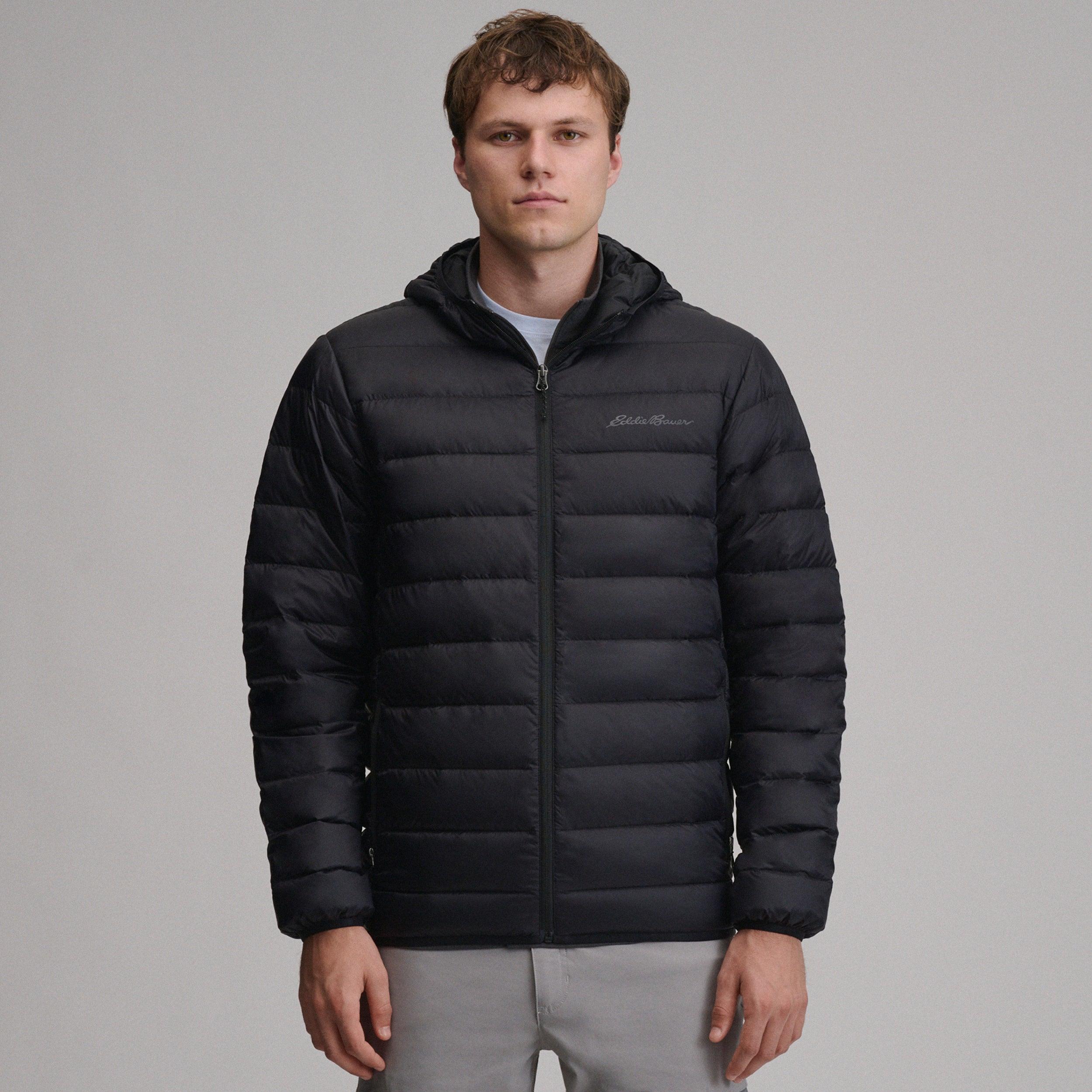
Eddie Bauer has been making down jackets for a long time, and the CirrusLite is its affordable, everyday option. You get real 650-fill-power down, a hood, a nylon shell with Eddie Bauer's StormRepel water-repellent finish and zip pockets to keep your phone and keys secure.
It's light and easy to pack, and Eddie Bauer pitches it for fall and spring, or as a warm layer under a shell in winter. It's offered in Regular and Tall sizes, which is helpful if sleeves are usually too short on you. It was heavily discounted when I checked, so it's worth watching for sales.
Eddie Bauer gives fewer details than the other two brands. There's no fill weight, no jacket weight, no down certification and no PFAS statement on the page. And 650 fill is the lowest here, so it won't be as warm or compress as small as the pricier picks.
Pros
- 01Affordable at $149, often on sale
- 02Real 650-fill down with a hood
- 03Tall sizes available
- 04Machine washable
Cons
- 01Fewer specs published
- 02No down certification or PFAS statement
- 03Less warm than the other picks
| Down | 650 fill power |
|---|---|
| Shell | 100% nylon |
| Lining | 100% polyester |
| DWR | StormRepel |
| Hood | Yes |
| Fit | Classic; Regular and Tall |
| Care | Machine wash cold, tumble dry low |
Fill power vs fill weight: what makes a jacket warm
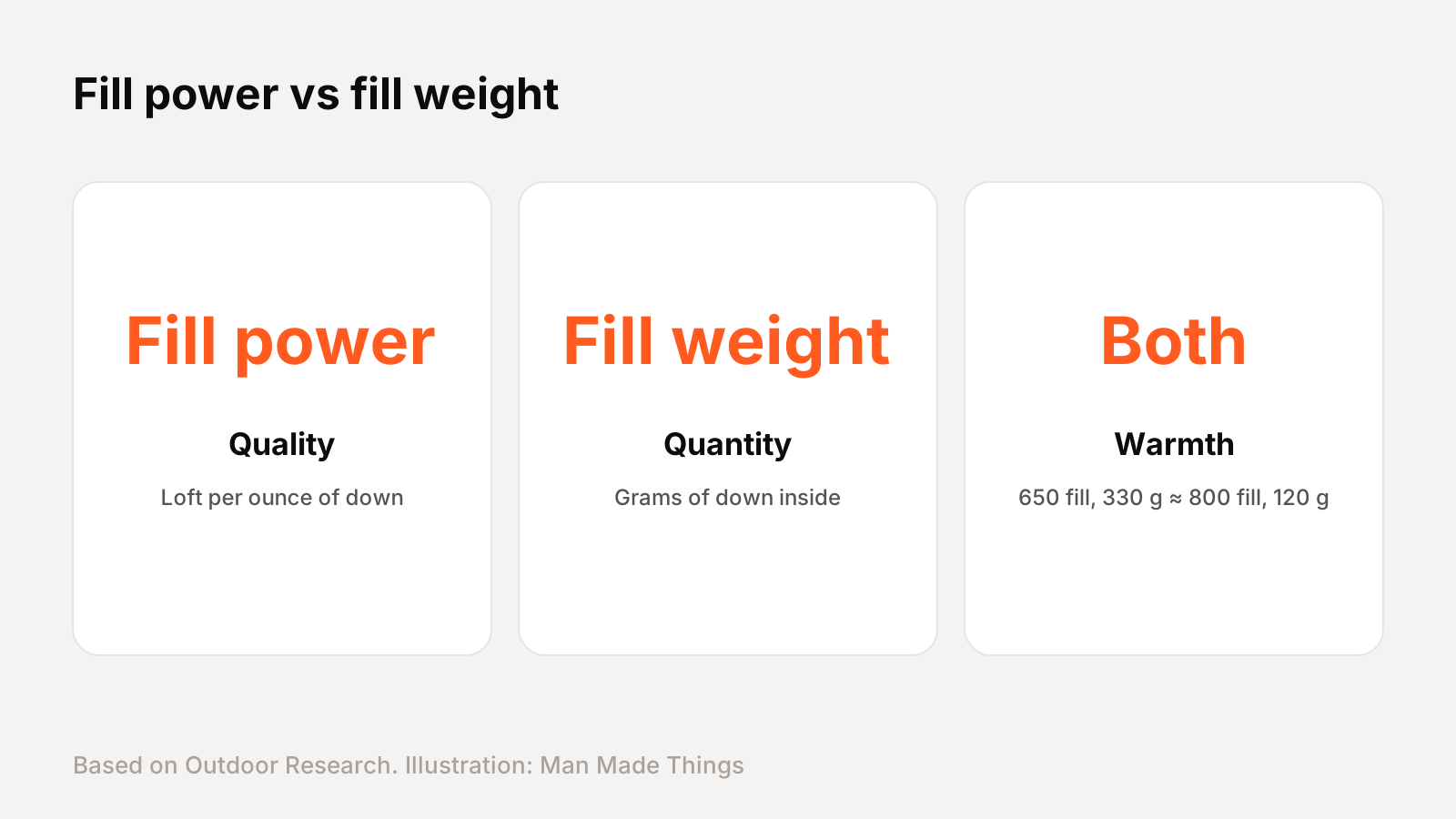
Fill power is the number you see most often, but it's only half the story. Outdoor Research explains it well:
- Fill power measures quality. It's the number of cubic inches of loft one ounce of down produces. Higher fill power down traps more heat for its weight, so you need less of it.
- Fill weight measures quantity. It's how much down is actually in the jacket, in grams or ounces.
Warmth depends on both. Outdoor Research gives an example: a 650-fill jacket with 330 grams of down may be as warm as an 800-fill jacket with 120 grams. The difference is that the 650-fill version will be bigger, heavier and harder to pack.
So higher fill power mostly buys you a lighter, more packable jacket, not necessarily a warmer one. That's why I like brands, like Rab, that publish the fill weight as well.
How to wash a down jacket
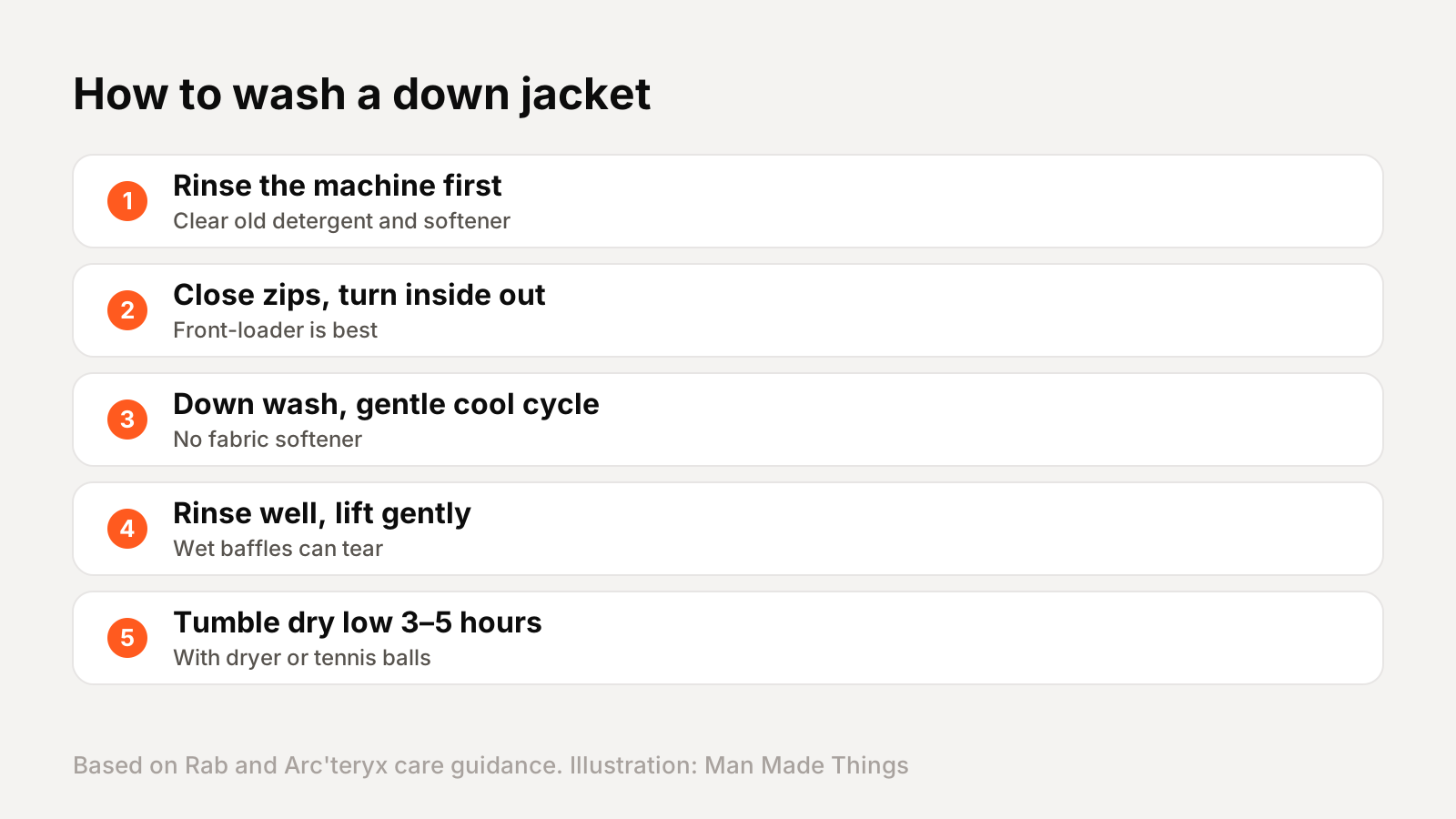
Washing a down jacket sounds risky, but dirt and body oils make down clump and lose warmth, so a wash once a season helps. Rab's steps:
- Rinse the washing machine first to clear leftover detergent or softener.
- Close all zips and pockets and turn the jacket inside out.
- Use a down-specific wash on a cool, gentle cycle. No fabric softener.
- Rinse thoroughly, then spin. Support the wet jacket when you lift it out, so you don't tear the internal baffles.
- Tumble dry on low right away, with a couple of clean tennis balls or dryer balls to break up clumps. Shake it every 20 to 30 minutes.
Rab says drying takes three to five hours, and not to stop early, because down can stay damp inside. Arc'teryx adds that a front-loading washer is best. Use a mesh bag in a top-loader. Store it uncompressed in a cool, dry place.
Frequently asked questions
What is the best down jacket for men?
+
For cold everyday wear, the Arc'teryx Thorium Hoody, with 750-fill RDS-certified goose down and a PFAS-free DWR.
What does fill power mean?
+
It measures down quality: the cubic inches of loft one ounce of down produces. Higher fill power is lighter and more packable for the same warmth.
Is higher fill power warmer?
+
Not necessarily. Warmth depends on fill power and fill weight. A jacket with more lower-fill down can be as warm as one with less high-fill down.
Can you machine wash a down jacket?
+
Yes. Use a down-specific wash on a gentle cycle, then tumble dry low with dryer balls for three to five hours.
Sources
Editor-in-Chief
Rahul has been writing about gadgets and software since 2013, first at Thetechhacker and now at Man Made Things. He edits every review on the site and signs off on every verdict.
More from Rahul →