Audio-Technica BPHS Broadcast Headsets Reviewed: BPHS1, BPHS2a, BPHS2Ca and BPHS2Sa
A research-based review of Audio-Technica's four BPHS broadcast headsets, with official prices, microphones, designs and specs: the around-ear BPHS1, the M60x-based BPHS2a and BPHS2Ca, and the single-ear BPHS2Sa, plus dynamic vs condenser and single-ear vs stereo explained.
We may earn a commission when you buy through links on this page. Learn more
Quick answer
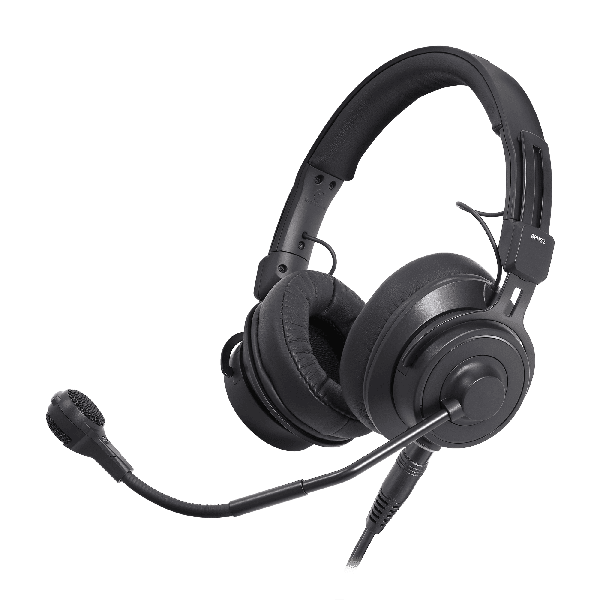
Audio-Technica's broadcast headsets: the BPHS1 (from $239) is the value pick with around-ear cups and a cardioid dynamic mic; the BPHS2a (from $359) uses ATH-M60x-based headphones with a hypercardioid dynamic mic for loud venues; the BPHS2Ca (from $419) swaps in a condenser mic for clearer voice; and the BPHS2Sa (from $339) is the single-ear version. We haven't tested them; this is based on Audio-Technica's official specs.
Broadcast headsets have a tough job: they need to let commentators hear the program clearly while capturing their voice cleanly, often in loud stadiums. Audio-Technica's BPHS range is designed for news and sports broadcasting, announcing and interviews.
I've reviewed all four current models using Audio-Technica's official US product pages. None have star ratings, because they haven't been tested hands-on. The key differences come down to the microphone (dynamic or condenser) and whether you want one ear or two.
Our picks at a glance
1. Best value broadcast headset
Audio-Technica BPHS1
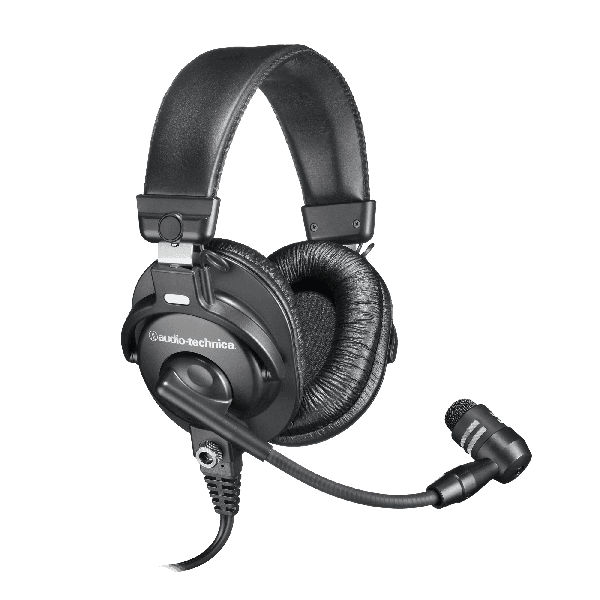
Audio-Technica's BPHS1 was created for on-air news and sports broadcasting, announcing and interviews. It has closed-back circumaural ear cups to seal out background noise and a high-output cardioid dynamic microphone on a flexible gooseneck boom. It uses a 3.3-meter cable with an 8-pin connector at the headset end and a 3-pin XLR for the mic.
Pros
- 01Around-the-ear isolation
- 02Dynamic mic on gooseneck
- 03Lowest price here
Cons
- 01Heavier at 264 g
| Design | Closed-back stereo, around-the-ear, cardioid dynamic mic |
|---|---|
| Type | Closed-back Dynamic (Headphone) Cardioid Dynamic (Microphone) |
| Driver Diameter | 40 mm (Headphone) |
| Frequency Response | 20-20,000 Hz (Headphone) 40-20,000 Hz (Microphone) |
| Sensitivity | 100 dB (Headphone) -57 dB (1.4 mV) re 1V at 1 Pa (Microphone) |
| Impedance | 65 ohms (Headphone) 560 ohms (Microphone) |
2. Best all-round broadcast headset
Audio-Technica BPHS2a
The BPHS2a is a rugged stereo headset whose low-profile, closed-back on-ear design is based on the ATH-M60x monitor headphones, with the same 45mm drivers. Its hypercardioid dynamic mic keeps pickup focused on the broadcaster's voice even in loud environments, on a rigid boom with a flexible gooseneck section. The cable is detachable.
Pros
- 01M60x-based sound
- 02Hypercardioid mic for loud venues
- 03Detachable cable
Cons
- 01On-ear fit
| Design | Closed-back stereo, on-ear (M60x-based), hypercardioid dynamic mic |
|---|---|
| Frequency Response | 50 - 14,000 Hz (at 2 cm (0.79")) |
| Output Impedance | 550 ohms |
| Sensitivity | -57 dB (1.4 mV) (0 dB = 1 V/Pa, 1 kHz) |
| Output Connector | TB6M |
| Type | Closed-back Dynamic |
3. Best for articulate voice
Audio-Technica BPHS2Ca
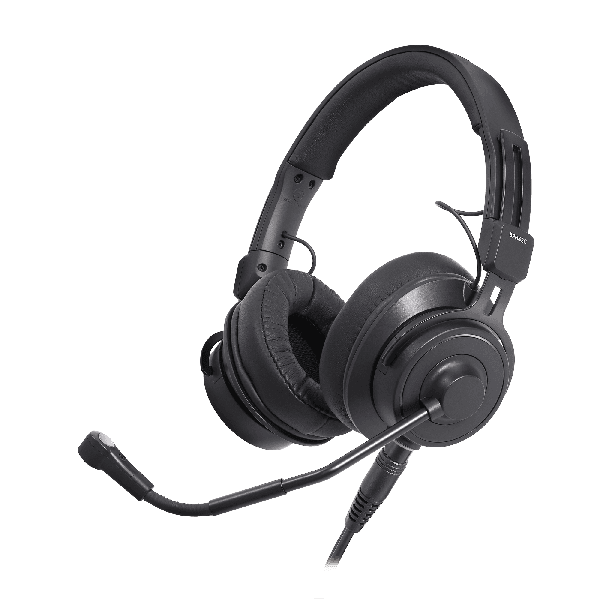
The BPHS2Ca uses the same M60x-based stereo headphones, but swaps in a sleek cardioid condenser microphone that Audio-Technica says gives clear, articulate vocal reproduction. Like the BPHS2a, it has a rigid boom with a flexible gooseneck and a detachable cable.
Pros
- 01Condenser mic clarity
- 02M60x-based sound
- 03Detachable cable
Cons
- 01Most expensive here
| Design | Closed-back stereo, on-ear (M60x-based), cardioid condenser mic |
|---|---|
| Frequency Response | 60 - 15,000 Hz (at 2 cm (0.79")) |
| Output Impedance | 100 ohms |
| Sensitivity | –45 dB (5.6 mV) (0 dB = 1 V/Pa, 1 kHz) |
| Output Connector | TB6M |
| Type | Closed-back Dynamic |
4. Best single-ear option
Audio-Technica BPHS2Sa
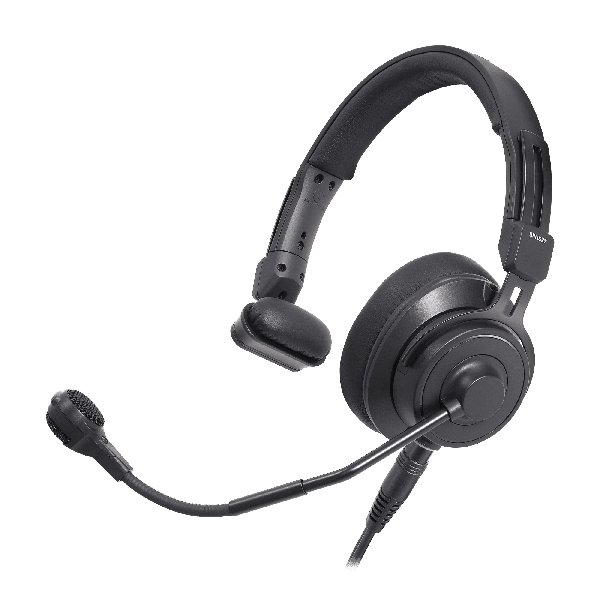
The BPHS2Sa is the single-ear version, for broadcasters who want one-ear monitoring to hear the venue around them. It's based on the ATH-M60x with the same 45mm driver and uses a hypercardioid dynamic mic on a rigid boom with a gooseneck section. At 190 grams, it's the lightest here.
Pros
- 01One-ear monitoring
- 02Lightest at 190 g
- 03Hypercardioid mic
Cons
- 01Mono monitoring only
| Design | Closed-back single-ear (M60x-based), hypercardioid dynamic mic |
|---|---|
| Frequency Response | 50 - 14,000 Hz (at 2 cm (0.79”)) |
| Output Impedance | 550 ohms |
| Sensitivity | –57 dB (1.4 mV) (0 dB = 1 V/Pa, 1 kHz) |
| Output Connector | TB6M |
| Type | Closed-back Dynamic |
The four headsets compared
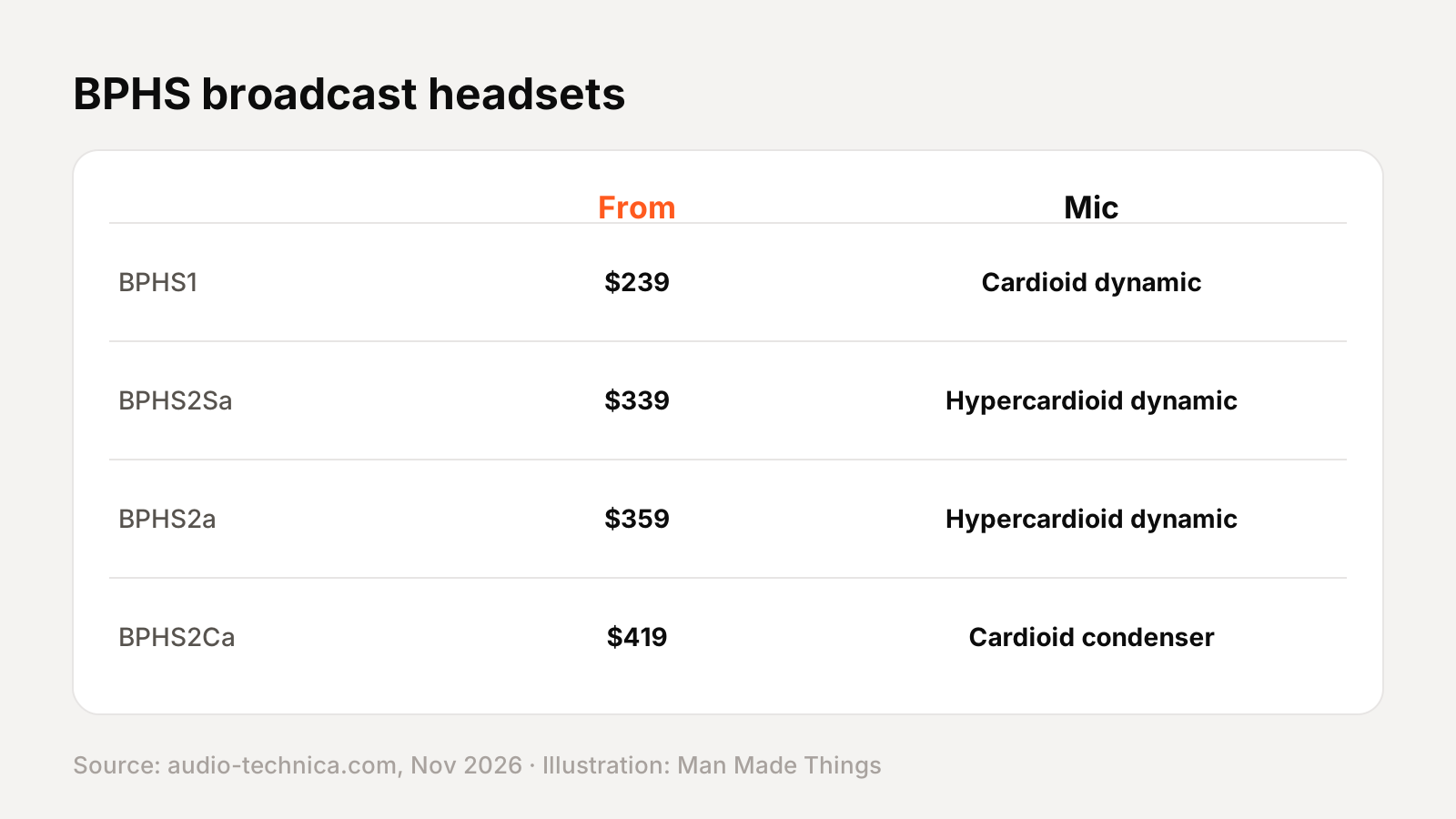
| Headset | From | Ears | Microphone | Weight |
|---|---|---|---|---|
| BPHS1 | $239 | Stereo, around-ear | Cardioid dynamic | 264 g |
| BPHS2Sa | $339 | Single-ear | Hypercardioid dynamic | 190 g |
| BPHS2a | $359 | Stereo, on-ear | Hypercardioid dynamic | 250 g |
| BPHS2Ca | $419 | Stereo, on-ear | Cardioid condenser | 240 g |
Prices are Audio-Technica's US "from" prices; several BPHS2 models are offered in cable configurations that change the price.
Dynamic vs condenser broadcast mics
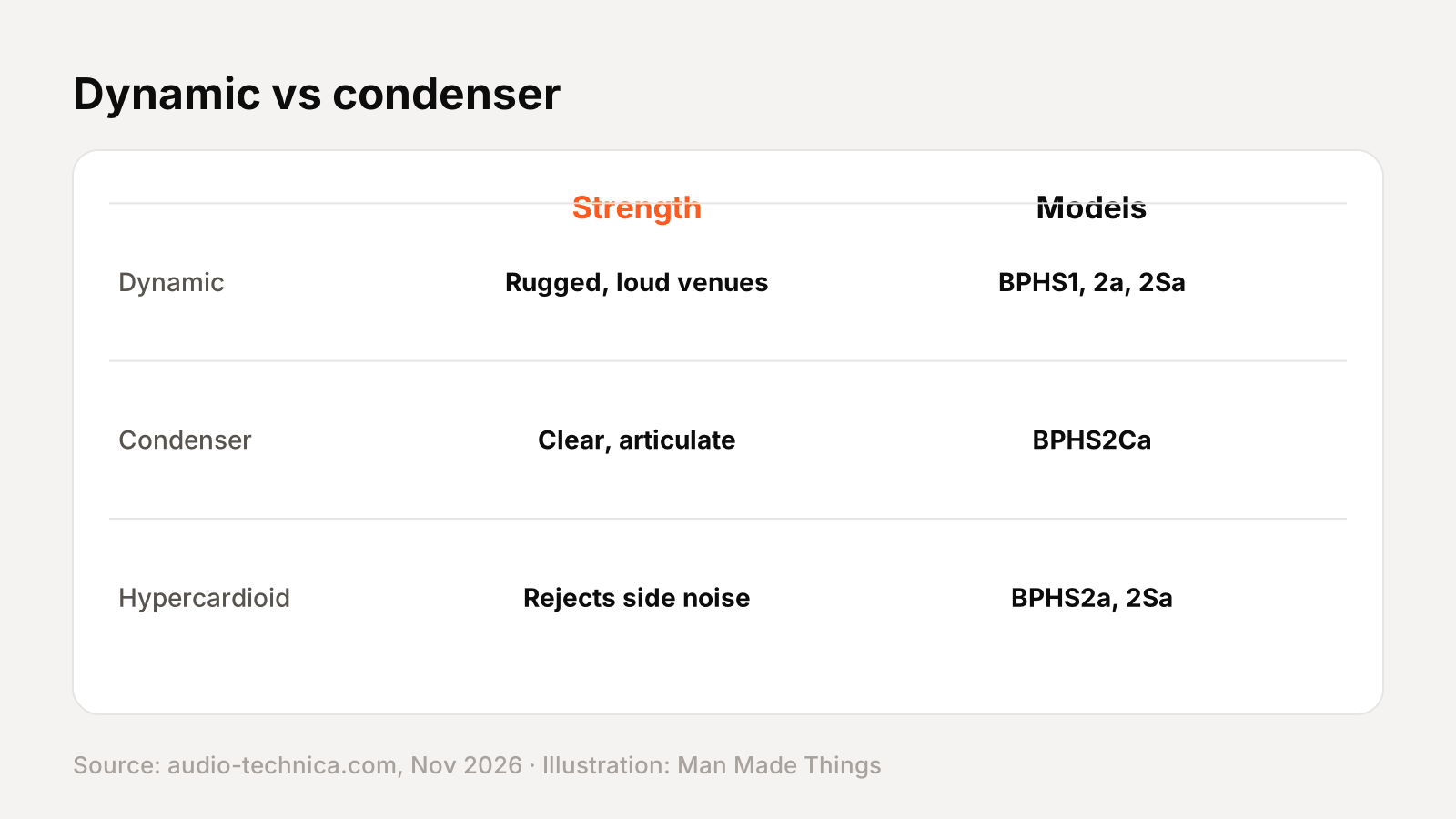
- Dynamic microphones (BPHS1, BPHS2a, BPHS2Sa) are rugged and handle loud environments well. Audio-Technica describes the BPHS2a's sound as "rich, broadcast-ready."
- Condenser microphones (BPHS2Ca) capture more detail; Audio-Technica describes "clear, articulate" vocal reproduction.
- Pickup pattern: hypercardioid mics reject more sound from the sides than cardioid ones, which helps in stadiums and busy studios.
In practice: for a loud sports venue, the hypercardioid dynamic models are the safer choice. For a quieter studio or commentary booth, the condenser BPHS2Ca can sound clearer.
Single-ear or stereo?
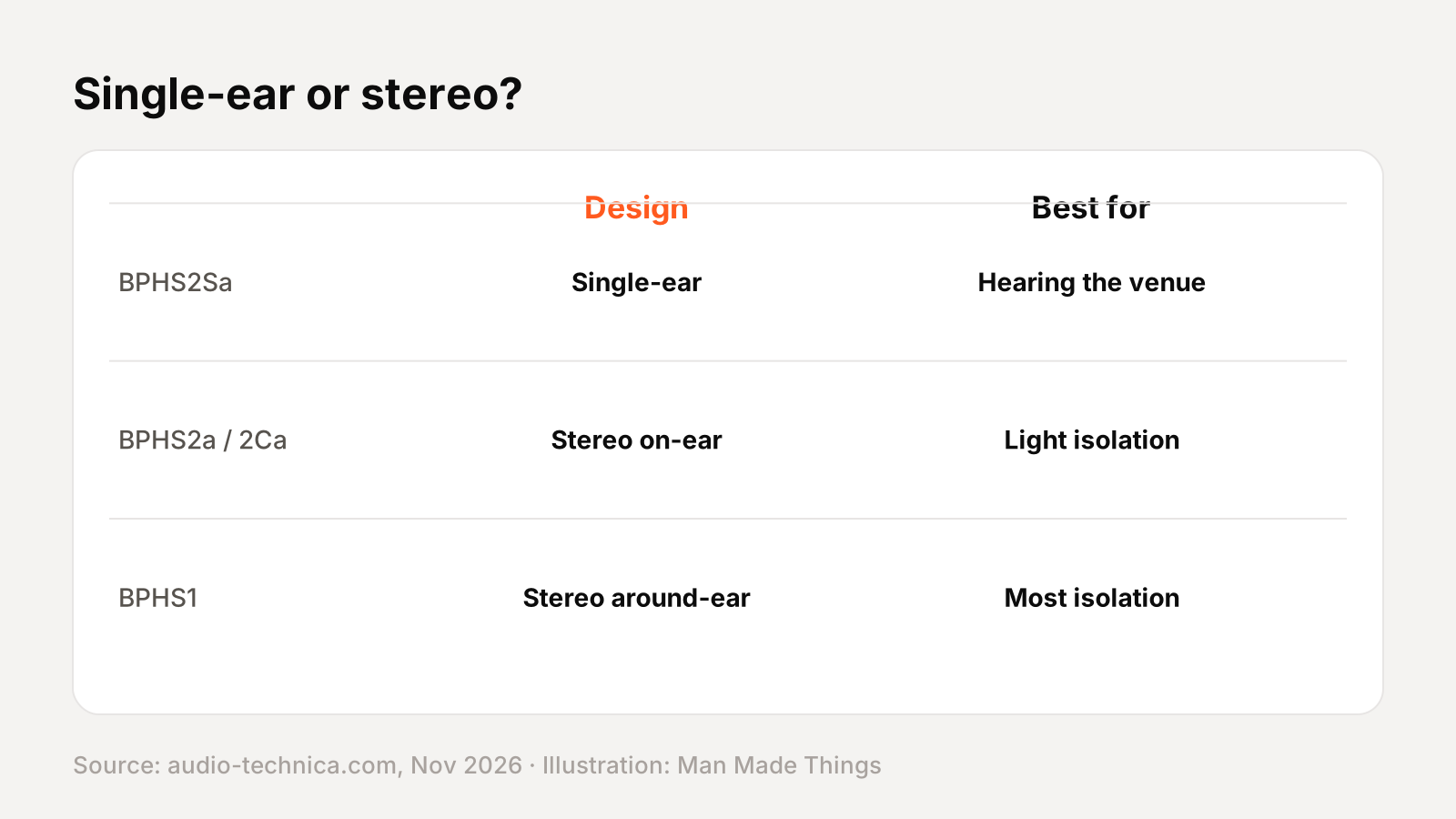
- Single-ear (BPHS2Sa): keeps one ear free to hear the crowd, producer or venue. Common for sideline reporters and floor managers.
- Stereo on-ear (BPHS2a, BPHS2Ca): low-profile and based on the ATH-M60x, so they're lighter than full over-ears while still isolating.
- Stereo around-ear (BPHS1): circumaural cups seal out more background noise, at the cost of weight.
All of the BPHS2 models share the ATH-M60x's 45mm drivers, so their headphone sound is closely related. See our ATH-M60xa review for the base headphone.
BPHS vs a regular headset
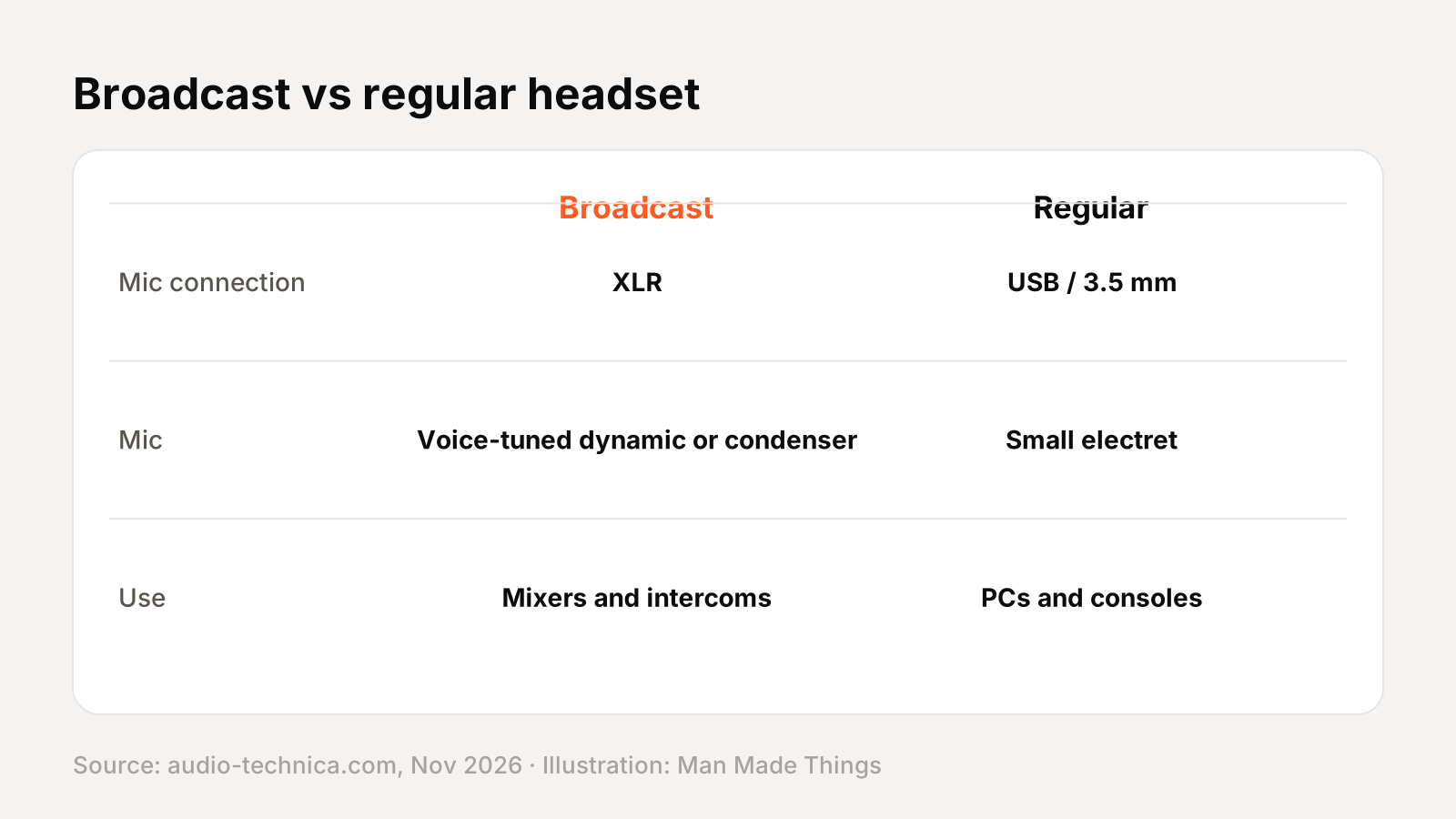
A gaming or office headset might look similar, but broadcast headsets are built for a different job:
| BPHS broadcast headsets | Regular headsets | |
|---|---|---|
| Mic connection | Professional XLR | USB or 3.5 mm |
| Mic type | Dynamic or condenser tuned for voice | Small electret mics |
| Boom | Rigid boom with flexible gooseneck | Usually flexible plastic |
| Use | Mixers, intercoms, camera audio | Computers and consoles |
If you stream or podcast from home, Audio-Technica's StreamSet headsets, like the ATH-M50xSTS, are designed for computers and may be a simpler fit. The BPHS models make the most sense when you're plugging into professional broadcast gear.
Fit and comfort for long broadcasts
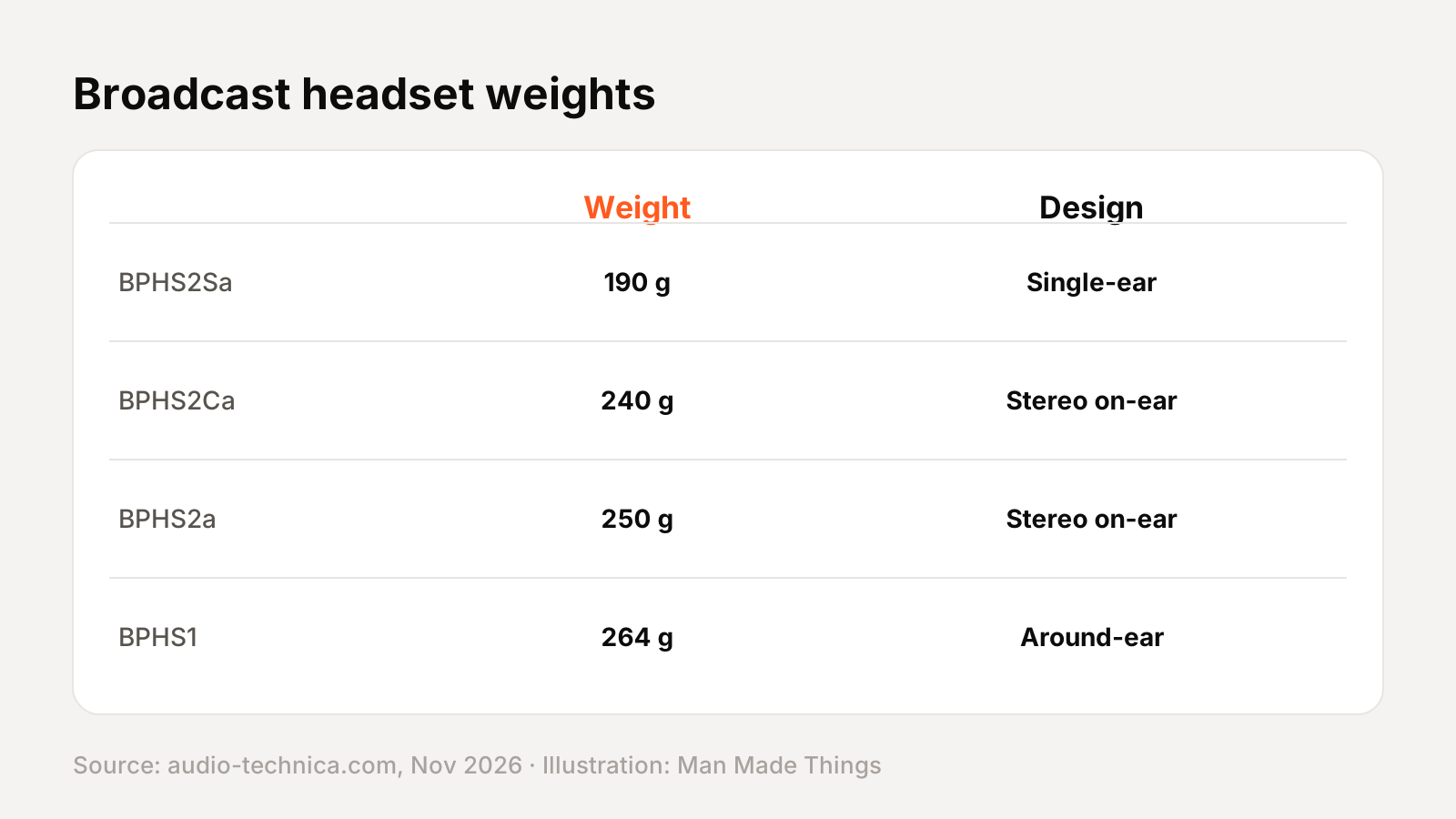
Commentators often wear a headset for hours, so weight and fit matter. Audio-Technica lists the single-ear BPHS2Sa at 190 grams, the stereo BPHS2Ca at 240 grams, the BPHS2a at 250 grams and the around-ear BPHS1 at 264 grams.
The low-profile, on-ear BPHS2 models are based on the ATH-M60x monitor headphones, which keeps them compact. The BPHS1's around-ear cups seal out more background noise, which can make a long day in a loud stadium less tiring, at the cost of extra weight. Whichever you choose, set the gooseneck so the microphone sits at the same distance from your mouth every time, for a consistent sound on air.
Connections and care
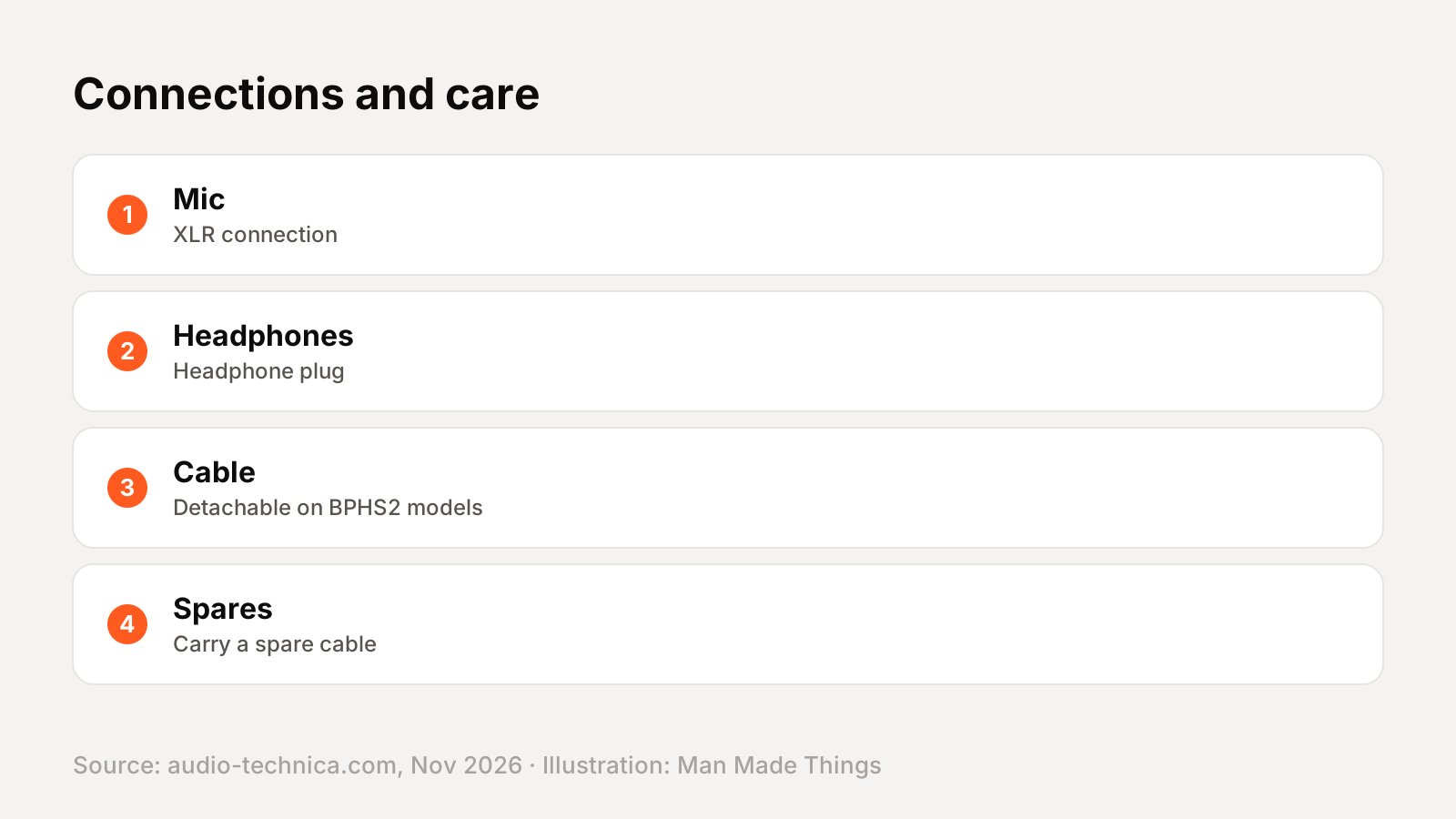
Broadcast headsets typically split into an XLR connection for the microphone and a headphone plug, so they plug into mixers, intercoms and camera audio. The BPHS2 models use a detachable cable with a 6-pin connector at the headset, which makes swapping a damaged cable quick on location. The BPHS1 uses an 8-pin connector at the headset end.
Tips: carry a spare cable, keep the gooseneck positioned a consistent distance from your mouth, and check Audio-Technica's service and repair center for warranty terms, which vary by product.
For general headphones, see our Audio-Technica headphones guide.
Frequently asked questions
Which Audio-Technica broadcast headset is best for sports?
+
The hypercardioid dynamic models, the BPHS2a (stereo) or BPHS2Sa (single-ear), are designed to keep pickup focused on your voice in loud environments.
What headphones are the BPHS2 headsets based on?
+
Audio-Technica says the BPHS2 models are based on the ATH-M60x professional monitor headphones, with the same 45 mm drivers.
What's the difference between the BPHS2a and BPHS2Ca?
+
The BPHS2a has a hypercardioid dynamic mic; the BPHS2Ca has a cardioid condenser mic for clearer, more articulate voice.
Sources
Editor-in-Chief
Rahul has been writing about gadgets and software since 2013, first at Thetechhacker and now at Man Made Things. He edits every review on the site and signs off on every verdict.
More from Rahul →