Ale vs Lager: The Real Difference (It's Not the Color)
Ale and lager are the two families every beer belongs to. Here's what actually separates them, how that changes the taste, and which styles fall on each side. For readers 21+.
We may earn a commission when you buy through links on this page. Learn more
Quick answer
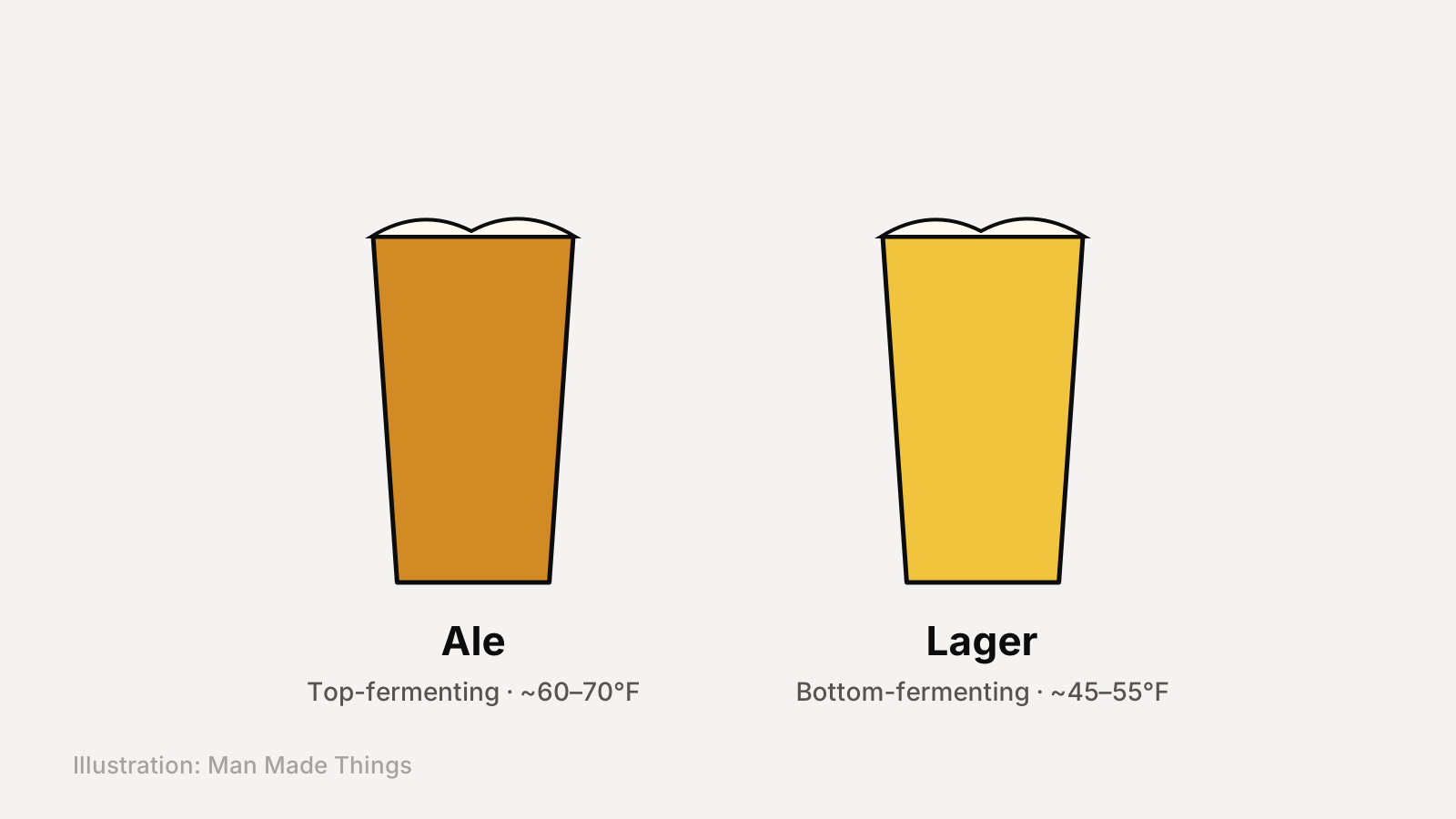
The difference is the yeast. Ales use top-fermenting yeast (Saccharomyces cerevisiae) at warmer temperatures, roughly 60–70°F, which creates fruity, complex flavors. Lagers use bottom-fermenting yeast (Saccharomyces pastorianus) at cooler temperatures, roughly 45–55°F, followed by cold aging, which gives a cleaner, crisper taste. Color has nothing to do with it.
Ask most people the difference between an ale and a lager and you'll hear something like "lagers are light, ales are dark." It sounds right, and it's wrong. There are pitch-black lagers and pale, golden ales.
Every beer in the world falls into one of these two families, and the line between them comes down to one tiny ingredient: yeast. Once you understand that, beer menus get a lot easier to read, and you can guess how a beer will taste before you order it.
This article is for readers 21 and older. Please drink responsibly.
It all comes down to yeast
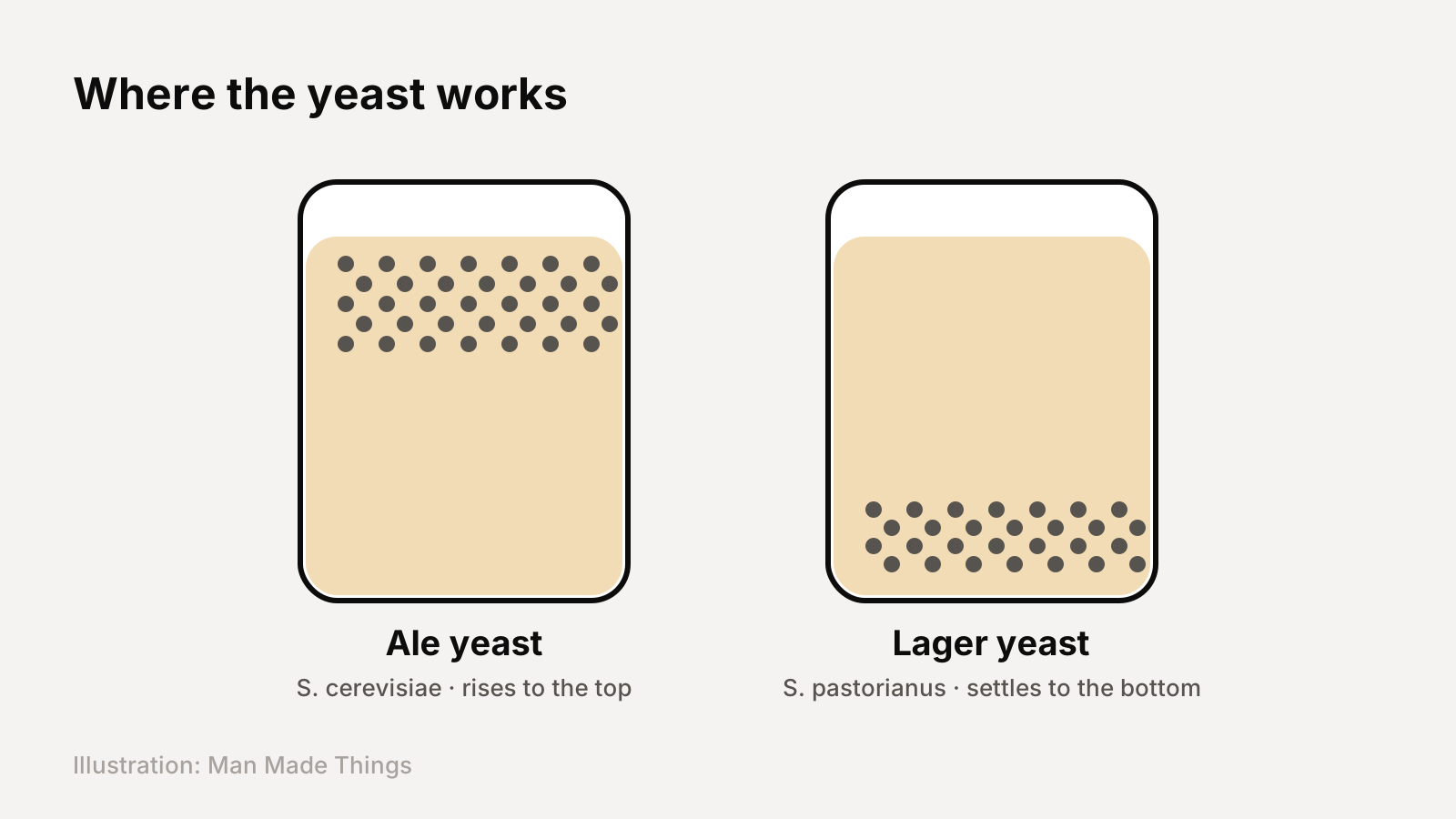
Yeast is what turns sugary grain water into beer. It eats the sugar and gives off alcohol and carbon dioxide. Brewers use two main types:
- Ale yeast (Saccharomyces cerevisiae) is called top-fermenting because it rises toward the surface of the tank during fermentation.
- Lager yeast (Saccharomyces pastorianus) is called bottom-fermenting because it works lower down and settles to the bottom when it's done.
That's the technical split. But the bigger difference for your taste buds is the temperature each yeast likes.
Warm vs cold: why temperature changes the taste
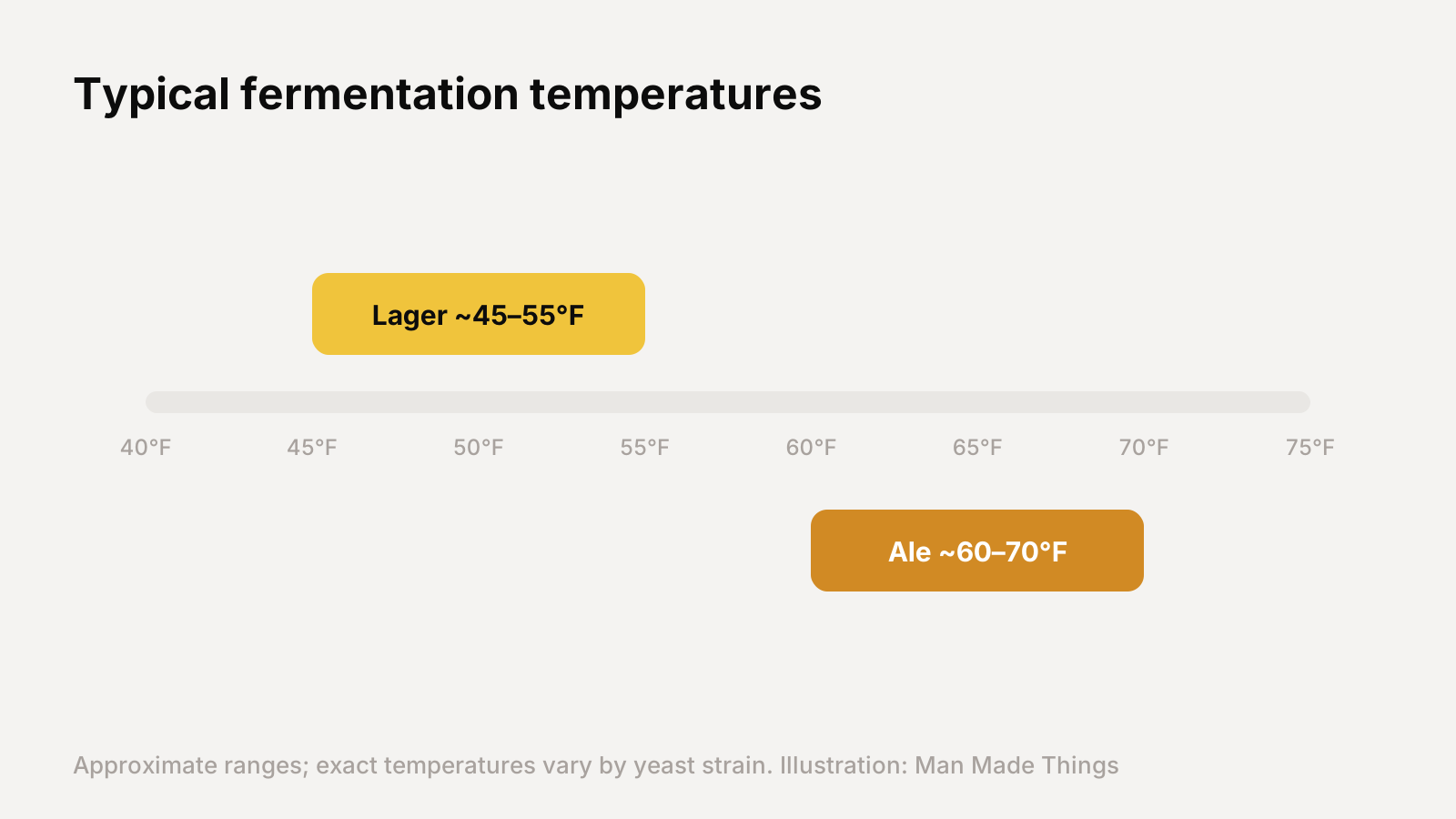
Ale yeast works best warm, roughly 60–70°F. Lager yeast prefers it cool, roughly 45–55°F. Exact ranges vary by yeast strain, but that's the general rule.
Warm fermentation is fast and lively, and the yeast throws off flavor compounds called esters. That's where the fruity notes in many ales come from, things like banana, pear or stone fruit.
Cool fermentation is slower and quieter. The yeast makes far fewer of those fruity compounds, so the grain and hops come through more clearly. The result is the clean, crisp taste people associate with lager.
The word "lager" even comes from the German for "to store." After fermentation, lagers traditionally rest at near-freezing temperatures for weeks. This cold aging, called lagering, smooths out the beer and makes it even cleaner.
Common ale styles
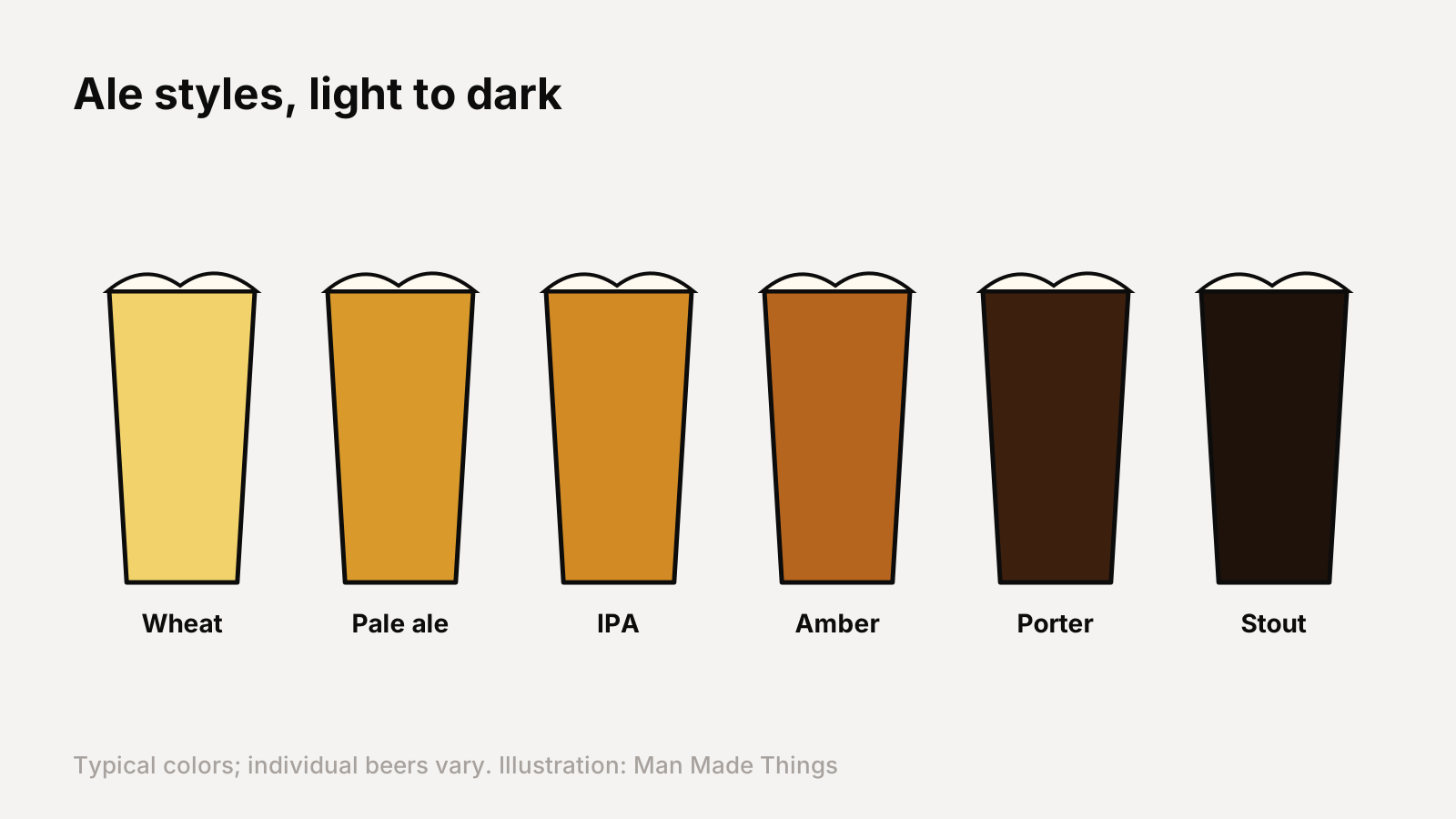
Ales cover a huge range, from hazy and fruity to roasty and dark:
- IPA (India Pale Ale): hop-forward, often bitter, with citrus, pine or tropical notes.
- Pale ale: like a gentler IPA, more balanced between malt and hops.
- Wheat beer (Hefeweizen, Witbier): hazy and light, often with banana, clove or citrus notes from the yeast.
- Stout and porter: dark and roasty, with coffee and chocolate flavors.
- Belgian ales: often strong and spicy, with very expressive yeast character.
If a beer smells fruity before you've even tasted it, there's a good chance it's an ale.
Common lager styles
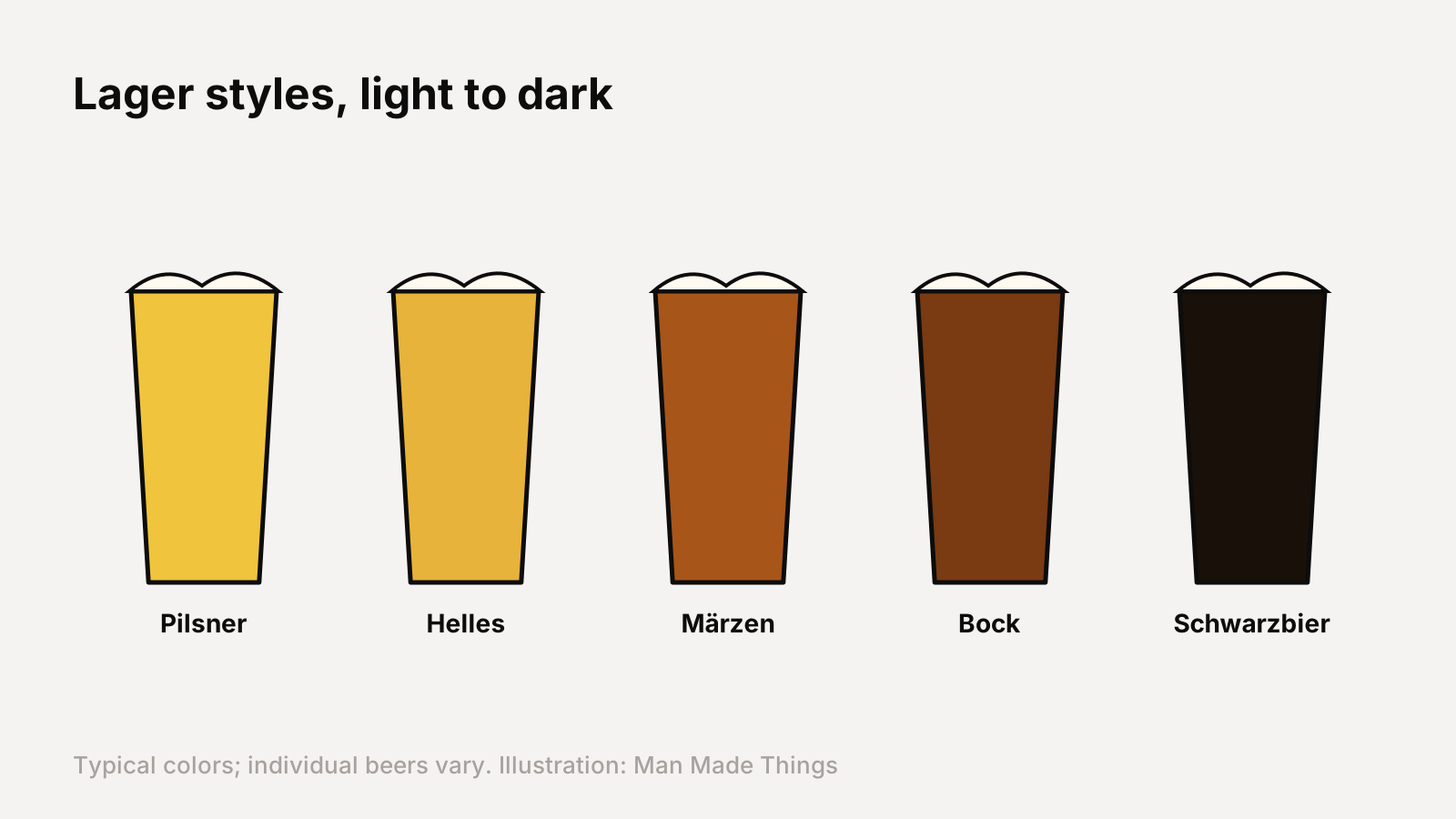
Lagers are often thought of as one thing, the big-brand light beers. But the family is much broader:
- Pilsner: golden, crisp and noticeably hoppy and bitter. A great "first craft lager."
- Helles: a soft, malty German pale lager. Easy-drinking and smooth.
- Märzen / Oktoberfest: amber, toasty and slightly sweet.
- Bock: stronger, malty and often darker.
- Schwarzbier: a black lager. It looks like a stout but drinks light and smooth, which is the best proof that color doesn't decide the family.
The in-betweens: hybrid beers
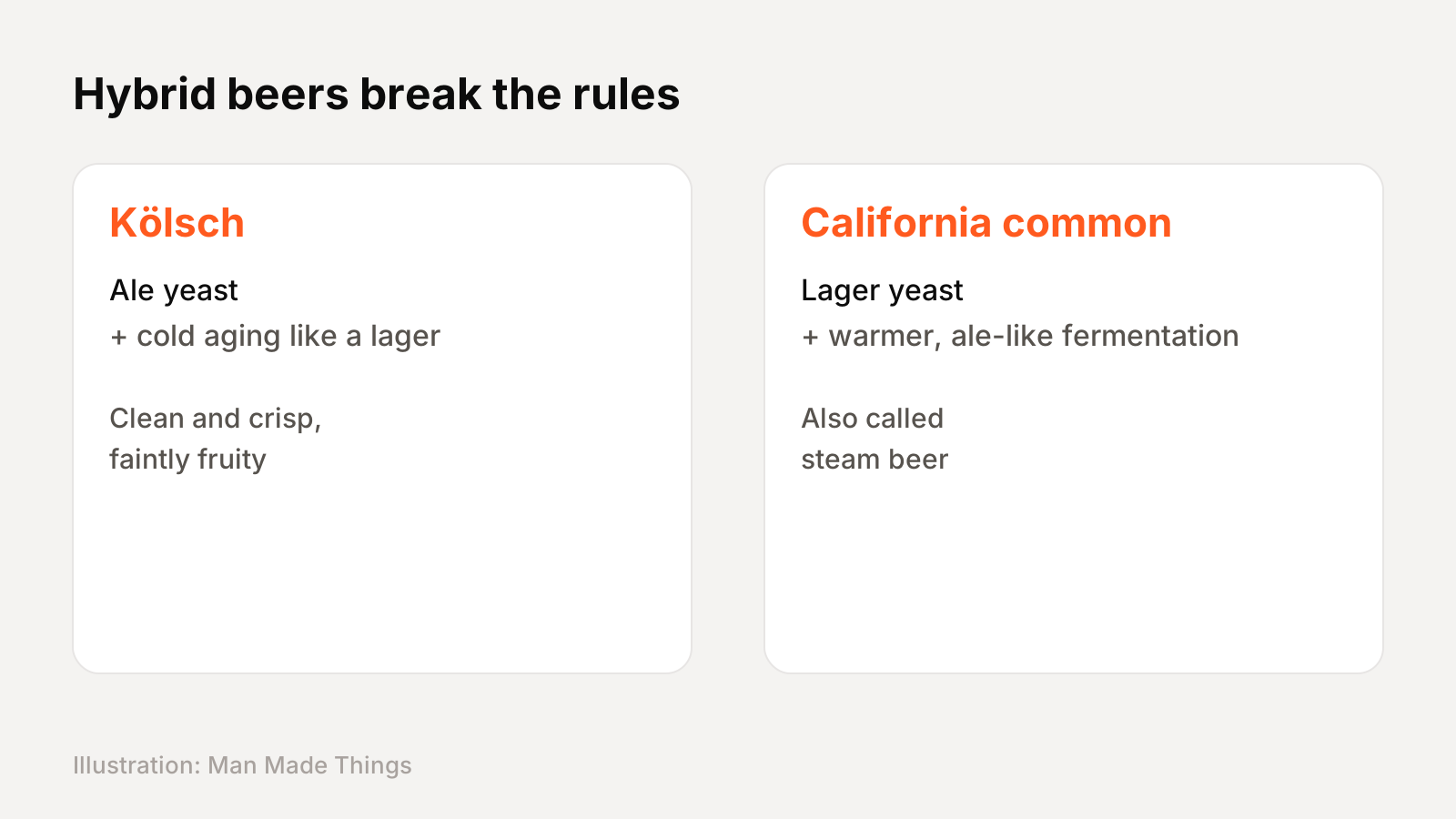
A few styles break the rules on purpose.
Kölsch, from Cologne in Germany, uses ale yeast but is then cold-aged like a lager. You get a beer that's clean and crisp with a faint fruitiness.
California common, sometimes called steam beer, does the opposite. It uses lager yeast fermented at warmer, ale-like temperatures.
These hybrids are worth trying because they show you exactly what yeast and temperature do to flavor. If you can find a Kölsch next to a regular pale ale and a pilsner, taste all three together. It's the quickest beer lesson you'll ever get.
How to serve ales and lagers
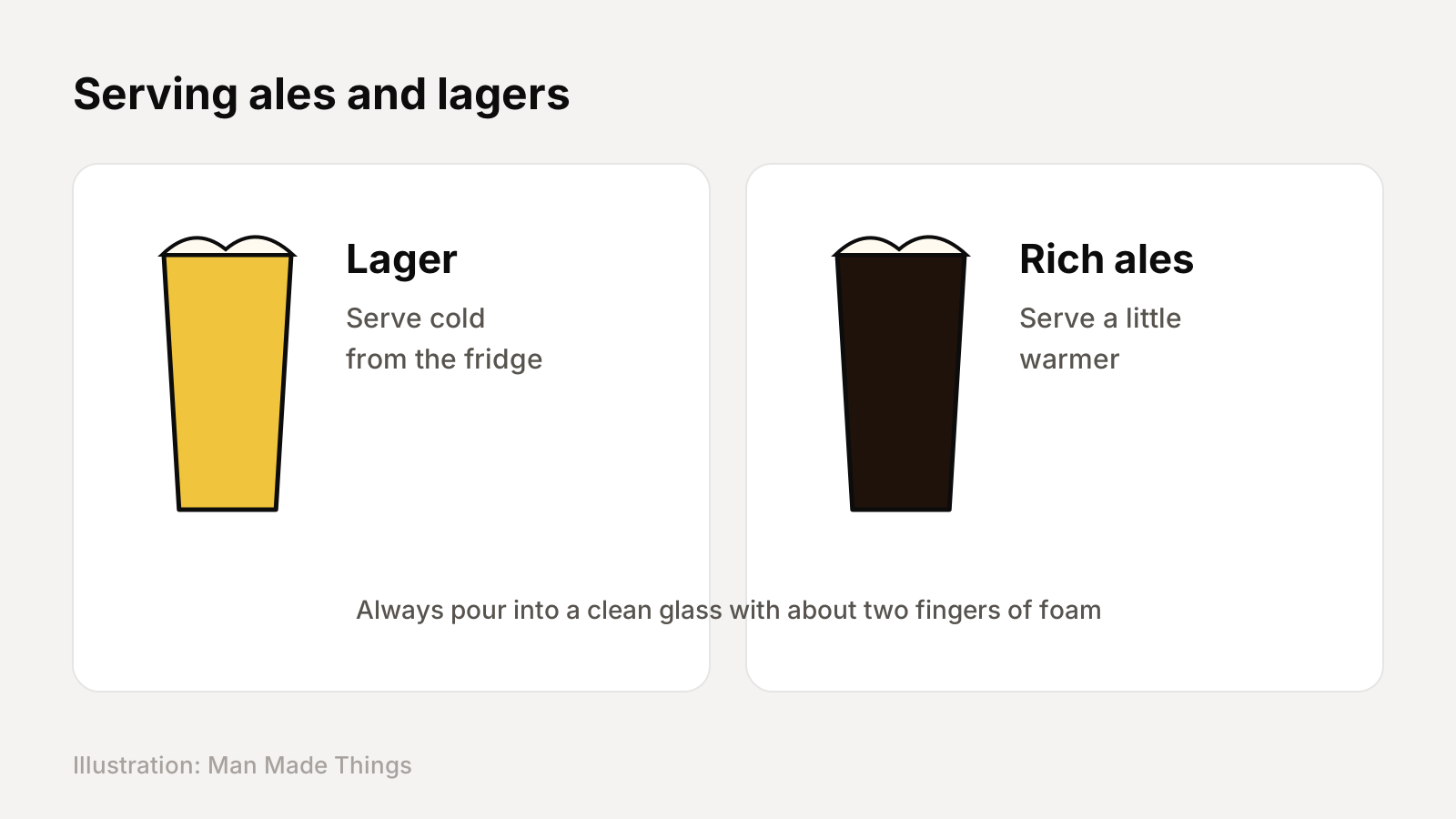
How you serve a beer changes how it tastes, and most people serve everything too cold.
Lagers taste best properly cold, straight from the fridge. Their whole appeal is that crisp, clean finish, and cold helps it.
Ales, especially richer ones like stouts, Belgian ales and amber ales, open up when they're a little warmer. Take them out of the fridge a few minutes before you pour. As they warm slightly, more of the aroma comes through. Ice-cold ale often tastes flat and dull by comparison.
Use a glass. Drinking from the bottle or can hides most of the smell, and smell is a huge part of taste. Pour down the side of a tilted glass, then straighten it toward the end to build a head of foam about two fingers tall. That foam carries the aroma to your nose.
Keep glasses clean. Leftover soap or grease kills foam fast. If bubbles cling to the sides of the glass, it isn't fully clean.
So which should you drink?
There's no better or worse family. It comes down to what you like.
Pick an ale if you want big flavor: fruit, hops, roast or spice. Start with a pale ale if IPAs feel too bitter.
Pick a lager if you want something clean and refreshing, especially with food or on a hot day. Try a German pilsner or helles to see how good a lager can be.
Better yet, order one of each side by side. Smell them first. In most cases, you'll be able to tell which is which before you take a sip.
Frequently asked questions
What is the main difference between ale and lager?
+
The yeast. Ales use top-fermenting yeast at warmer temperatures, around 60–70°F. Lagers use bottom-fermenting yeast at cooler temperatures, around 45–55°F, then are usually cold-aged.
Are lagers always lighter than ales?
+
No. Color and strength don't define the family. Schwarzbier is a black lager, and many ales are pale and light.
Is IPA an ale or a lager?
+
An IPA is an ale. The name stands for India Pale Ale.
Why do ales taste fruitier?
+
Warm fermentation causes ale yeast to produce more esters, which are flavor compounds with fruity aromas.
Sources
Editor-in-Chief
Rahul has been writing about gadgets and software since 2013, first at Thetechhacker and now at Man Made Things. He edits every review on the site and signs off on every verdict.
More from Rahul →